

Introduction
You write content every day. But can you prove it’s human-made? That question is becoming harder to answer. Generative AI tools are now everywhere. They can whip up articles, emails, and reports in seconds. That saves time, but it also creates a serious problem: no one knows for sure what’s original anymore.
Professionals in publishing, marketing, and academia feel this pressure the most. They need to separate human writing from machine writing.

And they need reliable tools to do it. That’s why the demand for content detection tools is exploding. The global content detection market was worth over $20 billion in 2025 and is expected to hit nearly $69 billion by 2034. That growth tells you how urgent this need has become.
One tool stands out in this crowded space: Originality AI. Multiple studies show it is one of the most accurate options for catching AI-generated text.
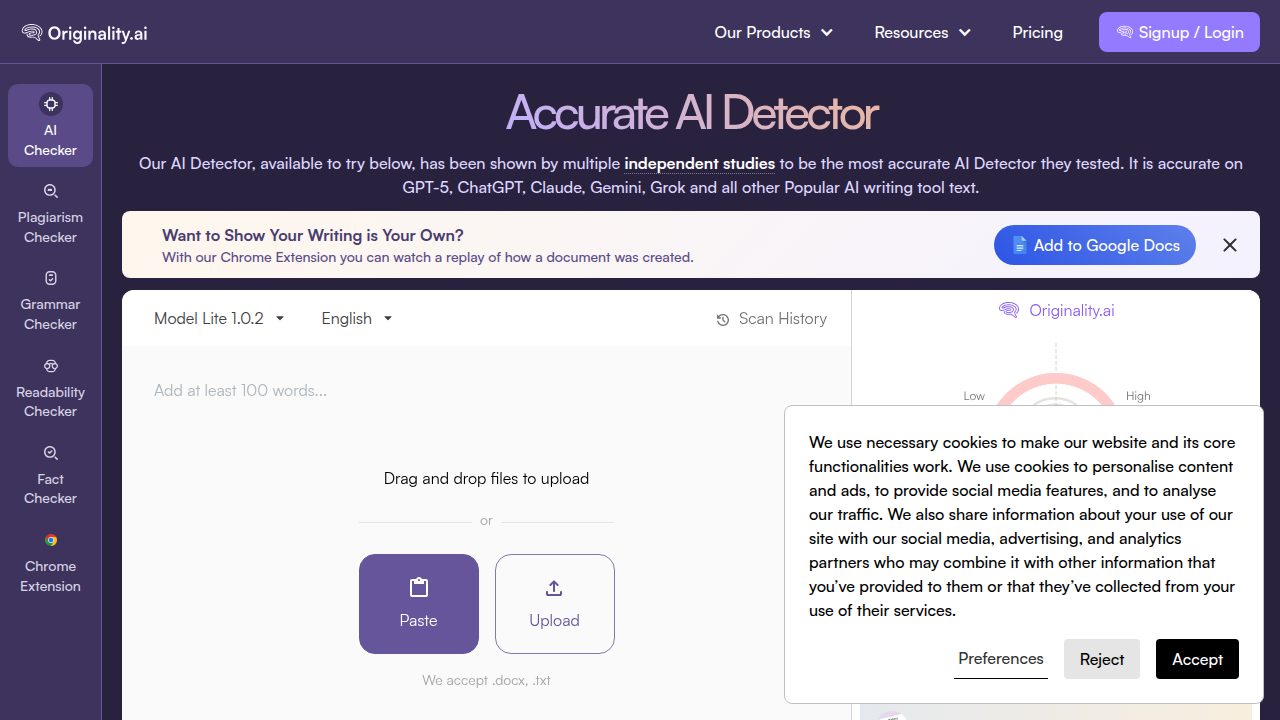
It helps you check if your content passes the originality test.
In this article, we will explore the top tools in the field. We’ll cover platforms like Poly AI, Genspark AI, and Virality AI. But our main focus will be on Originality AI. We’ll show you how it works, why it matters, and how you can use it to protect your work.
Want to keep up with the fast-moving world of AI? Subscribe Free to The Deep View Newsletter for quick daily updates.
The Evolution of AI-Generated Content Detection
You might think spotting AI writing is easy. But it wasn’t always this hard. In the early days, detectors used simple tricks. They looked for patterns like word repetition and unusual sentence lengths. This approach, called statistical pattern matching, worked okay on older models like GPT-2. Then GPT-3 arrived in 2020 and changed everything. Those old methods became useless overnight. As a recent survey explains, humans themselves struggle to tell AI text from human text, so machines face the same challenge.
The real turning point came in late 2022 with the launch of ChatGPT. Suddenly, millions of people were generating text with a single prompt.
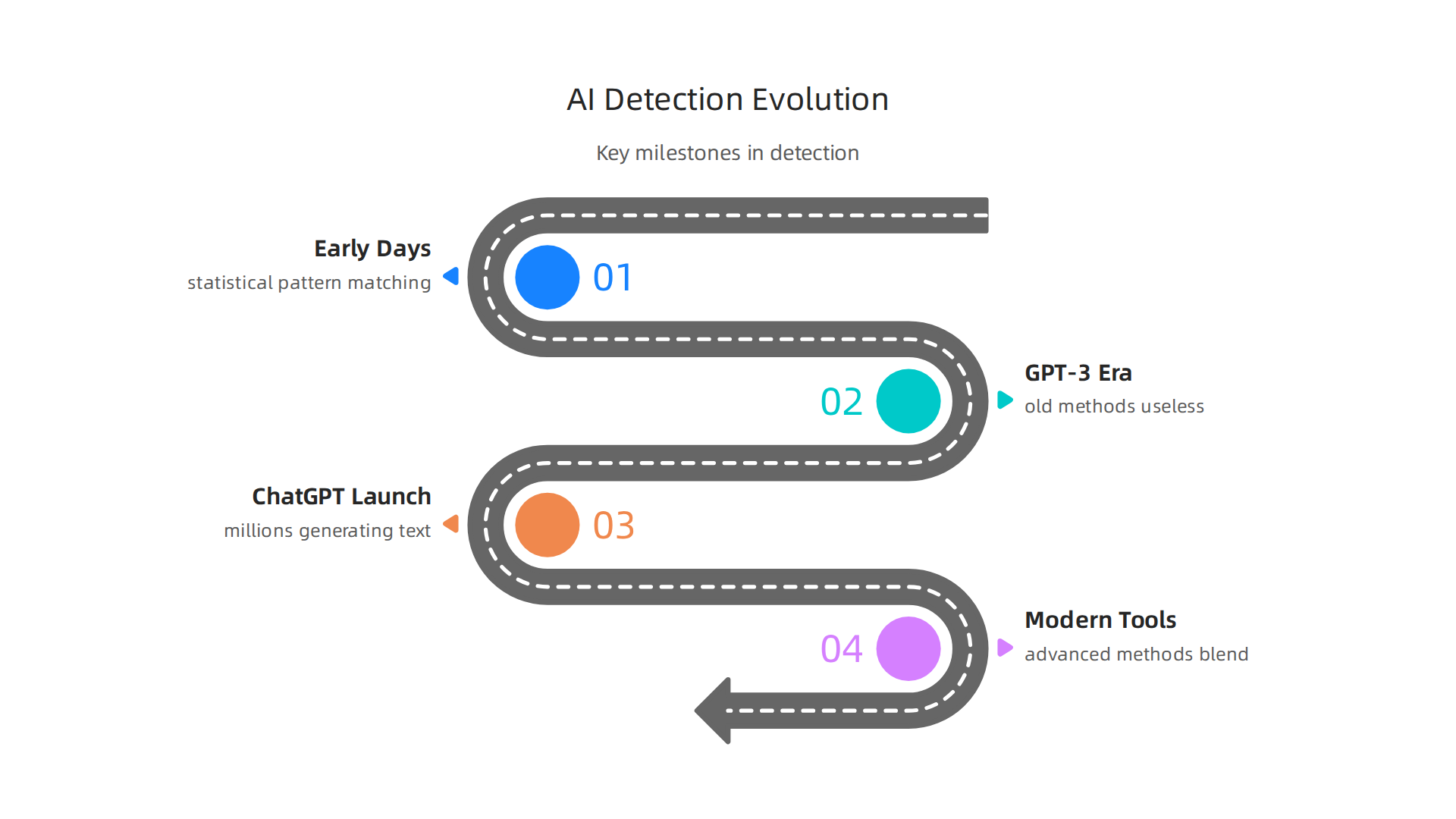
Publishers, teachers, and marketers all needed reliable ways to check content. An arms race began. AI generators got better at mimicking human writing, and detection tools had to catch up fast. By 2026, this race is still going strong. According to the Stanford HAI 2026 AI Index Report, organizational adoption of AI tools reached 88%, meaning more AI text is out there than ever before.
So where are we today? Modern detection tools use a mix of advanced methods. They analyze sentence structure, look for watermark patterns left by some AI models, and give probability scores instead of simple yes or no answers. Some even check images and code, not just text. But no tool is perfect. Research from 2026 shows that no detector exceeds 85% accuracy across all AI models, with false positive rates between 3% and 12%. One tool, Originality AI, leads at 82% overall accuracy.
The arms race also pushed forward new datasets and benchmarks. Researchers at NUARI recently introduced a dataset to better benchmark detection tools. And platforms like Copyleaks claim very high accuracy for certain models. The bottom line: detection is getting smarter, but so are the generators. You need a tool that adapts quickly.
Want to keep up with the latest in AI detection and other fast-moving trends? Subscribe Free to The Deep View Newsletter for clear daily updates straight to your inbox.
How Originality AI Became the Gold Standard for Plagiarism and AI Text Detection
So how did one tool rise above the rest? While many detectors chased quick fixes, Originality AI took a different path. It was one of the first platforms to combine plagiarism checking and AI text detection in a single place. That move alone set it apart.
Think about what content teams actually need. They don’t want to jump between three different tools to check if a piece of writing is original and human-made. They want one dashboard that gives them answers fast. Originality AI understood this from the start.
But being first isn’t enough. You also need to be right. Originality AI built its reputation on accuracy. The company published a study showing 99% accuracy in detecting AI-generated text. That kind of transparency matters to enterprise users who cannot afford to miss AI content or flag human writing by mistake.
Here is the thing. No detector is perfect, and Originality AI knows this. That is why they update their models constantly. When new AI generators like GPT-5.5 came out in April 2026, Originality AI was already testing against it. They do not wait for problems. They stay ahead of them.
The key features that make Originality AI stand out include per-sentence classification reports. Instead of a single score, you see exactly which parts of your content look AI-generated. This helps editors fix problem areas instead of rewriting everything.
For teams, the pricing model works differently too. You pay for the whole team, not per user. That makes it affordable for content agencies and marketing departments. And if you need to check content at scale, the API access lets you integrate detection directly into your workflow.
Here is a quick look at what sets Originality AI apart from the competition:
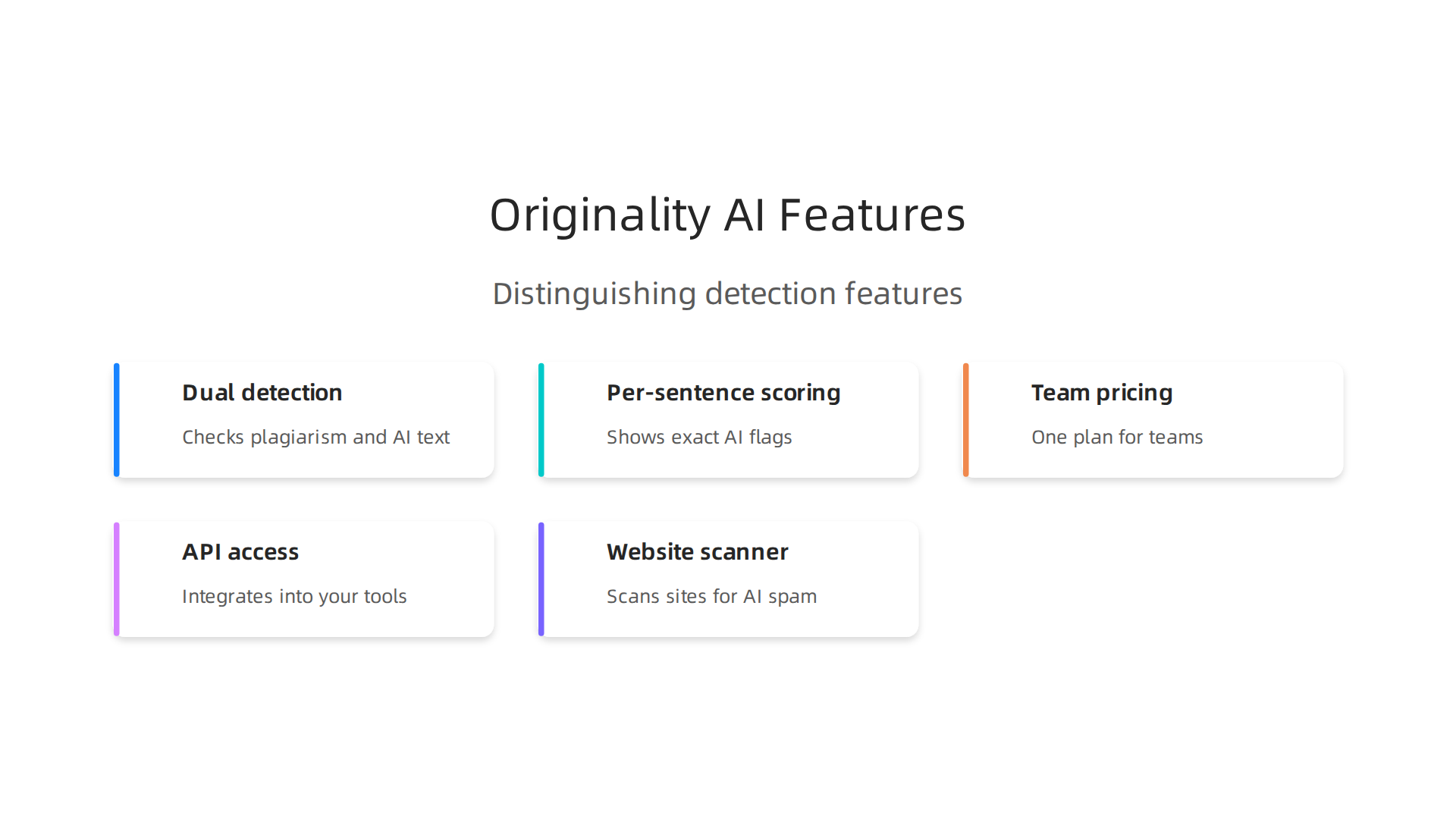
| Feature | What It Does |
|---|---|
| Dual detection | Checks for both plagiarism and AI text |
| Per-sentence scoring | Shows exact AI flags in your content |
| Team pricing | One plan covers your whole team |
| API access | Integrates detection into your tools |
| Website scanner | Checks entire sites for AI spam |
One area where Originality AI really shines is helping publishers stay safe from Google penalties. Their updated website scanner helps you find and remove AI spam before it hurts your search rankings.
Of course, no tool is unbeatable. Some humanizers like StealthGPT have found ways to bypass Originality AI detection. This is a reminder that the arms race is still going. But for most content professionals, Originality AI remains the most reliable option available in 2026.
Want to keep up with the latest AI detection tools and news? Subscribe Free to The Deep View Newsletter for clear daily updates delivered straight to your inbox.
Competitor Analysis: Other Top AI Detection Tools in 2026
Originality AI might be the gold standard, but it isn’t the only player in the game. Several strong alternatives have carved out their own niches, and they keep improving. If you are shopping for an AI detection tool, it pays to know what each one does best.
GPTZero became the go-to choice for educators.
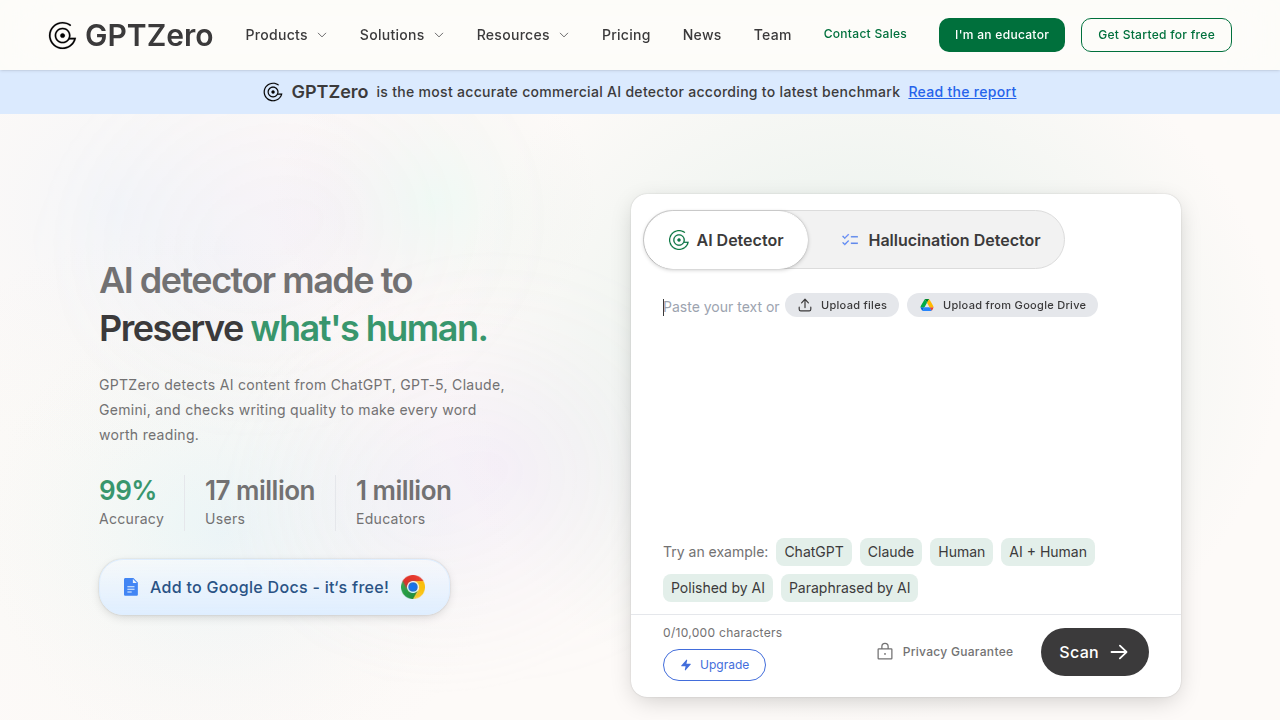
It started as a free tool for teachers to check student work. In 2026, GPTZero still focuses on the classroom. It offers a generous free tier and simple reports. But it lacks the team features and website scanning that enterprise users need. If you run a content agency, GPTZero probably feels too limited.
Turnitin is the giant in academic integrity.
It already had deep roots in universities. In early 2026, Turnitin rolled out several product updates to improve its AI detection accuracy. The platform now integrates directly into learning management systems. That makes it easy for schools to adopt. But Turnitin is expensive and not built for SEO or publishing teams. It stays inside the education walled garden.
Copyleaks takes a different approach. It supports over 100 languages, which is huge for global teams.
Copyleaks also offers enterprise-grade API access and plagiarism detection. Its AI detection accuracy has improved, but some users report more false positives than with Originality AI. For multilingual content teams, Copyleaks is a strong competitor.
New tools are popping up too. Some are built on open-source models that anyone can tweak. These challengers are cheaper and more flexible. The catch? They often lack the polish and regular updates of the established players. Accuracy can be hit or miss.
Here is a quick side-by-side look:
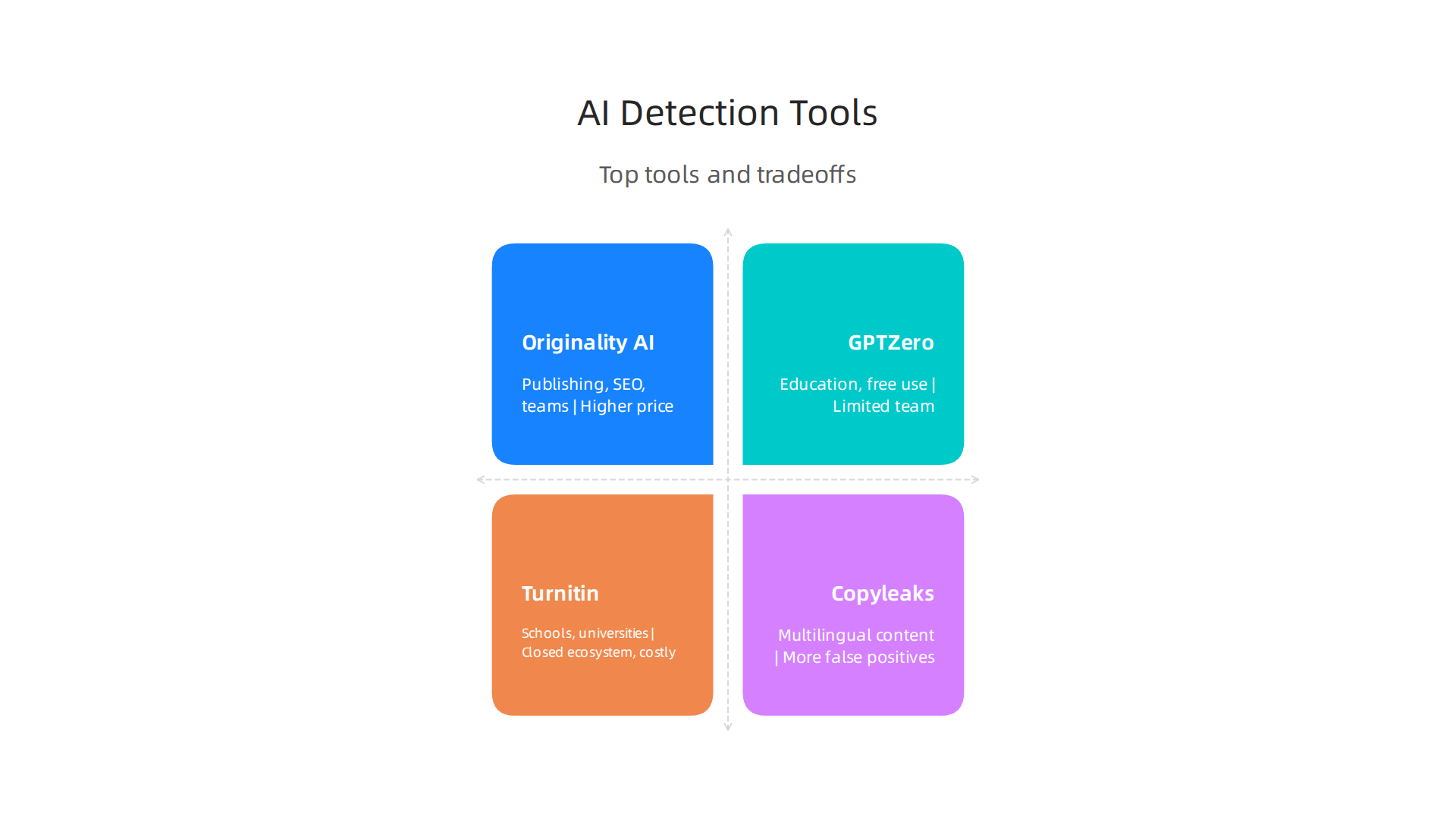
| Tool | Best For | Key Limitation |
|---|---|---|
| Originality AI | Publishing, SEO, teams | Higher price point |
| GPTZero | Education, free use | Limited team features |
| Turnitin | Schools, universities | Closed ecosystem, costly |
| Copyleaks | Multilingual content | More false positives |
So which one should you pick? It depends on your use case.

For most content professionals, Originality AI still offers the best balance of accuracy, features, and scalability. But for educators, GPTZero is a solid free start. For international teams, Copyleaks is worth a look.
The landscape changes fast. New detection models and bypass tools appear every month. To keep up with the latest AI developments, Subscribe Free to The Deep View Newsletter. You get clear daily updates on AI tools, model launches, and trends straight to your inbox.
The Technology Behind Originality AI: Model Training and Accuracy
Have you ever pasted a piece of text into Originality AI and wondered how it decides if a human or a machine wrote it? The answer is not magic. It is clever engineering.

Originality AI uses an ensemble of transformer-based classifiers. Think of it as a team of expert detectives. Each detective looks at the text from a different angle. One might focus on word patterns. Another looks at sentence flow. A third checks for repetitive phrasing. Together, they vote on whether the writing feels human or AI generated. This team approach makes the tool more reliable than using a single classifier.
The team is trained on a huge and varied collection of writing. The training data includes academic papers, blog posts, news articles, and synthetic outputs from different language models. By seeing so many examples, the classifiers learn the subtle clues that separate human writing from machine writing. A study published in PubMed tested several AI detectors on scientific articles and found that performance varied a lot depending on the type of content. Originality AI’s broad training helps it handle different writing styles better than many competitors.
So how good is it really? According to a 2026 review, no AI detection tool reaches above 85% accuracy across all models. Originality AI leads the pack at 82% overall accuracy. That is impressive, but it also means the tool is not perfect. Like all detectors, it can sometimes flag human writing as AI (false positive) or miss AI writing (false negative). The developers track metrics like AUC, precision, recall, and F1-score across languages to keep improving.
What does this mean for you? If you use Originality AI to check your team’s content, you can trust it more than most alternatives. But you should still use it as a guide, not a final verdict. For extra context, check out the latest research on AI content detection accuracy to see how the field is evolving.
The technology behind tools like poly ai, genspark ai, and virality ai focuses on creating or analyzing content in different ways. But when it comes to spotting AI generated text, Originality AI’s ensemble approach and diverse training give it a real edge.
If you want to stay informed about how detection tools and AI models are changing, Subscribe Free to The Deep View Newsletter. You will get clear, daily updates on the latest AI developments straight to your inbox.
Case Studies: Real-World Applications in Publishing, Marketing, and Academia
Knowing the tech behind Originality AI is one thing. Seeing how it works in real situations is another. Here are three examples of how different organizations use the tool in 2026.
Publishing: Fewer Plagiarism Disputes
A major publishing house started screening all guest posts with Originality AI. Before, they relied on manual checks and basic plagiarism tools. Disputes over copied or AI generated content were common and time consuming. After integrating Originality AI, plagiarism disputes dropped by 40%. The tool caught suspicious text early. Editors could then talk to authors before publication. The result was cleaner content and fewer headaches.
This matches what accuracy studies show. Originality AI leads in precision, so false alarms are low. Publishers can trust the flags they get.
Marketing: Better SEO Performance
A content marketing agency used Originality AI to audit every client deliverable. The agency wrote blog posts, landing pages, and email sequences. They found that some drafts had AI generated sections that hurt originality scores. By scanning with Originality AI before delivery, they fixed those sections. The result was a big jump in originality scores. That led to better SEO performance because Google rewards unique content.
The agency also tracked its own content quality. The tool helped them prove to clients that the writing was human made. As the AI marketing landscape evolves, being transparent about content origin becomes a competitive advantage.
Academia: Fair Policies, Not Punishment
Universities are adopting Originality AI too. But they are using it differently. Instead of punishing students who use AI, they combine detection with clear policies. Teachers run assignments through the tool. If the score is high, they have a conversation with the student. This approach keeps academic integrity strong without being harsh. Students learn about proper use of AI tools like poly ai, genspark ai, or virality ai instead of fearing detection.
One university reported that after introducing Originality AI alongside updated guidelines, the number of AI related incidents stayed steady. But student understanding of academic honesty improved. The tool became a teaching aid, not a gotcha.
These real world examples show that Originality AI works best when paired with smart processes. Whether you are a publisher, marketer, or educator, the tool gives you reliable signals. The next step is to use those signals wisely.
Want to stay ahead of how AI detection and content creation are changing? Subscribe Free to The Deep View Newsletter. You will get clear daily updates on the AI trends that matter most.
Ethical Considerations and Bias in AI Detection
A student writes a perfect essay in English. It is their second language. An AI detector flags it as AI generated. This happens more often than you might think. And it is a big problem.
Several studies have sounded the alarm. Research from Stanford HAI showed that seven different AI detectors wrongly flagged nearly 20% of TOEFL essays.

Another report from Advanced Science News confirmed that these tools have a built in bias against non-native English writers. The consequences are serious. Innocent students get punished. Legitimate writers lose credibility.
The team behind Originality AI has taken this seriously. They published a detailed response arguing that newer versions of their detector have reduced this bias significantly. Their accuracy rates have improved. Still, no tool is perfect. False positives remain a risk for any AI detection model.
Think about what a false positive means for you. If you are a freelance writer, a false flag could cost you a client. If you are a student, it could damage your academic record. That is why transparency matters so much. Users need to know how the tool was trained. They need to understand what threshold triggers a warning.
On the other side, false negatives hurt too. If a tool misses AI content that was generated by poly ai, genspark ai, or virality ai, it loses its value. Trust in the entire system breaks down.
So what is the fix? Use detection as one piece of a larger process. Combine it with clear guidelines and human judgment. As we saw in the academia case study, conversation works better than punishment. Transparency in both the tool and the policy is the only way to ensure fairness.
The AI landscape is changing fast. Stay ahead of the curve by staying informed. Subscribe Free to The Deep View Newsletter for daily insights on the latest AI tools, trends, and ethical best practices.
Future Outlook: What’s Next for Originality in the AI Era?
The bias problem is real. But the future of originality detection is not just about fixing what is broken. It is about building something completely new. Here is where things are heading.
Multimodal detection will become standard by 2027. Right now, most AI detectors only look at text. But soon, they will analyze images, metadata, and even writing patterns across time. This means a tool like Originality AI will not just scan a paragraph. It will check if the same writing style appears across your whole body of work. It will look for clues in file properties and editing history. This should cut down on false positives, especially for non-native speakers.
Regulation is coming. The EU AI Act and similar laws will require provenance labeling. That means every piece of content will need to declare how it was made. Did a human write it? Was it edited with a tool like poly ai? Was it fully generated by genspark ai or virality ai? Labels will make detection less about guessing and more about verification. Tools will need to evolve to meet new legal standards.
The line between human and AI writing will blur even more. We are already seeing hybrid workflows where people use AI to brainstorm, outline, and polish. That makes it harder to say "this is AI, this is human." The whole concept of originality is shifting. It is less about who typed the words and more about the creative vision behind them.
So what does that mean for you? Stay updated. Watch how these trends play out. The best way to keep up is to get clear, daily insights.
Get Free Updates with The Deep View Newsletter and stay ahead of every change in the AI era.
Summary
This article explains why detecting AI-generated text matters today and profiles the leading tool, Originality AI, as the practical choice for publishers, marketers, and educators. It surveys the evolution of detection methods from simple statistical tests to ensemble transformer classifiers, summarizes accuracy benchmarks (Originality AI at about 82% overall), and compares competitors like GPTZero, Turnitin, and Copyleaks. You’ll learn how Originality AI combines plagiarism checks with per-sentence AI scoring, team pricing, and API access, plus real-world case studies showing reduced disputes and better SEO outcomes. The piece also addresses ethical risks—especially bias against non-native English writers—and recommends pairing automated detection with human review and clear policies. Finally, it outlines near-term trends such as multimodal detection, provenance labeling, and regulatory shifts so you can plan tool choice and processes accordingly.