

Why the ‘top AI startups’ list matters for business leaders and investors
In 2026, the world of artificial intelligence is moving faster than ever. Every day, it seems like there’s news about a new AI company, a breakthrough in ai coding tools, or amazing ai design tools. For business leaders and investors, this can feel like a lot to keep up with. It’s easy to get lost in all the information, making it hard to figure out which new companies are truly important and worth looking into.
You might be asking yourself: "Which of these many companies will actually change things? Which ones are smart to invest in, whether through private stock or by partnering with them?" It’s a big challenge to sift through all the noise to find the real gems. Without a clear way to decide, you could miss out on big chances or make choices that don’t help your business grow.
This article is here to help with that exact problem.

We will give you a simple, fact-based way to spot the top AI startups that are making a real difference. We will look at what makes a startup strong, like its team, its ideas, and how well it’s doing in the market. Understanding these things helps biggest investment companies and business leaders make smart choices. For example, investors often check things like the company’s business plan, how good the founding team is, and how many customers they have already gotten before investing, according to a deal evaluation matrix for startup investment decisions A Deal Evaluation Matrix for Startup Investment Decisions.
By the end of this guide, you will have a clear framework to help you decide which AI startups offer the best opportunities for investment or partnership in 2026. This means less guessing and more confident decisions.
Stay ahead with smart insights. The AI Newsletter Worth Reading delivers clear daily AI updates directly to your inbox.
To make smart decisions about which AI startups to partner with or invest in, you need a clear way to size them up. This means looking at them like an expert investor would. In 2026, finding the truly promising ones among many means using a solid evaluation plan.
Here are the key things investors look at to decide if an AI startup is one of the top AI startups:
Investor Criteria for Top AI Startups
1. Strong Technology (Tech Moat)
A "tech moat" means the startup’s technology is special and hard for others to copy. For AI startups, this often means:
- Unique AI Models: Do they have their own special AI models or ways of doing things that others don’t?
- Proprietary Data: Are they using a unique set of data that makes their AI better than others? Investors check for a clear AI technical strategy and architecture, including data pipelines and training methods, to ensure this advantage is real Example Diligence Checklist for AI Investments.
- Technical Defensibility: Can they protect their ideas and technology easily?
2. Perfect Market Fit
This means the AI product solves a real problem for a lot of people who are willing to pay for it.
- Clear Problem Solved: Is there a big problem that the AI startup’s product fixes? Investors look for "problem evidence" and clear demand AI & ML Startup Investment Checklist: Pre-Seed Stage (2026).
- Big Market: Is the group of potential customers large enough to help the company grow a lot?
- Customer Demand: Are people already showing interest, like signing up for a waitlist or being early customers? This is often called "traction" or "product-market fit" Startup Evaluation Checklist: Essential Investment Criteria.
3. Good Money Picture (Unit Economics)
This looks at how much money the company makes from each product or service it sells, after costs.
- Costs vs. Earnings: For AI, this means understanding how much it costs to run the AI (like server costs) compared to how much money it brings in.
- Path to Profit: Can the startup make more money than it spends as it grows? Investors look at key financial details like yearly revenue growth and how much money the company spends compared to what it earns How Investors Evaluate Series A Startups in 2026.
4. Strong Team
Even the best idea needs a great team to make it happen.
- Experienced Leaders: Do the founders and main team members have the right skills and experience in AI or the industry they are working in? Things like the founding team quality and relevant expertise are very important AI & ML Startup Investment Checklist: Pre-Seed Stage (2026).
- Team Balance: Does the team have all the different skills needed, like tech experts, business people, and marketing pros? The "Investment Criteria Matrix" talks about looking at the team’s commitment and technical ability Investment Criteria Matrix | Startup Scoring Framework.
- Passion and Drive: Are they truly dedicated to making their startup a success?
Your Simple Scoring Framework
You can use a simple scoring system to quickly compare different AI startups. Give each startup a score from 1 to 5 (1 being weak, 5 being very strong) for each of the areas above. This helps you see where a startup stands out and where it might need more work.
Here is a quick look at what to score:
| Criteria | What to Look For (Examples) | Your Score (1-5) |
|---|---|---|
| Tech Moat | Unique AI models, hard-to-copy technology, special data, strong technical plan. | |
| Market Fit | Solves a big, clear problem for many people, strong customer interest, big market. | |
| Unit Economics | Low costs per user, clear path to making good money, efficient spending. | |
| Strong Team | Experienced founders, balanced skills, deep industry knowledge, high commitment. |
After scoring a few different AI startups, you can compare their total scores. This helps you find the ones with the most potential. Remember, a startup with high scores across the board is generally a better bet for future growth and success. This framework helps you make informed choices, whether you’re looking for partners or looking to learn more about strategic AI adoption or how to choose AI tools 2026.
After using a simple scoring system to look at AI startups, it is also important to understand the bigger picture of where money is flowing. This helps you see what the biggest investment companies are truly interested in. In 2026, the world of AI startup funding is seeing big changes, with lots of money pouring into certain areas.
Funding trends and investor signals shaping the top AI startups
Right now, AI companies are getting huge amounts of money. In the first three months of 2026 (Q1), about $242 billion went to AI companies. That was 80% of all startup money around the world in that time Q1 2026 Shatters Venture Funding Records As AI Boom …. This shows just how much investors believe in AI’s future.

Most of this money is going into very large deals, called "mega-rounds." In the first half of 2026, nearly 88% of all venture money in the US went to AI mega-deals 87.5% of venture dollars went to AI. The rest fought over …. This means that the top AI startups, especially those making "foundation models" (the basic AI brains), are getting the lion’s share. Companies like Anthropic, xAI, OpenAI, and Waymo have seen massive funding rounds, often in the tens of billions of dollars AI Investment H1 2026 Retrospective: Rounds + Valuations. These big investments show that investors are looking for AI companies with very strong technology and a clear lead in the market.
What Funding Milestones Mean
When an AI startup gets funded, the amount and stage of funding can tell you a lot about its potential.
- Early Stage (Seed and Series A): These early rounds are super important. In 2026, the value of AI startups at their Series A funding round is much higher than other startups. This "AI valuation premium" means investors are willing to pay more for AI companies they think will grow fast The H1 2026 AI startup funding report. A strong Series A valuation signals that a startup has moved past just a good idea and is showing real promise in its market fit and team.
- Later Stage (Series B, C, and beyond): As companies get to Series B, C, or even later rounds, the funding amounts get huge, but fewer companies reach this level. When a company keeps getting these big rounds, it often means it has proven its business model and is showing durability, not just hype. These later rounds often go to AI companies that are already leaders or quickly becoming leaders in their specific areas, perhaps with innovative ai coding tools or ai design tools that are gaining traction.
Investors are also looking closely at how AI companies spend their money and how quickly they can make a profit. It is not just about getting big checks, but about using that money wisely to build a lasting business. This means that to be among the top AI startups, a company needs more than just a cool idea; it needs a clear path to make money and show it can stand strong in the future.
To keep up with all these fast-moving changes and truly understand which AI startups are making waves, staying informed is key. Get clear daily AI updates from The AI Newsletter Worth Reading.
For any AI startup to truly become one of the top AI startups, it needs more than just a big check from investors. It must also have smart ways to make money and reach customers. This is called a business model and go-to-market strategy.
Business models and go-to-market strategies that scale
Building a lasting AI company means having a clear plan for how to charge for your services and how to get those services into the hands of customers.
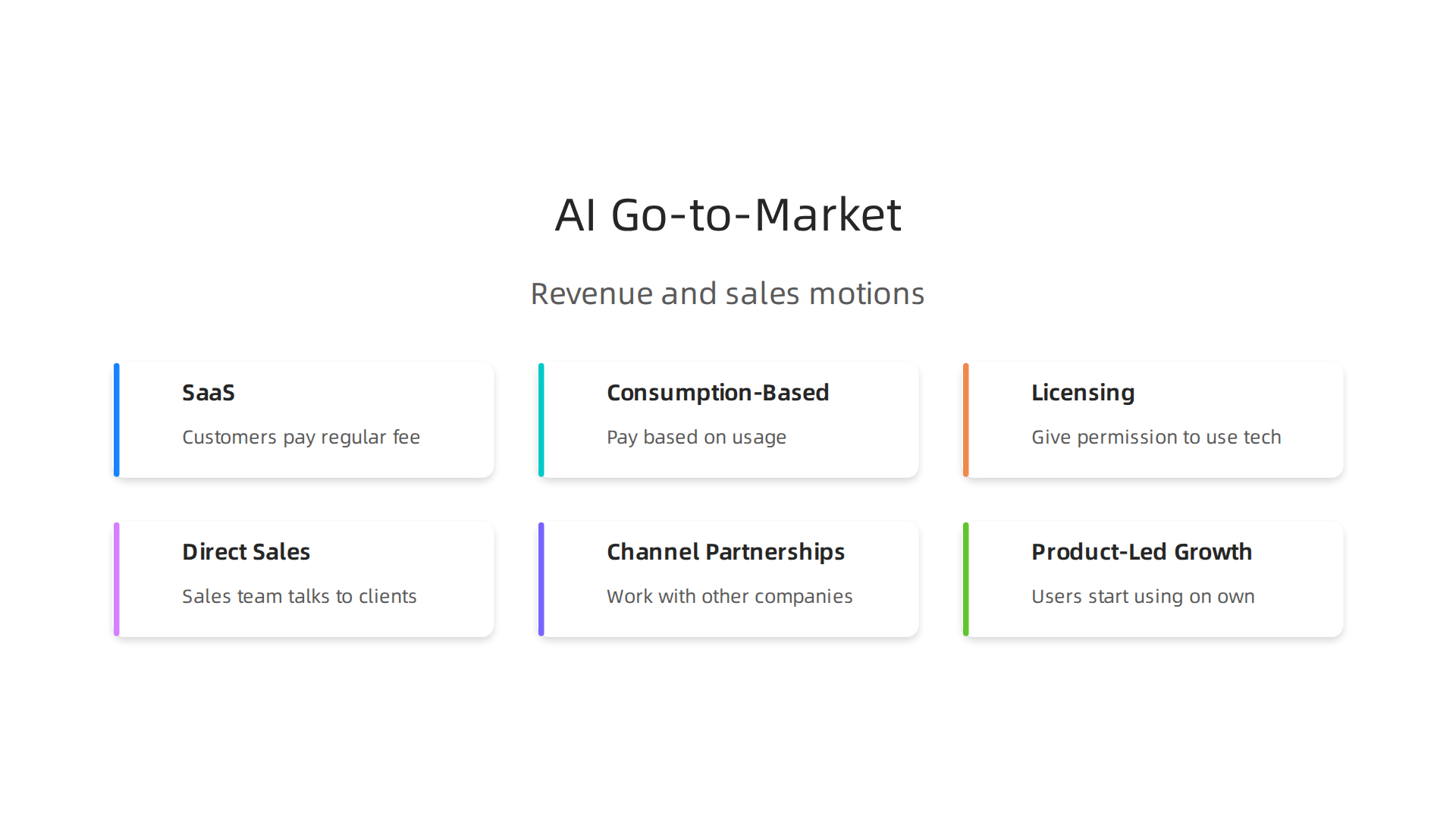
There are a few main ways AI startups do this:
Common Revenue Models for AI Products
- Software as a Service (SaaS): This is a very popular model. Customers pay a regular fee, like monthly or yearly, to use the AI software. Think of it like a subscription. This works well for AI products that offer ongoing value, such as AI coding tools that help developers write code, or AI design tools that assist graphic designers. Many AI-native companies using this model show a strong value when looked at by investors, much higher than older software companies The AI Software Valuation Report 2026.
- Consumption-Based: With this model, customers pay based on how much they use the AI service. For example, if an AI processes a lot of data, you pay more. If it makes many images, you pay more per image. This model is common for powerful AI models where usage can vary greatly. It means investors look closely at how much it costs the company to run the AI for each user and what the profit margin will be as the company grows AI Technical Due Diligence in 2026.
- Licensing: This model involves giving other companies permission to use your AI technology in their own products. They pay a fee for that right. This is often seen when an AI system is a core piece of technology that can be embedded into many different applications.
Choosing the right model depends on the type of AI product. A creative AI tool for individuals might do well with a freemium SaaS model (free basic version, paid advanced features), while a complex AI system for big businesses might use a consumption-based model with custom pricing.
Sales Motions and Partnerships that Speed Up Growth
Once an AI startup knows how it will make money, it needs to figure out how to sell its product.
- Direct Sales: For bigger, more complex AI solutions aimed at large businesses, having a sales team that talks directly to clients is key. These sales teams work to understand a client’s specific needs and show how the AI can help. This often involves making sure the AI’s promises match what it can actually do in real work settings AI Due Diligence.
- Channel Partnerships: This means working with other companies, like resellers or system integrators, to sell and implement your AI products. These partners already have relationships with customers and can help the AI startup reach a wider audience much faster. This is especially useful for getting AI solutions into big companies where trust and existing connections matter a lot. Partnerships are crucial for making sure AI solutions are properly adopted and integrated, helping companies to unlock maximum business value with strategic AI adoption.
- Product-Led Growth: Some AI products are so easy to use and show value so quickly that users can start using them on their own. This often involves free trials or free basic versions (freemium). If the product is great, users will share it and eventually pay for more features.
For any AI startup, having a solid business model and a clear way to reach customers is just as important as having great technology. Investors performing due diligence will look into how well a startup handles its revenue quality and how quickly it can put its plans into action AI Startup Due Diligence in 2026. These elements help define which AI companies truly become the top AI startups and succeed in the long run.
For any AI startup, having smart ways to make money and reach customers is very important. But even the best plan won’t work without strong technology behind it. This is about what makes an AI special and hard for others to copy.

Technology differentiators: models, data, and proprietary moats
To be one of the top AI startups, a company needs more than just good ideas. It needs a special kind of technology that stands out and offers a real advantage. This advantage is often called a "moat," meaning something that protects the company from rivals.
The power of proprietary data
Think of AI models as really smart students. They learn from the data they are given. If an AI startup has its own unique set of data that no one else has, that’s a huge advantage. This special data helps its AI learn things and do tasks in ways that other AIs cannot. It makes their product better and harder to beat. Experts in 2026 say that owning unique, high-quality data is like owning gold for AI companies Why Proprietary Data Is The New Gold For AI Companies.
Many AI startups fail because they just build a simple tool on top of existing big AI models, without adding their own special data or unique ways of working. These are sometimes called "thin wrappers." They don’t have a strong advantage and can easily be replaced by new tools or even the big AI companies themselves. In fact, building just a "thin wrapper" is a common reason for AI startup failure, with many facing zero profit within a year if they lack unique data Startup Failures 2026: The Ongoing AI Reckoning Report.
Unique AI model architectures
Beyond data, how an AI model is built also matters. Some startups create totally new ways for their AI to learn or solve problems. They might design a special "brain" for their AI that is faster, more accurate, or better at specific tasks than what others are using. This unique way of building the AI is its own kind of moat. It’s not just about using AI, but how you use and build it. For example, some companies develop special techniques for how their AI coding tools generate code, making them faster or more secure.
Benchmarks and real-world performance
A great AI must also prove itself. Startups show their technology is superior by doing well in tests, called benchmarks. These tests compare their AI to others to see which one performs better. But the true test is how well the AI works in the real world for actual customers. If an AI can solve complex problems reliably and efficiently, that’s a strong sign of a lasting technology edge.
This strong technical foundation is what investors look for. They want to see that a startup isn’t just riding a trend, but has something truly special that will keep it ahead for years to come. This focus on deep technology and unique value helps a startup avoid common pitfalls, as about 80% of AI projects fail to grow beyond initial tests due to issues like poor data quality or problems scaling up 80% of AI Projects Fail: The Hidden Cause. To truly understand the market, you might want to consider master data scouting in 2026 to cut through the noise.
If you’re an AI professional, founder, or executive, staying on top of these fast changes is key.
For clear daily AI updates, consider subscribing to The AI Newsletter Worth Reading.
While having a standout technology is crucial, growing an AI startup brings its own set of tricky problems. Even the smartest AI can fail if a company doesn’t handle risks, follow rules, and build strong ways of working. This is where many promising ventures stumble, even the top AI startups have to be careful.
Risk, regulation, and operational challenges when scaling AI startups
As AI companies get bigger, they face important challenges that can stop them from growing or even make them fail. These include making sure they follow all the rules, keep customer data private, and manage how their AI models work.
Playing by the rules: compliance and data privacy
In 2026, governments around the world are paying close attention to AI. This means AI startups need to be very careful about how they use data and how their AI makes decisions. For example, if an AI product makes unfair choices because of biased data, the company could face big problems. Keeping customer information safe and private is also a huge deal. Companies must follow strict data privacy laws. Not doing so can lead to big fines and a loss of trust from customers. In fact, challenges like these can lead to model failures and even compliance risks, which can break trust with people who use the AI, according to experts discussing enterprise AI systems and MLOps practices Operational Challenges and Best Practices in MLOps for Enterprise AI Systems. Understanding these potential pitfalls is key to avoiding some of The Real Dangers of AI in 2026: Bias, Privacy, Job Loss, and Existential Risk.
Handling model risks and staying fair
AI models can sometimes make mistakes or act in ways we don’t expect. This is called "model risk." Startups need ways to check their AI often, fix problems quickly, and make sure the AI is always fair and accurate. This is especially true for AIs that help with important decisions, like in healthcare or finance. It’s not just about building a good AI, but making sure it stays good and safe over time.
Fixing common operational problems
Even with great technology, scaling up an AI company is tough work. Many startups hit bumps in the road due to simple operational issues.
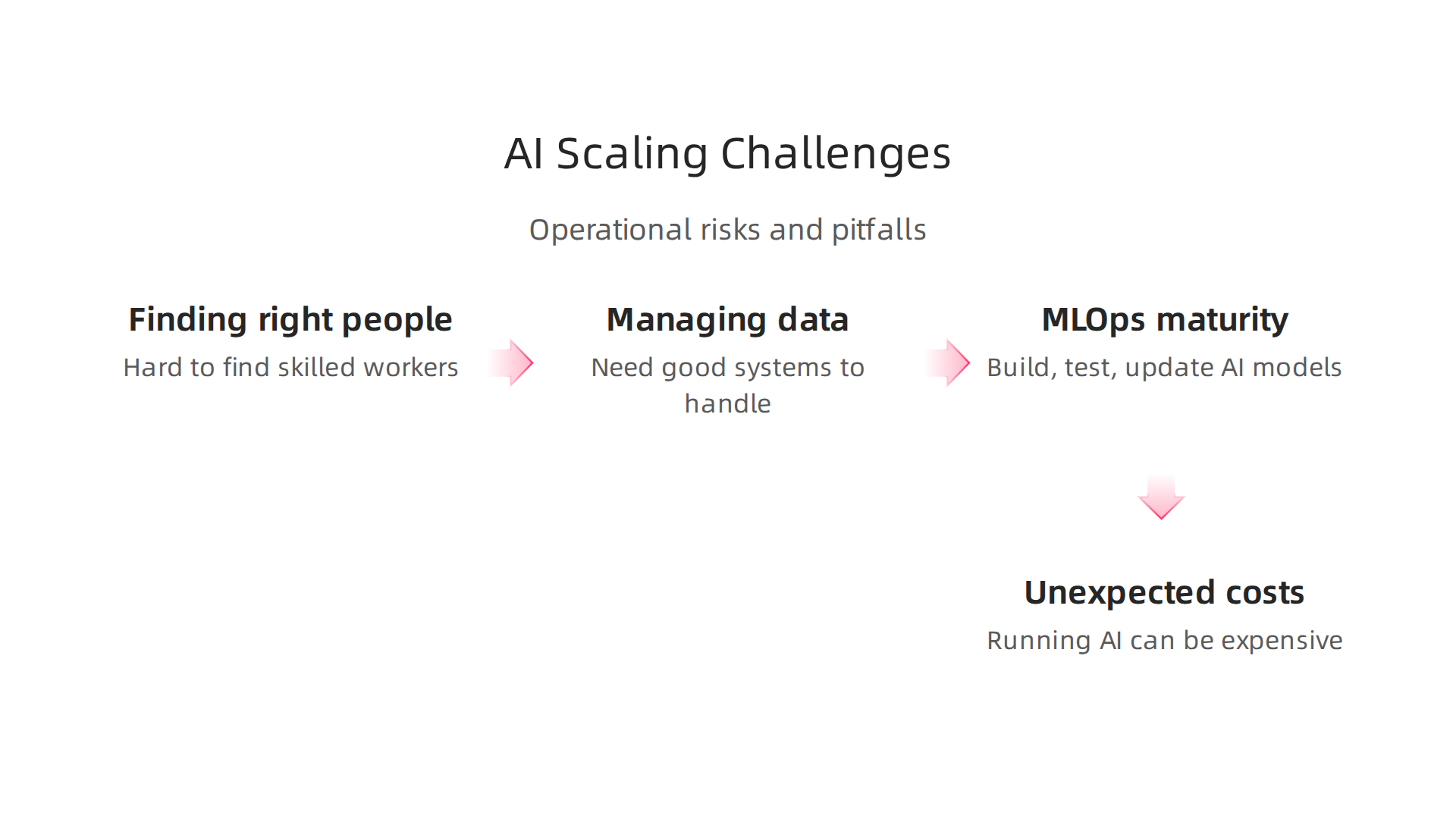
These include:
- Finding the right people: It’s hard to find enough skilled workers who know how to build and manage AI systems as they grow. This "talent gap" is a common problem for companies trying to adopt AI.
- Managing data: As a company collects more data, it needs good systems to handle it all. This includes making sure data is clean, organized, and flows smoothly to the AI models. Data problems like data fragmentation are common challenges for companies trying to use AI, as noted in a 2026 playbook for enterprise AI adoption Enterprise AI Adoption Challenges: A 2026 Playbook.
- MLOps maturity: MLOps (Machine Learning Operations) is like a special factory for AI models. It helps build, test, and update AI models quickly and reliably. Companies with strong MLOps practices can get their AI products to customers much faster. Without it, companies can struggle with slow updates and poor performance. In fact, companies with mature MLOps practices see AI models get to market 3 to 5 times faster What Still Breaks In Exactly….
- Unexpected costs: Running AI, especially big models, can get very expensive very fast. Companies often don’t plan enough for these rising costs, which can hurt their profits and growth. This is one of the top scaling mistakes that can derail a business, according to experts The 5 AI Scaling Mistakes That Could Derail Your Business.
To become truly successful, AI startups must not only build amazing technology but also carefully manage these risks and build strong operational foundations. This helps them attract bigger investment companies and helps their private stock grow.
Building on strong foundations and attracting big investors sets the stage for the next big step for AI startups: exiting. This means the founders and early investors sell their shares and get their money back, often with a large profit. There are a few main ways this happens.
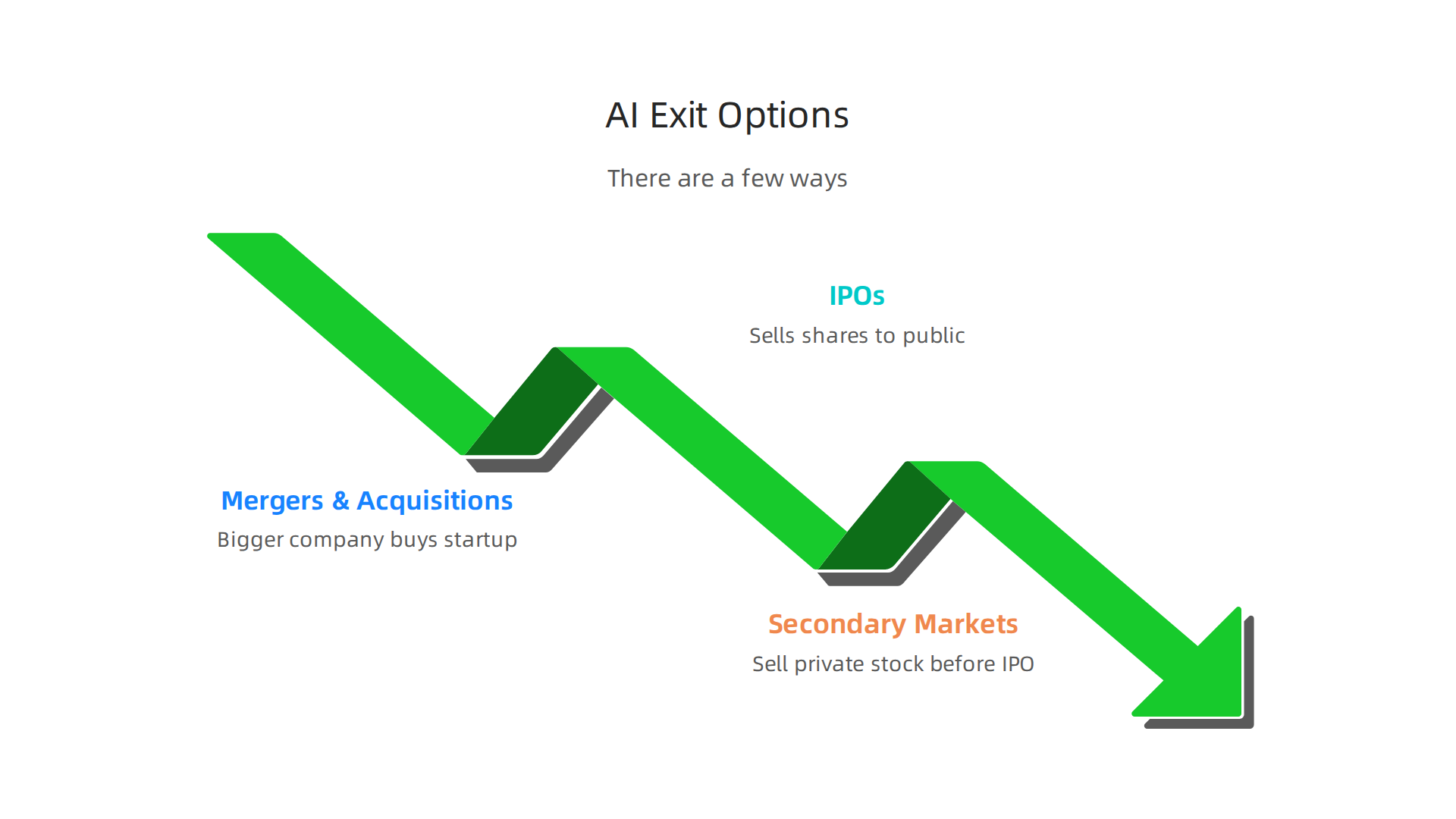
These include mergers and acquisitions (M&A), initial public offerings (IPOs), or selling shares in private secondary markets.
Mergers and Acquisitions (M&A)
Right now in 2026, M&A is a very common way for AI startups to exit. This is when a bigger company buys a smaller AI company. It’s often because the bigger company wants the startup’s technology, its talented team, or its customers. In the first three months of 2026, startup M&A deals reached $56.6 billion, making it one of the highest quarters since 2022, as noted in a report on Q1 2026: A Record Quarter, a Compressed Market, and a Window …. This shows that bigger companies are very interested in buying promising AI companies. For example, North American AI M&A deals went up by 57% in 2025. This trend continued into the first part of 2026 with 266 deals recorded in Q1 alone, a 90% increase from the year before, signaling that the "deal winter" might be over, according to insights on AI M&A Activity in Q2 2026. For a top AI startup, being bought by a major tech company can be a huge success.
Initial Public Offerings (IPOs)
An IPO is when a company sells its shares to the public for the very first time. This lets anyone buy a piece of the company on a stock exchange. While IPOs are a classic way for companies to grow even bigger and for investors to get a large return, the market for them has been pretty quiet lately. In Q1 2026, the IPO window was still largely closed, meaning not many companies were going public. However, some big names like OpenAI and Anthropic are expected to go public in the future, as mentioned in Mid-2026 M&A Insights. This would be a big deal for them and their private stock owners.
Secondary Markets: The New Way to Sell Private Stock
Since IPOs have been slow, secondary markets have become very important. This is where early investors, employees, and founders can sell their private stock in a company before it goes public. It’s like a private marketplace for shares. This gives people a chance to get cash for their shares without waiting for an IPO. In 2026, secondary markets are booming, especially for AI companies. For example, the secondary market for AI leaders has seen a lot of trading, showing high interest from buyers looking to invest in these companies early, as highlighted in a Unicorn Market Monitor for Q1 2026. The value of the secondary market grew significantly, reaching $121.7 billion over the past year up to Q2 2026. Direct sales of private company shares grew from $50 billion to $107.1 billion annually. This makes it easier for investors in top AI startups to get returns on their investments.
Demand for AI-related assets is really strong in these secondary markets. This makes them a key source of cash for investors, according to the US Capital Markets Watch for Q2 2026. This means if an AI startup is doing well, its private stock can be worth a lot, even before an IPO. For example, some AI companies are seeing their private shares traded at a premium, meaning buyers are willing to pay more than the last official valuation, as detailed in an AI Pre-IPO Secondary Market 2026 report. This is a great sign for those who invested early.
What Makes an AI Startup Attractive for Exit?
For a startup to have a good exit, it needs to show strong growth, a clear path to making money, and innovative technology. The biggest investment companies are always looking for AI startups that solve real problems, have strong teams, and can keep growing fast. Being a leader in your niche, whether that’s with advanced ai coding tools or amazing ai design tools, makes a company much more appealing.
Staying on top of what’s happening in the fast-moving AI world is key for founders and investors alike.
The AI Newsletter Worth Reading
Get clear daily AI updates from The Deep View Newsletter.
Summary
This article explains why curated ‘top AI startups’ lists matter for business leaders and investors in 2026 and gives a practical framework to separate hype from real opportunity. It walks through the investor criteria that signal durable startups—tech moats, market fit, unit economics and team quality—and shows how to score companies on those dimensions. The piece also reviews current funding patterns, how valuation and funding stages reveal potential, and why secondary markets matter when IPO windows are narrow. You’ll learn common revenue models (SaaS, consumption, licensing), effective go-to-market motions, and how proprietary data and unique model architectures create defensibility. The guide flags the operational and regulatory risks that commonly derail scaling AI ventures and explains what makes startups attractive acquisition or exit targets. After reading, you’ll be able to apply a 1–5 scoring system to compare AI startups and make more confident investment or partnership decisions.