

Why understanding data analytics roles and skills matters now
The world of jobs is changing very fast in 2026, especially in the data field.

More and more companies need people who can understand and use data to make smart choices. This means there are many new jobs like data quality analyst, operations research analyst, and many kinds of data scientist roles. It’s exciting, but it can also be confusing!
With so many different data roles popping up, it’s hard to know which skills are truly important for each one. You might wonder, "Do I need to learn SQL, Excel, or Python first?" or "What’s the difference between a data analyst and a data scientist?" Employers are always looking for specific skills, and knowing what they are can really help you get ahead. For example, many roles require skills like SQL, Excel, and data visualization tools such as Power BI or Tableau to handle and understand data effectively [https://online.edgewood.edu/blog/data-analyst-skills/]. Also, good communication skills are just as important as technical ones [https://skillsetmaster.com/data-analytics-skills].
This guide is here to help clear up that confusion. We will show you what skills are a must-have for different data jobs. We will also point you to great free data analytics courses online and simple projects you can do to practice. Whether you are thinking about a data science degree or just want to explore indeed data analyst jobs, you’ll find clear steps to start your journey in data analytics.
The AI Newsletter Worth Reading
Get clear daily AI updates from The AI Newsletter Worth Reading.
So, how do all these new data jobs fit together? It’s like a big team, and each player has a special job. Knowing what each person does helps you understand where you might want to play. Let’s look at the most common data analytics roles in 2026.
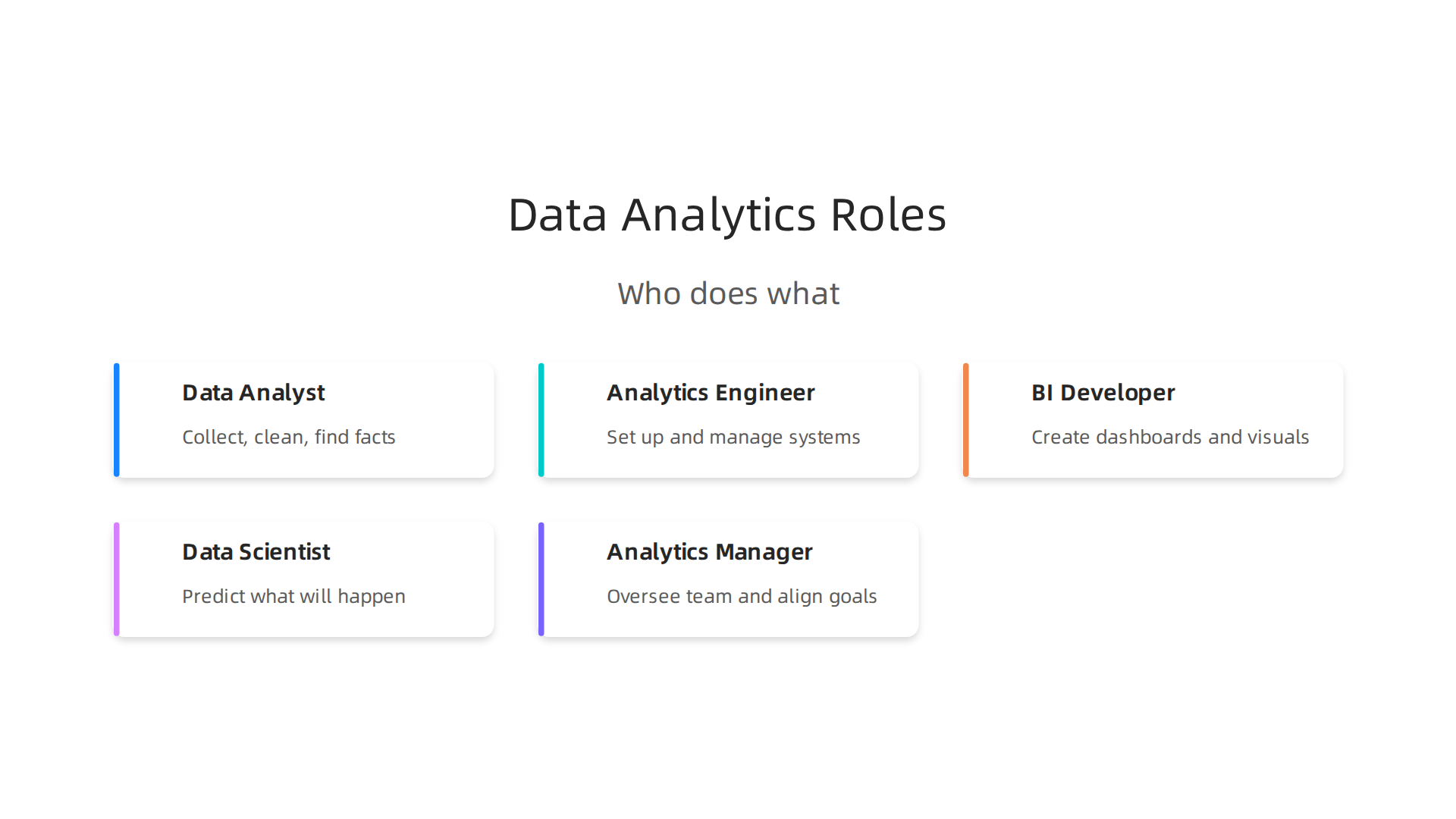
Data Analyst
A data analyst is like a detective for information. Their main job is to collect, clean, and look closely at data to find useful facts and trends. They often make reports and simple charts to show what they found. For example, they might look at sales numbers to see which products people like best. Key skills for a data analyst often include SQL for talking to databases, Excel for organizing numbers, and tools like Power BI or Tableau for making visuals. Many employers look for these skills in 2026, along with good communication [https://online.siue.edu/degrees/undergraduate/bsba/data-analytics-spec/analyst-job-description-and-skills/]. If you are exploring indeed data analyst jobs, you will see these skills mentioned a lot.
Analytics Engineer
Think of an analytics engineer as a builder. They make sure the data pipes are clean and flow correctly. Their job is to set up and manage systems that prepare data for others to use. This means they build tools and processes so that data analysts and data scientists can get the information they need easily and quickly. They focus on making data reliable and ready for analysis.
BI Developer (Business Intelligence Developer)
A BI developer is like a storyteller with data. They create easy-to-understand dashboards and reports that show important business information at a glance. They use tools to turn complex data into clear pictures, helping leaders make smart decisions. Their work is all about making sure the right people see the right data in a helpful way. To learn more about this career, check out the business intelligence analyst skills needed.
Data Scientist
A data scientist is the advanced problem-solver. While an analyst tells you what happened, a data scientist tries to predict what will happen or why something happened using advanced math and computer programs. They build smart models that can find hidden patterns, make predictions, or create new insights. This role often requires strong skills in statistics, programming languages like Python or R, and machine learning. People who pursue a data science degree often aim for this kind of role. If you are interested in growing your skills, many resources exist to teach you data scientist skills 2026.
Analytics Manager
An analytics manager is the team leader. They oversee the data team, making sure everyone is working on the most important projects. They connect the data work with the business goals, helping translate tricky data insights into actions that help the company. They also mentor their team members, including roles like the data quality analyst who makes sure data is accurate and complete, or an operations research analyst who uses math to solve complex business problems.
Where Roles Overlap
It’s important to know that in the real world, these roles can sometimes blend together. Smaller companies might have one person doing a bit of everything. A data analyst might also create dashboards, or a data scientist might do some data cleaning. What’s more, strong communication and the ability to tell a story with data are important for almost all these jobs, no matter how technical they get [https://graduate.northeastern.edu/knowledge-hub/skills-for-analytics-careers/]. Understanding these roles helps you pick the right path and find the best free data analytics courses online.
After looking at the different roles in data, it’s clear that certain skills are needed across the board. These are the tools and ways of thinking that help everyone on a data team do their best work. Think of them as the building blocks for any data job in 2026.
Core Technical Skills
To work with data, you need to know some key technical things.
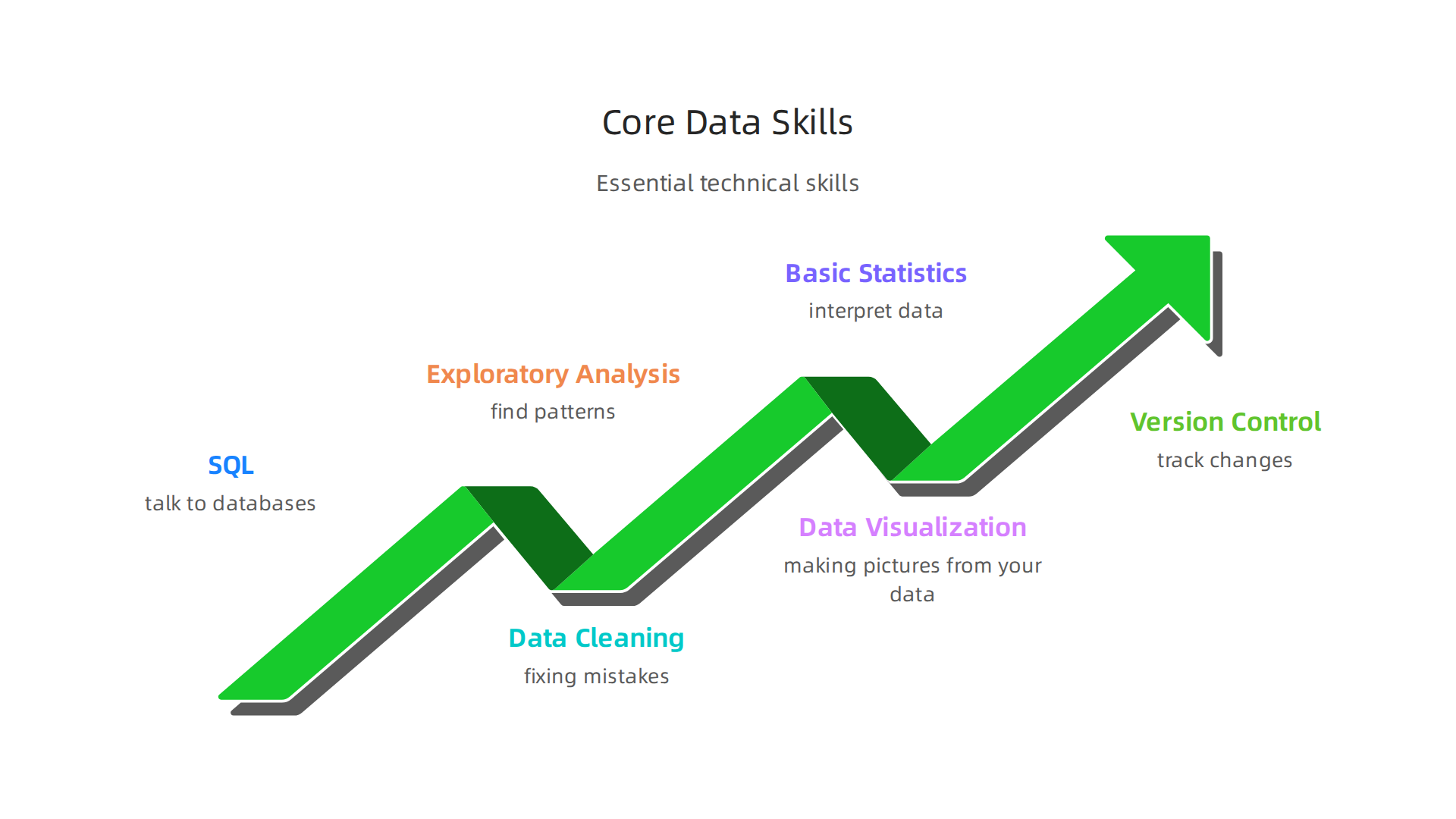
These are like the special tools a carpenter uses to build things.
- SQL (Structured Query Language): This is super important. SQL is the language used to talk to databases. It helps you get, sort, and change data that is stored away. Almost every data job in 2026 will ask if you know SQL, as it’s seen as a non-negotiable skill [https://www.cv-by-jd.com/skills-for/data-analyst]. Knowing SQL helps you gather the right information quickly [https://www.uagc.edu/blog/data-analytics-skills-every-business-professional-needs-2026].
- Data Cleaning: Imagine you have a messy room. Data cleaning is like tidying up that room. It means fixing mistakes, getting rid of old or bad information, and making sure the data is ready to be used. This step is key because bad data can lead to bad decisions [https://blog.udallas.edu/tower-thoughts/top-data-analyst-skills-employers-are-looking-for-in-2025-and-beyond]. A good data quality analyst spends a lot of time on this.
- Exploratory Analysis: This is like exploring a new place. You look at the data from all sides to find patterns, interesting facts, or anything that stands out. It helps you understand what the data is trying to tell you before you dive deeper.
- Data Visualization: This is about making pictures from your data. Tools like Power BI or Tableau help you create charts, graphs, and dashboards that show complex information in a simple way. It’s how you tell the story of the data, and it’s a critical skill employers want in 2026 [https://www.interviewstack.io/blog/data-analyst-skills-companies-want-2026]. You can learn more about making data easy to see with a guide on how to design a high impact Google Analytics dashboard for smarter decisions.
- Basic Statistics: You don’t need to be a math genius, but understanding basic statistics helps you know if your findings are real or just by chance. It helps you interpret what the data really means and if something is truly important. Many job postings in 2026 list statistics as a key skill [https://academy.koenig-solutions.com/blog/2026-07-14-skills-needed-for-data-analyst-job].
- Version Control: This is like having a "save" button that remembers every change you’ve made to your work. Tools like Git let you track changes, go back to older versions, and work with others on the same project without messing things up. It helps keep your work organized and makes sure others can understand it.
Important Soft and Operational Skills
Besides technical skills, how you work with people and manage your projects is super important.
- Problem Framing: This means being able to take a big business question, like "Why are sales down?" and turn it into a question that data can answer, such as "What factors changed before sales dropped?" It’s about knowing how to ask the right questions.
- Communication with Stakeholders: You might find amazing things in the data, but if you can’t explain them clearly to the people who need to make decisions (the "stakeholders"), your work won’t help.

This means talking simply, avoiding technical jargon, and showing how your findings matter to the business.
- Reproducible Workflows: This means setting up your data work so that anyone else (or even you in the future) can easily understand and repeat the steps you took. It makes sure your work is reliable and can be checked. This is super helpful, especially for complex projects where an operations research analyst might need to review things.
Learning these skills can open many doors in the data world. Many people find useful ways to get started, even looking for free data analytics courses online to begin their journey. To stay on top of the latest changes in AI and how it affects data roles, you’ll need reliable information.
Get clear daily AI updates from The AI Newsletter Worth Reading.
If you’re looking to dive into the data world without spending a lot of money, finding the best free data analytics courses online is a smart way to start. But how do you pick the right ones from so many choices? It’s like finding good free tools for any project; you need to know what to look for.
How to Pick the Best Free Courses
Not all free courses are made equal. Here are some key things to consider when choosing your learning path in 2026:
- Curriculum Coverage: Make sure the course teaches you what you need to know. Does it cover the basic skills like SQL, data cleaning, or visualization? A good course should give you a solid understanding, not just a quick overview. Some courses, like the Google Data Analytics Professional Certificate, offer a broad view of the entire analytics process, and you can often find ways to access these for free or at a low cost Free Data Analytics Certificate Courses — 12 Best Programs in …. For those considering a deeper dive, understanding how these stack up against a full Google Data Analytics Professional Certificate Vs Degrees and Top Certifications in 2026 can be helpful.
- Hands-on Labs: Learning by doing is the best way. Look for courses that let you practice what you learn with real tasks. Platforms like Codecademy offer interactive ways to write and test SQL queries right away Best Free Data Analytics Courses for 2026. This hands-on practice helps you truly build skill.
- Project Focus: Companies want to see that you can use your skills to solve real problems. Courses that include projects or help you build a portfolio are very valuable. FreeCodeCamp, for instance, has project-rich programs that explore tools like Pandas and NumPy for data analysis Best Free Data Analytics Courses for 2026. This can be crucial for landing data analyst entry level jobs.
- Community and Support: Even free courses can offer ways to get help. Look for ones with active forums or communities where you can ask questions and learn from others. This support can be really helpful when you get stuck.
Your Starting Pathway for Data Analytics
For beginners aiming for roles like a data quality analyst or even those considering a data science degree later on, a clear learning path can make all the difference.
- Basic SQL and Spreadsheet Analytics: Start with SQL to learn how to pull data from databases. Websites like Kaggle Learn and Mode Analytics offer excellent free tutorials for this [10 Best Data Analytics Courses Online (2026) – SkillScouter]. At the same time, get comfortable with spreadsheet programs like Excel or Google Sheets, as they are often used for quick data reviews.
- Introductory Statistics: You don’t need to be a math whiz, but a basic understanding of statistics is vital to make sense of your data. Khan Academy offers free courses on statistics and probability that can build this foundation [10 Best Data Analytics Courses Online (2026) – SkillScouter].
- Python for Data Analysis: Once you have the basics down, dive into Python. It’s a powerful tool for data cleaning, analysis, and building more complex models. FreeCodeCamp is a great place to learn Python for data analysis, focusing on libraries like Pandas and NumPy Best Free Data Analysis Courses in 2026: Honest Picks (No …). To learn more about how Python can boost your data career, read about how to accelerate your career with Python for data analysis in 2026.
Many platforms offer genuinely free data analytics courses online that stay free forever, making it possible to gain valuable skills for potential indeed data analyst jobs without upfront costs. Remember, learning data analytics is a journey, and starting with these foundational free courses can set you up for success. You can also explore a full data science from scratch beginner roadmap to guide your learning.
After you have a strong base, you might want to look into more special free data analytics courses online. These courses help you learn about specific areas of data analytics. This step is usually taken when you know what kind of job you want to aim for.
Specialized Free Courses and Skill Deep Dives (Visualization, Analytics Engineering, ML Basics)
Choosing a specialized course depends a lot on the job you want. For example:
- For Business Intelligence (BI) roles: If you want to be a Business Intelligence Analyst, you’ll need to know how to show data in clear pictures and dashboards. This is called data visualization. Free courses on tools like Tableau or Power BI can be very helpful here. Microsoft Learn, for instance, offers free modules for Power BI that can get you started quickly Free Data Analytics Certificate Courses — 12 Best Programs in …. Making good dashboards is key for a business intelligence analyst.
- For Analytics Engineers: If you’re interested in building and managing the systems that move and clean data, you might become an analytics engineer. This role often involves ETL (Extract, Transform, Load) processes. Learning about how to create smart data pipelines can set you up for roles like an operations research analyst or a data quality analyst.
- For those moving to Data Science: Maybe you see yourself getting a data science degree down the road. Then, a free course that gives you a basic look at machine learning (ML) can be a great next step. It helps you understand how computers can learn from data.
When you’re looking at these specialized free data analytics courses online, it’s smart to check a few things:
- Project-based work: Does the course let you work on real projects? Showing off what you can do with actual data projects is a big plus for getting indeed data analyst jobs or other roles. Many free platforms like freeCodeCamp offer project-rich programs that dive deep into tools for data analysis and visualization Best Free Data Analytics Courses for 2026.
- Tools and compatibility: Do the tools taught in the course match what companies are using today? It’s good to learn tools that are widely used in the industry. For example, Kaggle Learn provides free training in Python and pandas, which are very popular Best Free Data Analysis Courses in 2026: Honest Picks (No …).
- Course length: Some specialized courses can be shorter, while others might be longer. Pick one that fits the time you have and the depth of knowledge you want to gain.
By picking the right specialized free courses, you can sharpen your skills for a specific career path. This way, you’re not just learning about data; you’re preparing for a job you’ll love.
Stay ahead with daily insights into the rapidly changing world of AI and technology.
The AI Newsletter Worth Reading
Now that you’ve learned many useful skills through various free data analytics courses online, it’s time to show what you can do. The best way to do this is by creating a strong portfolio filled with practical projects.

Think of your portfolio as your personal showcase, proving to future employers that you have the skills they need.
Practical Project Ideas for Different Roles
The projects you choose should match the kind of job you want. Here are some ideas:
- For Data Analyst and Business Intelligence roles: If you want to become a data analyst or a business intelligence analyst, your projects should focus on understanding data and showing it clearly. You can create dashboards that help a pretend company make better choices. For example, you might analyze sales data and make charts that show how sales have changed over time. Many experts suggest building projects like a sales dashboard or a customer analysis report to start Data Analyst Career Path 2026: Skills, Roadmap, Projects, and. Learning how to design a high impact Google Analytics dashboard is a great skill to demonstrate.
- For Analytics Engineer roles: If your goal is to be an analytics engineer or even an operations research analyst, your projects should highlight how you clean, prepare, and manage data. You could work on a project where you take messy data, clean it up, and get it ready for analysis. This shows your skills in data quality and setting up smart data processes.
- For those interested in Data Science: If you’re thinking about pursuing a data science degree later, your projects should include more advanced topics. This might mean using machine learning to predict things, like what customers might buy next.
No matter the role, a strong project clearly explains a business problem, shows where your data came from, details your steps, presents visuals, and offers real advice based on your findings How to Make a Data Analyst Portfolio That Gets Interviews.
Making Your Projects Shine for Hiring Managers
When you’re putting together your portfolio, remember that hiring managers are looking for certain things. They want to see that you can not only do the work but also explain it well.
- Choose good datasets: Pick data that is interesting and similar to what companies use in the real world. You can find many free datasets online to practice with.
- Document your work: It’s important to show how you got from the start to the end of your project. This means writing down all the steps you took, from cleaning the data to your final results. Using tools like Jupyter notebooks can help keep your work organized and easy to follow. This kind of detailed workflow helps recruiters see your thought process 30 Data Analytics Projects for All Levels (2026). Knowing how to track your steps is part of mastering the data science process.
- Use version control: Tools like Git and GitHub are very helpful. They let you save different versions of your project as you work. This means you can show your changes over time, which is a big plus for showing how you solve problems. You can upload your code and project explanations to GitHub, making it easy for others to see 20 Best Data Analyst Projects for 2026.
- Tell a story: Don’t just show your charts and graphs. Explain what the data means, what problems you solved, and what you learned. This "storytelling" aspect is very important because it shows you can communicate your findings clearly to others. Hiring managers often use a rubric to assess portfolios, looking at how well you frame the problem and communicate your results The Portfolio Rubric Data Science Hiring Managers Use.
- Get feedback: Share your projects with friends or mentors who know about data analytics. They can give you ideas on how to make your projects even better.
By creating a strong portfolio, you boost your chances of landing those important indeed data analyst jobs or other roles in the field. This step is a key part of your journey, turning your learning from free data analytics courses online into real-world opportunities.
After you’ve built a strong portfolio, the next step is to understand how your skills fit into the real world of work. Knowing the different career paths and what hiring managers look for will help you move forward. The good news is, demand for data analysts is growing quite fast, about three times the average for all jobs in 2026, and roles like operations research analyst are also seeing strong growth Are Data Analysts Still in Demand in 2026? – LinkedIn.
Typical Career Trajectories for Analytics Talent
Many people start their journey with free data analytics courses online and then land an entry-level job. Here’s a common path:
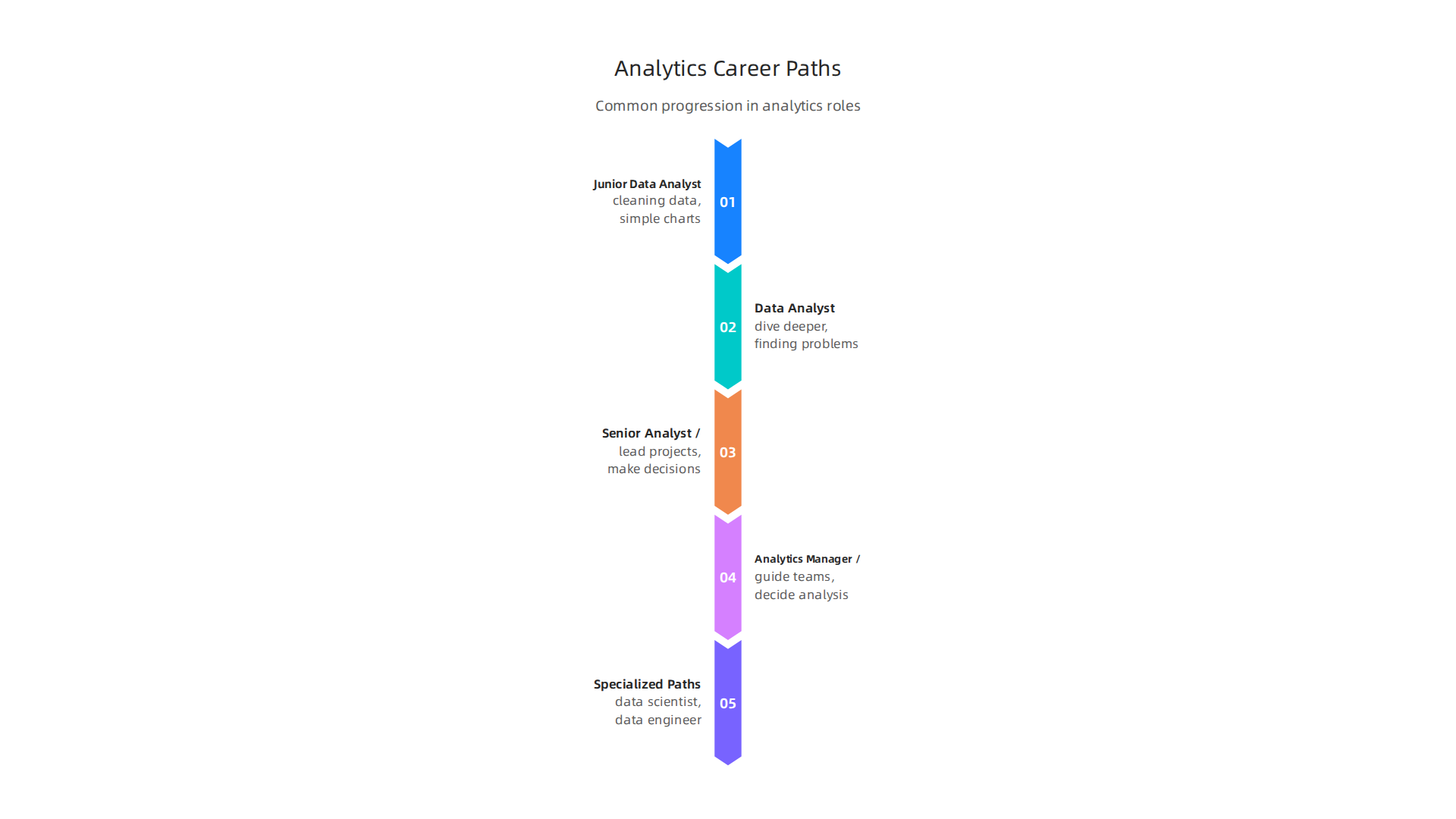
- Junior Data Analyst: This is often the first step. You’ll work on cleaning data, making simple charts, and helping with basic reports Data Analytics Career Path with Salary Growth Insights.
- Data Analyst: As you get more experience, you move into a general data analyst role. Here, you dive deeper into data, finding problems and suggesting solutions.
- Senior Data Analyst / Business Intelligence Analyst: With a few years under your belt, you might become a senior analyst or a Business Intelligence Analyst 2026 Skills Salary and Career Roadmap. You’ll lead projects and help make bigger decisions. Some people choose to become a specialist, like a data quality analyst, focusing on making sure data is correct and useful.
- Analytics Manager / Director: If you like leading people and projects, you can become an analytics manager or even a director. At this level, you guide teams and decide what kinds of analysis the company needs Data Analyst Career Path 2026: Levels, Pay & Exit Ramps.
- Specialized Paths: Some analysts choose to go deeper into technical skills. They might become a data scientist, using machine learning to predict things, or a data engineer, building systems to handle large amounts of data. If you are thinking about a data science degree, remember that the skills needed are a bit different.
It’s good to know there isn’t just one path. Careers often branch out into business, technical, engineering, or research roles Analytics Career Paths.
What Employers Look For When Promoting Talent
To move up, employers want to see certain things from you:
- Strong Core Skills: You need to be really good at the basics. SQL is super important and shows up in almost half of job postings. Excel is still key, too, appearing in about one-third of jobs Top Data Analyst Skills in 2026. You’ll also need to know a tool like Power BI or Tableau. Python is also a highly valued skill.
- Problem-Solving: Can you find issues and come up with smart ways to fix them using data? This is very valuable.
- Communication: Can you explain complex data findings in a simple way to people who don’t know much about data? Being able to tell a story with data helps you influence decisions.
- Business Understanding: Knowing how the company works and what its goals are helps you choose the right data projects and make a bigger impact.
- Proactive Learning: The world of data changes quickly. Showing that you keep learning new tools and methods, perhaps through more free data analytics courses online, is a huge plus. This includes staying updated on new trends like AI.
Leveling Up Inside Organizations
To grow in your role and take on more responsibilities, here’s what you can do:
- Negotiate Your Role: Don’t be afraid to ask for projects that challenge you and teach you new skills. Talk to your manager about what you want to learn next.
- Build Influence: Work well with different teams. If you can help other departments understand their data better, you’ll become a go-to person in the company.
- Invest in New Skills: Think about what skills will be important in the future. For example, knowing more about machine learning or cloud platforms can help you move from a data analyst to a data scientist or data engineer Data Analyst Career Path: From Entry-Level to Senior & Beyond …. Continuing your education, even through specialized certifications, can make a difference Best Data Analyst Certifications in 2026: Which Ones Are ….
- Stay Updated: New tools and methods in data analytics and AI come out all the time. Being aware of these changes helps you stay ahead.
For those eager to stay informed about the latest in AI and technology, consider subscribing to The AI Newsletter Worth Reading for daily updates. This kind of ongoing learning is crucial for anyone hoping to advance their career in analytics, whether aiming for higher-level indeed data analyst jobs or moving into specialized roles like operations research analyst.
Summary
This article maps the data analytics landscape in 2026 and shows you how to pick the right role, skills, and learning path to get hired and grow. It explains common jobs—data analyst, analytics engineer, BI developer, data scientist, and analytics manager—why they matter, and where responsibilities overlap. The guide lists core technical skills (SQL, data cleaning, visualization, basic statistics, version control) plus key soft skills like problem framing and stakeholder communication. It also explains how to choose high-quality free courses, offers a beginner pathway (SQL → spreadsheets → statistics → Python), and suggests specialized learning for BI, analytics engineering, and ML. Practical project ideas and portfolio tips help you demonstrate ability, while career trajectories and promotion criteria show how to move from junior roles to senior or specialized positions. Overall, readers will finish with a clear learning plan and actionable steps to land entry-level analytics jobs and advance in data careers.