

For AI professionals in 2026, the power of artificial intelligence is clear. But to truly make AI work its magic, you need more than just a lot of data. You need smart data. Think of it like this: a chef can have a huge pile of raw ingredients, but they need to know where each ingredient came from, how fresh it is, and what flavors it has to cook a great meal. AI is the chef, and data is the food.

The Big Difference: Raw Data vs. Smart Data
Today, many businesses collect huge amounts of information, often called big data. This raw data can be messy and disorganized. It might come from many different places and sometimes has mistakes. For AI models to learn and make good predictions, they need data that is clean, clear, and easy to understand. This is where smart data comes in.
Smart data is like raw data that has been given a brain. It’s raw data with extra helpful information attached. This extra information includes things like "data provenance" and "data tagging" smart data – Glossary | CSRC. Provenance means knowing the full story of your data: where it started, how it was collected, and what changes it went through What is Data Provenance in AI?. Data tagging means labeling data with keywords or categories so AI can quickly sort and understand it.
Without smart data, AI systems might make bad guesses or miss important patterns because they don’t have enough context. Smart data fills this gap by giving AI the high-quality inputs it needs to work best.
Who Benefits from Smart Data?
Everyone who works with AI stands to gain from smart data:
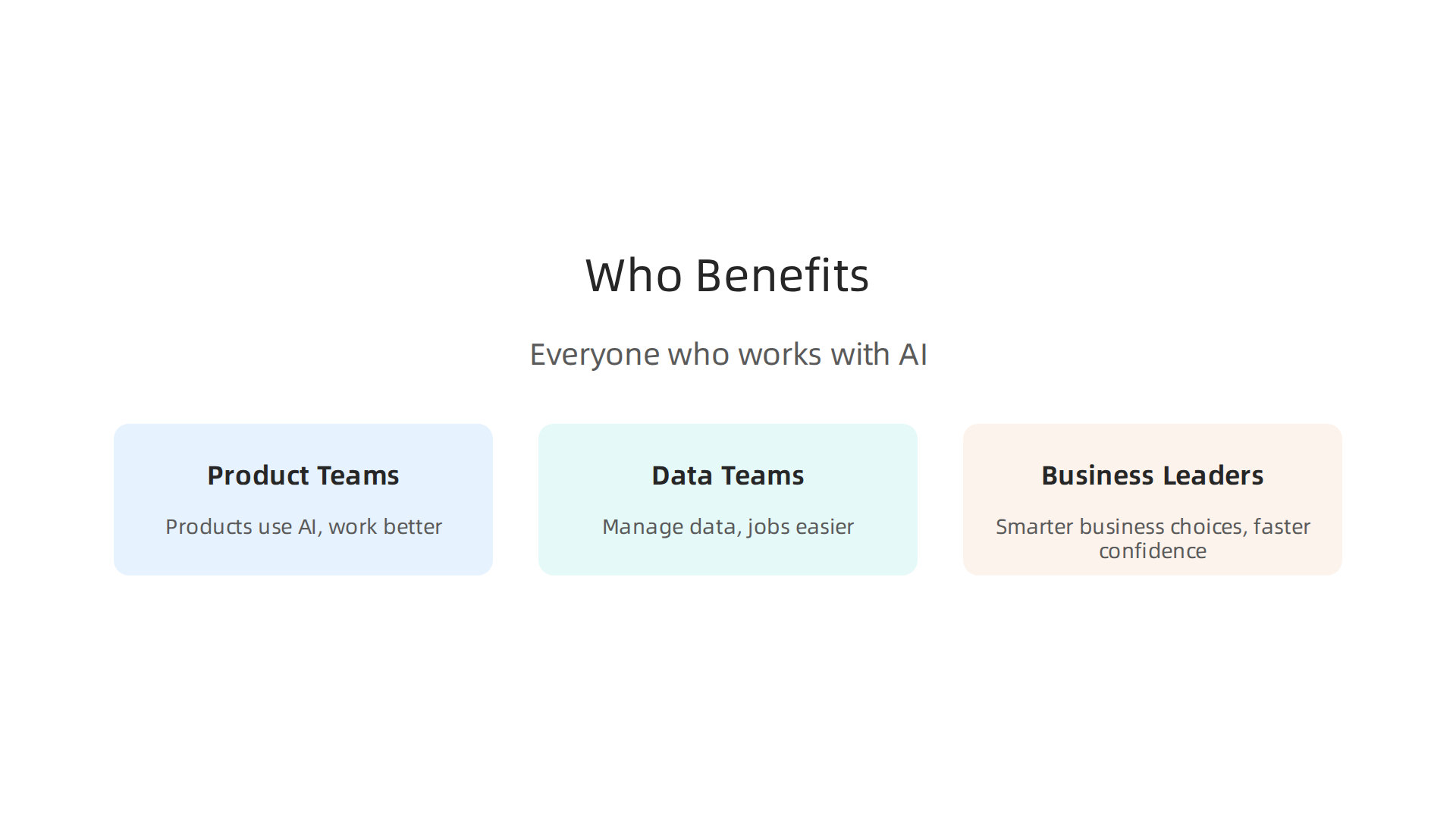
- Product Teams: When products use AI, smart data helps those products work better. For example, if you have an AI tool that recommends items, smart data makes sure the recommendations are spot-on.
- Data Teams: People who manage data find their jobs much easier. With clear data pipelines and well-organized information, they can spend less time cleaning data and more time making it useful. If you want to dive deeper into making sense of your information, you can learn about What is Business Intelligence AI powered insights for smart decisions in 2026.
- Business Owners and Leaders: Smart data leads to smarter business choices. With better insights from
ai for data analysis, leaders can make decisions faster and with more confidence, helping their companies grow.
Timeliness and quality are key. Imagine trying to make a decision based on old, incorrect information. It just won’t work. For AI, having fresh, accurate smart data is like having the latest, most reliable map for a journey. It ensures that the AI’s understanding of the world is always up-to-date and correct, leading to better results every time.
Want to keep up with the latest advancements in AI and technology? Get clear daily AI updates from The Deep View Newsletter. The AI Newsletter Worth Reading
Continuing from our understanding of why smart data is so important for AI, let’s look closer at what it actually is. Smart data is not just data with extra tags. It has special qualities that make it truly intelligent and useful for AI.
What is ‘smart data’? Definitions, taxonomy, and key properties
Smart data has a few main features that set it apart from regular big data. These features help AI understand and use the information much better. Think of them as special powers for your data.
Key Properties of Smart Data
Here are the defining qualities that make data "smart":
- Structured Enrichment: This means adding more useful details to the basic data. It’s like taking a simple description and adding lots of important facts around it. This extra information makes the data richer and more helpful for
ai for data analysis. - Semantic Labeling: This goes beyond simple tags. Semantic labeling gives data meaning by linking it to bigger ideas or rules. It helps AI understand the "why" behind the data, not just the "what." This deeper meaning can be thought of as a semantic spectrum, from simple tags to complex knowledge. For instance, a number isn’t just a number; it’s a "temperature reading" or a "sales figure." Tools can help add semantic definitions to datasets for long-term use.
- Provenance: As we touched on before, provenance is the history of your data. It answers questions like: Where did this data come from? Who touched it last? What changes were made to it? This record is super important for trusting your AI’s results. Knowing the definition and examples of dataset provenance helps ensure your AI works with reliable information.
- Freshness: Smart data is also up-to-date. Old or stale information can lead to bad decisions. Fresh data means AI always works with the most current facts, making its predictions more accurate.
When data has these qualities, it becomes a powerful tool for any AI system.
Different Types of Smart Data
Just like there are different kinds of tools in a workshop, there are different types of smart data. These categories help us understand how smart data is organized and used. This way of organizing is called a data taxonomy. It’s how we classify information into groups based on what they are and how they are used What is Data Taxonomy? Use Cases & Best Practices.
Here are some common types:
- Enriched Records: These are individual pieces of data that have been filled with extra details. Imagine a customer’s name and address now also include their past purchases, preferred products, and how they like to be contacted. This makes each record much more useful.
- Derived Features: Sometimes, smart data is created by taking existing data and performing calculations or analysis to create new, more telling information. These are "derived features." For example, instead of just having sales numbers, you might derive a "customer loyalty score" from those numbers.
- Labeled Datasets: These are collections of data where each item has been carefully marked or categorized. For example, a dataset of images might have labels like "cat," "dog," or "car" so AI can learn what each image shows. This practice of labeling is very important for AI training AI Provenance and Labeling.
- Knowledge Graphs: These are complex networks that show how different pieces of data are connected. They don’t just store facts; they show the relationships between facts. For example, a knowledge graph might show that "person A works for company B," and "company B makes product C." This creates a much richer understanding for AI systems. Taxonomies are a way to organize all this data into clear structures What is Taxonomy Management?
Understanding these types helps you know what kind of smart data you need for different AI tasks. If you’re looking to advance your career in this field, learning to choose the best online data analytics courses can be a great next step. Data experts often use tools like data studio to visualize and manage these complex datasets effectively.
Now that we know what makes data smart and its different forms, let’s look at how smart data is different from just "big data" or "raw data." It’s an important difference, like comparing raw ingredients to a ready-to-eat meal.
How smart data differs from big data and raw data — practical distinctions
Think about it this way: raw data is like all the separate pieces of a jigsaw puzzle scattered on a table.
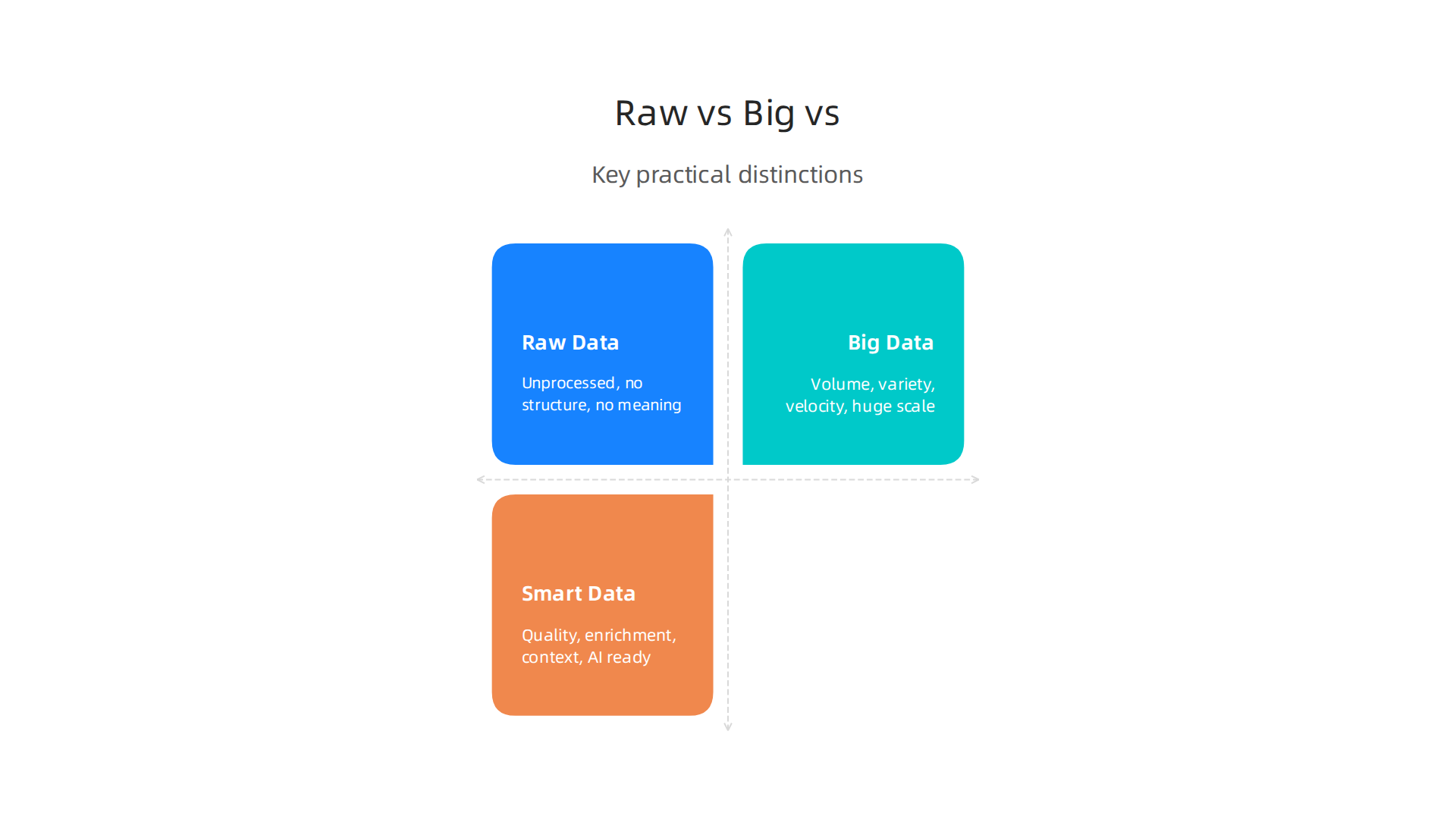
Big data is like having a huge pile of many different jigsaw puzzles, all mixed up. Smart data, on the other hand, is like one specific puzzle already put together, checked for missing pieces, and labeled with notes about the picture it makes.
Raw Data: The Unprocessed Bits
Raw data is simply information that has not been touched or changed yet. It’s collected just as it is, straight from the source.
- No cleaning: It can have errors, missing parts, or information that doesn’t make sense.
- No structure: It might come in many different forms, making it hard to understand or use directly.
- No meaning: It lacks extra details or labels that tell you what it truly means.
For example, a list of numbers from a sensor might just be "45, 62, 38, 55." Without more context, these are just numbers.
Big Data: Lots of Everything
Big data refers to data that is very large in size, comes in many different kinds, and arrives very quickly. The world creates so much data every day that it’s hard to imagine. This is often called the "volume, velocity, and variety" of big data. You can learn more about how big data is categorized in a Taxonomy of Big Data: A Survey.
The problem with big data is that while there’s a lot of it, it’s not always useful right away.
- Volume: There’s just too much to look at by hand.
- Variety: It comes from many places and in many formats, like text, pictures, videos, and numbers.
- Velocity: It keeps coming in very fast, making it hard to keep up.
Big data is full of raw data. It might contain useful information, but it’s hidden in a huge, disorganized collection. It needs a lot of work before it can be used for ai for data analysis.
Smart Data: Ready for AI
Smart data takes the best parts of raw and big data and makes them truly useful for AI. It’s the result of applying special care and steps to turn messy data into clear, valuable insights.
Here’s how smart data stands out:
- Quality Controls: Smart data has been cleaned and checked. Errors are fixed, and missing parts are filled in or noted. This makes the data reliable.
- Enrichment: It has extra details and helpful information added. Our sensor numbers "45, 62, 38, 55" become smart data when we add details like "Temperature readings in Celsius, taken every hour, from Server Room A, on January 15, 2026."
- Contextualization: Smart data has meaning. It understands the "why" and "how." It’s not just a collection of facts, but facts that are connected and make sense together. This helps AI understand relationships, not just individual pieces.
- Readiness for ML/AI: This is the biggest difference. Smart data is already prepared and structured in a way that AI models can easily learn from and use to make predictions or decisions. Raw and big data often need a lot of processing first.
From Raw to Smart: The Transformation Process
To turn raw or big data into smart data, you need data pipelines.

These are like assembly lines for data. They take the raw data, clean it, add details, give it meaning, and make sure it’s fresh.
Imagine you have a big pile of social media posts (raw, big data). To make it smart data, you would:
- Clean it: Remove spam, bad links, or repeated messages.
- Enrich it: Add information about the user who posted, their location, and the time of day.
- Contextualize it: Use natural language processing (a type of
ai for data analysis) to figure out the feeling or sentiment of the post (happy, sad, angry). - Label it: Mark certain posts as "customer complaint" or "product idea."
This careful process transforms a jumbled collection into valuable smart data that an AI can use to understand customer feelings or find new product ideas. Data specialists are essential in this transformation, as their skills are more critical than ever in the age of AI. They often use tools like data studio to manage and visualize these complex data pipelines.
Staying on top of these kinds of advancements is key for anyone working with AI today.
Get clear daily AI updates from The AI Newsletter Worth Reading.
To make smart data truly shine, you need well-built data pipelines. Think of these pipelines as a series of steps that take raw, messy data and refine it into something clean, rich, and ready for ai for data analysis. In 2026, building these pipelines is a core skill for anyone working with data.
These pipelines have three main parts: ingestion, enrichment, and feature engineering.
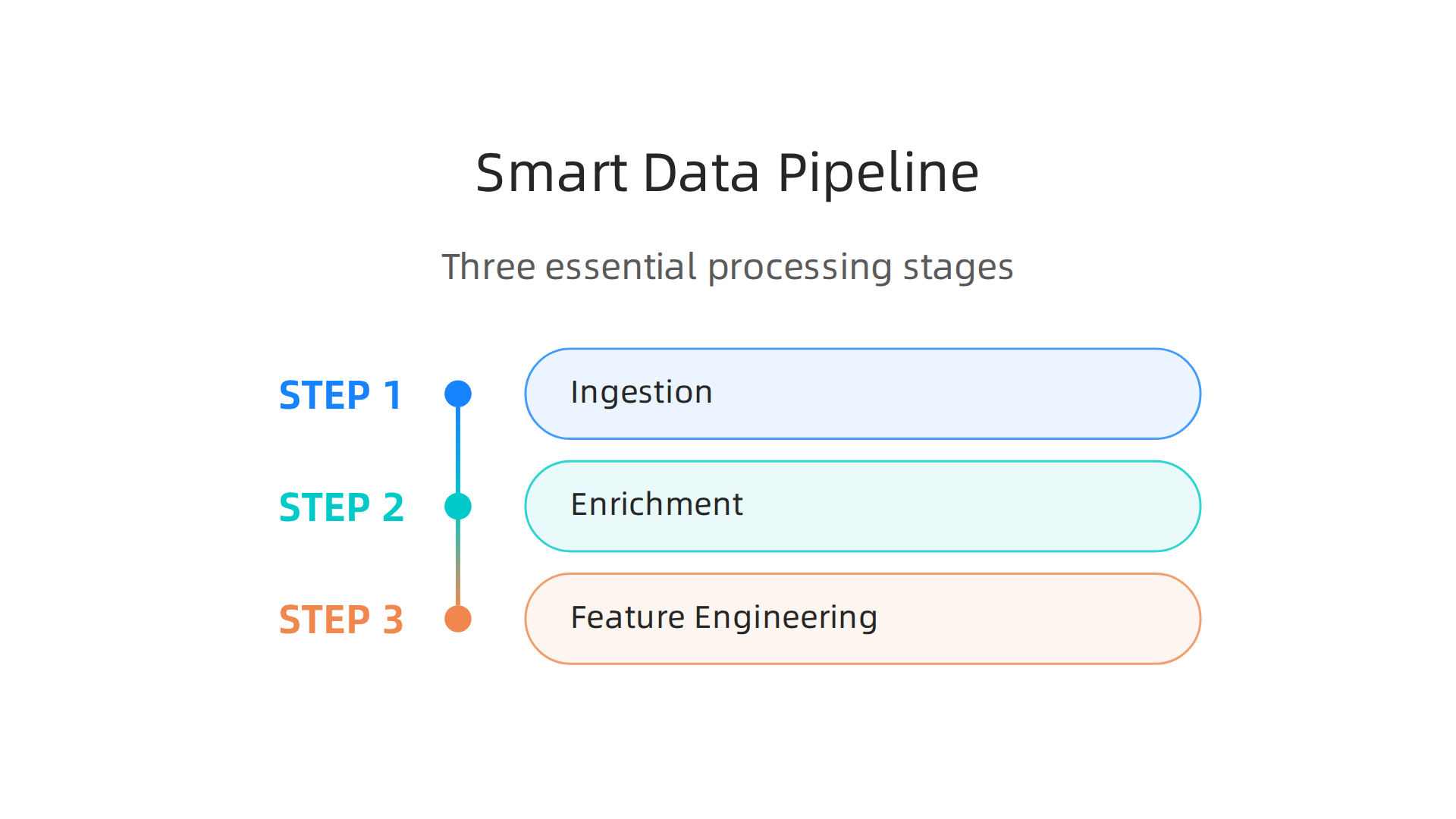
Ingestion: Bringing the Data In
The first step is bringing all the data into your system. This is called ingestion. It’s like gathering all the ingredients for a meal.
- Collecting from everywhere: Data comes from many places. This includes websites, apps, sensors, social media, and business systems. It might be coming in constantly (streaming data) or in large batches at certain times (batch data).
- Handling different types: The ingestion stage needs to be able to take in all sorts of data, whether it’s text, numbers, images, or even sounds.
During ingestion, the main goal is to get the data reliably from its source to where it can be processed further.
Enrichment and Validation: Making Data Smart
After ingestion, the data needs to be improved. This stage makes raw data much more valuable and helps turn it into smart data.
- Cleaning up: This is where errors are fixed, missing pieces are filled in, and duplicate information is removed. If a sensor accidentally records "abc" instead of a number, this step fixes it.
- Adding more details: Enrichment means adding extra information to the data. For example, if you have a customer’s purchase history, you might add details about their age group, location, or how often they buy certain items. This gives the data more context and makes it richer.
- Checking for quality: Validation means checking that the data makes sense and follows certain rules. Is a customer’s age a reasonable number? Is a product ID correct? These "quality gates" are important stops in the pipeline to make sure only good data moves forward.
- Using
data studiotools: Many teams use tools likedata studioto keep an eye on data as it moves through these stages. These tools help them see if data is flowing correctly and if the quality checks are working.
These steps ensure that the data is reliable and truly ready to be used.
Feature Engineering and Feature Stores: AI’s Secret Sauce
This is a very important part, especially for AI.
- Feature Engineering: This is the art of turning raw data into "features" that AI models can easily understand and learn from. A feature is like a special clue or piece of information that helps an AI make a better guess or prediction. For example, instead of just having a list of customer purchases, you might create a feature called "average monthly spending" or "number of items bought last week." These are more useful to an AI trying to predict future buying habits. You can learn more about how data pipelines use features for machine learning in this guide to Optimizing Data Pipelines for Machine Learning in Feature Stores.
- Feature Stores: In 2026, "feature stores" are becoming a key part of modern
data pipelinesfor AI. These are special places where carefully engineered features are stored and managed. They make sure that all AI models use the same, correct features, saving time and making models more reliable. Think of a feature store as a shared library of all the best clues for your AI. A well-designed modern data pipeline often includes a feature store to prepare data for AI models efficiently, as detailed in an overview of What Does a Modern Data Pipeline Look Like in 2026.
Automating these steps is critical. This means setting up the pipeline so it runs by itself, without constant human help. Automation ensures that smart data is always fresh and ready when AI needs it. For anyone looking to understand more about this whole process, diving into Your Guide to Mastering the Data Science Process can offer further insights.
Making smart data is not just about moving and cleaning information. It’s also very important to make sure this data is handled fairly, safely, and legally. This is where governance, privacy, and compliance come in.

These big words simply mean having rules and ways to manage data well. Especially in 2026, with more data being used for ai for data analysis, these rules are more important than ever.
When we talk about governance, privacy, and compliance for smart data, we’re thinking about a few key things:
Rules and Good Practices for Data
- Understanding the Law: Different countries have different laws about how to handle personal data. For example, the EU AI Act is becoming very important in 2026 for anyone dealing with data that fuels AI, alongside rules like GDPR. These laws tell us what we can and cannot do with people’s information. Failing to follow these rules can lead to big problems.
- Being Ethical: Beyond what’s legal, there’s what’s right. Ethical data use means not taking advantage of people’s information, making sure the data is fair, and avoiding anything that could be biased or harmful, especially when preparing data for AI.
- Building Trust: When people know their data is handled with care and respect, they are more likely to trust you. This trust is key for gathering good
smart datain the first place.
Practical Ways to Control Data
To make sure smart data is governed well, companies use certain tools and methods within their data pipelines.
-
Data Lineage: Knowing Where Data Comes From
Data lineage is like a GPS for your data. It lets you trace data back to its very first source. This helps you understand how data was collected, changed, and used at every step. If there’s ever a question about data quality or privacy, data lineage helps you find answers quickly. It also helps you see all the steps data takes from its raw form to becoming usefulsmart datafor AI. In 2026, tracking this journey is a must for good data practices, as noted by experts on Data Privacy Governance: 8 Best Practices (2026). -
Consent Management: Asking for Permission
This means having clear ways to ask people if you can use their data and letting them say yes or no. People must be able to change their minds too. Think of it like a permission slip. If you want to use someone’s information, you need their permission, and it must be clear what you’re using it for. Tools for consent management help businesses keep track of these permissions automatically. This is a core part of a Data Privacy Governance Framework in 2026. -
Differential Privacy and Aggregation: Protecting Secrets in Big Data
Sometimes, you need to learn from a lot of data without seeing any one person’s specific details. That’s where these techniques come in.- Differential privacy is a fancy way of saying you add a little bit of "noise" or change to the data. This makes it almost impossible to figure out information about one person, but you can still learn overall trends from the whole group. The US National Institute of Standards and Technology (NIST) even has Guidelines for Evaluating Differential Privacy Guarantees to help ensure it works properly.
- Aggregation means grouping data together. Instead of looking at what one person bought, you look at what thousands of people bought. This gives you useful insights without showing any personal information.
Using these practical controls helps make sure that all the smart data collected and refined through your data pipelines is not only useful for ai for data analysis but also secure and handled with respect for everyone’s privacy. Keeping up with the latest in AI and technology helps ensure your data practices are always top-notch.
To stay informed about the latest developments in AI, technology, and data trends, consider subscribing to The AI Newsletter Worth Reading for clear daily updates from The Deep View Newsletter.
Making sure your smart data is safe and private is very important, as we just discussed. But how do you know if all that effort is actually helping your business grow? This is where we look at the "business value" of smart data.

It’s about figuring out the "Return on Investment" (ROI) and seeing how smart data changes how your company works day-to-day. In 2026, many companies are asking this exact question, especially with more investments in ai for data analysis.
How to Measure the Good Smart Data Does
To understand if your smart data is worth the investment, you need to measure specific things. These are called Key Performance Indicators, or KPIs. They act like scorecards that show you what’s getting better. Think of them as ways to track progress for your data pipelines.
Here are some common types of KPIs that help businesses see the value of smart data:
- Better AI Models: If your
smart datamakes your AI tools work smarter, that’s a big win. You can measure if your AI models are making more accurate predictions or better suggestions. For example, a sales prediction AI might become 10% more accurate thanks to cleaner, more organizedsmart data. - Faster Insights: How quickly can you get useful information from your data?
Smart datashould help you get answers much faster. This is called "time-to-insight." If it used to take a week to understand customer trends, and now it takes a day, yoursmart datais providing real value. - Saving Money and Time:
Smart datacan make many parts of your business run smoother. This can save you money (operational cost savings) and time. For instance, automating tasks with better data might reduce the need for manual checks, leading to fewer errors and lower costs. Many businesses, in fact, look at productivity as a key way to measure the success of their digital changes, according to Deloitte’s analysis on Mapping Digital Transformation Value – Metrics that Matter. - Improved Products and Services:
Smart datacan help you create better products or services. By understanding what customers really want or how they use your products, you can make improvements that lead to more sales or happier customers. This is often seen through product metrics like how often people use a feature or how long they stay engaged.
Many executives are investing in AI, but only about 29% feel confident they can measure its ROI today. So, knowing what to measure is a big step to show real results for ai for data analysis, as highlighted in reports on How to maximize AI ROI in 2026.
Start Small: Building a Measurable Pilot Project
You don’t have to change everything at once. A smart way to start proving the value of smart data is to run a small test, called a pilot.
- Pick a Clear Goal: Choose one specific problem you want
smart datato solve. Maybe you want to make your customer service faster, or improve a marketing campaign. - Decide How to Measure Success: Before you even start, agree on the KPIs you will use. For example, "We will know this pilot is a success if customer waiting times drop by 20% in three months."
- Use Your
Smart Data: Apply your improved data to the chosen problem. This might involve using a specializeddata studioto analyze the information or changing how yourdata pipelinesfeed information to a specific AI tool. - Watch and Learn: Keep a close eye on your chosen KPIs. Does the data show improvement? Are you saving money or time?
- Share the Results: If your pilot works, share the success with others in your company. This helps show everyone how
smart datacan make a real difference and encourages more investment.
By focusing on clear measures and starting with small, manageable projects, businesses can clearly show the dollar-and-cents value of their smart data investments. This helps them move from just collecting data to truly unlock maximum business value with strategic AI adoption and drive better decisions. Knowing how to measure these impacts is key for anyone wanting to use data to its fullest, turning raw information into AI powered insights for smart decisions in 2026.
Getting useful insights from a small smart data test is a great start. But what happens when you want to use smart data across your whole company? That’s when you run into real-world patterns, both good and bad, for making smart data work on a bigger scale. In 2026, many businesses are learning how to expand their smart data use from a small project to something that helps everyone.
Real-world patterns: case studies, pitfalls, and scaling smart data
When companies try to make smart data a big part of their business, they often see certain things happen. Some ways of doing things work really well and become helpful patterns. Other ways cause problems and are called pitfalls or "anti-patterns." Knowing these can help you avoid mistakes and grow wisely.
Common Ways Smart Data Helps (Patterns)
Companies that succeed with smart data usually follow some smart steps:
- Starting with a Clear Problem: Instead of just gathering lots of data, they find a specific business problem
smart datacan solve. For example, a company might usesmart datato improve how they manage their supply chain, making it smoother and faster. Research shows that focusing on specific "use cases" helps understand the real value of smart data investments, including the costs and benefits involved in different scenarios Understanding the costs and benefits of smart data use cases. - Building Strong Data Foundations: They make sure their
data pipelinesare well-built from the start. This means having clean, correct, and easy-to-use data. It’s like having good pipes for water, so you always get fresh water when you turn on the tap. When a company uses smart data forai for data analysis, good data is super important. - Teamwork and Training: Successful companies make sure their employees understand
smart dataand how to use it. They train people, so everyone from managers to frontline staff can work with the new data tools and understand the insights. A study on implementing AI in businesses shows how important it is to tailor these tools to specific needs Generative AI Implementation in Enterprises – Sign in.
What Can Go Wrong (Pitfalls)
Even with good intentions, some common mistakes can slow down or even stop smart data efforts:
- Bad Data Quality: This is a big one. If your
smart datais wrong, incomplete, or messy, any decisions you make from it will also be wrong. This is like trying to build a house on a shaky foundation. Many studies point to data quality as a major barrier to successful data-driven projects, especially in areas like smart buildings Data-driven smart buildings: narratives of drivers and barriers. - Lack of Clear Goals: If a company doesn’t know exactly what it wants
smart datato achieve, it’s easy to waste money and time. You need a clear target. - Not Enough Skills: Sometimes, companies don’t have enough people who know how to manage, analyze, or use
smart data. This can be a challenge, especially with newerai for data analysistools. - Ignoring Privacy Rules: As we talked about earlier, keeping data safe and private is crucial. Not following privacy laws can lead to big problems and lose customer trust.
Scaling Smart Data: Growing Your Efforts
Once you have a successful pilot project, the next step is to grow it. Scaling smart data means taking what worked in a small area and applying it to more parts of your company. This usually happens in steps, with careful planning along the way. Companies often find that smart data is most effective when they are already growing and have enough resources, so timing is key for scaling successfully Scaling Startups Smarter: A Conceptual Framework for Data …. This might involve expanding your data studio tools or building more complex data pipelines.
Build In-House or Buy a Managed Service?
A big decision for many companies in 2026 is whether to build their own smart data systems from scratch (build in-house) or to pay another company to manage it for them (buy a managed service).
Here’s a simple checklist to help decide:
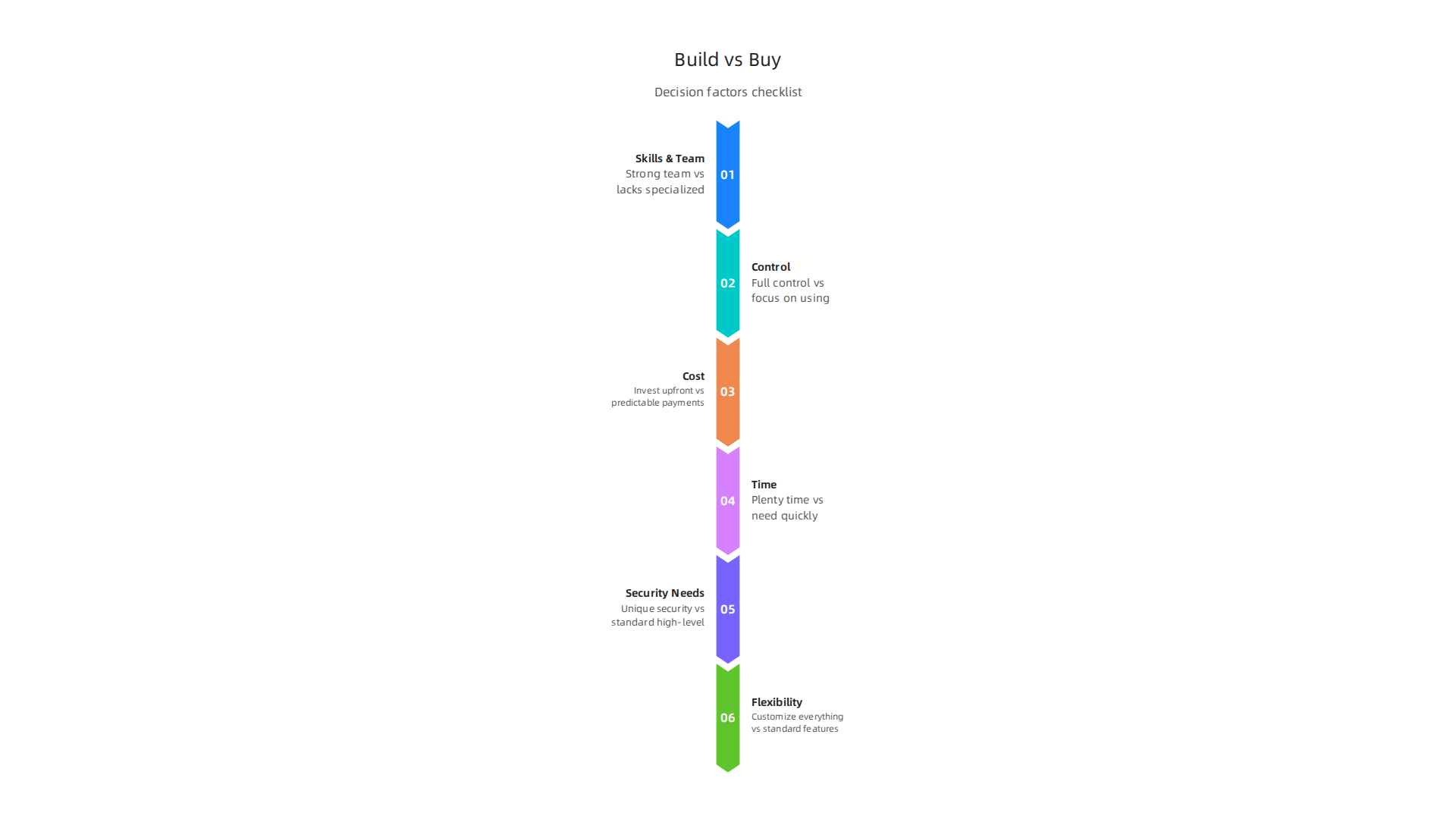
| Decision Factor | Build In-House If… | Buy Managed Service If… |
|---|---|---|
| Skills & Team | You have a strong team of data experts. | Your team is small or lacks specialized smart data skills. |
| Control | You need full control over every detail of your data. | You want to focus on using data, not managing it. |
| Cost | You can invest a lot of money upfront for setup. | You prefer ongoing, predictable payments without big upfront costs. |
| Time | You have plenty of time to set everything up. | You need to get started quickly. |
| Security Needs | Your data is extremely sensitive and needs unique security. | Standard high-level security is good enough. |
| Flexibility | You need to customize everything exactly. | You’re happy with standard features and options. |
Choosing the right approach depends on your company’s unique situation. It’s smart to think about how to choose data analysis tools for AI professionals that fit your team’s skills and your business needs. You also want to consider how to choose AI tools for maximum business impact for your specific goals.
Ultimately, whether you build or buy, the goal is to make sure your smart data efforts are reliable and truly help your business grow. This careful planning and understanding of real-world patterns will make sure your investments in smart data pay off.
Stay ahead with the latest in AI and technology. Get clear daily AI updates from The AI Newsletter Worth Reading.
Summary
This article explains what