

Introduction
Let’s be honest. In 2026, the amount of data and AI models coming at us feels like drinking from a fire hose. You’re not alone if you’re struggling to keep up.
According to Stanford HAI, generative AI reached 53% population adoption faster than the PC or the internet ever did. That’s massive. And with that surge comes an explosion of data streams. Every day, new models launch, new tools appear, new claims flood your feed. For professionals chasing data driven decision making, it’s overwhelming.
Here’s the thing: the real edge doesn’t come from having more data. It comes from having the right data analysis tools to turn that noise into clarity.

But picking a tool isn’t as simple as scanning a feature list. You need alignment with your strategic goals. You need seamless workflow integration. And most of all, you need trust in the outputs.
A recent McKinsey report highlights six dimensions essential to capturing value from AI, including strategy, talent, and technology. The same thinking applies to your choice of analysis platform. It’s not just about what a tool can do. It’s about what it helps you actually achieve.
That’s why we put this guide together. We’ll give you a structured framework to evaluate, compare, and implement data analysis tools that actually drive informed, AI-powered decisions. Whether you’re a solo data analyst or leading a team, you’ll walk away with a clear path forward.
And if you want to stay ahead of the curve every single day, we recommend you get free updates from The Deep View Newsletter. It delivers concise, reliable AI insights straight to your inbox so you never miss what matters.
Ready to cut through the noise? Let’s dive in.
Why Data Analysis Tools Are Critical for AI Professionals in 2026
By now you know the feeling. You open your dashboard and see a flood of raw logs, customer chat transcripts, sensor data, API outputs, and social media feeds. It’s overwhelming. And it’s only getting worse.
In 2026, global AI adoption among enterprises in the OECD reached 20.2%, according to Alice Labs.

In North America, that number jumps to 70% active usage, per the NVIDIA State of AI report. More organizations using AI means more data sources pumping out unstructured information every second.
So what does that mean for you? Your data analysis tools need to handle three critical jobs at once.
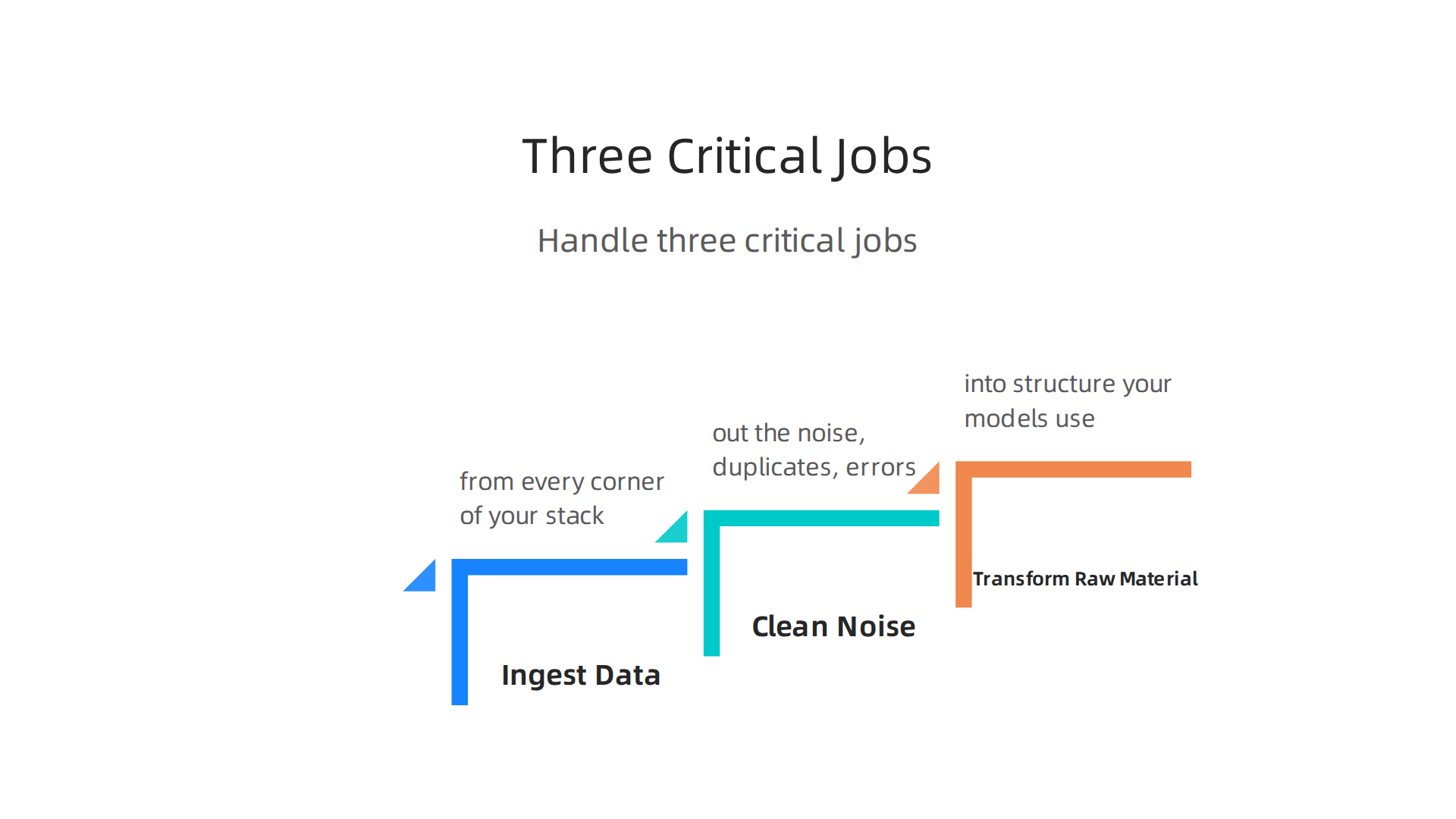
First, they must ingest data from every corner of your stack. Second, they need to clean out the noise, the duplicates, the formatting errors, and the garbage that pollutes your datasets. Third, they have to transform that raw material into a structure your models and your brain can actually work with. Skip any of those steps and your insights will be unreliable.
Time is the other pressure. A competitor spots a trend today and makes a move. You catch it tomorrow. That gap can cost you real competitive advantage. The Adobe Digital Trends 2026 report highlights that brands are scrambling to close foundational gaps in their data infrastructure to keep up with the speed of AI. Being fast isn’t optional anymore.
This is why AI-native features are now table stakes. Auto-ML tools that build models for you. Natural language query that lets you ask questions in plain English. Smart recommendations that flag patterns you might miss. These capabilities used to differentiate premium platforms. Now they are the baseline for any serious data analyst pursuing effective data driven decision making.
And let’s not forget trust. Before you act on an insight, you need to know your data is genuine. That’s where quality checks matter. Tools like Originality AI help you verify the integrity of your content and inputs, so you can move forward with confidence.
The bottom line is simple. In 2026, the right tool isn’t a luxury. It’s the engine that turns raw noise into sharper, faster decisions. That’s how you lead instead of play catch up.
Want to stay ahead of the curve every single day? Get free updates from The Deep View Newsletter for clear, concise AI insights delivered to your inbox.
Key Features to Evaluate in Modern Data Analysis Tools
So you know why you need the right tools. But how do you pick the right one? With so many options out there, it helps to know what really matters.
Let’s break down the core features you should look for.
Data Connectivity and Transformation
First, your tool needs to talk to everything. Your data lives in databases, cloud storage, spreadsheets, APIs, and even raw log files. A good tool connects to all of them without a fight. The AtScale guide says integration with existing data sources is a top factor.
Next comes the transformation pipeline. Raw data is messy. You need a tool that can clean, reshape, and prepare it automatically. Manual cleaning is a waste of time and invites errors. Look for built-in data wrangling features that let you set rules once and reuse them.
Visualization and Collaboration
A number alone tells you nothing. You need visuals that make patterns pop. Dashboards, charts, and graphs should be easy to build and even easier to share. The Splunk guide to must-have tools highlights that modern platforms blend analytics with storytelling.
But don’t forget collaboration. Your team needs to work on the same data without stepping on each other.

Look for tools that support shared dashboards, comments, and role-based access. The Domo article stresses that governance and team expertise are key when choosing a platform.
AI Augmentation
Here is where 2026 tools really shine. You should expect natural language query. Instead of writing complex code, you type a question like "What were our top selling products last month?" and the tool answers instantly. The Zerve AI list shows that tools like Microsoft Power BI and Tableau now include these features.
Automated insight generation is another must. The tool scans your data and flags trends, outliers, and correlations you might miss. Anomaly detection is especially useful for catching problems before they grow.
Scalability, Security, and Compliance
These are not optional. Your tool must handle growing data volumes without slowing down. According to the Domo guide, you need to consider your current data volume and future needs.
Security comes next. Enterprise use demands encryption, access controls, and audit trails. And compliance with standards like GDPR and SOC2 is non-negotiable if you handle sensitive data. Check that the tool meets these requirements before you sign up.
The Findanomaly comparison mentions that Gartner reports now list security as a top evaluation criterion.
Bringing It All Together
When you evaluate a tool, run it through this checklist:
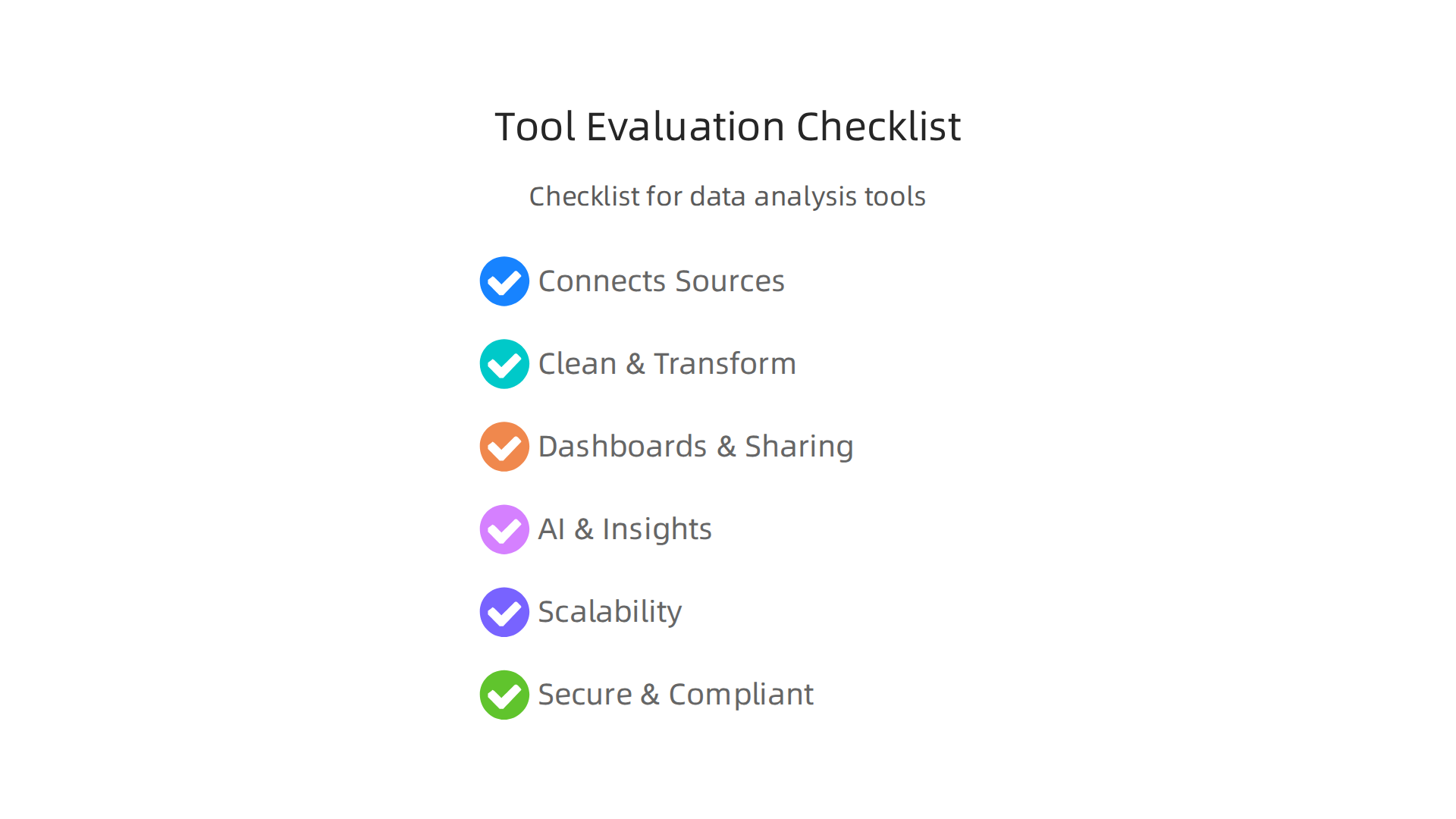
- Does it connect to all my data sources?
- Can it clean and transform data on its own?
- Are dashboards and sharing easy?
- Does it offer natural language and automated insights?
- Will it scale with my growth?
- Is it secure and compliant?
The right tool makes data driven decision making faster and more reliable. It helps you focus on insights instead of fighting with spreadsheets.
Want to stay ahead of the curve every single day? Get free updates from The Deep View Newsletter for clear, concise AI insights delivered to your inbox.
Top Data Analysis Tools for Professionals: A Comparative Overview
Now that you know what to look for, let’s compare the top data analysis tools for professionals in 2026. No single tool wins for everyone. The right choice depends on your team’s skill level, your data maturity, and the problems you solve most often.
The AtScale guide notes that many organizations now blend multiple tools instead of choosing one. That is smart. You might use a visual dashboard for executives and a code notebook for your data science team. Let’s break it down.
All-in-One Visual Platforms
These tools let you connect data, build dashboards, and share insights without writing much code.
Microsoft Power BI remains the king of corporate business intelligence. It is affordable, integrates with the Microsoft ecosystem, and now includes natural language query features. According to the Zerve AI list, Power BI is ideal for organizations that already use Office 365.
Tableau still leads in visual exploration. Its drag-and-drop interface makes it easy to find patterns in complex data. Tableau is great for data analysts who need to create beautiful, interactive dashboards fast.
Domo offers a cloud-first approach with strong collaboration features. The Domo guide highlights its governance and role-based access as key strengths for enterprise teams.
Code-First Notebooks
These tools give you total control. They are best for teams with programming skills.
Jupyter Notebooks are the standard for data science. You write Python or R code alongside explanations and visualizations. It is flexible but requires coding knowledge.
RStudio is designed for statisticians and researchers. R has powerful libraries for analysis, modeling, and visualization. The PW Skills article calls Python the "Swiss Army Knife" for its versatility, while R excels in statistical work.
New 2026 Entrants
The Findanomaly comparison shows that 2026 brings fresh players focused on embedded AI and collaborative notebooks.
Zerve is a collaborative data science platform that combines notebooks, AI assistance, and team features in one place. It is designed for modern data teams who want to work together without switching tools.
Databricks provides a unified platform for data engineering, analytics, and machine learning. It scales easily and supports real-time data processing.
How to Choose
Here is a quick comparison to help you decide:
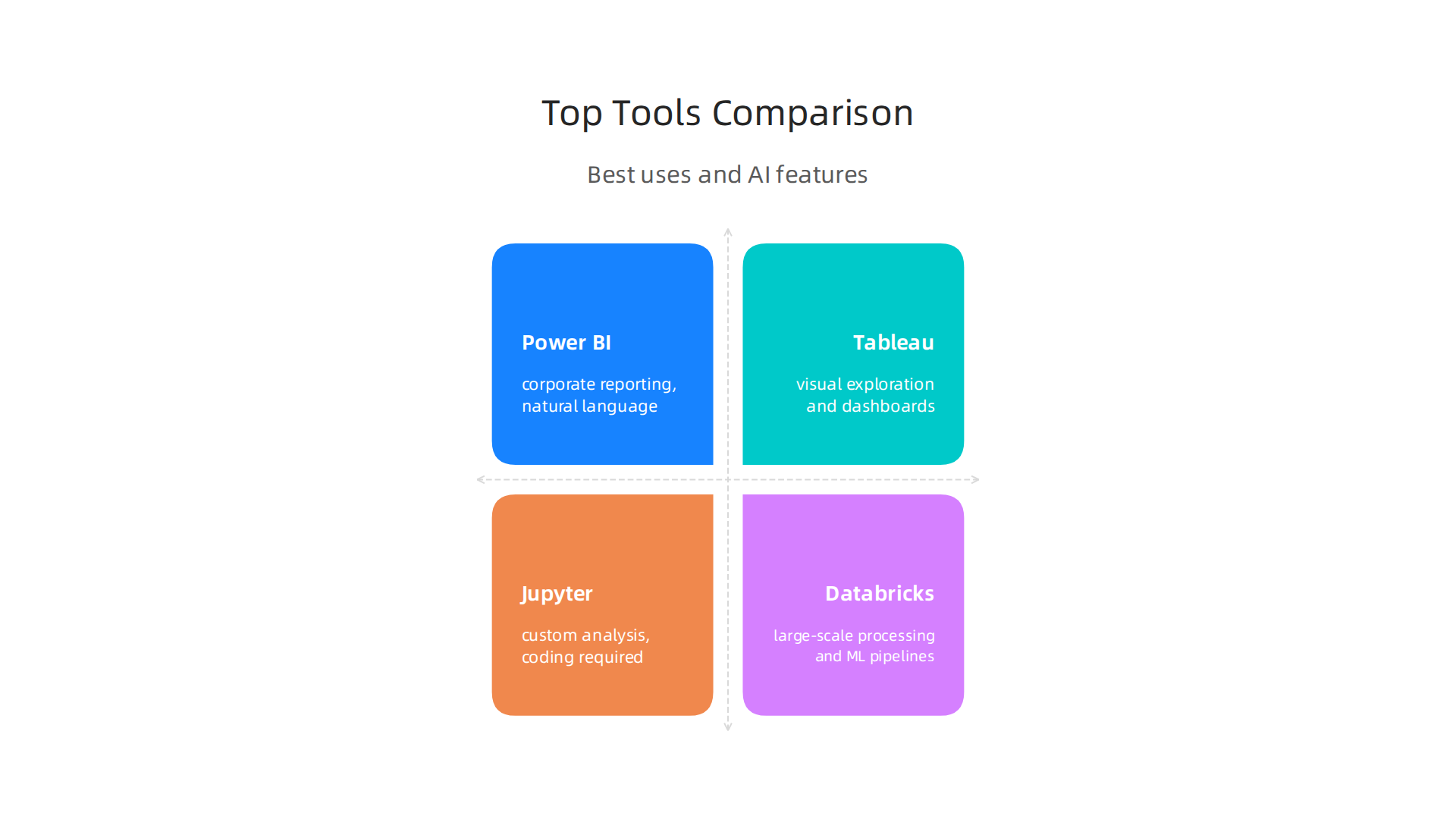
| Tool | Best For | AI Features | Skill Level |
|---|---|---|---|
| Power BI | Corporate reporting, executives | Natural language queries | Beginner to intermediate |
| Tableau | Visual exploration, dashboards | Automated insights | Beginner to advanced |
| Jupyter | Custom analysis, data science | Code generation assistants | Advanced (coding required) |
| Zerve | Collaborative notebooks | AI pair programming | Intermediate to advanced |
| Databricks | Large-scale data processing | Built-in ML pipelines | Advanced |
The Astera Software article reminds us that the best tool is the one your team will actually use. Start with a trial version. Test it with real data. See if it fits your workflow.
Ultimately, data analysis tools are just enablers. Your real power comes from asking the right questions and turning insights into action. The tools make that path faster and clearer.
Want to stay ahead of the curve on the latest AI tools and trends? Get free updates from The Deep View Newsletter for clear, concise insights delivered to your inbox every day.
How to Integrate Data Analysis Tools into Your Workflow
Picking the perfect data analysis tools is only half the job. The other half is weaving them into your daily work without causing chaos. Here is a simple three-step process to get it right.
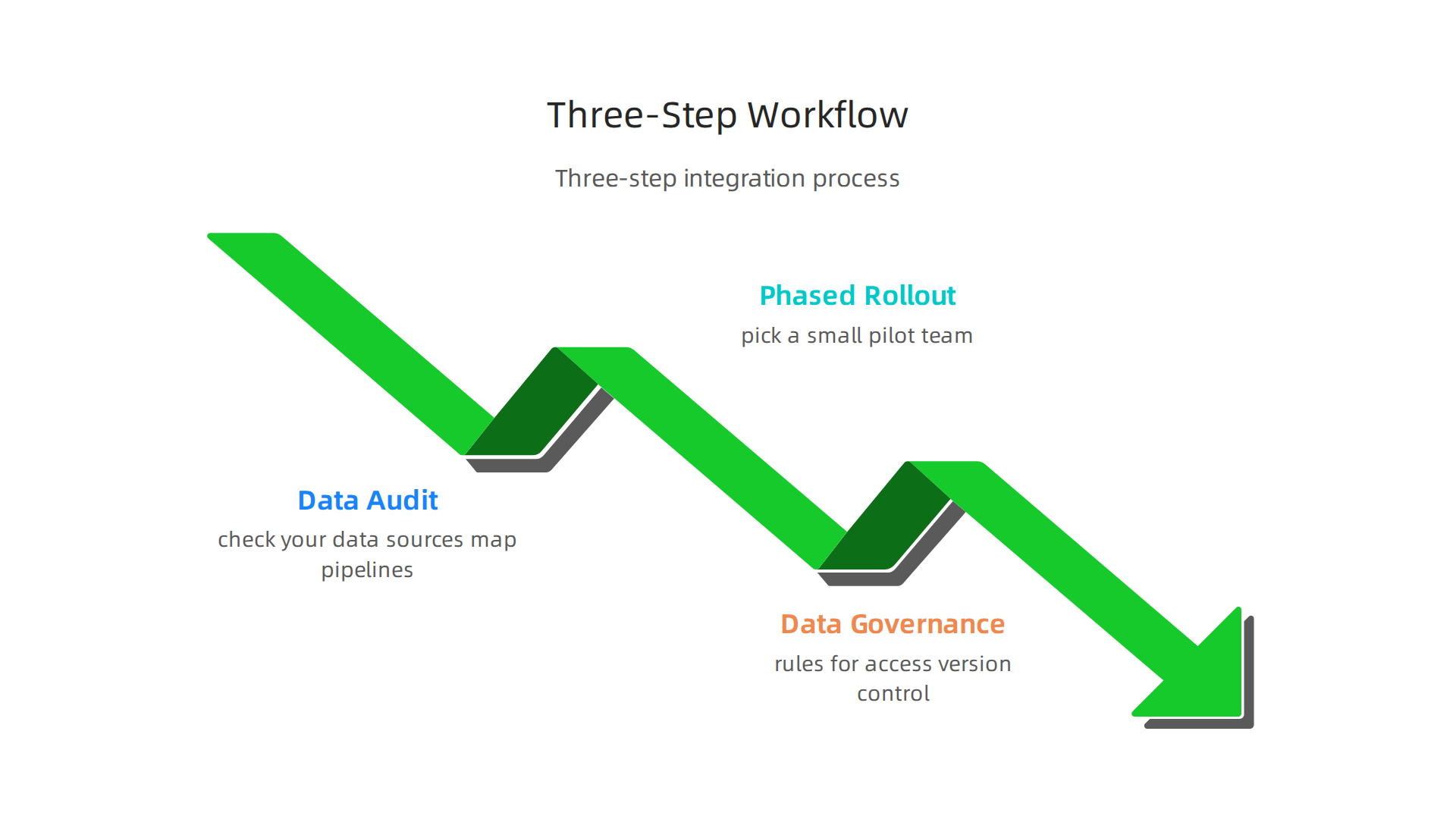
Step 1: Start with a Data Audit
Do not just plug a new tool into your existing mess. First, check your data sources. Where does your data live? How does it flow from one system to another? Map out your current pipelines. The Kanerika guide says to use clean, consistent data before adding any tool. This step stops you from buying extra licenses for data you do not have or cannot trust.
Step 2: Run a Phased Rollout
Do not hand a new tool to everyone on day one. That is a recipe for confusion. Instead, pick a small pilot team. Let them test it with real work. Measure how it changes their speed and accuracy. According to the AtScale guide, integration with existing data sources is critical. After the pilot succeeds, you can scale to the rest of your organization with confidence.
Step 3: Set Up Data Governance
Once the tool is in use, you need rules. Who can see what data? How do you handle version control? How do you make sure every analysis can be reproduced? The Domo guide highlights governance and role-based access as key enterprise strengths. Good governance also helps you avoid tool sprawl, where teams pick different tools and data gets siloed.
Getting these three steps right turns a new data analysis tool into a lasting part of your team’s workflow. For more on evaluating AI powered tools in different fields, check out our look at Originality AI as a content detection tool.
Ready to make smarter decisions with your data? Get free updates from The Deep View Newsletter for clear daily AI insights delivered to your inbox.
Case Study: How a Leading AI Team Boosted Decision-Making with the Right Tool Stack
Theory is great, but nothing beats a real example. Let me walk you through how one healthcare AI startup turned their messy tool situation into a streamlined machine.
This company was using three different legacy tools to handle their data pipeline. One for ingestion, another for cleaning, and a third for analysis. The problem? Data kept getting stuck between steps. Their data analyst team spent more time fixing broken connections than actually finding insights.
So they made a bold move. They replaced all three tools with a single unified analytics platform. The results were impressive.
The team cut the time from data ingestion to insight by 60%. That meant they could test more hypotheses in less time. Their model accuracy also jumped by 12%. For a healthcare AI company, that kind of improvement means better patient outcomes and more reliable predictions.
The global data analytics market is already worth over $104 billion in 2026, and tools like this are driving that growth. But the startup did more than just pick a new platform. They followed three key lessons that any data analyst can learn from.
Lesson 1: Involve data scientists early. Do not let IT pick the tool alone. The people doing the actual analysis know what features matter most. When the startup brought in their data scientists from day one, they chose a platform with the flexibility teams actually need.
Lesson 2: Choose tools with strong API integration. The best data analysis tools in 2026 connect easily with existing systems. The startup made sure their new platform could talk to their cloud storage, their CRM, and their model training pipelines. This stopped data silos from forming.
Lesson 3: Invest in training. A powerful tool is useless if nobody knows how to use it. The startup ran dedicated workshops for every team member. This turned their new platform from a confusing upgrade into a daily habit.
The biggest takeaway? Data driven decision making is not about having the fanciest tool. It is about having the right one that your team actually uses well.

If you are a data analyst evaluating new options for your own workflow, the same principles apply. Pick tools that fit your team, connect with your existing systems, and invest the time to learn them deeply. For a closer look at how AI powered detection tools work in another field, read our review of Originality AI as a content detection tool.
Want to stay ahead of the latest AI tools and trends without the noise? Get free updates from The Deep View Newsletter, your daily source for clear AI insights that help you make smarter decisions.
Overcoming Common Challenges and Pitfalls
Even with the right data analysis tools in place, most data analysts hit roadblocks. You probably already know this from experience. Things like information overload, tool fatigue, and trust gaps can slow down your data driven decision making process. The good news? Each of these pitfalls has a practical fix.
Challenge 1: Information overload. When you have dashboards showing every possible metric, it gets hard to see what actually matters. The solution is simple. Use filtered dashboards that only surface the most important KPIs for your team. Pair them with automated alerts that notify you only when something changes significantly. This keeps your focus sharp without drowning in noise.
Challenge 2: Tool fatigue. Many data analyst jobs come with a dozen different tools. Each one has its own login, its own interface, and its own quirks. Poor data quality often comes from juggling too many disconnected systems. The fix is to consolidate where you can and prioritize interoperability. Pick tools that talk to each other easily. If you are evaluating new options, look for platforms that integrate with what you already use. This saves time and reduces errors.
Challenge 3: Trust gaps. It is hard to trust your analysis when you are not sure about the data behind it. A data quality framework gives you a structured way to validate your outputs. Always check your results against known domain data. Maintain auditable logs so you can trace any metric back to its source. When you can prove your data is accurate, your recommendations carry more weight.
If you are ready to avoid these traps and sharpen your workflow, staying informed about the latest tools and best practices helps a lot. Subscribe Free to The Deep View Newsletter for daily AI insights that keep your data skills sharp.
Future Trends in Data Analysis Tools for 2026 and Beyond
The way we use data analysis tools is changing faster than ever. If you want to stay ahead in data analyst jobs, you need to know what is coming next. Here are three big trends that will shape data driven decision making in 2026 and beyond.
Trend 1: Large language models (LLMs) in your daily workflow. You will soon be able to ask your data analysis tools questions in plain English. Instead of writing complex SQL queries, you can just say, "Show me last quarter’s sales by region" and get a chart back instantly. LLMs also help you generate report summaries automatically. According to Gartner’s 2026 predictions, AI is becoming the backbone of how companies process and understand data. This makes data analysis tools much more accessible for teams that do not have deep technical skills.
Trend 2: Real-time streaming analytics becomes standard. With more devices connected through IoT and edge AI, waiting for batch updates is no longer enough. Data comes in constantly, and you need answers right away. Forrester’s 2026 predictions highlight the race to trust and value in real-time data. That means your tools must handle continuous streams of information, alerting you the moment something changes. No more stale dashboards.
Trend 3: Open-source and low-code platforms grow even more. These platforms let people without coding backgrounds build their own analyses. This democratization of data is opening up data analyst roles to more people across the company. As a result, data driven decision making is no longer limited to a small team. Everyone can participate.
One thing to keep in mind: as AI generates more content and queries, you need to verify what comes out. Tools like Originality AI can help you spot AI-generated or fabricated data, ensuring your analysis stays trustworthy.
Want to stay on top of these shifts? Subscribe Free to The Deep View Newsletter for daily updates on AI and data trends.
Building Trust in Your Data Analysis Tool Stack
All the fancy new data analysis tools in the world won’t help you if you can’t trust the results. Trust is the foundation of good data driven decision making. Without it, even the best dashboard can lead you in the wrong direction. So how do you build that trust?
First, look for transparency. Your data analysis tools should clearly show where data comes from and what assumptions are baked into the models. This is called data lineage. When you can trace a number back to its source, you can check for errors. A solid data quality framework helps here by giving you a repeatable way to assess and monitor your data.
Second, run rigorous validation cycles. Before you rely on a new model or report, test it. Backtesting lets you see how a model would have performed on past data. Shadow deployments run the new tool side by side with your old one without affecting real decisions. These catch mistakes early. Poor data quality leads to big risks, from lost productivity to bad strategies. Don’t let that happen to you.
Third, pick vendors with strong security certifications and a commitment to ethical AI practices. If a vendor can’t prove they handle data responsibly, move on. Reliable tools earn your trust over time.
As AI becomes more common in your workflow, it also creates new risks. Fabricated or misleading outputs can sneak in. That is why you need extra verification. Tools like Originality AI can help you spot AI-generated or tampered data, keeping your analysis honest.
Building trust takes effort, but it pays off in better decisions.

Want to stay ahead of these challenges? Subscribe Free to The Deep View Newsletter for daily updates on AI and data trends.
Summary
This guide explains how to choose and implement data analysis tools that turn overwhelming AI-era data into reliable, actionable insights. It covers why the right platform matters in 2026, the core features to prioritize—like broad data connectivity, automated transformation, visualization, collaboration, and AI augmentation—and how scalability, security, and compliance factor into decisions. You’ll find a practical comparison of leading options (Power BI, Tableau, Jupyter, Databricks, and newer entrants), advice on running audits and phased rollouts, and governance rules that protect trust in your results. The article also shares a real healthcare startup case showing measurable gains from consolidating tools and investing in training. It highlights common traps such as information overload, tool fatigue, and trust gaps, with concrete fixes for each. Finally, it previews near-term trends—LLMs in queries, real-time streaming analytics, and low-code/open-source growth—so you can plan future-proof tool choices. After reading, you’ll have a clear checklist to evaluate tools, integrate them into workflows, and build systems that deliver faster, more trustworthy data-driven decisions.