

Why tracking AI innovators matters now
It’s 2026, and the world of Artificial Intelligence is moving faster than ever before. Every day, new ideas and tools pop up, making it tough for leaders and business owners to keep up. You might feel like you’re drowning in news about deepmind ai, anthropic ai, and all the other smart companies changing the game.
This feeling of too much information, or "information overload," is a real challenge for many busy people. It’s hard to tell what’s important and what’s just noise. For example, reports show that companies are making more promises about how safe their AI tools are, which means there’s a lot to learn about new rules and ideas always coming out, as noted in the International AI Safety Report 2026. Without clear guides, it’s easy to miss big changes that could help your business.
That’s why staying on top of AI innovators is so important.

Knowing what companies like deepmind ai are doing helps you make smarter choices. This helps you understand new products, what they mean for your business, and how you can use them. For example, knowing about developments in areas like flawless ai systems or tools that help with decisions ai can give you an edge. You need to know how these changes might amplify ai strategies in your own company.
This article is here to help you cut through the clutter. We promise to give you simple, clear information about the newest AI breakthroughs. We will explain what these changes mean for your products and business plans. Most importantly, we will give you clear steps you can take. If you often feel like there’s too much to learn, finding ways to sort through it all can be a big help. You can learn more about how to manage information better if you want to become a meta data scientist in 2026 and beat information overload.
To get simple daily AI insights and keep up with these fast changes, consider subscribing to Your Daily AI Shortcut.
DeepMind: Research milestones, flagship models, and real-world impact
While some AI companies, like anthropic ai, focus on bringing their smart tools to market very quickly, deepmind ai often works a bit differently. DeepMind, owned by Google, is known for pushing the very edge of what AI can do.

They spend a lot of time on deep research, exploring big ideas that might not turn into a product tomorrow but could change the world in a few years. Their goal is often to solve hard scientific problems and advance how AI learns and thinks.
One of DeepMind’s big jobs is to create AI models that can tackle tough challenges. For example, they’ve worked on systems that can understand and use language in new ways, or AI that can help discover new medicines. They’ve also looked into making AI systems more reliable and trustworthy. In fact, evaluating how well AI models understand facts is a key area, and DeepMind has even developed new ways to test their truthfulness, as explored in the FACTS Benchmark Suite. This focus on understanding how models perform is a big deal in 2026, especially as we see many new AI models come out each year, with their performance and costs tracked in datasets like the AI Model Benchmarks and Pricing Dataset 2026.
So, what does DeepMind’s research mean for your business? Even if their breakthroughs aren’t ready-made products, they often lay the groundwork for future tools. For example, their work on learning and reasoning could lead to flawless ai systems that make fewer mistakes in complex tasks. Their advances might help create better decisions ai that guide businesses with more accurate insights. Companies can watch DeepMind’s progress to understand where the AI world is heading. This helps them prepare for new technologies and think about how to amplify ai strategies in their own operations. Knowing about these cutting-edge developments helps businesses stay ready for the next big thing in AI.
Understanding the history of AI can give you a better grasp of these advancements. You can learn more about the early days of smart machines in our guide on When Did AI Start.
While deepmind ai focuses heavily on pure research, another key player, anthropic ai, puts a strong emphasis on building AI systems that are safe, helpful, and honest right from the start. This company’s main goal is to create powerful AI that people can trust and rely on, especially as these smart tools become more common in 2026.
Anthropic’s commitment to safety shapes how they design their AI models and plan their products.

They developed a unique way of training AI called "Constitutional AI." Instead of just learning from human feedback, their AI models, like Claude, are taught to follow a set of guiding principles or rules, much like a constitution. These rules help the AI avoid harmful outputs and make better choices, even when faced with tricky questions. This method helps build AI that aims for a higher standard of safety and reliability, making it less likely to make big mistakes. This focus is all about moving towards more flawless AI systems.
This safety-first approach is very important for businesses. Companies are increasingly worried about AI alignment, which means making sure AI’s goals match human goals. They also care about audits and following rules, known as regulatory compliance. Anthropic’s methods help to address these concerns head-on. Their work aims to create trustworthy AI that can handle sensitive tasks without causing problems. For example, a global alliance between KPMG and Anthropic shows how serious big companies are about making sure AI is secure and well-governed, prioritizing security, trust, and governance as key factors. This helps businesses use AI more confidently, knowing the system has built-in safety checks, as outlined in reports like the International AI Safety Report 2026.
For enterprises, Anthropic’s work means they can look forward to decisions ai tools that are not only smart but also safe and transparent. This helps businesses amplify ai strategies in a way that is responsible and aligns with new rules and expectations for AI use. Keeping up with these developments is important, as AI governance is a top priority for organizations in 2026, with many companies making voluntary commitments to safety. Staying informed about leaders in the AI space, like Anthropic, can help your business plan for the future.
If you want to keep up with all the fast changes in AI, it’s helpful to get daily insights. Your Daily AI Shortcut is a great way to stay in the loop.
Comparing approaches: DeepMind, Anthropic, OpenAI and other major players
While Anthropic focuses a lot on making AI safe and trustworthy, other big names in the AI world have different main goals. Understanding these differences helps businesses choose the right AI tools for their needs. It’s not just about how smart an AI is, but also about what it’s built to do and how it gets to market.
Take DeepMind AI, for example. Google’s DeepMind is famous for its very deep research. They often aim for big scientific breakthroughs, like creating AI that can beat humans at complex games or help discover new medicines. Their focus is more on pushing the limits of what AI can do at a fundamental level. They work on challenging tasks that might not have an immediate use in a product but can lead to big changes later on. For instance, DeepMind developed the FACTS Benchmark Suite to test how factual large language models are. This kind of work helps them create more powerful and reliable AI models in the long run.
Then there’s OpenAI. This company tries to balance advanced research with making AI products that many people can use. They want to make very powerful AI available to everyone in a safe way. Their tools, like ChatGPT, are built for a wide range of tasks, from writing stories to helping with coding. OpenAI works on making their AI easy to use for businesses and individuals, which means they spend time turning their research into actual products that can solve everyday problems. Staying updated on OpenAI news 2026 key developments that matter for AI users can help you see how they balance this.
Each of these companies has a different path.
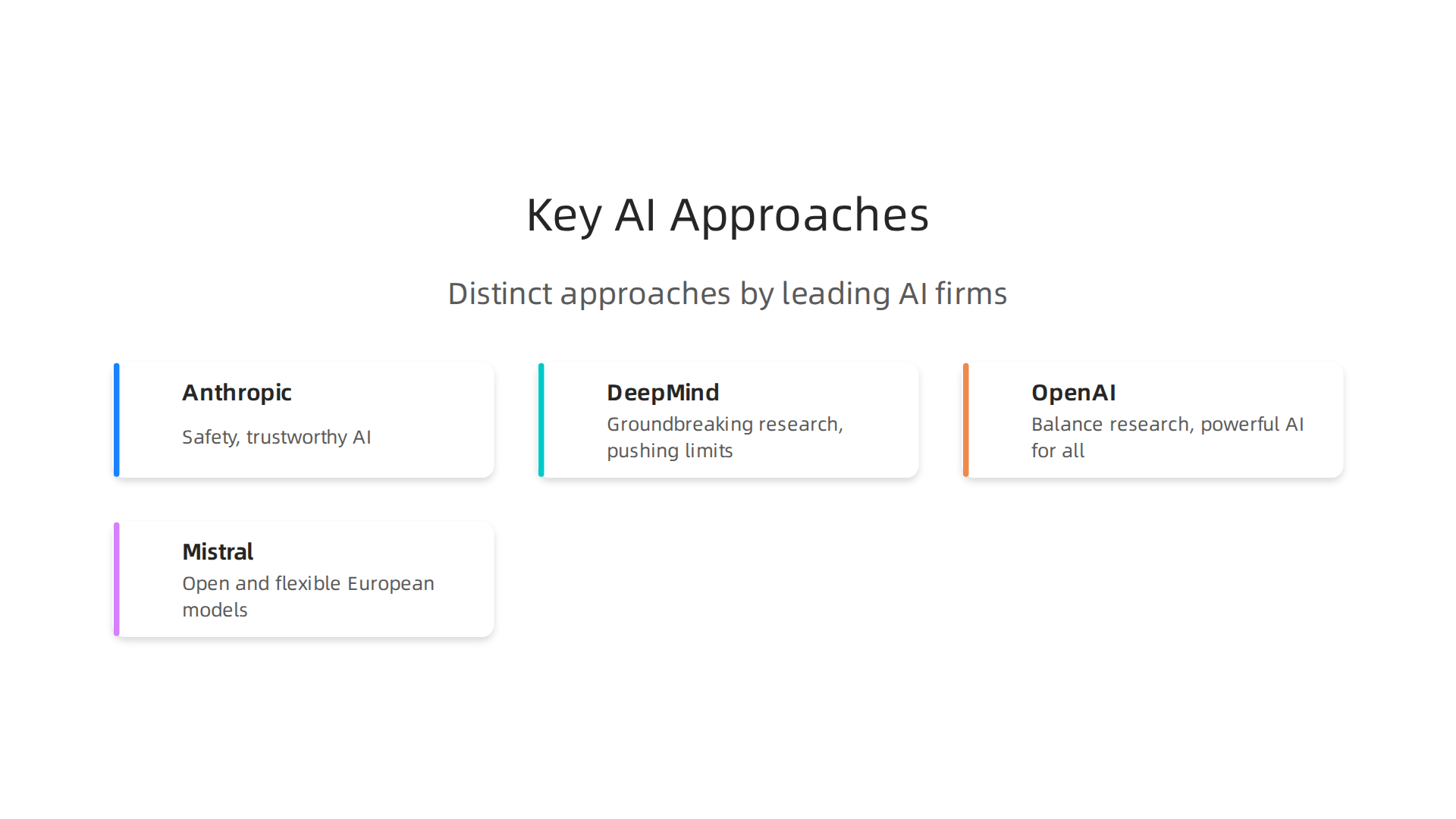
Anthropic stresses safety above all, aiming for truly flawless ai that you can trust with important tasks. DeepMind is often about groundbreaking research. OpenAI tries to make powerful AI tools that are easy for many people to use.
These different approaches matter a lot for companies looking to use AI in 2026. If a business needs highly secure and ethical AI for sensitive work, Anthropic’s focus on safety might be key. If they want to amplify ai by integrating state-of-the-art AI for very specific, complex problems, DeepMind’s research might offer the foundation. And if they need flexible, powerful AI tools that are ready to use right now to boost productivity or improve customer service, OpenAI’s product offerings could be the best fit.
Choosing an AI partner means looking at what they do best and how that fits your company’s goals. There are many great AI models out there in 2026, and finding the best AI models in 2026 often depends on what your business needs most. Understanding these big players helps businesses make better decisions ai solutions for their unique challenges.
Regional innovators and emerging challengers: Mistral and the broader European ecosystem
While big names like DeepMind, Anthropic, and OpenAI lead in many ways, it’s important not to forget about other key players, especially regional innovators. European AI labs and startups are making a big mark in 2026. They bring special strengths to the table, like focusing on specific needs, making sure their AI follows important rules, and creating unique partnerships.
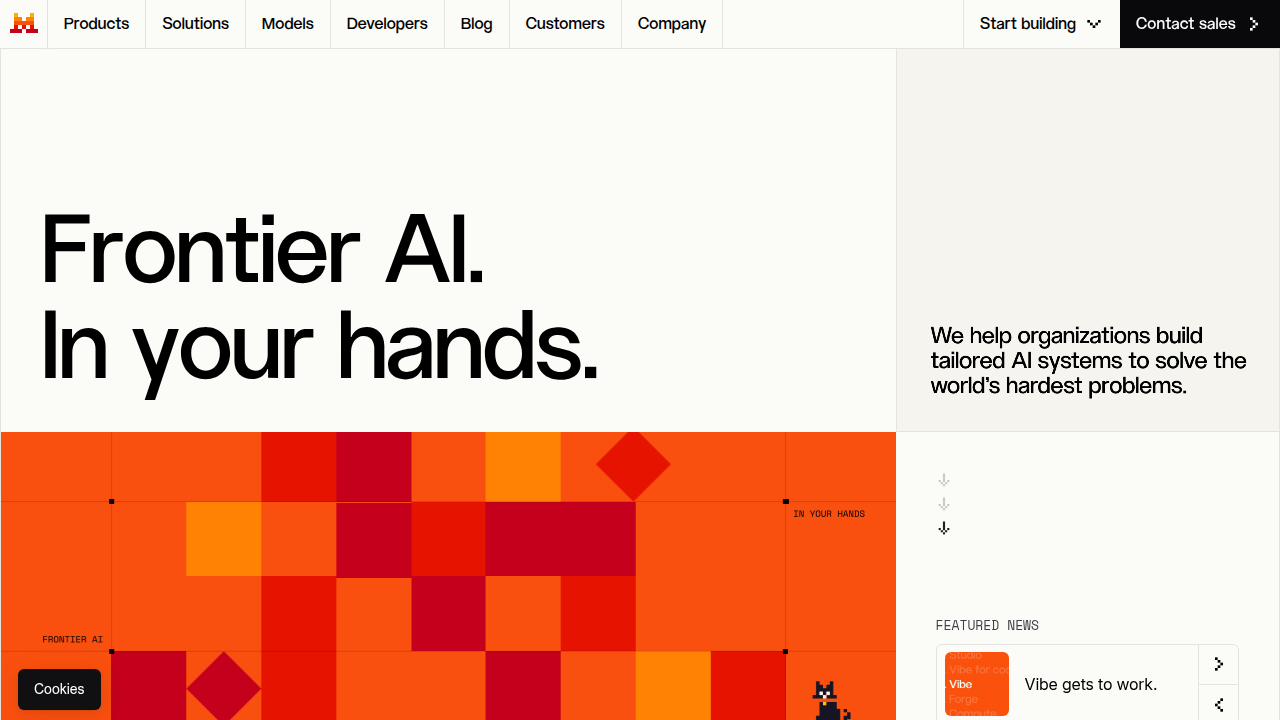
One standout example is Mistral AI, a fast-growing company from Europe. Unlike the broad approaches of some major players, Mistral often focuses on open, flexible models. This means their AI can be changed and fitted to many different business needs. They are showing how challengers can often move faster and work more closely with other businesses to amplify ai solutions.
Why European challengers stand out
- Specialization: Many European AI companies focus on niche areas, becoming experts in specific types of AI. This allows them to build very tailored solutions for certain industries. They might not try to do everything, but what they do, they do very well.
- Regulation Alignment: Europe has strong rules about data and how AI should be used. This means European AI companies often build their tools with these rules in mind from the start. For businesses that need to be extra careful with data, a solution from a company like Mistral can help ensure their AI is trustworthy and compliant, closer to what one might call
flawless ai. This makes it easier to makedecisions aisolutions that fit strict privacy and safety standards. - Unique Partnerships: These newer companies are great at working with others. Mistral AI, for example, has teamed up with big names across different industries.
They have a strategic partnership with chipmaker NVIDIA to make advanced open-source AI models even better Mistral AI partners with NVIDIA to accelerate open frontier models. They also work with companies like ASML in tech manufacturing ASML, Mistral AI enter strategic partnership and Airbus in aerospace to strengthen AI use Airbus and Mistral AI partner for AI in aerospace. Even design software like SOLIDWORKS is integrating Mistral AI to help makers and startups Mistral AI integrated into SOLIDWORKS 2026. These partnerships show how European innovators are embedding AI deeply into different sectors.
These kinds of partnerships highlight how challenger companies can adapt quickly and offer cutting-edge AI that fits specific industry needs. While companies like DeepMind AI are known for breakthrough research, and Anthropic AI for safety, these regional innovators carve out their own space by being highly specialized and great collaborators.
If you’re interested in keeping up with all the exciting AI trends and breakthroughs from around the world, including those from emerging challengers, we’ve got something for you.
Join The Deep View Newsletter for simple daily AI insights.
Your Daily AI Shortcut
From lab to market: commercialization paths and product risk profiles
After developing amazing AI, companies need to figure out how to share it with the world. This is called bringing AI from the lab to the market. There are many ways AI companies do this, and each way has its own set of challenges and benefits.
How AI gets to you: different ways companies sell AI
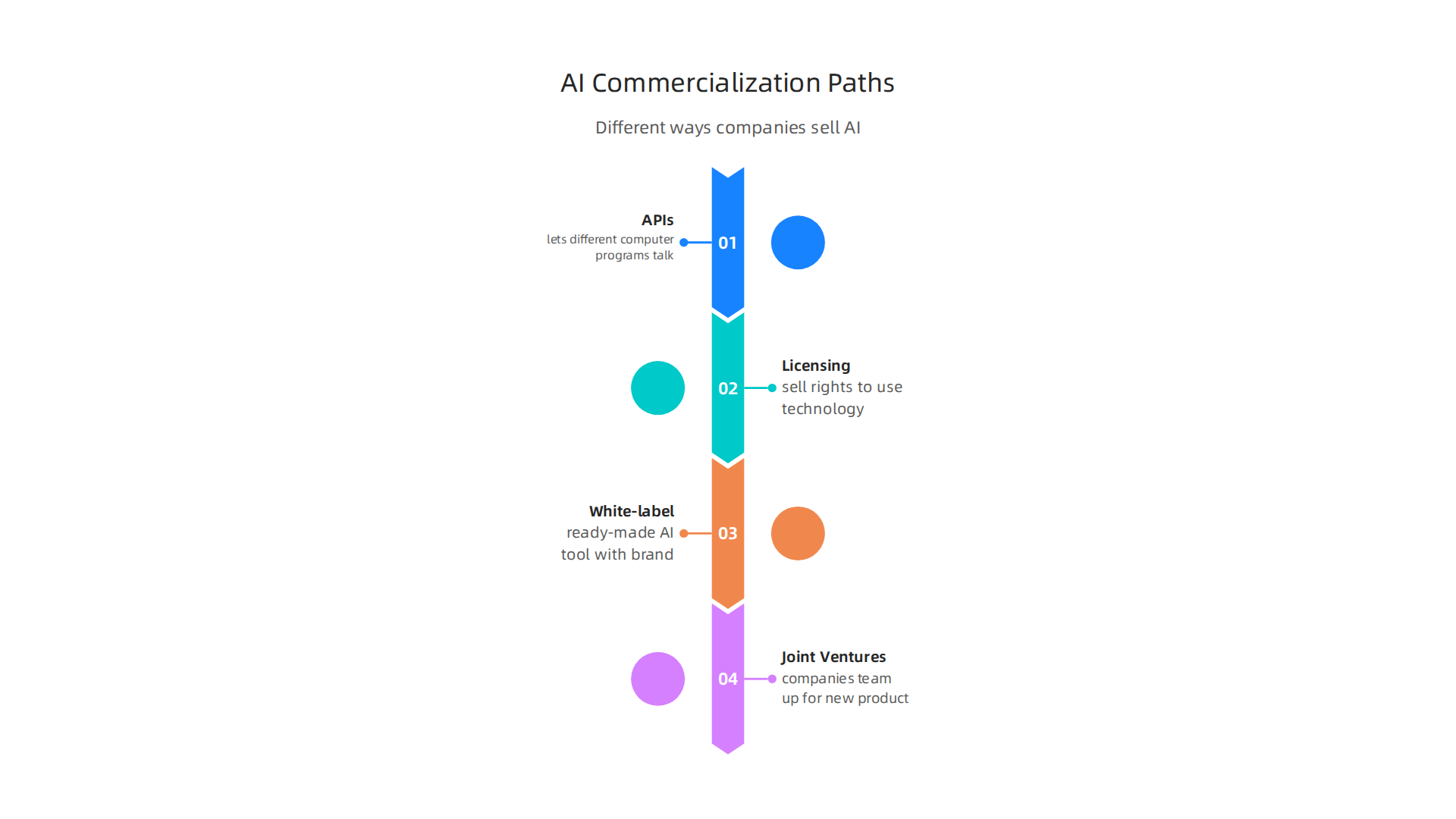
- APIs (Application Programming Interfaces): Many big AI companies, like those working on
DeepMind AI, offer their smart tools through APIs. Think of an API as a special door that lets different computer programs talk to each other. Businesses can use these doors to add advanced AI features to their own products without having to build the AI themselves. This is a common way for developers to quicklyamplify aicapabilities in their apps. - Licensing: Sometimes, a company might just sell the rights to use their AI model or technology. This is like buying a special recipe for AI. Other businesses then get to use that recipe to make their own products. The market for licensing AI training data, for example, is growing very fast, showing how important this method is becoming Dataset Licensing for AI Training Market Research Report 2034.
- White-label Solutions: Some AI makers create a ready-made AI tool that another company can put its own brand name on. It’s like a store selling a product made by someone else, but with their own label. This lets companies quickly offer AI products to their customers without a lot of development work.
- Joint Ventures: This is when two or more companies team up to create a new AI product or service together. They share the work, the costs, and the profits. This often happens for big projects where special skills from different companies are needed. Many companies are finding that using AI can help them make more money and do their work better How AI Is Driving Revenue, Cutting Costs and Boosting Productivity ….
Companies like Anthropic AI might focus on APIs for their cutting-edge models, while specialized companies might use licensing or white-labeling to reach specific industries. Seeing how AI is being used in the real world through different projects gives us a good idea of what’s possible AI Implementation Case Studies: Real Enterprise Results 2026. You can also learn more about how some of these newer companies are growing quickly by looking at the 8 Fastest Growing AI Companies Reshaping Industries in 2025.
What companies worry about when using AI
When businesses bring AI into their operations, they also need to think about some important risks. Making smart decisions ai solutions means looking at both the good and the bad.
- Operational Risks: This means making sure the AI works correctly all the time. What if the AI gives wrong answers? What if it breaks down? Companies need to test their AI well to make sure it’s reliable and performs as expected. They need to aim for
flawless aisystems as much as possible, which is a big task. - Compliance Risks: This is about following rules and laws. AI needs to be fair, protect people’s privacy, and not spread harmful ideas. With more and more rules about AI, businesses must make sure their AI tools meet all the legal and ethical standards. Reports like the International AI Safety Report 2026 help everyone understand these important safety guidelines. Not following these rules can cause big problems for a company.
For any business, truly understanding these risks and planning for them is just as important as the AI itself.
After understanding the risks of bringing AI to market, it’s key to know what to look for next. This helps founders, investors, and leaders make smart choices in the fast-changing world of AI. We need to watch for signs that tell us if an AI company or product is going to do well or if it might have problems.
What to watch for in AI right now
Keeping an eye on certain signals can help you understand where AI is heading in 2026.
- Technical Changes: Look for how powerful new AI models are. Are companies like
DeepMind AImaking big leaps in how AI learns or solves problems? Is it easy for other businesses to use andamplify AIin their own tools? The simpler it is to add AI power, the faster it will spread. Also, see if the AI can be used in many different ways, not just one. - Rules and Safety: Governments and groups are making more rules for AI to keep it fair and safe. You should watch for new laws and guidelines. Companies like
Anthropic AIoften share how they are working to make their AI safe and fair, which can be a good sign Anthropic’s Transparency Hub. Knowing about these rules helps make sure AI products are legal and ethical. Many groups are talking about how to set up good rules for AI, like the ideas shared in the Six AI Governance Priorities for 2026 – Partnership on AI. - Business Growth: See which companies are working together. Are new AI startups getting money from investors? How quickly are businesses using AI tools to make better
decisions AIsolutions? When big companies team up or new money flows in, it often means the AI is seen as truly helpful and ready to grow.

How to check an AI business before you invest or partner
When you’re thinking about putting money into an AI company or working with one, it’s like doing homework. You want to make sure it’s a good idea. Here’s a simple checklist:
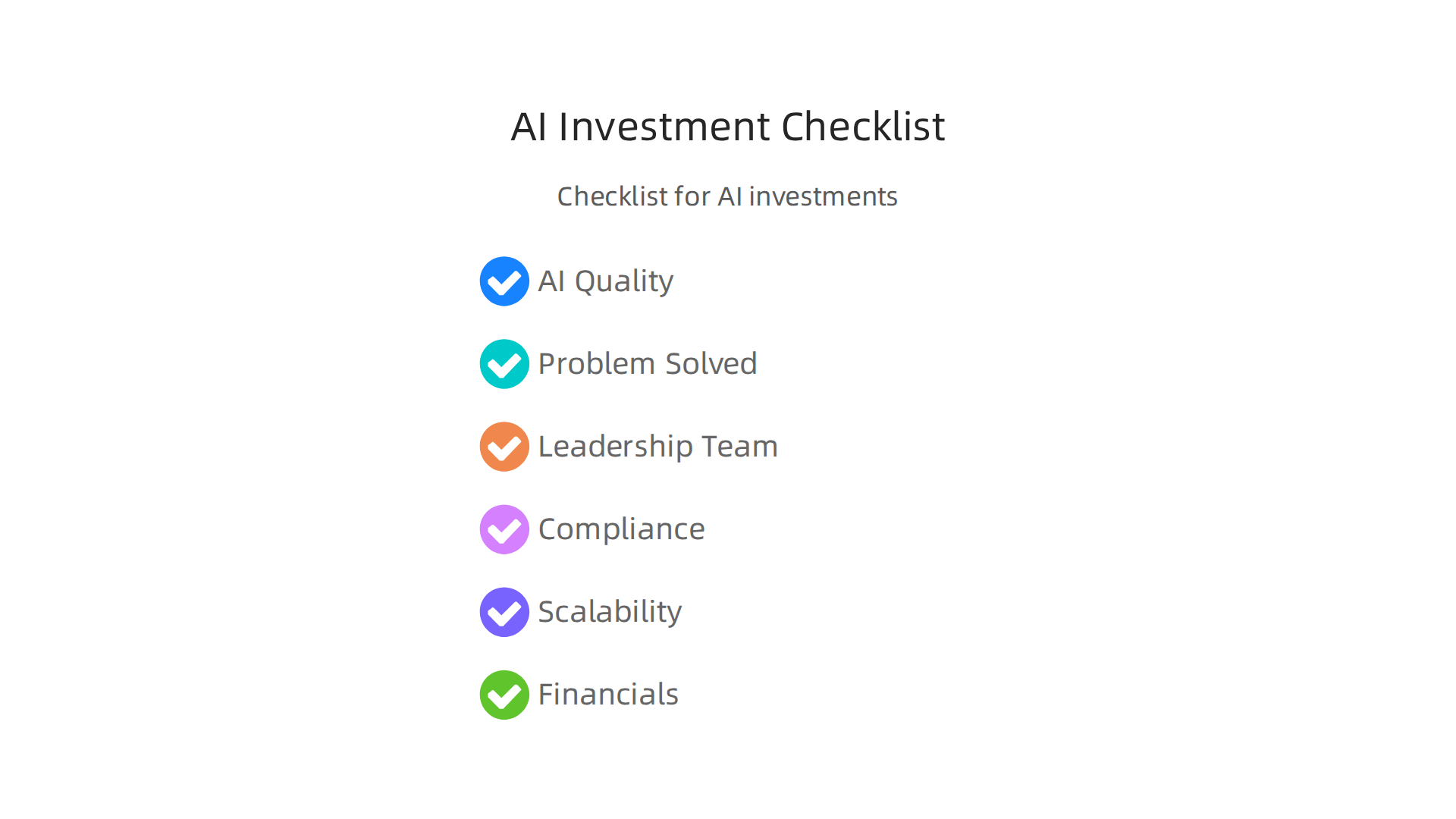
- Is the AI really good? Does it do what it promises? Is it a
flawless AIsystem, or does it have clear plans to fix problems? Is it much better than other options out there? - Does it solve a real problem? Many great AI ideas don’t go anywhere because they don’t help enough people with a problem they truly have.
- Who is behind the company? Do the founders and their team know a lot about AI and business? Do they have a clear plan?
- Are they playing by the rules? This means checking if their AI is fair, safe, and follows all the legal and ethical guidelines. No one wants to partner with a company that might run into big trouble later.
- Can it grow big? Will the AI work just as well when many more people use it? Can the company handle a lot more customers without breaking down?
- Does the money make sense? For investors, this is about how much money they need to put in and how much they can expect to get back. For founders, it’s about making sure their company can make enough money to stay strong.
Thinking through these points helps you make smart choices in the AI world. For those looking to understand the financial side of things, it helps to know how to effectively check on potential AI investments, perhaps by learning about Screening AI Stocks with Zacks Investment Research in 2026.
Staying on top of all the new AI developments can feel like a lot of work. But with the right information, you can make the best choices.
Join The Deep View Newsletter for simple daily AI insights. Your Daily AI Shortcut
Summary
This article explains why following leading AI innovators matters for business leaders and investors in 2026, showing how different companies shape the future of AI and what to watch for. It compares research-led players like DeepMind, safety-focused firms like Anthropic, and product-driven groups such as OpenAI, and highlights regional challengers like Mistral that offer specialization and regulatory alignment. The piece covers how AI is commercialized (APIs, licensing, white-label, joint ventures), the operational and compliance risks companies must manage, and the market signals that reveal which tools will scale. It also gives a practical checklist for evaluating AI firms before partnering or investing and points to daily briefings to avoid information overload. After reading, you’ll understand the strategic differences between major AI teams, the concrete risks and opportunities for your business, and the steps to evaluate and adopt AI responsibly.