

Introduction
Let’s be honest. If you run a business or manage a marketing team in 2026, you probably feel buried under information. New tools launch every week. Customer expectations shift overnight. And your inbox? It’s a battlefield.
Here’s the thing. The right newsletter platform can turn that chaos into clarity. But not just any platform. The ones making a real difference today all have one thing in common: artificial intelligence.
AI is changing how newsletters work. It now handles the heavy lifting. It personalizes content for each subscriber. It figures out the best time to send. It even writes subject lines that actually get opened. A study from CleverReach found that 65% of marketing managers plan to invest more in email marketing as a reliable owned channel in 2026. That is a big number. And AI is the main reason why.
Marketers like you deal with information overload every single day. You have to spot what matters fast. AI-powered newsletter platforms help you cut through the noise.

They automate the boring parts so you can focus on what only a human can do: strategy, creativity, and building real connections with your audience.
In this article, we will walk through the key AI integrations showing up in top newsletter platforms right now. You will see how these AI marketing tools actually improve your return on investment. And you will learn which features matter most for your specific goals.
If you want to stay ahead of the curve without spending hours digging through news every day, consider subscribing to a resource that curates the best insights for you. Your Daily AI Shortcut delivers simple daily AI insights straight to your inbox so you never miss what matters.
Let’s start by looking at how AI is reshaping the newsletter platform landscape in 2026.
The Rise of AI-Powered Newsletter Platforms
Think back to 2024. If someone told you that within two years, your newsletter platform would write subject lines, predict the best send time, and personalize every paragraph automatically, you might have raised an eyebrow. Well, look around. That future is here. And it happened fast.
AI integration in the newsletter platform market has exploded since 2024. What used to be a "nice to have" experiment is now a standard expectation. Marketers today expect their email tools to handle the heavy lifting. And the platforms are delivering.
A comprehensive test of the best newsletter platforms in 2026 confirms that AI integration is the standout feature this year. Platforms now generate full email sequences, draft campaign copy, and even brainstorm content ideas for you. That is not a gimmick. It is the new baseline.
Here are just a few of the AI features that have become standard:
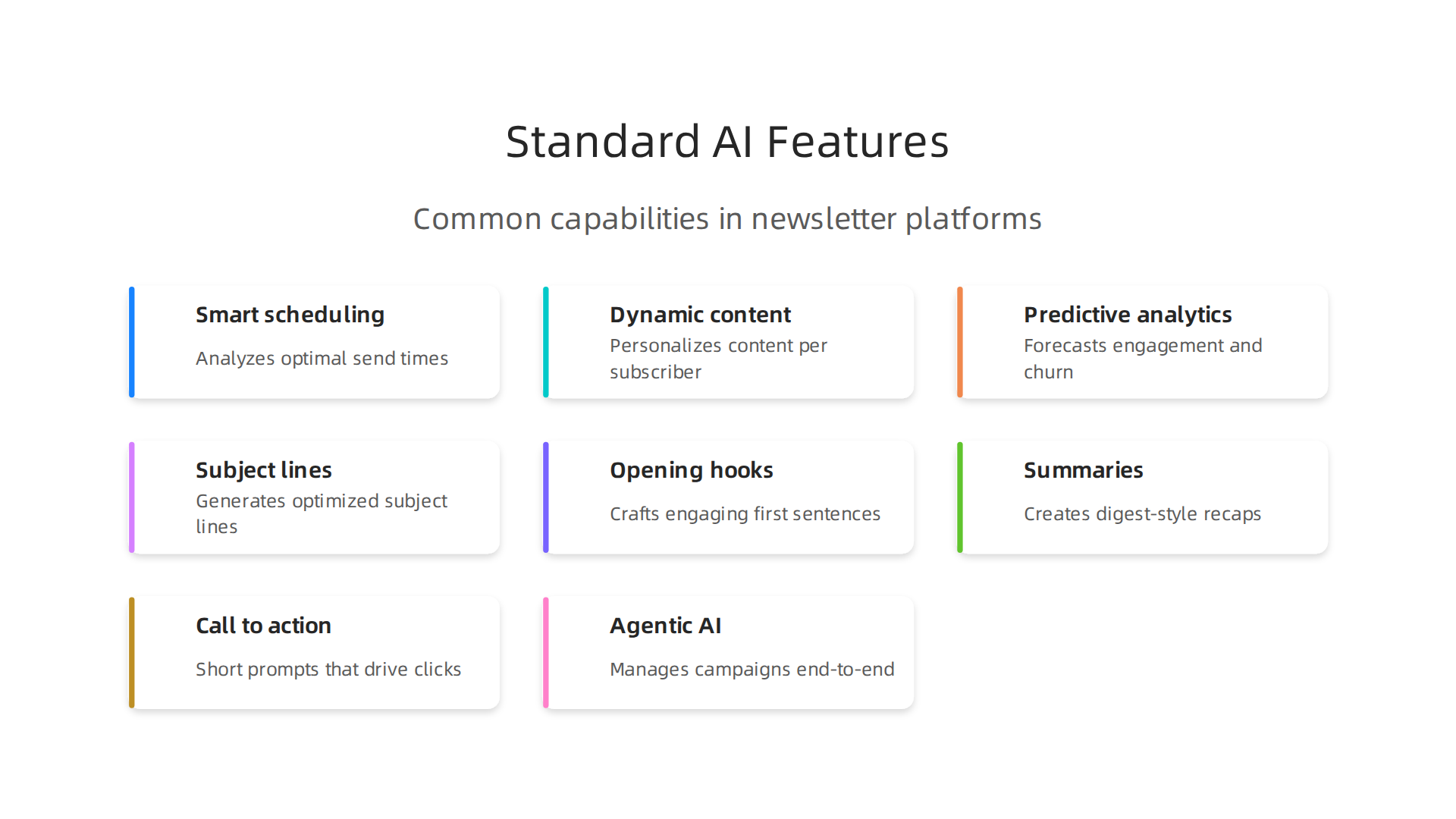
- Smart scheduling — AI analyzes when your subscribers are most likely to open and click, then schedules sends automatically.
- Dynamic content — Each subscriber sees a version of your newsletter tailored to their interests, behavior, or purchase history.
- Predictive analytics — AI forecasts engagement levels, churn risk, and even suggests the best subject lines to maximize open rates.
These capabilities are no longer exclusive to expensive enterprise tools. Mid-range and even entry-level platforms now compete fiercely on AI features. The goal is simple: help you get better results with less manual work.
The shift is real. As one industry report puts it, AI-driven personalization is becoming standard, not "innovative." In 2026, if your newsletter platform lacks smart AI features, you are probably missing out.
Major platforms like Mailchimp, Klaviyo, and Constant Contact have all rolled out new AI tools this year.
They are racing to attract marketers who want efficiency and results. And that competition is great news for you.
If you want to explore how AI can supercharge your broader marketing strategy, check out this guide on how to optimize your AI marketing funnel in 2026. It covers the full picture beyond just email.
The key takeaway? AI-powered newsletter platforms are no longer a future trend. They are the standard in 2026. And the sooner you adopt one, the easier your day-to-day work becomes.
Key AI Features Transforming Email Marketing Automation
So what exactly do these AI tools do for you each day? Let’s break down the three most powerful features that are changing how newsletter platforms work in 2026.
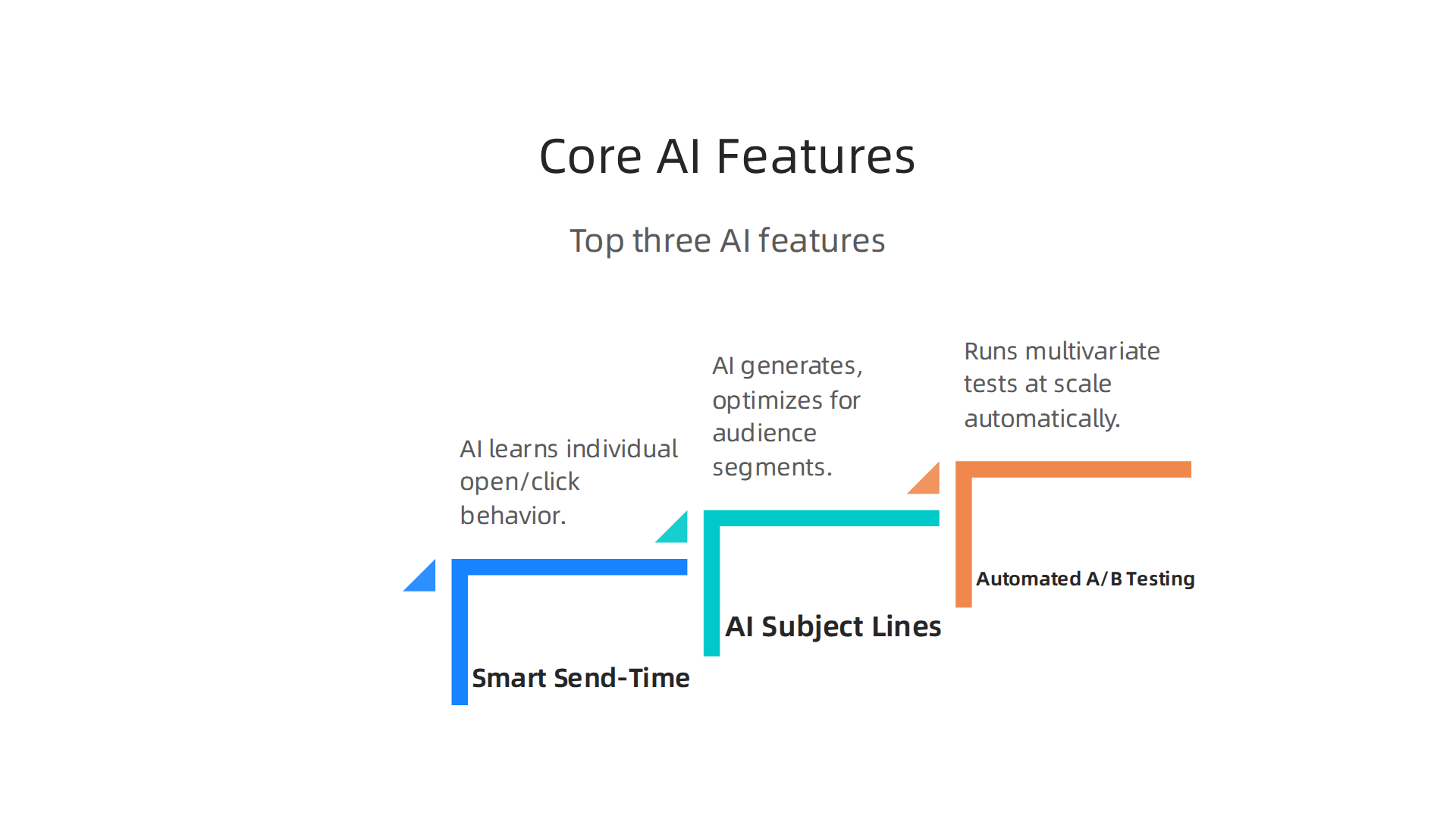
Smart Send-Time Optimization
You might already know that sending an email at the right time can double your open rate. But "the right time" is different for every subscriber. Some people check email first thing in the morning. Others open messages late at night.
AI solves this problem by analyzing each person’s behavior. The system learns when individuals open, click, and engage. Then it queues their email to land in the inbox at that exact moment.
This is not a guess. It is machine learning working on real data. According to an analysis of the best AI tools for email marketing in 2026, predictive sending is now a core feature on platforms like HubSpot, Mailchimp, and ActiveCampaign.
The AI studies patterns you would never spot manually. Then it schedules deliveries one subscriber at a time.
The result? Higher open rates without you changing a thing about your subject lines or content.
AI-Driven Subject Line Testing
Writing subject lines is hard. You want something catchy but not spammy. You want to spark curiosity without being misleading.
AI takes the guesswork out of it. Many newsletter platforms now include a built-in AI subject line generator. You type a few words about your content, and the AI suggests multiple options. You can test them automatically against each other.
But the real magic is in ongoing optimization. The AI tracks which subject lines perform best for different segments of your audience. Over time, it learns what style of phrasing your subscribers prefer. Some people respond better to questions. Others love numbers or urgency. The AI adapts your subject lines to fit.
One roundup of AI tools to transform your newsletter found that platforms like Lex and Zapier’s AI assistants now handle subject line generation as a standard feature. You get better open rates with less creative burnout.
Automated A/B Testing at Scale
A/B testing used to mean sending two versions of an email and waiting for results. It was slow. And most small businesses never had enough subscribers to get reliable data.
AI changes that completely. Modern platforms run multivariate tests automatically. They test subject lines, sender names, preview text, button colors, and even the layout of your email. The AI runs these tests simultaneously across small sample groups. Then it learns which combination works best and sends the winning version to the rest of your list.
This happens without you lifting a finger. According to a comprehensive guide on AI marketing tools in 2026, automated split testing is now table stakes for serious email platforms. It saves hours of manual work and delivers measurably better results.
These three features are not futuristic. They are available today on dozens of platforms. The key is choosing one that integrates them smoothly into your workflow.
If you want to explore more ways AI can save you time, check out our roundup of best AI productivity tools for 2026. And for daily updates on everything happening in the AI space, make it easy on yourself. Your Daily AI Shortcut delivers simple, practical insights straight to your inbox.
Personalization at Scale: How AI Tailors Content for Subscribers
You know the feeling. You open a newsletter, and it’s clearly written for everyone. The same headline. The same links. The same call to action. It feels generic. And most of the time, you click away.
In 2026, that kind of one-size-fits-all approach is a fast track to the spam folder. Subscribers expect content that feels personal. They want emails that show you understand who they are and what they care about.
That is exactly what AI personalization does. And the best part? It happens automatically.
How AI Learns About Each Subscriber
Your newsletter platform collects data with every email you send. It tracks open rates, click patterns, time spent reading, and even which links were ignored. AI tools take that raw data and turn it into a profile for every single person on your list.
The AI looks at what topics someone engages with most. It notices if they prefer short emails or long reads. It learns whether they click on product links or resource guides. Over time, the system builds a detailed picture of each subscriber’s preferences.
As one analysis of the 21 best newsletter platforms in 2026 points out, AI integration is the standout feature this year. Platforms now use machine learning to personalize content at an individual level, not just a segment level.
Dynamic Content That Changes Per Person
Here is where it gets really cool. AI does not just decide which email to send. It actually changes the content inside a single email based on who opens it.
This is called dynamic content insertion. The email you write has different blocks of text, images, and links. The AI picks and chooses which blocks each subscriber sees. Someone who loves case studies gets a case study. Someone who prefers quick tips gets a short list of tips.
Natural language processing (NLP) powers this. The AI reads your content, understands what each block is about, and matches it to subscriber interests. The result is an email that feels custom-made for each reader.
The Real Benefits: More Engagement, Fewer Unsubscribes
Personalization at scale does more than make people feel good. It drives real results.
When subscribers receive content that matches their interests, they open more emails. They click more links. They stay on your list longer.

Unsubscribe rates drop because people do not feel bombarded with irrelevant information. Instead, they look forward to your emails. They feel like you get them.
If you want to take your personalization strategy even further, you can learn how to optimize your AI marketing funnel for even better results. The tools are already here. The smartest move is to use them.
Data-Driven Segmentation and Predictive Analytics
Personalization is powerful, but it only works when you know exactly who you are talking to. Sending the right message to the wrong person still feels like spam. That is where data-driven segmentation and predictive analytics come into play.
In 2026, AI does not just group subscribers by basic traits like age or location. It creates micro-segments based on hundreds of behavioral signals. Things like what time someone opens emails, how often they click, which topics they spend time on, and whether they abandoned a cart. The AI watches all of this and builds tiny, focused groups that share similar patterns.
These micro-segments are dynamic. They update automatically as behavior changes. A subscriber who stops clicking on product links but starts reading resource guides moves into a new segment. The system never asks you to sort through your list manually.
Predictive Analytics Sees What Is Coming Next
Here is where things shift from reactive to proactive. Predictive analytics uses past data to forecast future actions. It can tell you which subscribers are most likely to churn in the next 30 days. It can also flag the ones most likely to make a purchase or upgrade.
Instead of waiting for someone to stop opening emails and then trying to win them back, you reach them early. You send a special offer or a personal note before they lose interest. That timing makes a huge difference.

As one guide to proven email segmentation strategies for 2026 explains, behavioral signals like page visits, email clicks, and abandoned carts are far stronger predictors of what someone will do next than basic profile data. This is why AI-driven segmentation beats manual lists every time.
Automation Frees You From Manual Work
Before AI, segmentation meant spending hours exporting csv files, writing rules, and praying the data was clean. Not anymore.
AI marketing tools handle all of that in the background. They connect to your CRM, website analytics, and e-commerce data. They build segments automatically and keep them fresh. You focus on writing great content and designing offers. The machine does the sorting.
If you want to see how these kinds of AI tools fit into your broader workflow, check out this roundup of the best AI productivity tools for 2026. Many of them include the segmentation and predictive features discussed here.
The result is better campaign relevance without extra effort. Higher open rates, more conversions, and fewer people hitting unsubscribe. All because your newsletter platform understands who your subscribers really are.
To stay on top of how AI is reshaping email marketing and audience insights, you can join The Deep View Newsletter for simple daily AI insights. It keeps you updated without the noise.
AI Writing Assistants and Content Generation for Newsletters
So you have your segments perfectly organized. You know exactly who needs what message. Now comes the hard part. You still have to write all that content.
This is where most newsletter creators get stuck. You stare at a blank screen. The cursor blinks. Nothing happens. Writing every edition from scratch takes hours. And when you manage multiple segments, each one needs its own version.
AI writing assistants solve this problem in 2026. They do not replace your voice. But they remove the blank page panic.
How Generative AI Helps You Write Faster
Large language models like GPT-4 can draft full newsletter editions in seconds. You give them a topic, a tone, and a few bullets. They return a complete draft.
Here is what AI handles well:
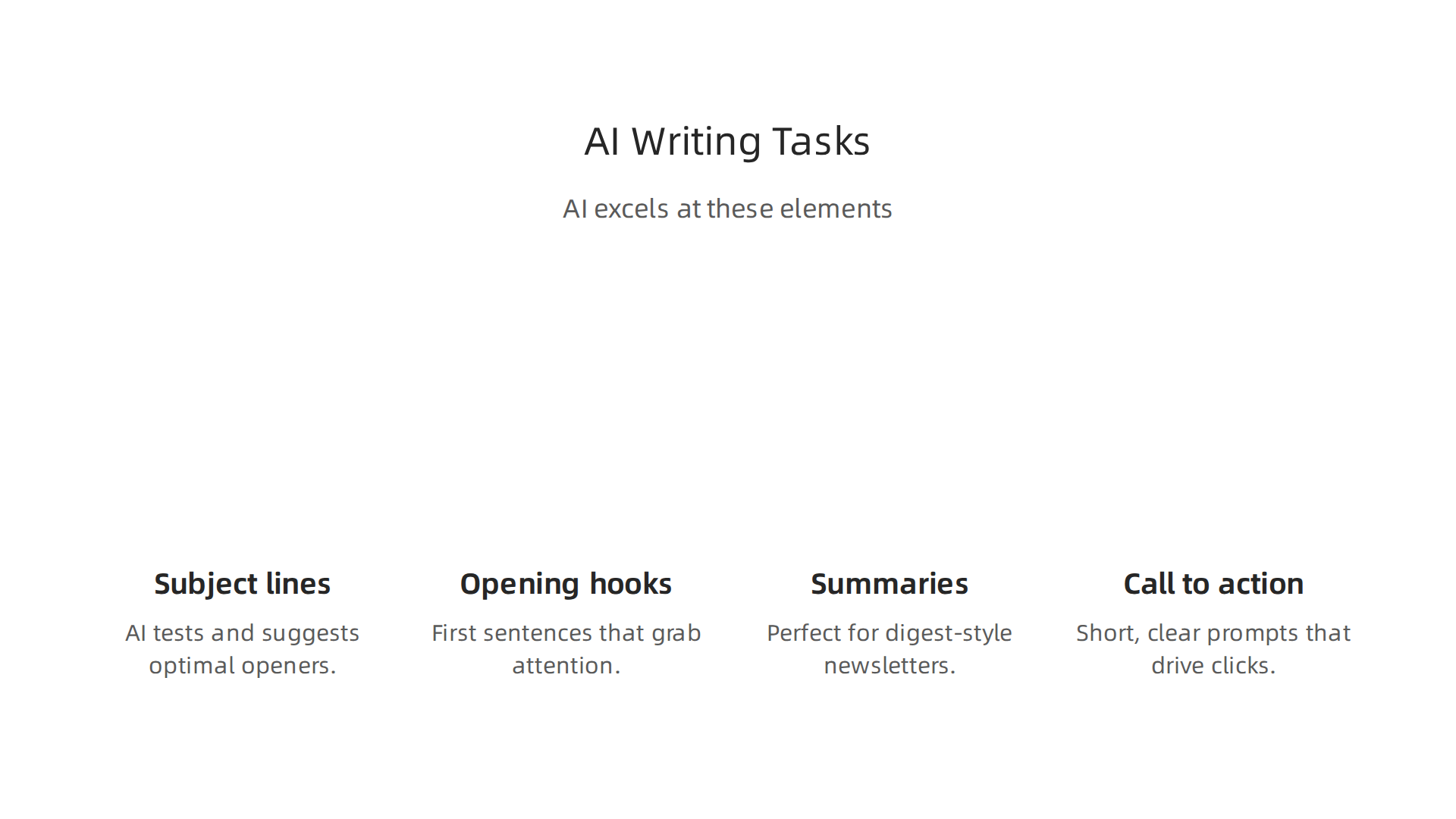
- Subject lines. The AI tests dozens of options and suggests the ones most likely to get opened.
- Opening hooks. First sentences that grab attention and keep people reading.
- Summaries and recaps. Perfect for digest-style newsletters that round up links and news.
- Call to action copy. Short, clear prompts that drive clicks without feeling pushy.
The key is treating AI as your first draft partner, not your final editor. As one guide to AI in email marketing for 2026 explains, AI speeds up ideation and drafting. But the human touch still matters for polishing and accuracy.
Keeping Your Brand Voice Consistent
Here is a worry many people have. Will AI sound like a robot? Will my newsletter lose its personality?
In 2026, the best AI writing tools let you fine-tune outputs to match your brand. You set rules for vocabulary, sentence length, and tone. The system learns from your past content. Over time, it gets better at sounding like you.
This means you can scale your content without scaling your effort. One person can manage a weekly newsletter for multiple audience segments. The AI handles the heavy lifting on volume. You handle the creative direction.
Why Human Oversight Still Matters
AI is fast. AI is not perfect.
Every AI-generated piece needs a human review before it goes out. Facts need checking. Tone needs adjusting. And sometimes the AI misses the nuance of a sensitive topic.
Think of it this way. You are the pilot. The AI is the co-pilot. It handles the routine work. You make the judgment calls.
If you are exploring different ways to speed up your content pipeline, take a look at the latest AI content creation tools available in 2026. Many of them integrate directly with your newsletter platform so the writing and sending happen in one place.
The best workflow is simple. Let AI draft. Let humans refine. Send with confidence. Your readers get consistent quality, and you get your evenings back.
Measuring ROI: AI Analytics and Optimization Tools
You have set up your newsletter platform. You have written great content. But how do you know if it is actually working? Old school metrics like open rates and click rates only tell part of the story. AI changes that completely.
In 2026, AI analytics tools look beyond surface level numbers. They predict things like customer lifetime value. They tell you which subscribers are most likely to become long term fans. They also show you the real attribution for each sale or signup. This means you can see exactly which email in which sequence drove the conversion.
Optimization tools take things one step further. They watch how your audience behaves. If someone stops opening your emails, the tool automatically adjusts the send frequency. If a certain topic gets more clicks, the AI pushes more content like that to that person. You do not have to guess anymore. The system learns and adapts in real time.
Real time dashboards give you all this information in one place.

You can see which segments are thriving. You can spot patterns before they become problems. As one guide to email marketing analytics tools for 2026 explains, these platforms filter out bot clicks so you get honest data. You stop making decisions based on fake opens or inflated numbers.
Here is the bottom line. AI turns your newsletter platform into a smart growth engine. It tells you what is working, what is not, and what to do next. You save hours of manual analysis and get better results.
If you want to stay on top of how AI is reshaping marketing and beyond, you can join The Deep View Newsletter for simple daily AI insights. It helps you spot trends early and use them in your own work.
For more ideas on using AI to improve your campaigns, take a look at this guide on how to optimize your AI marketing funnel. The same principles apply to your newsletter analytics.
You now understand how AI analytics can transform your newsletter performance. But to actually get those benefits, you need a newsletter platform that has these AI features built in from the start. Not every platform delivers the same level of smarts. Here is what to look for when choosing an AI-integrated newsletter platform in 2026.
AI Feature Depth
The best platforms go beyond basic automation. Look for predictive analytics that forecast subscriber behavior and lifetime value. Send time optimization automatically delivers emails when each person is most likely to open. Dynamic content swaps out sections based on who is reading. As one review of the top newsletter platforms explains, AI integration is a key strength for tools like Beehiiv and Sequenzy.
Ease of Use
AI should simplify your work, not add complexity. Choose a platform with a clean dashboard and drag and drop builders. Visual subscriber journeys let you set up sequences in minutes. If the tool takes too long to learn, you will skip the AI features.
Scalability
Your newsletter will grow. Pick a newsletter platform that grows with you. Most offer tiered pricing. The higher tiers unlock more advanced AI capabilities like custom predictive models and deeper integrations. You can start small and upgrade later without switching tools.
Integration Ecosystem
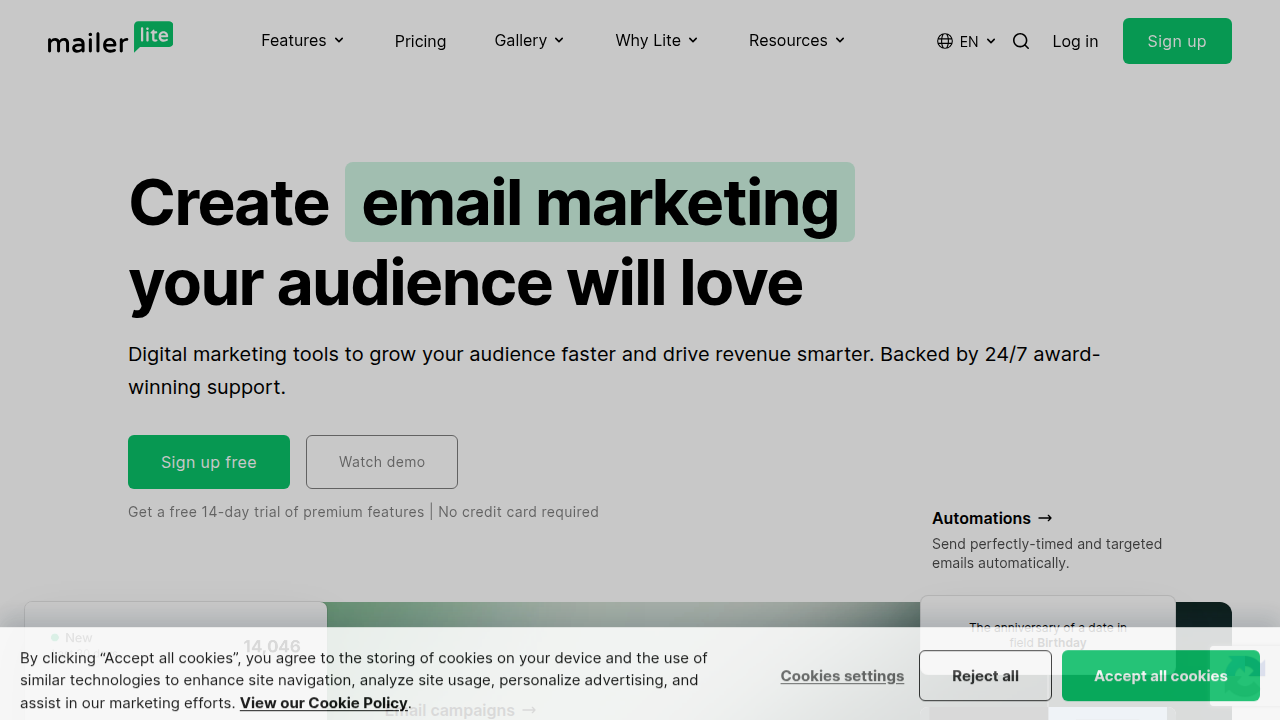
AI gets smarter when it has more data. A platform that connects with your CRM, e commerce tools, and analytics gives the AI a richer picture. Look for native integrations or a solid API. This is where platforms like MailerLite shine, with built in AI insights that pull from across your tools.
Free Trials Are a Must
Do not buy based on a sales video. Sign up for a free trial or demo account. Test the AI workflows with real subscriber data. See if the predictive send times actually improve open rates. Only hands on testing shows if the platform fits your style.
Taking time to evaluate these criteria will save you headaches later. For more ways AI tools can boost your daily workflow, check out this guide on the best AI productivity tools for 2026.
Future Trends in AI Newsletter Platforms
The newsletter landscape in 2026 is shifting fast. What worked last year may feel outdated by next quarter. Staying ahead means understanding the major trends that will shape how you use your newsletter platform. Here are three big ones to watch.
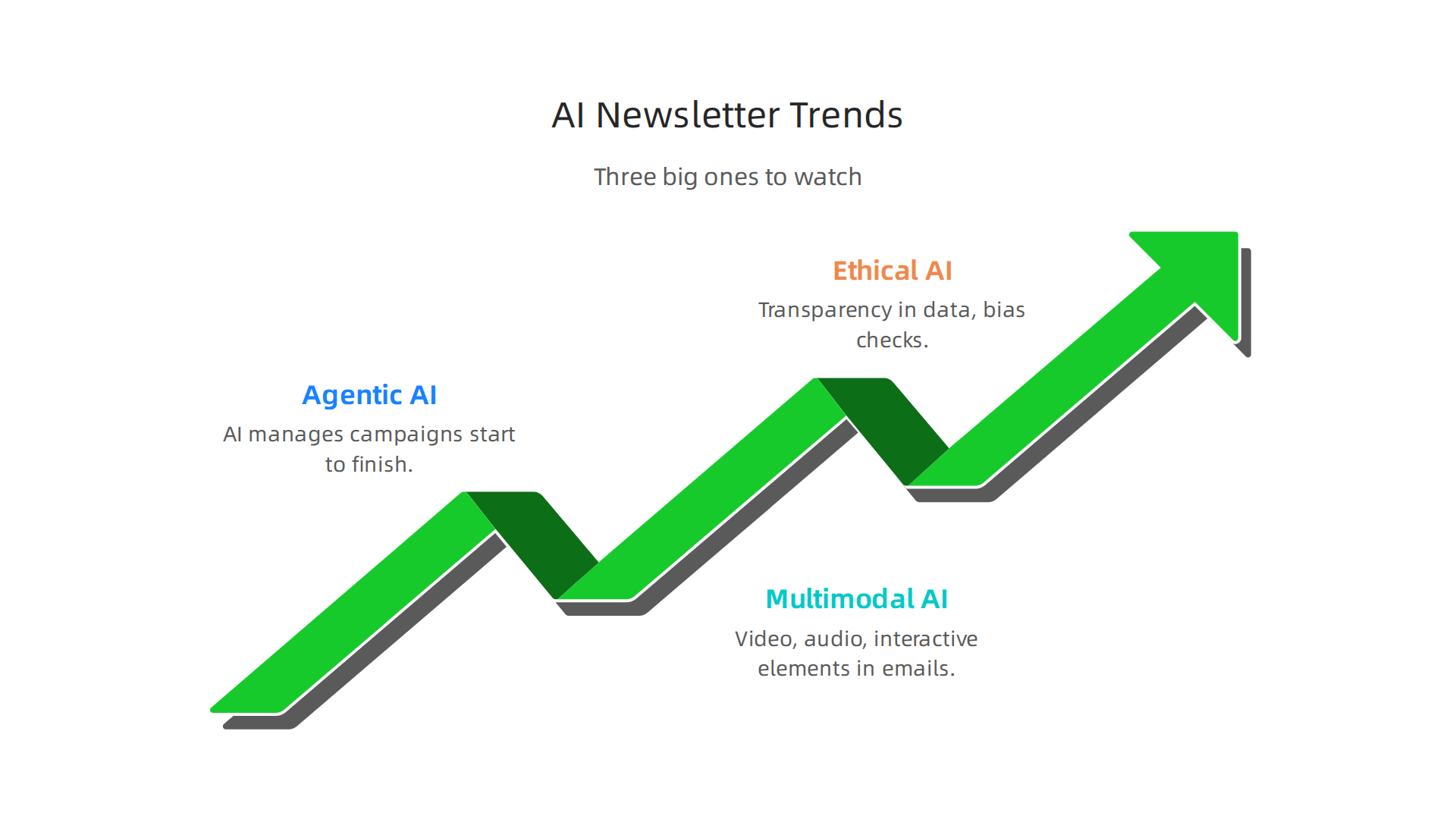
Agentic AI Will Handle the Heavy Lifting
Agentic AI goes beyond simple content generation. These systems can plan, execute, and optimize a newsletter from start to finish with almost no human input. Imagine an AI that researches topics, writes the copy, picks images, personalizes each section per subscriber, and schedules sends at the perfect moment. All without you touching a single button.
A recent report on newsletter growth trends shows that 64% of newsletter professionals believe most newsletters will be fully AI generated by 2030. Agentic AI is the engine behind that prediction. Early adopters are already testing AI workflows that manage entire campaigns autonomously. Your newsletter platform needs to support this level of automation to keep you competitive.
Multimodal AI Brings Video and Rich Media Into Emails
Email used to be text and static images. Multimodal AI changes that. Now your newsletter platform can generate video summaries, audio clips, and interactive elements directly inside the email. No need to send people to a separate landing page.
A subscriber could watch a 30 second highlight reel of your latest blog post without ever leaving their inbox. Tools that handle text, audio, video, and images in one seamless output are becoming standard. If your platform can’t do this yet, it will soon.
Ethical AI Concerns Will Demand Transparency
As AI gets more powerful, so do the risks. Bias in content generation, data privacy gaps, and opaque algorithms worry both creators and readers. Regulations are tightening. Platforms that ignore ethical AI will lose trust fast.
The focus on responsible and ethical AI frameworks is now a top trend across industries. Look for platforms that publish clear policies on data usage, offer bias checks on generated content, and let you control how their AI learns from your subscriber data. Transparency is no longer optional. It is a competitive advantage.
Stay Ahead With Daily AI Insights
The future of newsletter platforms is exciting but complex. To keep up with every new tool and trend, you need a steady source of curated information. That is exactly why we recommend a newsletter that delivers simple daily AI insights straight to your inbox. Join The Deep View Newsletter to stay informed and make smarter decisions with your newsletter strategy.

The tools you choose today will shape how you connect with your audience tomorrow. Pay attention to these trends and pick a platform built for what is coming next.
Summary
This article explains how AI has become the defining feature of modern newsletter platforms and why adopting AI tools matters for marketers in 2026. It covers the core AI capabilities now standard—smart send-time optimization, AI-driven subject-line testing, automated multivariate A/B testing, and dynamic content personalization—and shows how these features raise open rates, clicks, and subscriber retention. The piece also walks through data-driven segmentation and predictive analytics that create micro-segments and forecast churn or purchase behavior, plus practical guidance on AI writing assistants that speed drafting while preserving brand voice. You’ll learn what to evaluate when choosing a platform—feature depth, ease of use, scalability, and integrations—and why free trials are essential. The article highlights measurement and ROI improvements from AI analytics and points to emerging trends like agentic and multimodal AI and ethical transparency. After reading, you’ll know which AI capabilities to prioritize, how to test them, and how to set up workflows that scale without sacrificing quality.