

Introduction
Artificial intelligence is no longer a futuristic idea. In 2026, AI models have moved past the hype phase into real, daily use across nearly every major industry. The numbers back this up. According to The 2026 AI Index Report from Stanford HAI, generative AI reached 53% population adoption within just three years. That is faster than the personal computer or the internet ever moved. And organizational adoption hit 88%.
That is a massive shift.
It also creates a new problem. With so many new AI tools, model launches, and company updates coming every single day, it is easy to feel overwhelmed. Decision makers like you face a constant flood of information. How do you separate the signal from the noise? How do you know which AI models actually matter for your work?

That is exactly why this article exists.
We have put together a clear, structured tour of the most practical AI applications in 2026. Every section is backed by the latest data and expert insights from trusted sources. We cover everything from the best image generating AI tools to how to create AI videos for free, and even how USDA artificial intelligence is changing farming and food production.
The goal is simple. Help you stay informed without spending hours digging through scattered sources. Help you make smarter decisions faster.
If you feel like you are drowning in AI news and need a trusted guide, you are in the right place. Let us cut through the AI noise together and focus on what actually works. And if you want a daily shortcut to the most important AI updates, Your Daily AI Shortcut delivers simple, clear insights straight to your inbox.
AI Models in Healthcare: Diagnostics, Drug Discovery, and Patient Care
Healthcare is one of the areas where AI models are making the biggest difference. It is not just about faster computers. It is about saving lives. Let us look at three main ways AI is changing medicine in 2026.
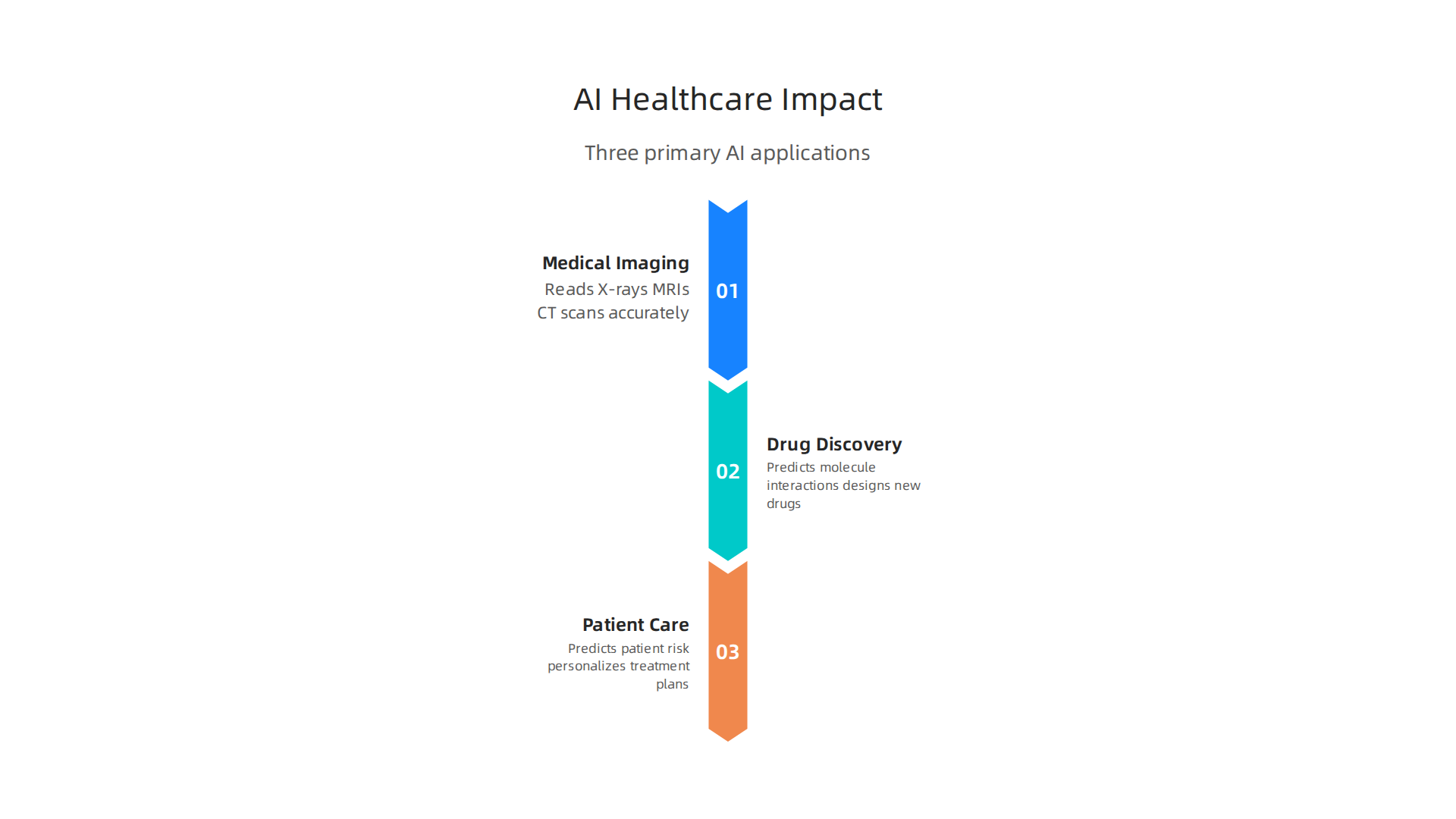
First, medical imaging. AI models can now read X-rays, MRIs, and CT scans with accuracy that matches or even beats human specialists. This means faster diagnoses for things like cancer, heart disease, and brain conditions. It also helps catch problems early when treatment works best. The U.S. Food and Drug Administration (FDA) keeps an updated Artificial Intelligence-Enabled Medical Devices list that shows how many approved AI tools are already in use. And the number keeps growing.
Second, drug discovery. Generative AI models have changed how we find new medicines. Instead of testing thousands of molecules by hand in a lab, AI can predict how molecules will interact inside the body. This cuts years off the development timeline. Drug companies now use AI to design new drugs from scratch and find existing drugs that could work for new diseases. This speed matters a lot when a new virus or health crisis appears.
Third, patient care and hospital management. Predictive AI models look at patient data to figure out who is at risk of getting worse. Hospitals use these tools to reduce readmissions and personalize treatment plans. For example, an AI model might notice that a patient recovering from surgery is likely to develop an infection. Doctors get an alert and act early. That is better for the patient and cheaper for the system.
You do not need to be a doctor to see the opportunity here. If you work in healthcare or invest in it, understanding how AI models are reshaping diagnostics and treatment is essential. This shift will only speed up.
To stay ahead of these changes, it helps to understand how AI models get deployed in real hospital settings. That is why we put together a guide on edge AI in 2026 and how it brings intelligence to bedside devices. It explains the technology behind these life-saving tools in plain words.
AI Models in Finance: Fraud Detection, Risk Management, and Algorithmic Trading
The same kind of revolution happening in healthcare is also reshaping finance. Banks, lenders, and trading firms are turning to AI models to make faster decisions, catch problems early, and serve customers better. If you have ever had a credit card alert about a suspicious purchase, an AI model probably flagged it. Let us look at three big ways AI is changing money in 2026.
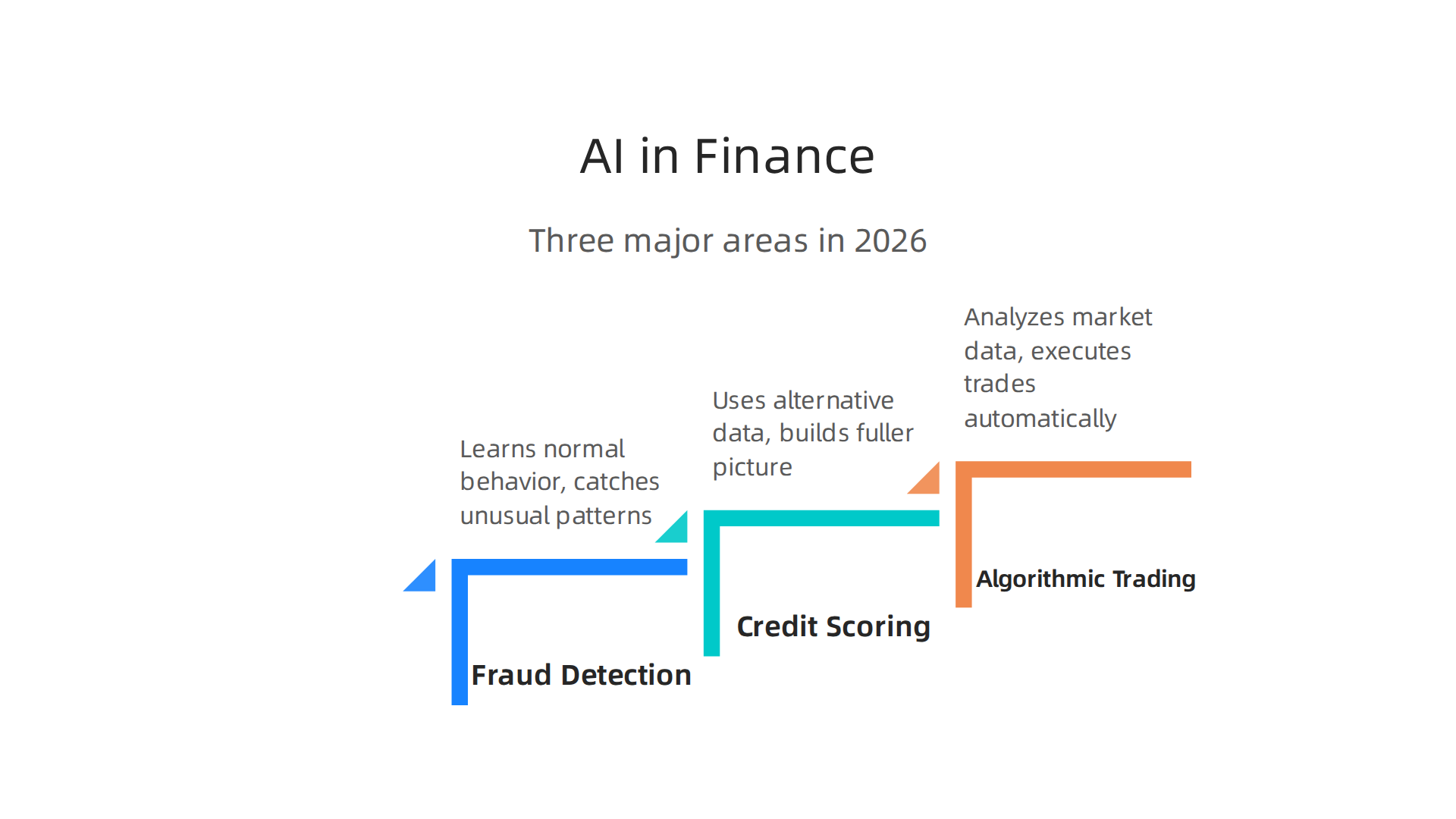
First, fraud detection. Old fraud systems used fixed rules. They looked for things like a purchase over a certain amount or a transaction in a different country. But fraudsters are clever. They change their patterns to slip through. Machine learning models solve this by learning normal behavior for each customer. When something unusual happens, the model catches it in real time, even if it has never seen that exact trick before. This stops fraud before the money leaves your account. The models get smarter over time as they see more data.
Second, credit scoring. Traditional credit scores look at a narrow set of information like loan payments and credit card debt. That leaves out a lot of people. AI models now use alternative data like rent payments, utility bills, and even education history to build a fuller picture. This helps banks say yes to more borrowers who are actually reliable. It opens up credit to people who were invisible to the old system. That is a big deal for financial inclusion.
Third, algorithmic trading. Stock markets move fast. Human traders cannot react as quickly as computers. AI models, especially deep learning ones, analyze market data, news, and social media in milliseconds. They spot patterns, predict price moves, and execute trades automatically. In 2026, these models also adapt to sudden volatility. When the market gets choppy, the AI adjusts its strategy instead of sticking to a broken plan. This helps reduce losses and find opportunities.
The shift to AI in finance is not without challenges. Banks have to deal with data quality, model drift, and keeping models fair. These are some of the same common AI model deployment challenges that every industry faces.
If you are an investor or work in finance, understanding how AI models work in trading is especially valuable.

That is why we put together a guide on AI factor investing and how to build a research-backed portfolio. It explains the strategy in plain language.
To stay ahead of all the changes happening in AI across finance, healthcare, and beyond, get your Your Daily AI Shortcut delivered straight to your inbox. It makes keeping up easy.
AI Models in Retail: Hyper‑Personalization and Supply Chain Efficiency
If you have shopped online lately, you have probably seen AI models at work without realizing it. That perfect product suggestion that makes you click "add to cart"? That is a recommendation engine powered by machine learning.

In 2026, these engines have become incredibly good at reading your preferences. They analyze your browsing history, past purchases, and even what other shoppers with similar tastes bought. The result is a shopping experience that feels personal and almost intuitive.
Retailers using these systems see real results. AI product recommendations help shoppers find the right products faster, which directly boosts sales. Studies show that AI-driven recommendations can increase conversion rates by up to 35%. That is a big lift for any online store. The key is that AI models learn in real time. If you suddenly start looking at gardening tools instead of electronics, the model adjusts on the spot. It does not rely on static rules. It adapts to you.
But AI in retail is not just about suggesting products. It also transforms how stores manage inventory. Predictive inventory models use historical sales data, weather forecasts, and even social media trends to forecast demand. This helps retailers avoid two costly problems: stockouts and overstock waste. When a store runs out of a popular item, it loses sales and frustrates customers. Too much extra stock eats into profits. AI models solve both by ordering just the right amount. For grocers and food retailers, this is especially important. Even the USDA uses artificial intelligence to forecast agricultural outputs, helping stores plan inventory around crop availability and seasonal demand.
Another powerful use of AI models in retail is customer sentiment analysis. Natural language processing (NLP) scans product reviews, social media comments, and customer service chats to understand how people feel about a brand or product. If a new sneaker gets mixed reviews, the retailer can spot the problem fast and fix it. This improves brand engagement and builds loyalty. Customers feel heard when companies respond quickly to their complaints.
AI also helps retailers create better product visuals. Instead of hiring photographers for every item, stores now use the best image generating AI to produce high-quality product shots. Some even create AI videos for free to showcase items in action, giving shoppers a better sense of how a product looks and works before buying.
If you run a retail business or work in e-commerce, understanding how AI models drive these changes is essential. To learn more about using AI specifically for marketing in the retail space, check out our guide on AI for marketing consultants. It covers practical ways to apply these tools to your own campaigns.
AI Models in Manufacturing: Predictive Maintenance and Quality Control
Now let us move from the retail floor to the factory floor. AI models are just as powerful in manufacturing, where they help companies keep machines running and products defect-free.
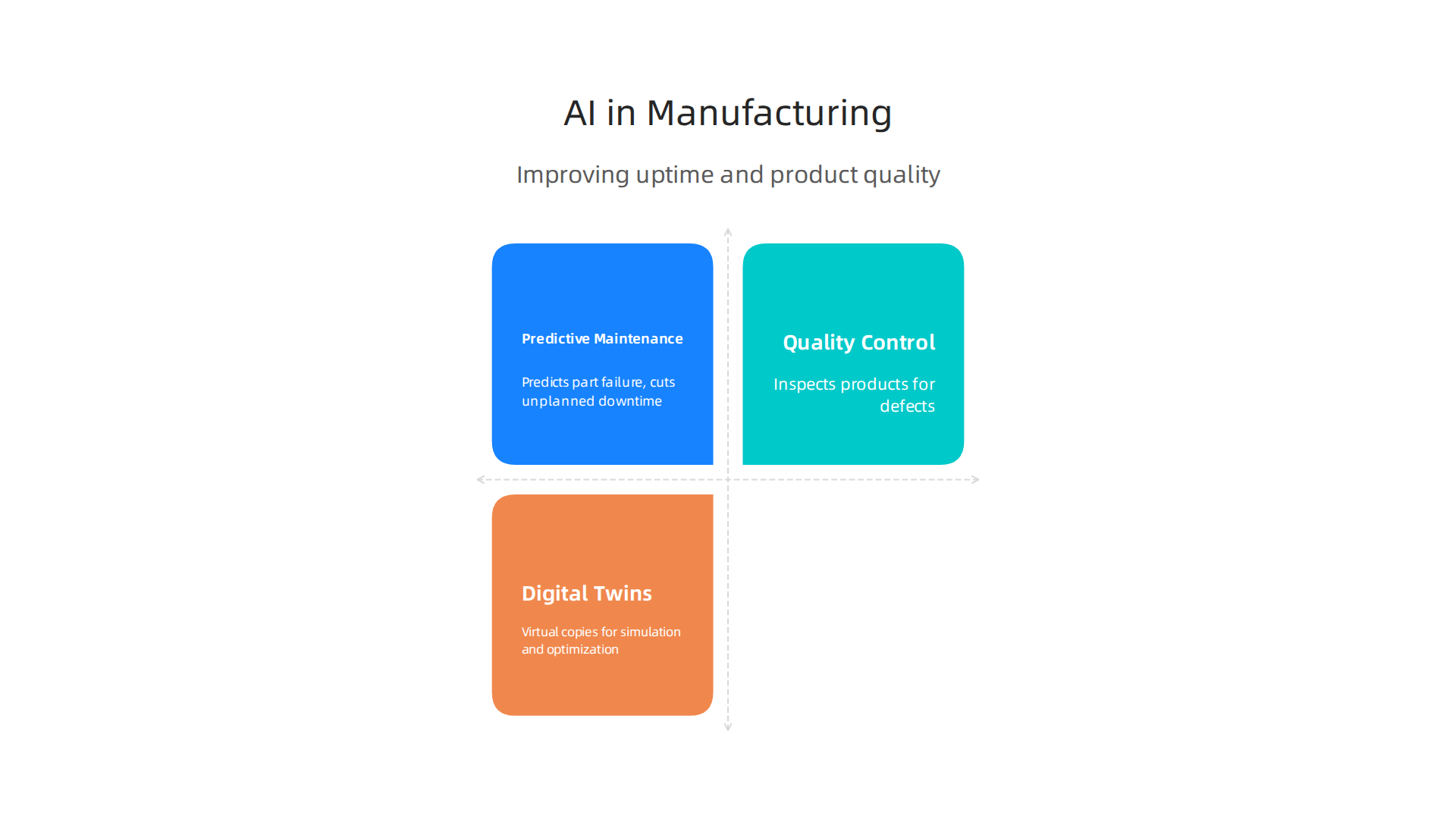
Predictive maintenance is one of the biggest wins. Instead of waiting for a machine to break down (reactive maintenance) or servicing it on a fixed schedule, AI models analyze sensor data in real time to predict when a part is likely to fail. This cuts unplanned downtime dramatically. According to a case study of Siemens and GE using AI for predictive maintenance, manufacturers can reduce unplanned downtime by up to 50% and cut maintenance costs by 30%. In an industry where a single hour of downtime can cost hundreds of thousands of dollars, that is a game changer.
But the savings do not stop there. AI models also improve quality control through computer vision. High-speed cameras paired with machine learning algorithms inspect products as they zoom down the assembly line. These systems spot defects that human eyes would miss, like tiny cracks, color inconsistencies, or misaligned parts. And they do it at line speeds far beyond what any person can sustain. This means fewer recalls, less waste, and happier customers.
Another exciting development is the use of digital twins. A digital twin is a virtual copy of a physical machine or production line. AI models run simulations on this twin to test different scenarios. What happens if we increase the temperature? What if a conveyor belt slows down? The AI finds the best settings without risking real equipment. This kind of real-time process optimization helps factories produce more with less energy and fewer raw materials.
If you work in manufacturing or supply chain, staying on top of these AI advances is critical. For a deeper look at how these technologies connect, check out our article on edge AI brings real-time intelligence to devices. It explains how on-device processing makes factory floor AI faster and more reliable.
And if you want daily updates on AI breakthroughs across all industries, Your Daily AI Shortcut is the simplest way to stay informed. Join The Deep View Newsletter for simple daily AI insights delivered to your inbox.
AI Models in Transportation & Logistics: Autonomous Systems and Route Optimization
The factory floor is not the only place where AI models are changing the game. Transportation and logistics have quietly become one of the most exciting proving grounds for artificial intelligence.
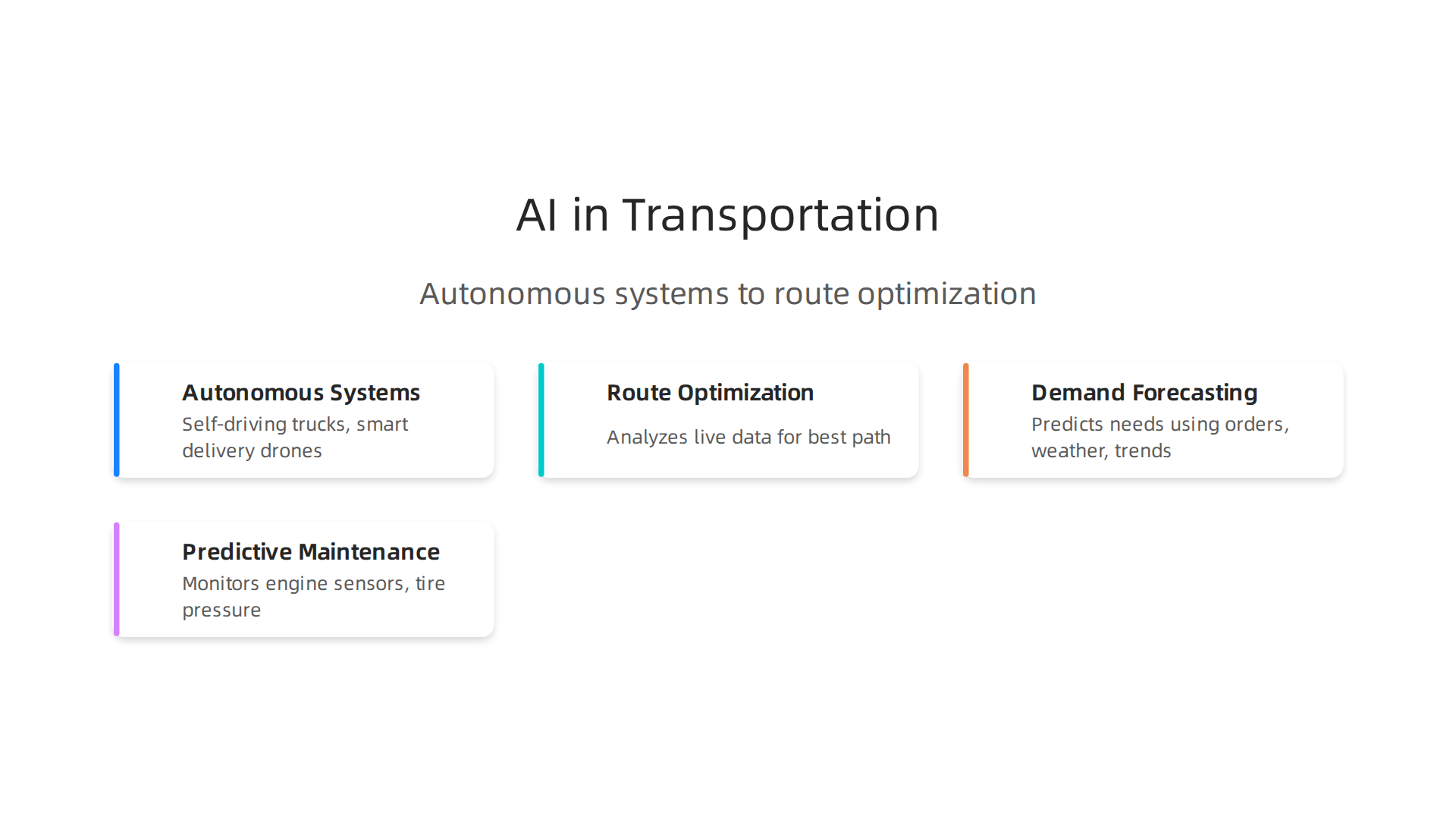
From self-driving trucks to smart delivery drones, AI is making the movement of goods faster, cheaper, and greener.
Autonomous vehicles and drones have moved past the pilot stage. In 2026, several major freight companies are running semi-autonomous trucks on long-haul routes. These systems use cameras, lidar, and AI models to navigate highways safely. Drones are handling last-mile deliveries in suburban areas, cutting delivery times from hours to minutes. The technology is not perfect yet, but it is already reducing the strain on human drivers and helping companies move more packages with fewer resources.
Route optimization is where AI models deliver some of the most immediate savings. Traditional GPS navigation gives you a fastest route based on static maps. AI route optimization goes much deeper. It analyzes live traffic, weather data, road closures, and even driver behavior patterns to find the best path for each trip. The results are impressive. Companies using AI-powered routing report fuel savings of 10 to 20 percent and delivery time reductions of 15 to 30 percent. For a fleet of 100 trucks, that adds up to hundreds of thousands of dollars every year.
Demand forecasting is another place where AI shines. Logistics companies need to know how many trucks, drivers, and trailers to have ready at any given time. Old methods relied on historical averages and gut feelings. AI models now crunch data from online orders, weather forecasts, holidays, and even social media trends to predict demand with surprising accuracy. This allows fleet managers to allocate vehicles where they are needed most and avoid those expensive "empty miles" where a truck drives back without a load.
AI models also help with predictive maintenance for the vehicles themselves. By monitoring engine sensors, tire pressure, and brake wear, AI can tell a fleet manager when a truck is likely to need service before it breaks down on the road. This cuts unexpected breakdowns and keeps trucks moving. According to a predictive maintenance case study from IIoT World, companies using this approach save significant costs and reduce downtime.
To stay ahead of these rapid changes in logistics AI, business leaders should keep a close eye on the latest innovations. Our guide on tracking AI innovators explains how to spot the most important developments before they hit the mainstream.
AI Models in Media & Entertainment: Generative Content and Deep Personalization
Just as AI is reshaping how goods move across the country, it is completely changing what we watch, listen to, and scroll through. The media and entertainment industry has become one of the biggest playgrounds for AI models. And the results are everywhere, even if you do not always notice them.
Generative AI models are now producing scripts, music, and visual effects at a fraction of the cost traditional studios used to spend. Small production teams can generate realistic backgrounds, compose original scores, and even write rough drafts of dialogue using tools powered by advanced AI.

A filmmaker no longer needs a million-dollar budget to create something visually stunning. In 2026, anyone with a laptop and a good idea can produce content that looks and sounds professional. This shift is opening doors for independent creators while putting pressure on big studios to adapt.
But the real magic happens after the content is made. Recommendation algorithms powered by AI models now predict what you want to watch better than your closest friends can. Streaming services, music platforms, and social media apps all rely on these systems to learn your taste. They track what you skip, what you rewatch, and even how long you pause on certain scenes. Over time, the model builds a profile so accurate that it can suggest a new show you have never heard of and somehow nail it. This kind of deep personalization keeps users glued to their screens. According to a detailed look at how AI recommendation engines work at Salesforce, these systems are the backbone of user engagement for the biggest platforms.
Audience analytics powered by AI now drive almost every big decision in media. Network executives, ad buyers, and content strategists use AI to decide which shows to greenlight, where to place ads, and how to price commercial slots. The same models that recommend your next video also tell companies what kind of content keeps people watching. Advertisers love this because it means their money goes further. Instead of showing a car commercial to everyone, they can target people who are actually shopping for a new car. This level of precision was impossible just a few years ago.
For content creators looking to stay ahead, knowing which tools actually deliver results matters. Our hands-on comparison of the best AI image generators for 2026 breaks down the top options for visual storytelling.
The entertainment landscape is evolving fast. And the companies that learn to use AI models wisely will be the ones telling the stories of tomorrow.
If you want to keep up with these changes without spending hours reading, grab Your Daily AI Shortcut. It is a simple newsletter that delivers clear AI insights straight to your inbox every day.
Summary
AI models are no longer experimental—by 2026 they power real outcomes across healthcare, finance, retail, manufacturing, logistics, and media. This article maps the most practical uses of AI models today: from medical imaging and drug discovery to fraud detection, product recommendations, predictive maintenance, route optimization, and generative content. It explains why these changes matter for decision makers, highlights measurable benefits like reduced downtime and higher conversion rates, and points to operational challenges such as model drift and data quality. Along the way the piece links to deeper guides and tools so readers can evaluate image generators, edge AI, investing strategies, and marketing applications. After reading, you’ll understand where AI delivers the biggest ROI, common deployment pitfalls, and concrete next steps to adopt or monitor AI in your organization.