

Introduction
The marketing world looks completely different than it did just two years ago. If you are a marketing consultant, you have probably felt the shift yourself. Clients no longer ask if you use AI. They assume you do. And if you do not have an answer ready, they start looking for someone else.
Here is the reality. According to recent industry reports on AI adoption in marketing, 88% of marketers now use AI tools daily. That is not a trend anymore. That is the new normal. Organization-wide use of AI in professional services almost doubled to 40% in 2026. Clients expect data driven, AI powered insights as a basic service, not a bonus feature.
The pace of change is forcing consultants to rethink old strategies or risk becoming irrelevant.

The methods that worked in 2023 already feel outdated. If you are still doing things the same way you did them last year, you are falling behind.
But here is the good news. You do not need to become a technical expert overnight. You need a clear plan. You need to know which tools actually deliver results, how to use them without losing trust, and how to keep your clients safe from compliance risks.
This article gives you an actionable roadmap. We cover practical steps for integrating AI into your work the right way. You will learn how to stay ahead without cutting corners. Along the way, you can also learn how to optimize your AI marketing funnel to get the most out of every campaign.
Stay ahead of the curve. The AI landscape changes fast. To keep your edge, subscribe to The Deep View Newsletter for simple daily AI insights delivered to your inbox every morning.
The New Mandate: Why Every Marketing Consultant Must Embrace AI
The days when clients politely asked, "Do you use AI?" are gone. Now they demand specifics. They want to know which tools you use, how you apply them, and what measurable results you deliver. If you cannot answer clearly and confidently, they move on to another consultant who can. That is the reality of 2026.
This shift is not hypothetical. According to the latest AI in marketing statistics for 2026, marketing professionals who mention AI in their job titles earn over 20% more than those who do not. Clients are paying a premium for consultants who understand AI. They expect you to bring data-driven, AI-powered insights into every engagement as a standard part of your digital marketing services, not as an add-on.

The data backs up the demand. Early adopters of AI among marketing consultants are already seeing huge gains. Marketing teams that use AI report a 44% boost in productivity and save between 11 and 13 hours every week. That extra time goes directly into strategy, creativity, and deeper client work. Inbound marketing strategies powered by AI consistently outperform traditional approaches.
If you are still relying on manual processes and outdated methods, you are not just missing out on efficiency. You are actively losing competitive ground. The gap between AI adopters and non-adopters is growing fast, and it is becoming visible to clients.
To stay relevant, you need tools that actually move the needle. Start by exploring our tested comparisons of the best AI productivity tools for 2026 to find solutions that fit your workflow.
The mandate for every marketing consultant in 2026 is clear. Either you adopt AI as a core part of how you work, or you risk becoming obsolete. The choice is yours, but the market has already made its decision.
Core AI Competencies for the Modern Marketing Consultant
Knowing that AI adoption is a must is one thing. Knowing exactly which skills to build is another. In 2026, the bar for a marketing consultant has moved far beyond basic tool use. You now need three core competencies just to stay competitive.
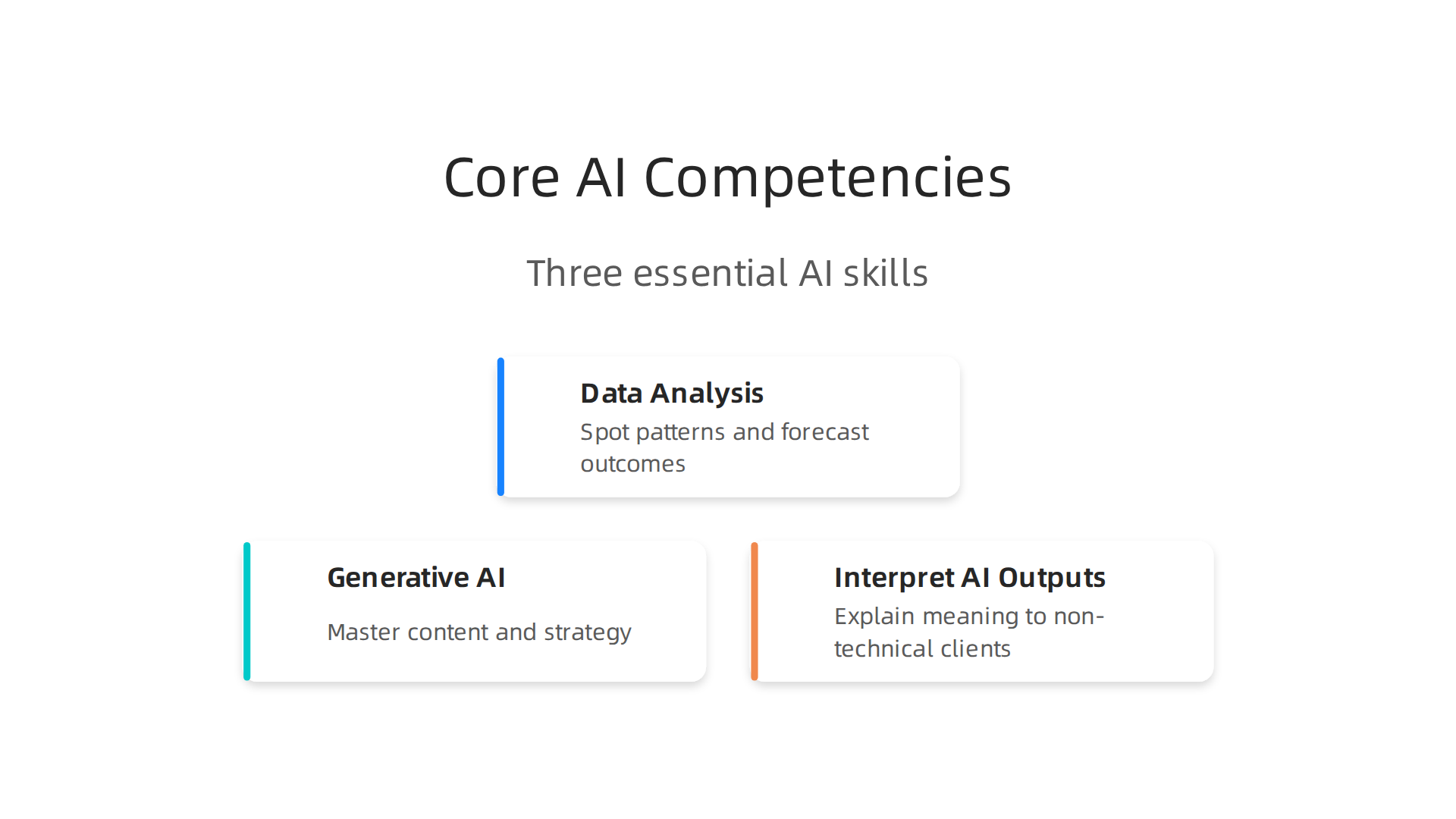
First, you need solid skills in data analysis and predictive modeling. Clients expect you to dig into their numbers, spot patterns, and forecast outcomes using AI. This means you must be comfortable running your own analyses, not just reading reports someone else made. If you want to sharpen these skills, check out our guide on how to choose data analysis tools in 2026 for AI professionals. It walks you through the best options for consultants at any level.
Second, you must master generative AI for content, strategy, and creative work. Tools like ChatGPT, Claude, and Canva AI are now standard in any modern marketing stack.
According to the experts at Generation Digital, a strong 2026 stack usually combines an AI assistant, a research tool with citations, a design suite, and automation to connect everything. You do not have to become a developer, but you need to know which tool fits which job.
Third, and maybe most importantly, you need the ability to interpret AI outputs and explain them to non-technical clients. The AI might tell you something, but your client needs to understand what it means and why they should act. This communication skill is what separates a true consultant from a tool operator. It is also why upskilling in AI is one of the top priorities for consulting firms in 2026.
The tools change fast. The need to keep learning does not. To stay ahead, make daily learning a habit. That is why we recommend subscribing to Your Daily AI Shortcut.

It delivers simple, practical AI insights straight to your inbox each day. No fluff. Just what you need to keep your skills sharp and your clients impressed.
Real-World Evidence: AI Success Stories in Consulting
The numbers do not lie. Across industries, consultants who adopt AI are delivering measurable results that their clients can actually see. In 2026, that is what separates a good marketing consultant from a great one.
Let us look at what the data says. According to the comprehensive AI marketing statistics for 2026 collected by Digital Applied, content drafting powered by AI delivers an average return of 3.2 times the investment. Personalization engines come in at 2.7 times ROI. Audience research and ad copy also show strong returns. These are not small improvements. They are the kind of numbers that make CFOs pay attention.
Consultants are also saving serious time. The same report shows that marketers who use AI save about 6.1 hours each week. That is nearly a full workday back. For a consultant billing by the hour or by the project, that time directly translates into higher capacity and faster results for clients.
What does this mean in practice? Imagine a consultant who uses AI to onboard a new client. Instead of spending weeks manually analyzing data, the AI surfaces patterns and recommendations in days. The consultant can then offer personalized strategies rooted in real-time insights rather than guesswork. That kind of speed builds trust and loyalty fast.
Consultants who build a clear AI strategy see even bigger advantages. A Harvard Business Review study found that companies with a formal AI plan spend 30% less on AI technology while getting better outcomes. That is a lesson every marketing consultant should apply. This approach works whether you are in e-commerce, B2B services, or healthcare. Major firms like PwC and Deloitte have already embedded AI into their core consulting practices, proving that scalability is real.
If you are a marketing consultant looking to replicate these results, start by choosing the right technology foundation. Check out our guide on choosing the best enterprise AI platform to make sure your tools are ready for the scale your clients expect.
The evidence is clear. AI is not a trend. It is a proven driver of ROI for consultants who know how to use it.

Strategic Applications of AI in Marketing Campaigns
So what does using AI actually look like inside a real marketing campaign? For a marketing consultant, the answer goes far beyond drafting a blog post or generating social media captions. The real power shows up in three key areas: personalization at scale, smarter audience targeting, and faster decision-making.
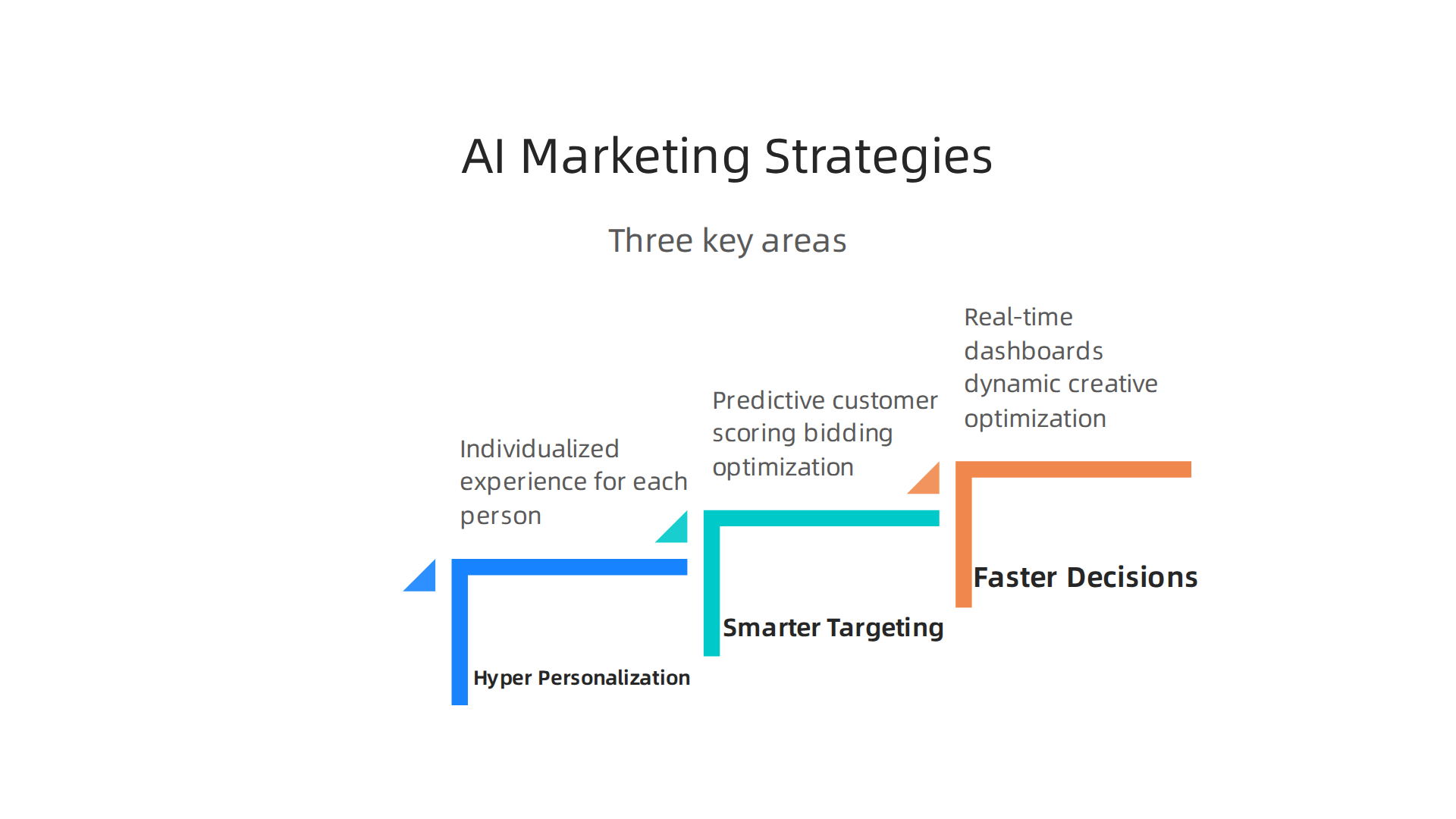
Let us start with hyper-personalization. In the past, personalizing a campaign meant segmenting your email list into maybe 10 groups. That is nothing compared to what AI can do now. AI tools analyze thousands of data points per customer in real time, including browsing behavior, purchase history, and even time of day. The result is a truly individualized experience for each person. According to this guide on AI-driven marketing strategy for 2026, effective campaigns will use hyper-personalization based on real-time analysis of customer preferences and purchase history. That level of detail builds trust and boosts conversion rates.
Predictive customer scoring is another game changer. Instead of guessing which leads are ready to buy, AI scores each lead based on past behavior patterns. A marketing consultant can then focus time on the highest value prospects. The same goes for real-time bidding optimization. When you run paid ads, AI can automatically adjust your bids across platforms to get the best return on ad spend. The statistics from this 2026 AI marketing consulting report show that AI scales marketing decisions instantly and drives about 70% of outcomes. That means less manual work and better results.
Then there is content creation at speed. Generative AI helps consultants produce blog posts, ad copy, email sequences, and social media content in minutes instead of hours. But the smartest teams do not stop there. They use AI to run A/B tests continuously. The machine learns which headlines, images, and calls to action work best and automatically updates the creative. This is called dynamic creative optimization, and it keeps your campaigns always improving without extra manual effort.
Integrating AI into your campaign management workflow cuts the time from idea to insight from days down to minutes. Instead of waiting for a weekly report to see how a campaign performed, you get real time dashboards that flag problems immediately. That speed lets you pivot fast and avoid wasted spend.
For a marketing consultant, these applications are not future ideas. They are available today. If you want to explore how to put these strategies into practice step by step, check out this guide on how to optimize your AI marketing funnel. It walks you through the exact stages to build campaigns that scale.
Staying current on these fast changing tools matters. For simple daily AI insights delivered right to your inbox, join The Deep View Newsletter. It helps you cut through the noise and focus on what actually works in 2026.
The Consultant’s AI Toolkit: Top Platforms and Software in 2026
Now you know AI can transform your campaigns. But the specific tools you choose make all the difference. For a marketing consultant, building the right stack means picking platforms that handle content generation, predictive analytics, and customer intelligence.
The best AI marketing tools in 2026 fall into a few key categories. For content, you have assistants like ChatGPT and Claude for drafting, plus Canva for fast design. For email and automation, HubSpot’s AI CRM and ActiveCampaign lead the way.
For SEO and visibility, Semrush and Clearscope help you rank higher. According to Zapier’s list of the best AI marketing tools in 2026, a strong modern stack usually combines an AI assistant, a research tool, a design suite, and automation to connect everything.
But here is the thing: not every client needs the same setup. When a marketing consultant offers digital marketing services, the toolkit has to match the client’s industry, budget, and existing tech. A small ecommerce brand might benefit more from Klaviyo and Canva than from enterprise suites like Salesforce Einstein. For inbound marketing strategies, you might lean on tools like Surfer SEO for content optimization and Apollo for prospecting.
Many experienced consultants adopt a best-of-breed mix rather than a single vendor. They pick the top tool for each job and connect them with Zapier or Make. This approach gives you flexibility and keeps costs lower. If you are evaluating larger options, this guide on how to choose the best enterprise AI platform for your organization can help you compare features and pricing.
As Artificial Intelligence Harvard Business Review analyses have pointed out, the consultant’s role is shifting from execution to strategy. The tools handle the heavy lifting, freeing you to focus on high-level decisions. The goal is not to use every platform. It is to build a light, effective stack that saves time and delivers real results.
Ethical AI and Privacy Compliance: A Consultant’s Responsibility
Now that you have built a powerful toolkit, here is the hard truth. With great AI power comes great responsibility. As a marketing consultant, your reputation depends on trust. And trust gets shattered fast when AI goes wrong.

The biggest ethical risks you face are data privacy breaches, algorithmic bias, and a lack of transparency. Algorithms learn from data. If that data contains hidden biases, your AI could discriminate against certain groups in targeting or personalization. That is not just unfair. It can also violate regulations. According to the IAPP’s overview of the ethical use of AI in advertising, these risks appear consistently across industry surveys.
You also have to handle client data carefully. Laws like the GDPR and the EU AI Act set strict rules about consent, profiling, and transparency. These frameworks are becoming the global standard. They impact how you run digital marketing services and inbound marketing campaigns. Ignoring them puts your clients at legal risk and damages their brand.
Here is an often overlooked point. Proactive ethical audits can become a competitive differentiator. When you show clients that you check for bias, secure data, and document your AI decisions, you stand out. They trust you more. They feel safer working with you.
To get started, establish clear accountability policies. Always review AI outputs before they go live. Use diverse training data and test for fairness. Understand why data annotation tech is critical for AI accuracy, because clean data is the first defense against bias.
Staying on top of these evolving regulations and ethical best practices takes time. For a daily shortcut that keeps you informed, join The Deep View Newsletter for simple daily insights. It helps busy consultants like you stay ahead without the overwhelm.
Navigating AI Regulations: GDPR, CCPA, and Beyond
Knowing the ethical principles is one thing. Putting them into practice while following the law is another. As a marketing consultant, you need to understand the major data protection rules that affect your digital marketing services. The two biggest are the General Data Protection Regulation (GDPR) in Europe and the California Consumer Privacy Act (CCPA) in the United States.
Both laws require you to get clear consent before collecting personal data. You must tell people what data you collect and how you use it. If you run inbound marketing campaigns with AI, you need to make sure your AI tools are set up to respect these rules. For example, AI systems that profile users or do behavioral targeting must have a lawful basis. According to a breakdown of ethical AI in marketing from Silverback Strategies, regulations like GDPR and CCPA mandate strict data protection measures and transparent data practices.
But there is more. The European Union passed the AI Act, which adds extra rules for high-risk AI systems. Marketing AI tools that influence people’s decisions or target vulnerable groups could be considered high-risk. That means you may need to do impact assessments, keep detailed records, and allow human oversight. The same source notes that existing frameworks like the UNESCO recommendations also stress transparency and fairness.
So what does this mean for you? You cannot just set up AI and forget it. You need to build compliance into your workflow. Partner with your legal team early. Run regular audits. Make sure your AI vendors follow the same standards. If you are evaluating which AI platforms to use, you can learn how to choose the best enterprise AI platform for your organization to ensure they meet compliance requirements.
Staying compliant might feel overwhelming, but it is a chance to build deeper trust with your clients. When you show them you take privacy and fairness seriously, they will see you as a true partner.
Measuring Success: KPIs and ROI of AI Integration
Once you have compliance under control, it is time to talk about results. You have started using AI in your digital marketing services. But how do you really know if it is working? Measuring success is not about gut feelings. It is about hard numbers. As a marketing consultant, you need to track specific KPIs to prove the value of AI to your clients and to your own business.
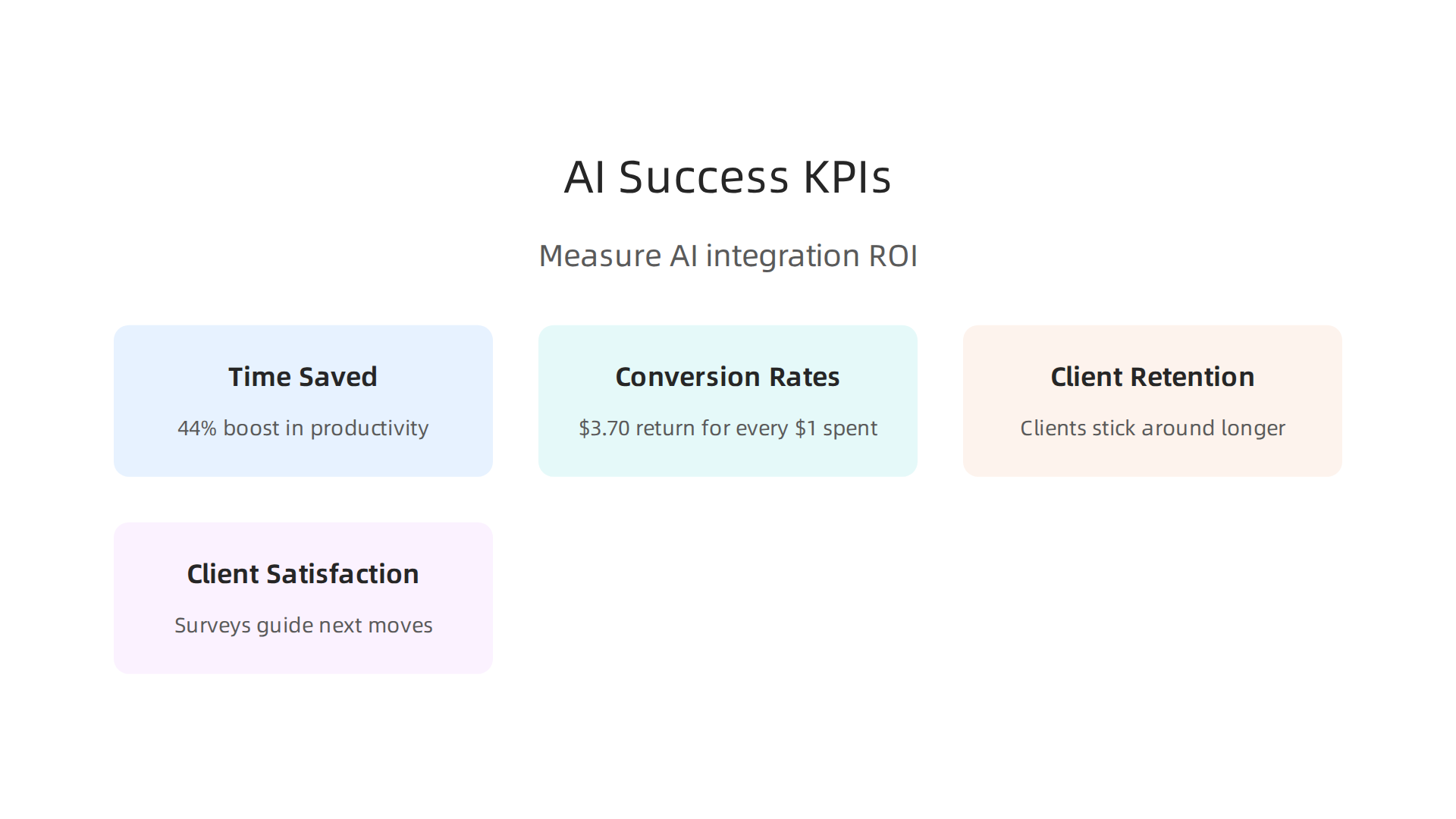
Start with the basics. Track time saved per project. Many teams using AI report a 44% boost in productivity, saving up to 11 to 13 hours each week. That is time you can reinvest into strategy, client relationships, or new business.
Next, look at conversion rates. AI-powered campaigns often deliver higher returns. In fact, according to recent global AI adoption boom data, companies investing in generative AI report an average return of $3.70 for every dollar spent. Some see a 300% ROI within six months. These numbers help you set realistic expectations when you talk to clients.
Client retention is another huge KPI. When you use AI to personalize content, improve response times, and deliver better results, your clients stick around longer. That means recurring revenue and stronger referrals.
You also want to watch client satisfaction scores. Send quick surveys after each campaign. Ask clients if they feel the AI-driven approach added value. Their feedback will guide your next moves.
Benchmark data is your best friend here. Use it to show clients what is possible. For example, if you know that AI-driven ads can lift conversion rates by 41%, you can promise realistic improvements instead of overpromising.
To get the most out of your AI tools, consider how to refine your approach over time. You can learn how to optimize your AI marketing funnel to track each stage of the customer journey.
Staying on top of the latest AI trends and numbers is key to making smart decisions. That is why many consultants rely on a daily dose of curated AI news. If you want to keep your edge, join The Deep View Newsletter for simple daily insights that help you stay ahead.
Future-Proofing Your Consulting Practice: Trends to Watch
The AI world moves fast. What works today could feel like ancient history by next year. As a marketing consultant, you cannot afford to look only at the present. You need to scan the horizon and prepare for what is coming. Here are three big trends that will shape your digital marketing services in 2026 and beyond.
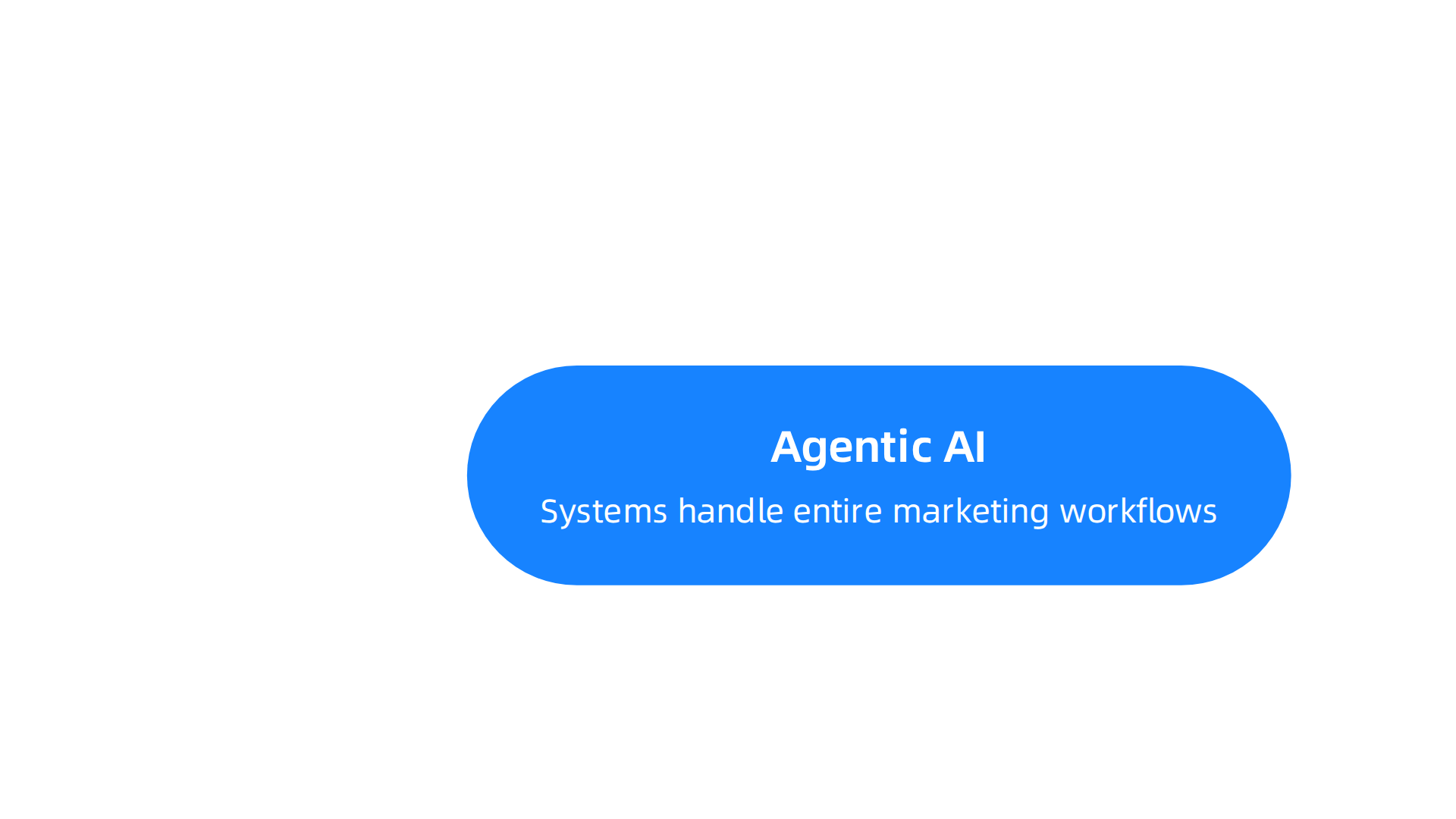
First up is agentic AI. These are systems that act on their own. They do not just help you write a blog post or analyze a spreadsheet. They handle entire marketing workflows from start to finish. In the past, you prompted a tool, reviewed the output, and made the final call. Soon, AI agents will create ad variations, test them across audiences, allocate budgets, and optimize performance with very little human input. Your job shifts from doing the work to validating the work. You become a strategic checker, not a hands-on doer. This shift is already changing how teams operate. You can read more in these future of marketing predictions for 2027 and beyond.
Second, hyper-personalization will become the standard. Customers today expect brands to understand them. But in 2027, they will demand real time personalization. Not just "Dear [First Name]" but a message that matches their exact need at the exact moment. AI systems will decide when to reach out, what to say, and which channel to use. This is a big opportunity for you. Clients will pay for someone who can build systems that deliver these individual moments. If you can offer that, you will stand out from the crowd.
Third, ethics and transparency will become a competitive advantage. As more businesses adopt AI, customers will ask harder questions. Where does this data come from? Is the AI making fair decisions? How do we know the content is safe? If you build your consulting practice around ethical AI use, you will earn trust that other consultants cannot match. And in a world where trust is becoming the most valuable asset, that matters a lot.
To keep up with these changes, you need to stay curious. Read about emerging trends and new tools. A great place to start is by tracking AI innovators what business leaders must know in 2026. Regular learning will keep your skills sharp and your practice relevant.
Summary
This article explains why AI is now mandatory for marketing consultants and offers a practical roadmap to adopt it correctly. It covers the business case—productivity gains, higher fees, and measurable ROI—then details the three core competencies consultants must build: data analysis and predictive modeling, generative AI for creative work, and the ability to interpret and explain AI outputs to clients. The guide walks through strategic campaign applications like hyper-personalization, predictive scoring, and dynamic creative optimization, plus how to select the right tools for different clients. It also outlines ethical and compliance responsibilities under GDPR, CCPA and the EU AI Act, and explains how to measure success with concrete KPIs. Finally, it previews near-term trends such as agentic AI and real-time personalization so consultants can future-proof their practices.