
Why face swap AI matters for digital content teams (and what this guide will deliver)
In 2026, creating engaging content quickly is super important for digital teams. This is where face swap AI tools come in handy. These clever tools let you change faces in pictures and videos easily. Think of it like a special photo editor AI that can swap one person’s face onto another.
For content creators, face swap AI opens up many new doors.
You can make marketing materials that grab attention by putting different faces on models or actors. This helps with rapid prototyping, meaning you can test many ideas quickly without needing to hire lots of people for photoshoots or video shoots. It’s a fantastic way to produce diverse content faster and more affordably. Many tools today use advanced methods, like diffusion models, to make these swaps look very real and high-quality, as explored in recent surveys of face swapping technology Towards High Fidelity Face Swapping: A Comprehensive Survey …. Some even act like an ai image enhancer to make your visuals look their best.
But using face swap AI isn’t just about fun and easy content. There are big things to think about, especially for decision-makers. You must know the risks. Legal issues can pop up if you use someone’s face without their permission. There are also ethical concerns about making images or videos that look real but aren’t, which can sometimes mislead people or harm reputations. Brand safety is another key point; you wouldn’t want your brand linked to misuse of this technology. It’s very important to understand these dangers before diving in. If you want to learn more about how to pick the right tools for your visual content, check out our guide on how to choose the best image AI generator for your digital media team.
This guide will walk you through everything you need to know. We will show you how face swap AI works, talk about the best tools you can use in 2026, and help you understand how to use this technology safely and smartly. We will also cover the important ethical and legal points so you can make choices that are good for your team and your brand.
To keep up with all the fast changes in AI, make sure you get regular updates.
The AI Newsletter Worth Reading
How face swap AI works: a concise technical primer
You know that face swap AI can change faces in pictures and videos. But how does this clever trick actually happen? It’s like a special photo editor AI that uses smart computer programs to do the magic. At its core, face swapping works by finding faces, understanding their features, and then cleverly blending a new face onto an existing one.
To make this happen, these tools use different kinds of AI models.
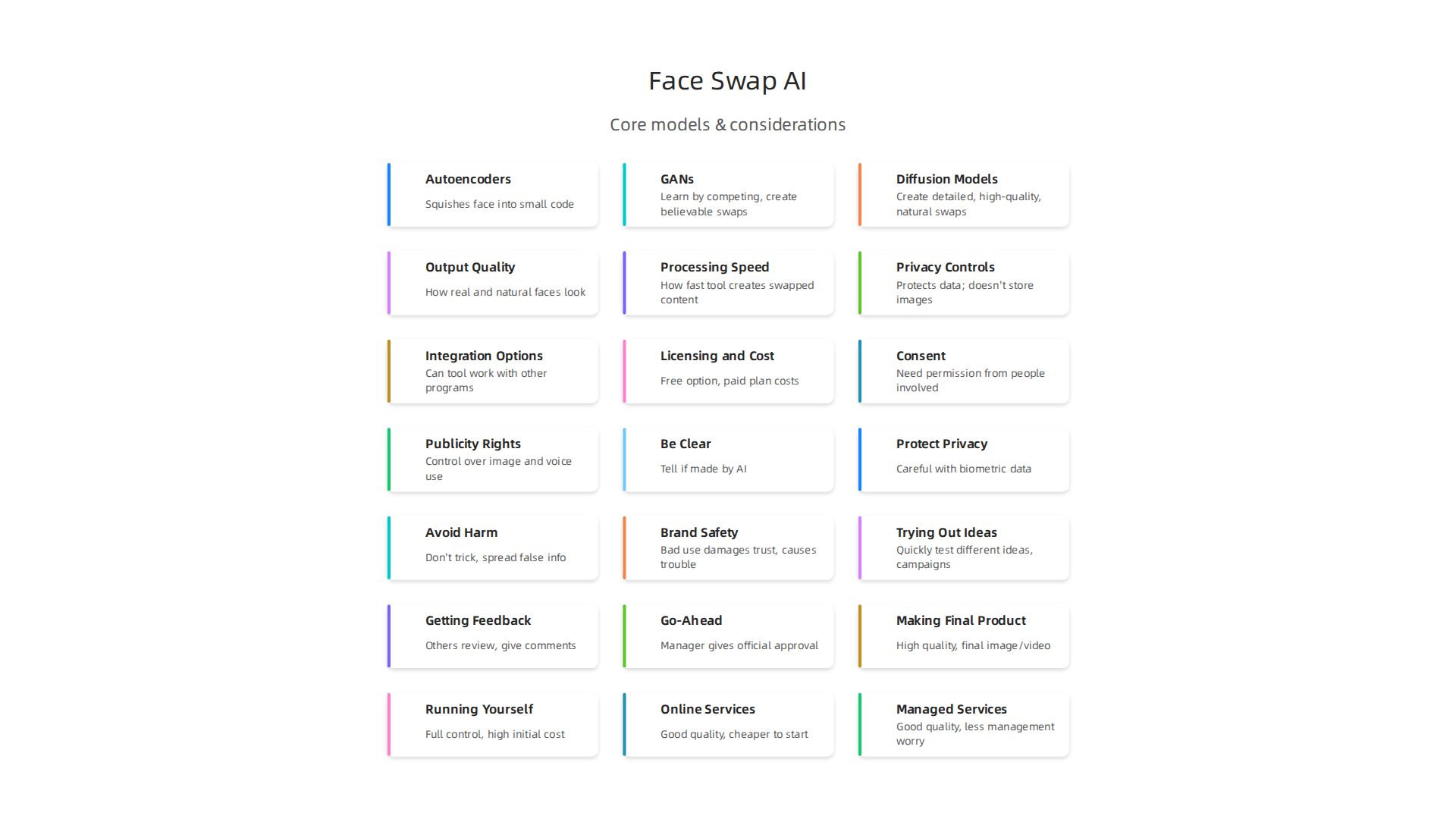
One older method uses something called autoencoders. Think of an autoencoder as a two-part system. The first part squishes a face down into a small code, like making a summary. The second part then uses that summary to build the face back up. Early face swap tools often relied on this idea, sometimes in combination with other methods Facke: a Survey on Generative Models for Face Swapping.
A more common way, especially a few years ago, involved something called Generative Adversarial Networks, or GANs. GANs use two AI parts that learn by competing. One part tries to create a fake face that looks real, and the other part tries to spot if the face is fake or not. They get better and better, making very believable face swaps 8 Best AI Face Swap Tools in 2026: Tested on 20 Photos & 5 Videos. Many open-source tools still use GANs today for fast results Open Source Face Swap Software: Top Models & Tools (2026).
In 2026, the newest and best face swap AI tools often use something called diffusion models. These are the same powerful AI models that create amazing new images from text prompts. Diffusion models are great at making very detailed and high-quality face swaps that look natural. They can create a new face pixel by pixel, adding tiny details until it blends perfectly with the original image or video. This often leads to much more realistic results than older methods Realistic and Efficient Face Swapping: A Unified Approach ….
The whole process usually starts when you give the tool a "source" picture (the face you want to use) and a "target" picture or video (where you want the face to go). First, the AI finds the faces in both the source and target. This is called face detection. Then, it maps out important points on the faces, like eyes, nose, and mouth. This helps the AI understand the shape and features of each face. After that, it takes the identity of the source face and blends it with the head, expression, and lighting of the target face. The final step is to mix the new face smoothly into the rest of the image or video, making it look as real as possible. This involves careful color and light matching How AI Face Swap Works: Advanced Techniques Explained (2026). Just like a good photo AI generator, the goal is to make the final picture look perfect.
Making these realistic face swaps often needs a lot of computing power. Creating a single high-quality image can take a bit of time, and video swaps, which involve many images, can take even longer. There’s usually a trade-off: tools that work super fast might not make the most realistic swaps, while tools that take more time can produce much better results. Finding the right balance depends on what you need. If you’re looking to create many visuals, knowing about the best AI image generators can help you pick the right tool for your quality and speed needs.
Practical tools and platforms for face swap workflows (what to pick for your use case)
Now that you know how face swap AI works its magic, you might be wondering which tool is right for you. Just like choosing any other smart program, what you pick depends on what you want to do. Today in 2026, there are many different kinds of tools available, from simple apps for fun to powerful platforms for professionals.
Let’s break them down into a few main types:
Simple Apps for Everyday Fun
These are usually mobile apps or easy-to-use websites. They are great if you just want to try face swap AI for jokes, social media, or quick personal projects.
- Best for: Casual users, making memes, quick photo and video swaps.
- What to expect: They often have free versions with some limits, like watermarks or fewer features. They might not always give the most perfect results, but they are super easy to use. Some popular choices in 2026 include apps that offer quick swaps for videos and photos Best Face Swap AI Tools in 2026: Reviewed & Ranked.

Advanced Platforms for Creators and Businesses
If you need better quality or more control, these platforms are a step up. They often live on websites and offer more features, like higher resolution outputs and faster processing.
- Best for: Content creators, marketers, or small businesses who need reliable, good-looking results for their work.
- What to expect: These tools usually cost money, but they give you much better control over the final image or video. Many of them can also act as an ai image enhancer or a full photo editor AI, offering tools beyond just face swapping. Some top choices allow for high-fidelity video and combine face swap with other AI video features 13 Best AI Face Swap Tools in 2026 (Tested: Photo, Video, ….
Developer Tools (APIs and SDKs)
For big companies or app makers, there are special tools called APIs (Application Programming Interfaces) and SDKs (Software Development Kits). These are like building blocks that developers can use to put face swap technology directly into their own apps or systems.
- Best for: Developers, large enterprises, or teams building custom AI applications.
- What to expect: You won’t use these directly as a regular user. They require coding knowledge but offer the highest level of customization and integration. For example, some SDKs are used for live AR experiences Best AI Face Swap Apps and Tools to Watch Out for in 2026: Top 5 Tested.
How to Pick the Right Face Swap Tool
When choosing a face swap AI tool, here are some important things to think about:
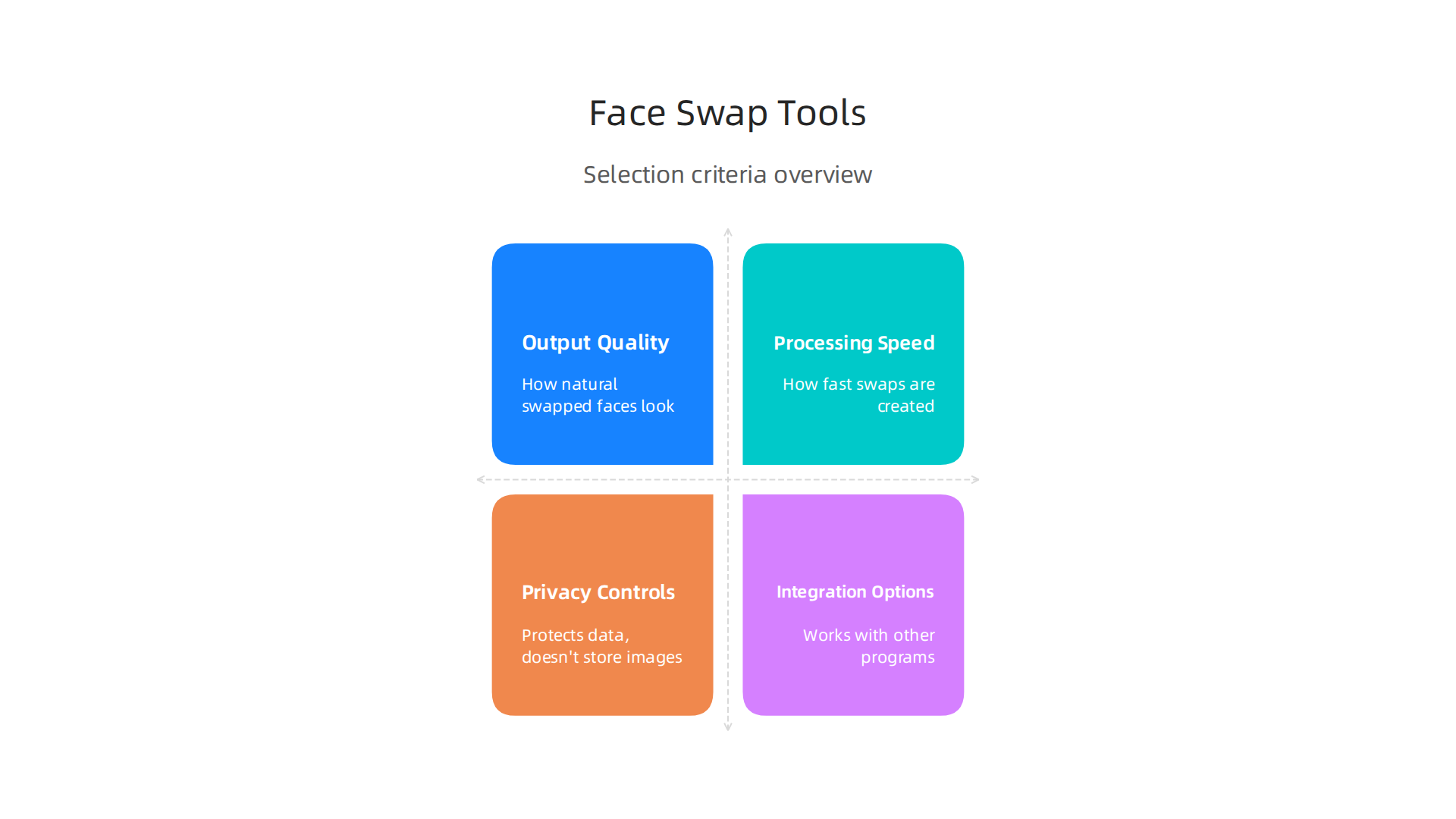
- Output Quality: How real and natural do the swapped faces look? Do they blend smoothly with the rest of the image or video? New tools using diffusion models generally offer very high quality Realistic and Efficient Face Swapping: A Unified Approach ….
- Processing Speed: How fast does the tool create the swapped image or video? Some tools are very quick, while others take longer but give better results Best Face Swap Video Tools for 2026: How to Choose the ….
- Privacy Controls: This is very important. Since you’re uploading faces, make sure the tool protects your data and doesn’t store your images longer than needed. Some free tools have poor privacy, while others process images locally or delete them quickly Best Free AI Face Swapper in 2026 | WaveSpeed Blog.
- Integration Options: Can the tool work with other programs you use? This is mainly for advanced platforms or developers.
- Licensing and Cost: Does it have a free option? How much do paid plans cost, and what do you get for your money? Many tools offer free trials or limited free usage before you need to pay Best Free AI Face Swap Tools (2026).
Some tools might also offer extra features like an ai background remover, which can be very handy for editing your swapped images. Always think about your needs first. If you want to keep up with all the latest AI developments and tools, consider subscribing to The AI Newsletter Worth Reading for clear daily updates.
If you’re looking to pick out the best AI tools, especially for image generation, knowing how to compare them for quality and speed is key. You can learn more about how to choose the best AI image generators to fit your needs.
Now that you know how to pick the right face swap tool, it’s also really important to think about the rules and safe ways to use them. Using face swap AI can be fun and useful, but there are some serious things to keep in mind so you don’t run into problems.

What is Legal and What is Not?
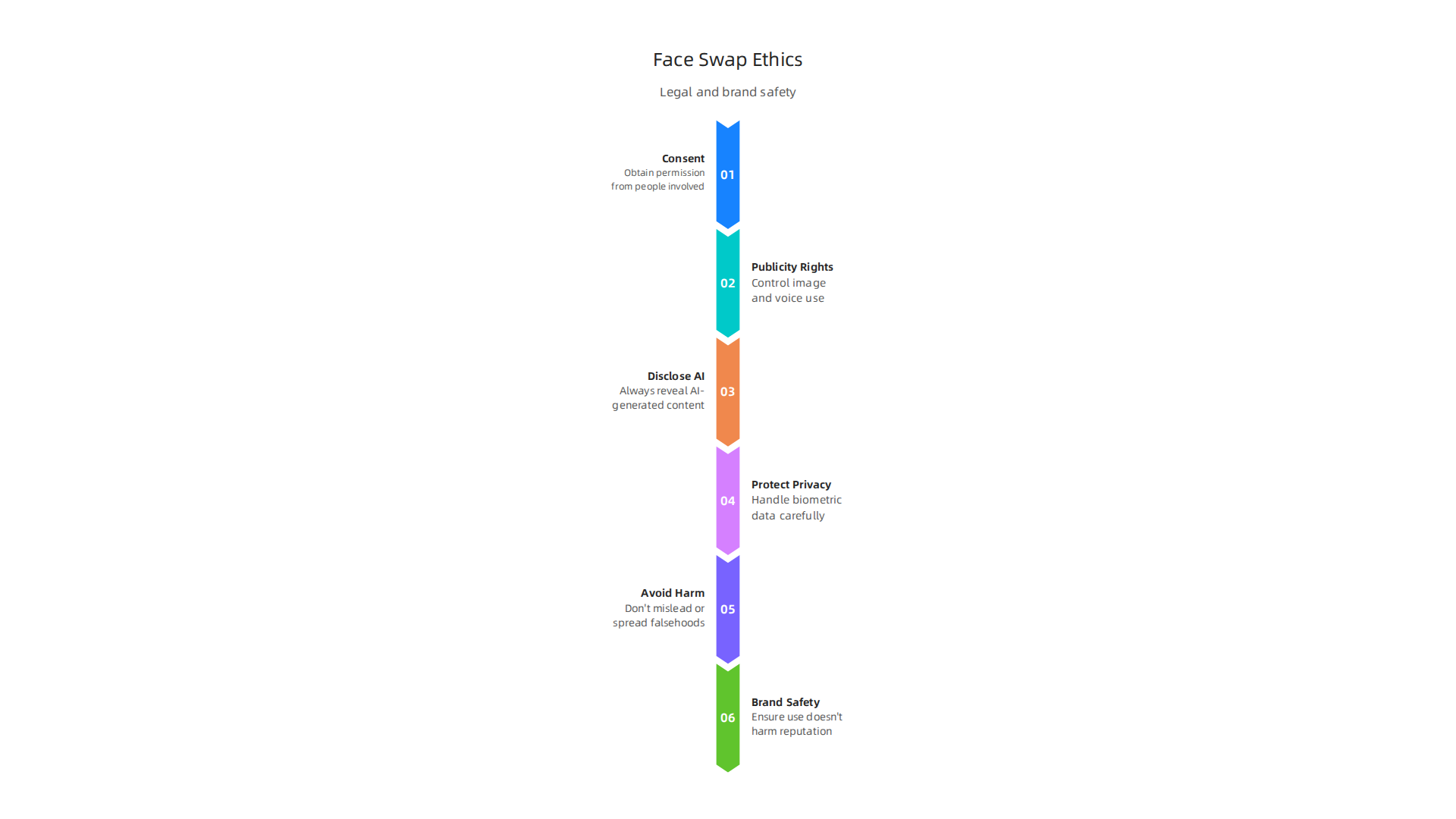
Using face swap AI is generally okay, but what you do with the swapped face can quickly become against the law. The biggest rule is consent. You nearly always need to get permission from the person whose face you are using and the person in the picture or video you are changing Is AI Face Swap Legal? Complete Legal Guide for 2026. If you use someone’s face without them saying it’s okay, you could be breaking the law. This is especially true if you make harmful or false content. In 2026, many places have new laws to help with this Deepfakes and Consent: The Law Finally Catches Up.
Another key idea is called publicity rights. This means famous people or public figures have a right to control how their image and voice are used. If you use a celebrity’s face with face swap AI to make money or promote something without their permission, they can sue you The Legal Issues Surrounding Deepfakes.
Laws about AI and deepfakes are changing very fast around the world. For example, in the United States, there’s a new federal law called the TAKE IT DOWN Act, which started being enforced in May 2026. It makes it a crime to share certain types of deepfakes without permission Deepfake Legislation Tracker: Federal, State Laws. In Europe, the EU AI Act will also fully apply from August 2026. This law requires people to be clear when they use AI to make or change content Deepfake Criminal Laws 2026: Global Guide.
It’s also important to remember that laws can be different in various places. What’s okay in one country might not be okay in another. When you use these tools, especially for business or sharing with many people, you need to know the rules where you are and where your content might be seen.
Being Ethical and Safe for Brands
Beyond just what’s legal, there are ethical things to consider when using face swap AI. This is super important for people creating content and for businesses.
- Be Clear About AI Use: Always tell people if content was made or changed by AI. This is called disclosure. Many new laws, like the EU AI Act, want this to happen Deepfakes and the law: perspectives from the EU and China. Some places even require a special label or watermark on AI-made images or videos IT Rules 2026: Deepfake 3-Hour Takedown & AI Labelling – LawSikho.
- Protect Privacy: When a tool uses someone’s face, it’s often using their special data, like biometric data. Laws like GDPR and CCPA say that companies need to be very careful with this kind of data, and often need to get clear consent Legal AI Face Replacement Guide for Anonymous …. Always choose tools that have strong privacy rules.
- Avoid Harm: Do not use face swap AI to create content that tricks people, spreads false information, or hurts someone’s reputation. This is where ethical choices come into play. It’s about being responsible with powerful technology. To understand more about the wider risks, you can read about The Real Dangers of AI in 2026.
- Brand Safety: For businesses, using face swap AI can be risky if not handled well. Badly used AI can damage a brand’s trust or lead to legal trouble. It’s crucial for brands to have clear rules on how they use these tools, including how they manage image rights and ensure everything is clearly labeled.
In short, while face swap AI tools can be exciting, always use them wisely. Think about who you’re affecting and make sure you have permission. Stay updated on the changing laws and always put ethics first.
After understanding the important rules for using face swap AI, let’s look at how content teams can actually use these tools every day. Making face swap AI part of how you create content means setting up clear steps. This helps everything run smoothly, from coming up with ideas to getting the final product ready.
How Content Teams Use Face Swap AI
For content creators, using face swap AI isn’t just about clicking a button.
It involves a planned way of working, often called a workflow or pipeline. Think of it like a path that your content takes from start to finish. This path often includes a few main stops:
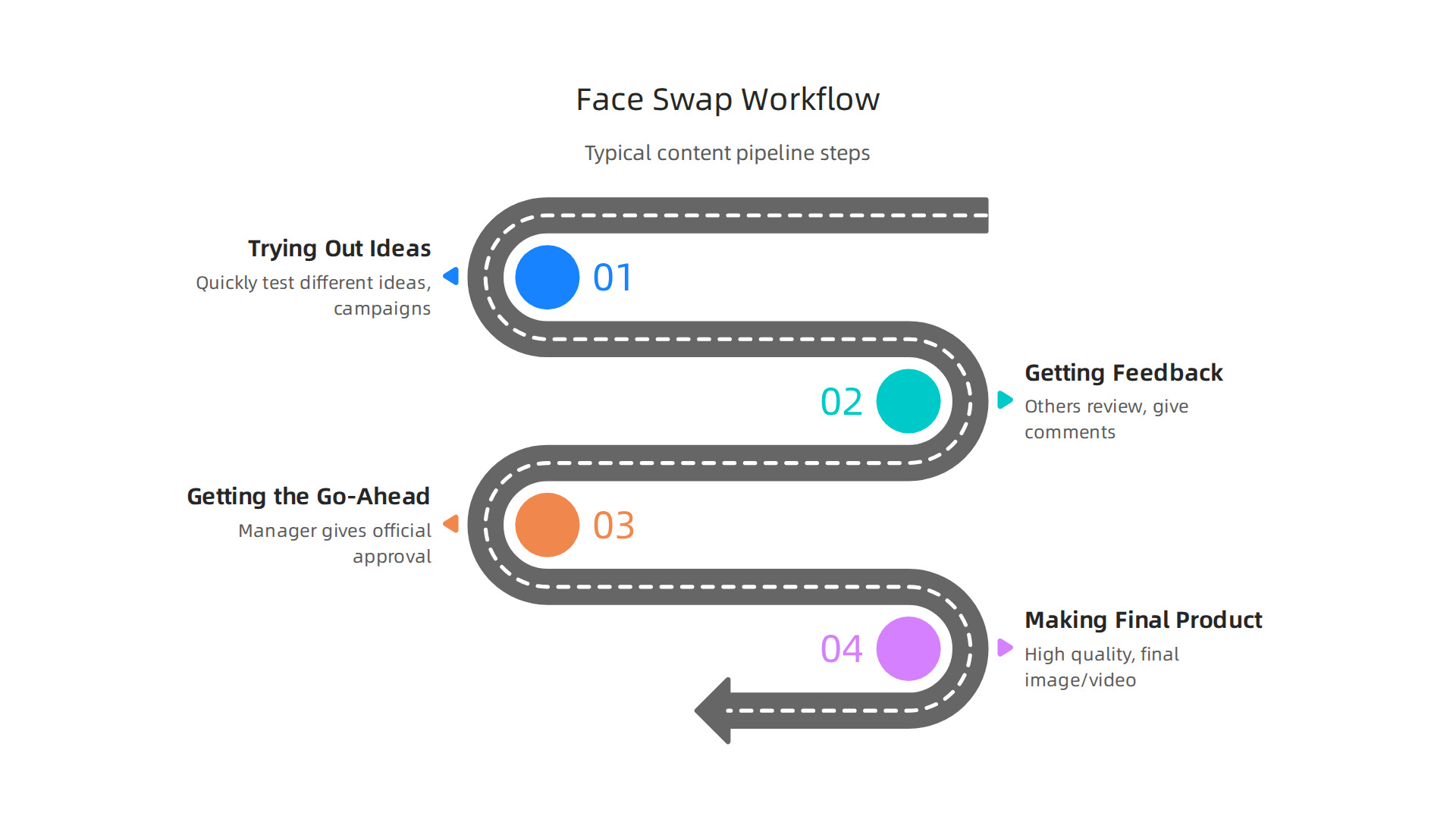
- Trying Out Ideas (Prototyping): First, teams might use face swap AI to quickly test different ideas. This is like making a rough sketch before painting a big picture. They can swap faces to see what works best for a campaign or story, without spending too much time or money. This helps them choose the best direction.
- Getting Feedback (Review Loops): Once a first idea is made, it goes through a "review loop." This means others on the team or clients look at the face swap AI content. They give feedback on things like how natural the swapped face looks or if the message is clear. Tools that allow for easy sharing and comments are very helpful here.
- Getting the Go-Ahead (Approvals): After feedback, the content might be changed. Then, it needs a final "approval." This is when a manager or client gives the official okay to move forward. This step is super important, especially because of the legal and ethical rules we talked about earlier. Everyone must agree that the content is good to go and meets all standards.
- Making the Final Product (Production Rendering): Once approved, the face swap AI content is made into its best version. This might mean making the images or videos very high quality. Sometimes, teams use other tools like an AI photo enhancer to make sure everything looks perfect. This is the stage where the final image or video is created for everyone to see.
Working with face swap AI in this way helps teams make sure their content is top-notch and fits their goals. It also helps manage all the different parts of creating content, like when you need to choose the best image AI generator for your digital media team.
Making Things Easier with Automation and Smart Tools
As more teams use face swap AI, they also look for ways to make the work faster and easier. This is where automation and smart tools come in handy.
- Automation: This means having computers do the repeated tasks automatically. For example, you can set up a system where, once a face swap is approved, it automatically starts the process of making the final, high-quality image. Some tools even offer ways to automate face swapping for things like GIFs Automate face swapping for GIFs with Fal.run AI and …. This saves a lot of time and makes sure things are done the same way every time.
- Metadata: This is like a label that holds important information about your AI-generated content. For face swap AI, metadata might include who gave permission for the face swap, when it was created, or if an AI background remover was used. Keeping good metadata helps teams keep track of their work and stay organized.
- API Orchestration: This sounds fancy, but it just means connecting different software tools so they can talk to each other and work together. For instance, a team might use one tool for face swapping, another as an AI image enhancer, and a third tool to manage all their projects. Using APIs helps these tools share information and steps in the workflow, making the whole process more seamless. Many modern face swap AI tools are built with this in mind, supporting what’s called a pipeline architecture for smooth production Face Swap Pipeline Architecture: Production Design Guide.
By using these smart ways of working, content teams can use face swap AI more often and with less effort. It helps them create more content, faster, and with better quality.
Stay up-to-date on all the latest AI trends and tools that can improve your content pipelines. Get clear daily AI updates from The Deep View Newsletter.
When using face swap AI, content teams also need to think about how good the final product will be, how much it will cost, and how long it will take.

This is like choosing the right car for a trip. Do you need a fast sports car, a cheap economy car, or something in between?
Quality, cost, and time trade-offs: choosing the right approach
Picking the best way to use face swap AI means balancing three main things:
- Quality: How real and smooth does the swapped face look?
- Cost: How much money will it take per image or video?
- Time: How quickly can you get the finished content?
Let’s look at a few common ways teams can get their face swap AI work done.
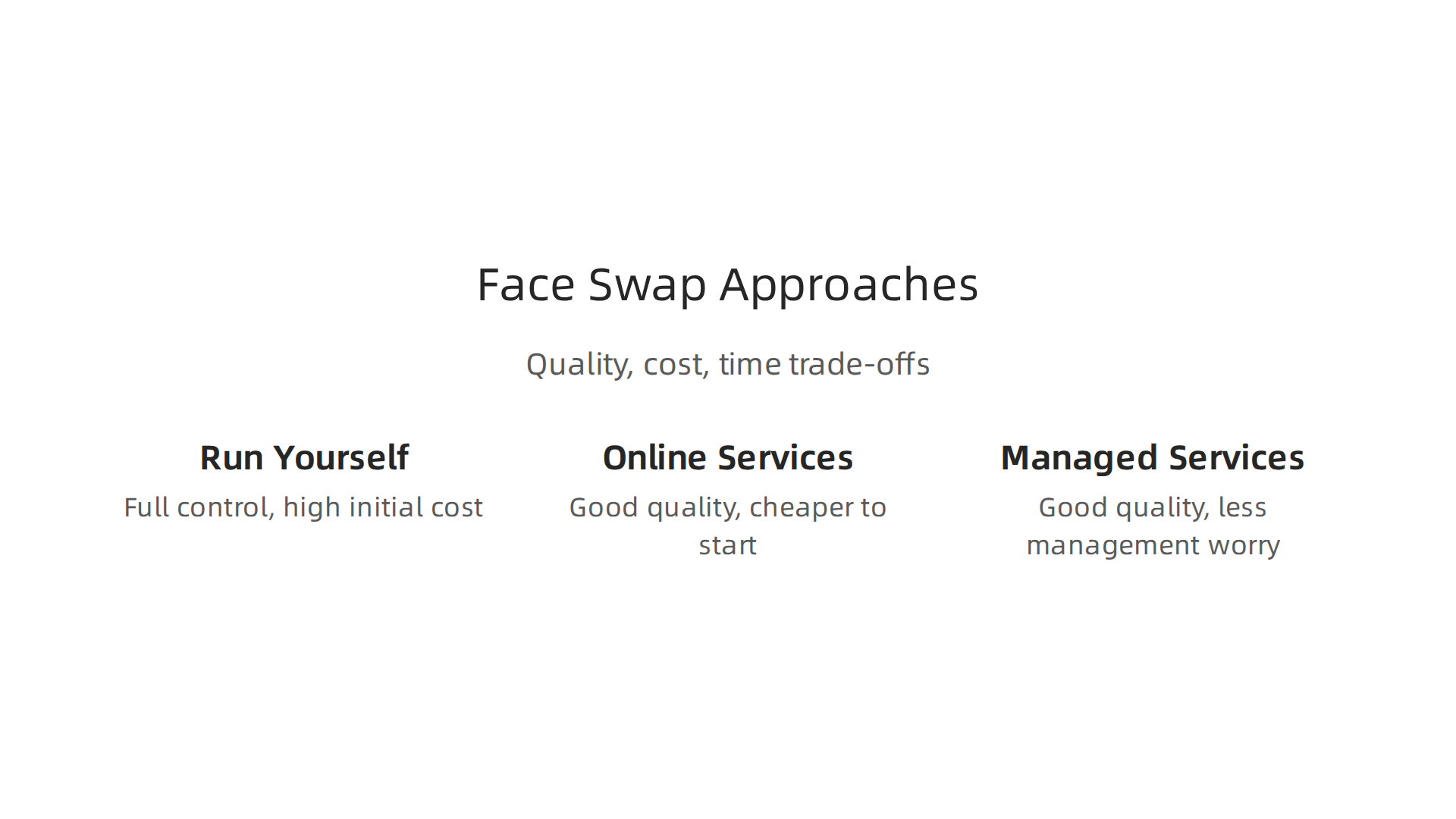
Different Ways to Use Face Swap AI
-
Running it Yourself (On-Premise):
This means your team has its own computers and software to do the face swapping.- Quality: You can get very high quality because you have full control over the tools and settings. You can tweak everything until it looks perfect.
- Cost: The first setup cost can be high because you need to buy special computers and hire experts. But, for a lot of work, the cost per item might go down over time.
- Time: It can take more time to set up and manage these systems. You also need people who know how to keep them running. This is often called ML ops, which means taking care of the AI tools.
- Good for: Big companies that do a lot of face swapping and need very specific results.
-
Using Online Services (Cloud API):
This is like renting a service from another company over the internet. You send your images or videos, and their AI does the face swapping.- Quality: The quality can be very good, but you have less control over the fine details than running it yourself. The look might change depending on the service you pick.
- Cost: This is usually cheaper to start because you don’t buy any big machines. You pay "per use" or a monthly fee.
- Time: It’s often much faster because you don’t have to manage any hardware. You just use their tools. However, there might be a small delay (latency) when sending and getting your files back.
- Good for: Teams that need quick results and don’t want to deal with setting up their own AI systems. Many popular face swap tools work this way.
-
Managed Services (A Mix of Both):
Some companies offer a service where they manage the AI tools for you, but you still get some control. It’s a middle ground.- Quality: Often good, with some options to customize things.
- Cost: A bit more than simple cloud services, but less than running everything yourself.
- Time: Faster than doing it yourself, with less management worry.
- Good for: Teams that want more control than a basic online tool but don’t have the resources for a full in-house setup.
Getting Assets Ready for Use
No matter which method you choose, getting "production-ready" content often takes extra steps. Face swap AI tools can do amazing things, but the final results sometimes need a little polish to look perfect. This is called post-processing.
- What is post-processing? It means making small changes to the swapped image or video after the AI has done its job. This might include adjusting colors, lighting, or making sure the edges around the swapped face look natural. Things like color matching and edge feathering are important for a good final look, and sometimes tools even clean up tiny errors that the AI might leave behind to ensure high quality results. For example, face swap AI often involves stages like detecting, encoding, and blending faces to ensure the best outcome possible, but sometimes, for uncontrolled images, about 70% to 85% of outputs are acceptable without further edits, depending on the model used to create them How AI Face Swap Works: Models, Methods & Limits (2026).
- Tools for polishing: You might use a regular photo editor ai or a special AI background remover to make the image truly stand out. Sometimes, an AI photo enhancer is needed to fix blurry parts or make the whole image sharper.
- ML Ops Effort: This is the work involved in keeping your AI tools running smoothly. If you run the AI yourself, you’ll need people to manage the software, make sure it’s up-to-date, and fix any problems. Even with cloud or managed services, you still need to set up the workflow, test the outputs, and make sure everything fits your content goals. This effort adds to the overall cost and time.
To make the best choices for your team, it’s wise to think about your specific needs for quality, how fast you need content, and your budget. You can learn more about how to make these kinds of decisions in our guide on how to Master how to choose AI tools for your business needs.
Best practices, templates, and hands-on tips for teams starting with face swaps
After figuring out the best way to get your face swap AI work done, it’s time to think about how to use these tools wisely. It’s not just about making the swap; it’s about making sure the content is good, fair, and ready for people to see. This means having a clear plan and checklist for your team.
Your practical checklist for face swap AI
When your team starts using face swap AI, there are important steps to follow every time. These steps help make sure you create good content without causing problems.
- Get Permission (Consent Capture): Always make sure you have permission from the people whose faces you are using. This is very important for legal and ethical reasons. It helps protect everyone involved and builds trust.
- Plan Your Tests (Test Plans): Before you use face swap AI for a big project, test it first. Make a plan for what you will test. This helps you see how the AI works with different faces, lighting, and video types. You want to know what to expect.
- Check for Unfairness (Bias Checks): AI tools, including face swap AI, can sometimes be unfair or biased. This means they might work better for some groups of people than others, or even show them in a bad way. It’s important to check your results for any signs of bias. Learning about the real dangers of AI in 2026: bias, privacy, job loss, and existential risk can help your team understand these issues better.
- Final Quality Steps (QA before Publish): Before any face swap AI content goes out to the world, give it a final check.
- Look closely at the swapped face. Does it blend in smoothly? Are the colors right? Does it look natural?
- Make sure there are no weird glitches or blurry spots.
- Sometimes, you might need a special tool, like an AI image enhancer or a photo editor AI, to make everything perfect. These tools can help sharpen details or adjust lighting.
- There are many ways to check the quality of a face swap, including looking at how well the identity transfers and how natural the visual looks Face Swap Quality: 8 Metrics That Matter.
Helpful tools for your team
To make these steps easier, you can use simple guides or templates.
- Briefs for Projects: A brief is like a detailed instruction sheet for your face swap AI project. It tells everyone what needs to be done, who the faces belong to, and what the final goal is. This helps keep everyone on the same page.
- Review Checklists (Rubrics): A review rubric is a simple list that helps your team check the quality of face swap AI results. It might ask questions like: "Does the face look real?" "Are there any strange colors?" "Is the lighting consistent?"
- Safe-Release Checklists: This checklist helps you make sure all the permissions are in place and that the content meets your team’s rules before it is shared. It’s a final safety step.
By following these best practices, your team can use face swap AI effectively and responsibly in 2026. This ensures your content is not only creative but also fair and high-quality.
Staying up-to-date with AI is key for any team. To get daily updates on the latest in AI, consider subscribing to The AI Newsletter Worth Reading.
Summary
This guide explains why face-swap AI has become a practical tool for digital content teams in 2026, and walks through how the technology works, which tools to pick, and how to use it responsibly. It covers technical approaches (autoencoders, GANs, and modern diffusion models), the main tool types (simple apps, advanced platforms, and developer APIs), and decision criteria like output quality, speed, privacy, and cost. The article also details legal and ethical risks — consent, publicity rights, and new laws — and gives concrete best practices for disclosure, bias checks, and brand safety. You’ll find recommended workflow steps from prototyping to approval and production rendering, plus tips for automating pipelines, tagging metadata, and post-processing for high-quality results. After reading, teams will be able to select the right face-swap approach, build a safe approval process, and deploy face-swap content with clear QA and legal safeguards.