

Why AI-ready marketing portfolios matter in 2026
Imagine trying to show off your marketing skills in a world that changes almost daily. That is what marketing feels like in 2026, thanks to rapid advances in Artificial Intelligence (AI). AI is quickly changing how marketing work gets done and what success looks like.
Just how much has AI changed things? A lot, actually. About 87% of marketers now use generative AI in some part of their job. This is a huge jump from just two years ago. Another report shows that AI and machine learning now power 24.2% of all marketing activities, nearly twice as much as in 2024. These numbers tell us that AI is not just a passing trend. It is here to stay and is a core part of effective marketing today.
This rapid change means that traditional marketing portfolio examples might not be enough anymore.

Employers and clients want to see how you use AI tools and how you adapt your marketing strategy examples to this new world. They are looking for people who can not only use AI but also show real, measurable impact from it.
This guide will show you how to create powerful marketing portfolio examples that stand out. We will explain how to highlight your important AI skills, show the clear, measurable results you have achieved, and prove that you use AI in smart and ethical ways. Whether you are using a tool like a beautiful ai presentation maker or thinking about your next letterdrop newsletter, understanding AI is key.
To stay on top of all these fast changes in AI and marketing, you need good information every day. The AI Newsletter Worth Reading can help. Also, learning to use AI for planning your work is a smart move for your career. You can learn how to win 2026 with an AI marketing plan template.
How AI is reshaping marketing content creation
AI has changed marketing in many ways, but its impact on creating content is one of the biggest. From writing words to making pictures and videos, AI helps marketers do more, faster, and better. This means that marketing portfolio examples must now clearly show how you use these smart tools.
Here is how AI is changing how we make marketing content:
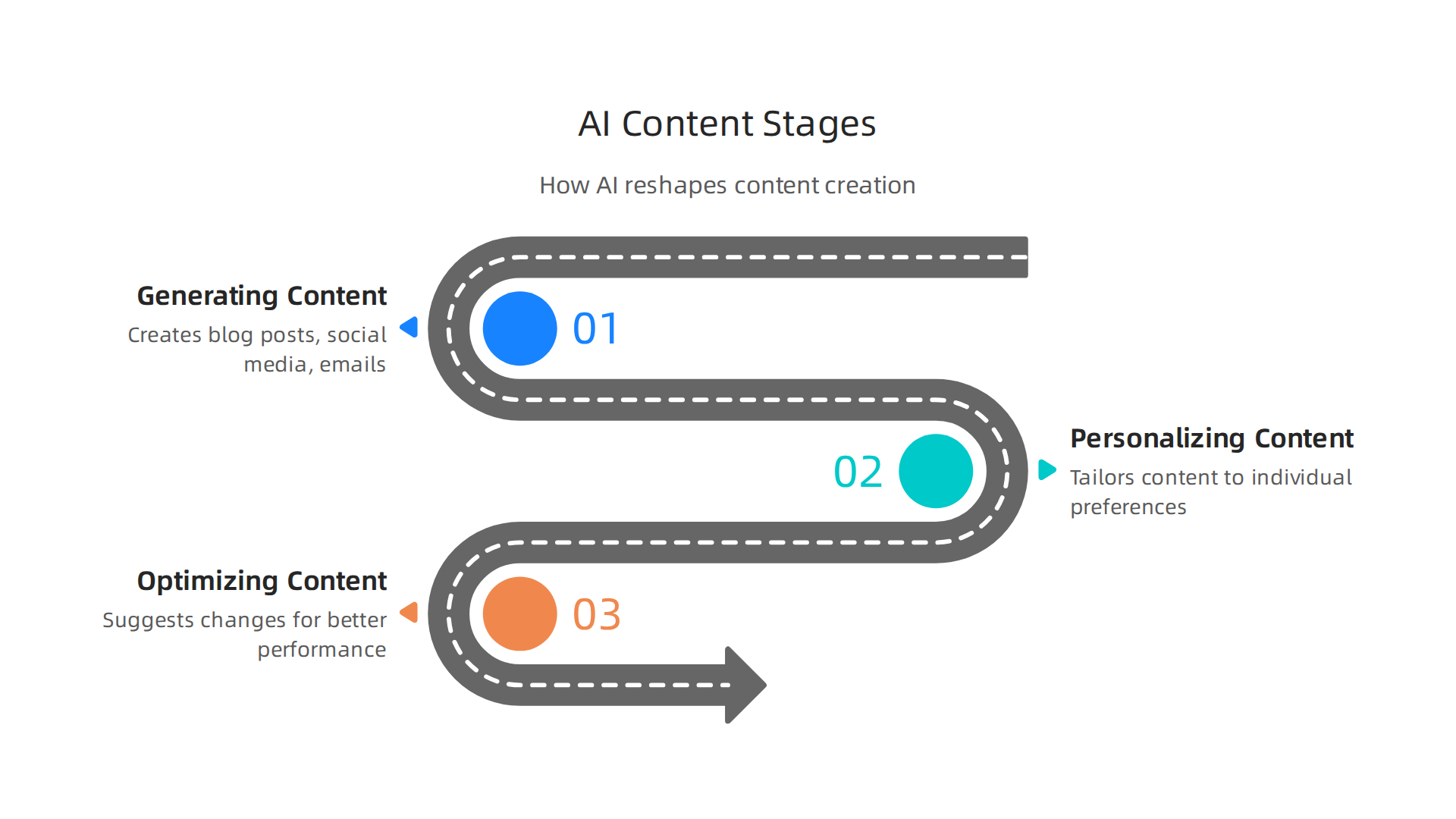
AI for Generating Content
First, AI can create new content all by itself. This is called generative AI. It can write blog posts, social media updates, and even email messages. Imagine needing an idea for a letterdrop newsletter, and AI gives you a full draft. It can also create images and even short videos. This saves a lot of time and helps marketers come up with fresh ideas quickly. In fact, many reports, like the State of AI Marketing 2026 report, show that content creation is the top use for AI in marketing.
AI for Personalizing Content
Second, AI helps make content special for each person. Think about going to a website and seeing ads or stories that feel like they were made just for you. That is AI at work. It looks at what you like and what you have clicked on before. Then, it helps marketers create marketing strategy examples that show you content that is most likely to interest you. This makes people feel more connected to a brand.
AI for Optimizing Content
Third, AI makes content work better over time. It can look at how well a piece of content is doing, like how many people read it or how many clicked a link. Then, AI can suggest changes to make it even better. This could be changing a headline or trying a different image. It helps marketers understand what works best without having to guess. This also applies to tools like a beautiful ai presentation maker, where AI can suggest ways to make your slides more impactful.
How Work Changes with AI
Because of these AI tools, the way marketers work has changed a lot. Projects can move much faster. Marketers can test many more ideas than before. The focus has shifted from just creating content to also guiding AI tools and making sure their output is good. This means marketers need to show not just the final product but also how they used AI to get there. Your marketing portfolio examples need to highlight these new skills and the great results you achieved with AI.
Marketing portfolio examples that prove AI-driven impact
Since AI now plays a big part in creating content, your marketing portfolio examples must show how you use these smart tools. It is not enough to just show what you made. You also need to show how AI helped you make it and what great results came from your work. This helps you stand out in 2026.
Here is how you can make your portfolio shine with AI-driven projects:
How to Build Your AI-Ready Portfolio
Think of your portfolio as a collection of short stories, or "case studies."

Each story should talk about a problem you faced, how you used AI to solve it, and what good came out of it. Most experts agree that showing about three to five strong projects is best when building an AI portfolio that gets you hired.
Here are the key parts for each story in your portfolio:
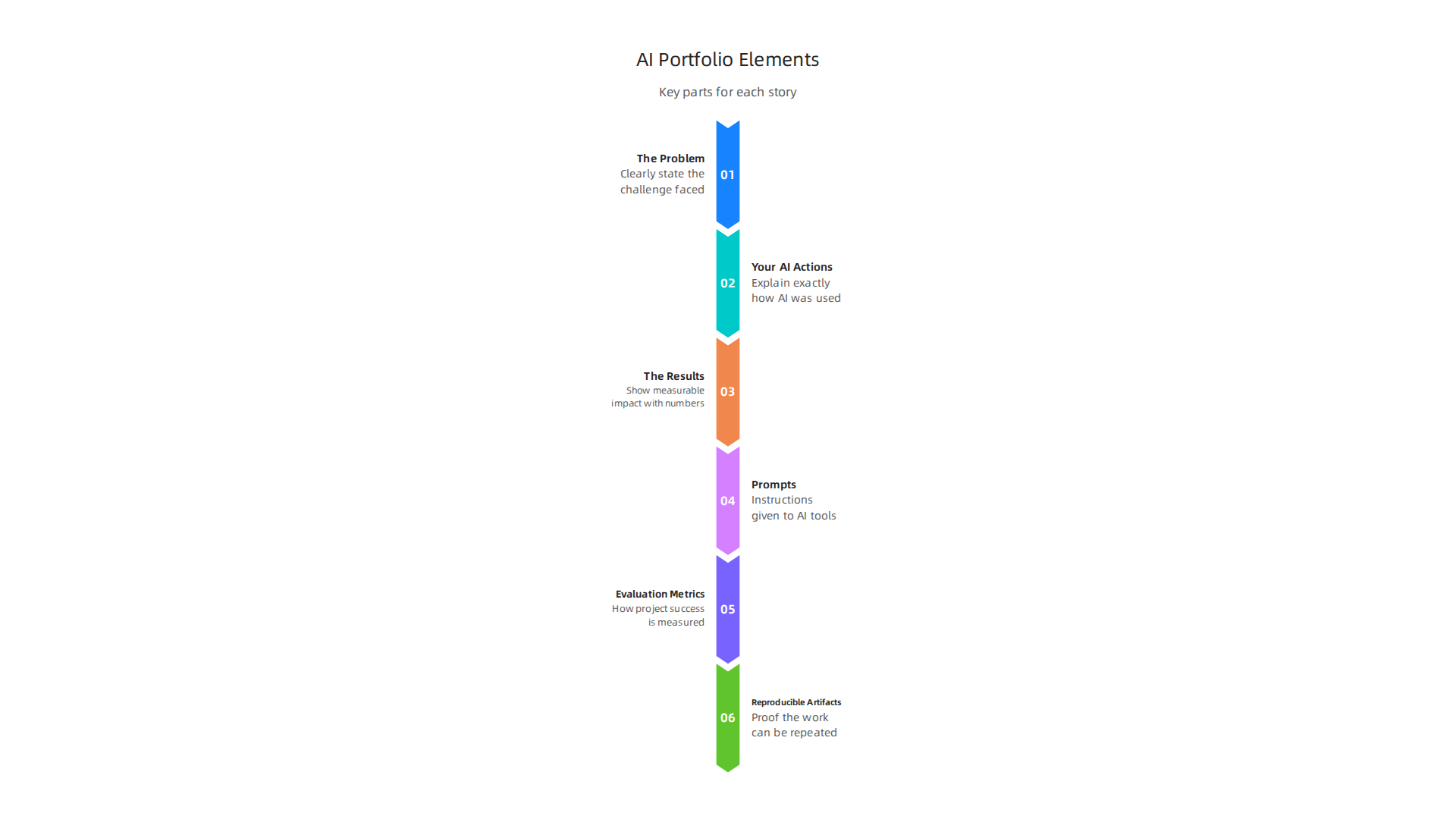
- The Problem: Start by clearly telling what challenge you needed to solve. Was it a tricky writing task? Did you need to make lots of unique images fast?
- Your AI Actions: Explain exactly how you used AI.
- Did you use AI to brainstorm ideas for marketing strategy examples?
- What AI tools did you use? (For example, a special AI writing tool or an image generator.)
- How did you guide the AI? This means showing the words you used to tell the AI what to do, often called "prompts."
- How did you check the AI’s work and make it better?
- The Results: This is super important! Show what happened because of your work with AI.
- Use numbers whenever you can. Did sales go up? Did more people click on your ads? Did you save a lot of time?
- Include pictures of dashboards, charts, or graphs that show your success. Showing AI-driven business intelligence software can highlight how you tracked results.
- Show the actual content you created. This could be AI-generated ads, blog posts, or visuals.
For example, a strong portfolio often features a simple overview of each project, followed by a deeper dive into the story and the proof of your success. Some great examples are like a "TL;DR" (too long; didn’t read) summary with a picture, and then the full story with facts and figures, as explained in The Ultimate AI Portfolio Guide: Show Your Work Smarter.
What Your Portfolio Should Include
When putting together your marketing portfolio examples, make sure to include:
- AI-assisted projects: Show projects where AI played a key role. This could be a campaign where AI helped write ads or create new images.
- Automation workflows: If you set up systems where AI does repetitive tasks, show how they work. This proves you can think in a smart, systematic way.
- Prompt libraries: These are like your secret recipes for AI. If you have special prompts that make AI create amazing things, share a few examples. This shows your unique skill in talking to AI.
- A story about your skills: Explain how you learned to use AI and how you keep getting better.
Many resources offer free templates to help you structure your portfolio. For instance, you can find marketing portfolio examples from Notion that are easy to use. Another great option for templates that help organize your case studies is from MySeera.
Remember, your goal is to show that you’re not just using AI, but you’re using it wisely to get real business results. This skill is vital for success in 2026.
Ready to stay informed on the fast-changing world of AI?
The Deep View Newsletter provides daily updates to keep you ahead.
The AI Newsletter Worth Reading
To truly show off your AI skills in 2026, your marketing portfolio examples need to go beyond just showing the final work. You need to pull back the curtain and reveal the smart choices and processes behind your success. This means including specific details that prove your understanding of AI tools and methods.
What to Include in Your AI-Focused Portfolio
When you build out your case studies, think about these important elements:
- Prompts: These are the special instructions you give to AI tools. Showing your best prompts proves you know how to talk to AI and get the results you want. Experts agree that mastering prompt engineering is one of the top 3 digital marketing skills to learn in 2026.
- Evaluation Metrics: How did you know your AI-powered project worked? Did sales go up? Did more people sign up for a newsletter? Show the numbers or key goals you tracked. This proves you can measure success. For example, a strong AI portfolio often includes things like accuracy rates, user success rates, or cost savings from using AI, as explained in the AI Portfolio That Gets Interviews: 10 Project Ideas.
- Toolchain Diagrams: If you used several AI tools together, draw a simple picture or diagram to show how they fit. This shows you can build a full process, not just use one tool. Think of it like a map for your project.
- Reproducible Artifacts: This just means showing that your work can be done again with similar results. This could be a link to a dataset you used (if allowed) or a workflow you set up. It proves your method is reliable.
- Code (if applicable): For more technical roles, sharing snippets of code you wrote to work with AI can be very powerful. This might be how you connected different AI tools or automated a task.
By including these details, your marketing portfolio examples show you understand how AI works, not just that you can use it. It makes your portfolio truly stand out.
Balancing Technical Details with Business Stories
Here’s the trick: not everyone who looks at your portfolio will be a tech expert. Some will be business leaders who care more about results. So, you need to tell your story in a way that works for everyone.
- For Business Leaders: Start with the "big picture." What was the business problem? How did AI help solve it? What were the clear, measurable results? Use simple language and focus on how your work made money, saved time, or reached more customers. You might even use an AI presentation maker to make your results look clear and impressive.
- For Technical People: This is where you can dive into the details. Show your prompts, your choice of AI tools, and how you evaluated the AI’s performance. Explain any challenges and how you fixed them. Think of it as showing your homework.
A good marketing portfolio will have a main story that’s easy for anyone to understand, with deeper technical details available for those who want to dig in. This way, your portfolio can attract a wide range of opportunities, whether you’re looking to enhance marketing strategy examples or streamline content creation, such as with a letterdrop newsletter. You can also find many helpful guides online, such as this overview of marketing portfolio examples that win interviews in 2026.
When you show off your amazing marketing portfolio examples that use AI, it’s super important to also think about the rules and right ways of doing things. This means understanding legal stuff like who owns the work, and ethical ideas like making sure your AI is fair.
Who Owns What? Your AI Work and the Law
One of the biggest questions in 2026 is about who really owns content made with AI. Here’s what you need to know:
- Human Authorship is Key: In the United States, current laws say that only people can own copyrights. This means if an AI tool makes something completely on its own, without a lot of human help, it might not be protected by copyright. The U.S. Copyright Office has rules about this, and the courts agree that AI-generated works need a human touch to be copyrighted. This also means if your marketing materials are mostly made by a machine, without enough human creativity, you might not have strong ownership rights over them AI Copyright Law: Ownership, Licensing, and Legal Risks.
- Check the Rules of Your AI Tools: Every AI program you use has its own set of rules, often called "terms of service" or "licensing agreements." These rules tell you what you can and can’t do with the content the AI creates. They might say that even if you use the tool, the company still has some rights. Make sure you read these carefully, especially if you plan to use AI-generated content for big marketing strategy examples or paid campaigns.
- Show Your Human Input: To protect your work and show you understand the rules, your marketing portfolio examples should highlight your role. Explain how you guided the AI, refined its outputs, or combined AI-generated parts with your own creative ideas. This proves there was real human effort involved. If you’re creating digital content, it’s also smart to look into unlock digital content creation with face swap AI tools and ethical workflows for more ethical guidance.
Doing Things Right: Ethical Concerns for AI Marketing
Beyond the law, there are also ethical considerations to keep in mind when using AI for marketing. Being ethical means being fair, honest, and thoughtful about how your work impacts others.
- Beware of Bias: AI learns from the data it’s given. If that data has unfair patterns or old biases, the AI can learn and repeat them. This could mean your AI-generated marketing content might accidentally show unfairness in things like images, language, or who it targets. In your marketing portfolio examples, you can show how you check for bias and make sure your AI work is fair to everyone. Understanding the real dangers of AI in 2026 can help you avoid these pitfalls.
- Be Clear and Open: It’s good practice to be transparent. If you use AI to create a lot of your marketing content, like blog posts or images, it’s often wise to let people know. This builds trust with your audience. You don’t have to shout it from the rooftops, but a simple note or mention can go a long way.
- Show Your Ethical Steps: In your portfolio, you can talk about the steps you take to be ethical. Maybe you use tools to check for bias, or you have a process to review AI-generated content before it goes live. Showing these practices makes your work stronger and more responsible.
Handling these legal and ethical points shows you’re not just skilled with AI tools, but also a thoughtful and responsible professional. This makes your marketing portfolio examples even more impressive to potential clients or employers in 2026.
Stay on top of all the latest AI news and trends to keep your skills sharp and your practices ethical.
The world of AI changes fast, and keeping up with new models, tools, and rules is key. For clear daily updates, consider subscribing to The AI Newsletter Worth Reading.
After covering the legal and ethical sides of AI in marketing, the next big step is to show how much good your AI work actually does. This means looking at the numbers and proving that your AI-powered campaigns bring real value. When you put together your marketing portfolio examples, showing clear results is key to standing out in 2026.

What Metrics to Track for AI Marketing
To show that AI is truly helping, you need to measure the right things. Here are some key numbers to include in your marketing portfolio examples:
- Better Conversion Rates: Did more people sign up, buy something, or click a link because of the AI? AI can make marketing messages much more personal, which often leads to more conversions.
- Lower Costs: Did AI help you save money? Maybe it automated tasks, reducing the need for manual work, or found cheaper ways to reach customers.
- More Engagement: Are people interacting more with your content? This could mean more likes, shares, comments, or time spent on your website.
- Faster Growth: Is your customer list or sales growing quicker? AI can help you reach new audiences more effectively and speed up your marketing efforts.
While many companies are pouring money into AI, not all are seeing big results. Only about 29% of companies investing at least $1 million a year in AI technology are seeing important returns, according to one 2026 survey Key findings from our 2026 AI adoption survey. This means showing your success with clear numbers is more important than ever.
How to Show AI Made the Difference
It can be tricky to prove that AI, and not something else, caused good results. This is called "attribution." Here’s how you can make a strong case:
- Before and After Comparisons: Show what happened before you used AI and after you started using it. For example, "Before AI, our email open rates were 15%. After using AI to write headlines, they jumped to 25%."
- A/B Testing: This means showing one group of people an AI-driven marketing message and another similar group a traditional message. If the AI message does better, you have proof.
- Attribution Models: These are smart ways to give credit to different parts of your marketing campaign. AI-driven attribution uses advanced computer learning to figure out which marketing "touchpoints" (like an ad, email, or social media post) truly led to a customer’s action AI-driven marketing attribution: How it works. These models are much better than older methods that only looked at the last thing a customer saw before buying. Many serious marketing teams in 2026 are building their measurement plans around things like marketing mix modeling and incrementality testing to truly understand impact Marketing Attribution AI 2026. To learn more about setting up your marketing strategy, consider exploring how to win 2026 with an AI marketing plan template for data driven growth.
- Focus on Specific AI Uses: Highlight specific tasks where AI played a big part, like using an AI presentation maker to create a beautiful AI presentation quickly, or an AI newsletter tool like a letterdrop newsletter that improved engagement.
Presenting Your Results in Marketing Portfolio Examples
When putting together your marketing portfolio examples, make your results easy to see and understand:
- Simple Charts and Graphs: Use visuals to show your numbers clearly. A simple bar chart comparing "before" and "after" numbers can be very effective.
- Dashboard Snapshots: If you use tools that create dashboards, take pictures of these to show how your campaigns are performing. This offers a quick overview of your success.
- Case Studies: Tell a short story about a project where AI made a big difference. Explain the problem, how you used AI, and the positive results.
- Summarize Your Findings: Always include a short summary explaining what the numbers mean and how your AI approach contributed to the success.
By showing clear results and how you measured them, your marketing portfolio examples will highlight your skill not just in using AI, but in making it truly count for business growth. This makes your work much more impressive and shows you understand how to drive growth with AI in your brand strategy. Dive deeper into making smarter business decisions by checking out AI-Driven Business Intelligence Software.
To truly stand out with your marketing portfolio examples, showing off your AI skills is not just about today’s wins, but also about preparing for tomorrow. The world of AI changes fast. What’s new today might be common knowledge next year. So, keeping your skills sharp and your portfolio updated is super important in 2026 and beyond.
Key AI Skills for Marketers in 2026
To stay ahead, you’ll want to learn some specific AI skills.
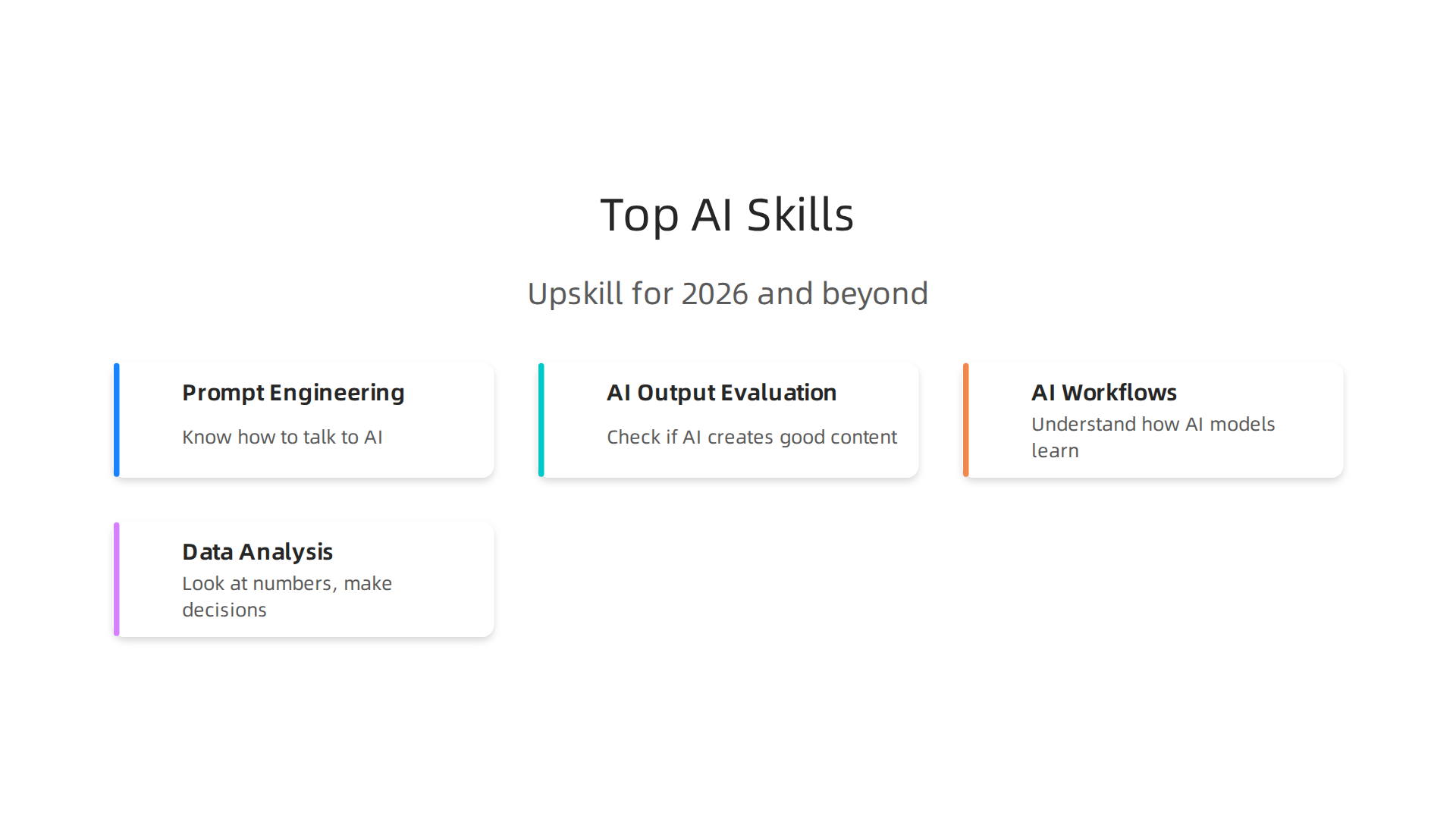
These skills will show that you’re not just using AI, but truly understanding and guiding it.
- Prompt Engineering: This means knowing how to "talk" to AI. It’s about giving clear instructions and asking the right questions to get the best results from AI tools. Think of it like being a good director for a movie. You tell the actors (AI) exactly what you need for a great scene (marketing content). Many experts agree that prompt engineering is a top skill for marketers this year Top 3 Digital Marketing Skills to Learn in 2026. You can learn more about this in courses like those offered by HubSpot Academy

- AI Output Evaluation: You need to be able to tell if what the AI creates is actually good. This means checking for mistakes, making sure it sounds natural, and ensuring it fits your brand. You’re the quality checker, making sure the AI’s work is perfect before it goes out. This also involves understanding if AI-generated content follows legal guidelines, as purely AI-generated works generally can’t be copyrighted in the U.S. without enough human input Legal Issues in Using AI-Generated Content for Business Marketing.
- Understanding AI Workflows (MLOps for Marketers): You don’t need to be a coder, but it helps to know how AI models learn and are managed. This helps you use AI tools more smartly and understand their limits. It means you can fit AI smoothly into your overall marketing strategy examples.
- Data Analysis and AI Integration: Being able to look at numbers and see what they mean is crucial. AI can help with this, but you need to know how to use the insights to make smart decisions for your campaigns.
Many places offer courses to help you master AI skills. You can find many options for AI Marketing Certification 2026: Skills & Courses Guide that can help you upskill. For a broader look at new skills, you can explore guides on mastering AI in 2026 key skills learning paths and career strategies.
Keeping Your Portfolio Ready for the Future
As AI tools keep changing, so should your marketing portfolio examples.
- Update Regularly: Show off your latest work. If you used an AI presentation maker to create a beautiful AI presentation, include it! If you used an AI newsletter tool like a letterdrop newsletter that got great results, show that too.
- Highlight Learning: Mention any new courses or certifications you’ve completed. This shows you are always learning and ready for new challenges.
- Focus on Problem-Solving: Always explain how you used AI to solve a real problem or get better results. This proves your value even as the tools themselves evolve.
Staying informed about the latest AI news is a full-time job in itself. With new models and tools coming out almost every day, it can be tough to keep up.
The fast pace of AI means you’re always learning. By focusing on these core skills and keeping your marketing portfolio examples updated, you’ll stay valuable and relevant in the exciting world of AI marketing.
Summary
This article explains why every marketer needs an AI-ready portfolio in 2026 and shows exactly how to build one that gets noticed. It covers how AI is reshaping content creation, personalization, and optimization, and why employers now expect clear evidence of AI-driven impact. You’ll learn a practical structure for AI case studies—problem, AI actions (tools and prompts), and measurable results—plus what artifacts to include such as prompt libraries, workflows, dashboards, and code snippets when relevant. The guide also walks through measurement techniques (before/after, A/B tests, attribution), legal ownership and licensing concerns, and ethical checks for bias and transparency. Finally, it lists the core skills to develop, tips for tailoring stories to business vs. technical readers, and how to keep your portfolio current as AI evolves.