

The world of Artificial Intelligence (AI) is moving very fast in 2026. What was new last year might be old news today. This rapid change means many people and businesses feel they need to catch up. They worry about falling behind if they do not learn new AI skills quickly. Jobs are changing, and new tools are popping up all the time. This creates a lot of pressure to understand and use AI better, no matter what your job is or what industry you work in.

This quick pace makes it very important to start mastering AI now. The US Department of Labor even put out a plan to help people learn about AI, showing just how important it is for everyone to have some AI literacy in 2026 [US Department of Labor releases AI literacy framework]. This guide is here to help you navigate this fast-changing world. It will show you clear, proven ways to learn AI effectively. We will look at different ways to learn, such as formal courses and hands-on training. We will also explore career plans to help you make the most of your new AI skills.
For example, topics like Generative AI and Agentic Systems are not just advanced ideas anymore; they are now a basic part of modern AI work [Artificial Intelligence Courses Syllabus for 2026]. This means that even if you’re thinking about a data science masters or specialized data analyst training, you will need to learn these newer concepts.
Many worry about information overload in the AI space. It’s hard to keep up with all the new models, tools, and company news every day. This guide cuts through that noise. It focuses on the most important things you need to know to truly become good at AI, from understanding the basics to picking the best data analytics certification. We will cover practical steps that help you learn efficiently and apply what you know. This is not just about understanding AI, it is about using it to grow your career and business. You can learn more about how AI models in 2026 are transforming every major industry.
To stay on top of the latest advancements without getting overwhelmed, you need reliable information.
Get clear daily AI updates from The AI Newsletter Worth Reading.
The world of AI is changing job roles very quickly. To succeed, you need to know what skills are most important right now. Employers are looking for a mix of different talents to build strong AI teams.
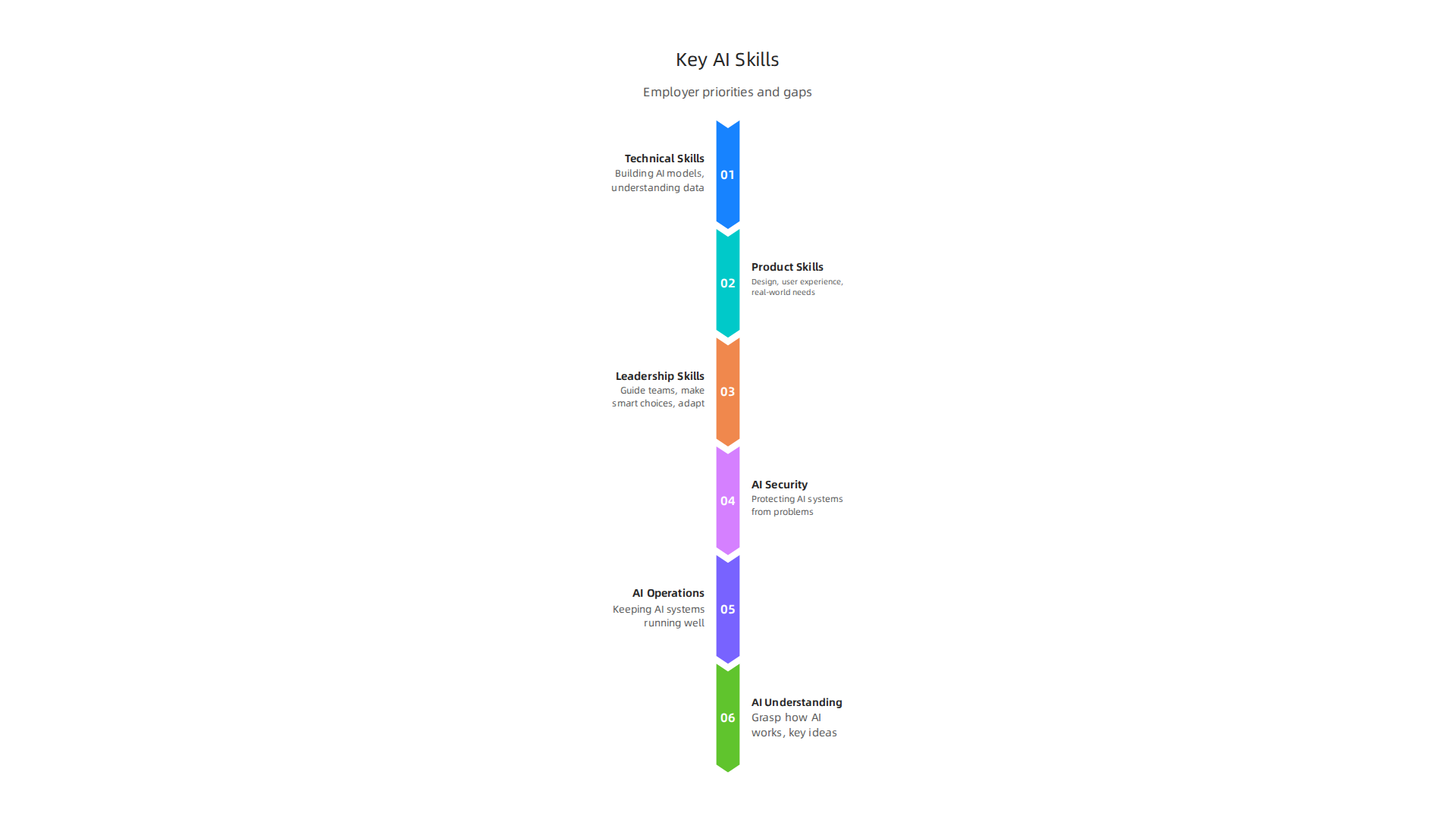
These include technical skills, product understanding, and good leadership.
Technical Skills
First, there are technical skills. This is about knowing how AI works under the hood. It includes things like building AI models, understanding complex data, and making sure the AI runs smoothly. Many people interested in a Business Intelligence Analyst career roadmap or becoming a Meta data scientist will focus on these areas. They learn to collect, clean, and use data to train AI. They also learn to keep an eye on how the AI is performing. Reports show that finding people with these kinds of AI skills is now the hardest thing for employers around the world
Global Talent Shortage Reaches Turning Point as AI Skills Claim …. This includes understanding AI concepts and algorithms.
Product Skills
Then come product skills. These skills help make sure AI tools are actually useful for people. It is not enough to just build an AI; you need to know what problem it solves and how users will interact with it. This means thinking about design, how easily people can use the AI, and making sure it meets real-world needs. For example, if you are making an [AI powered homework help] tool, you need to think about what students and teachers really need from it.
Leadership Skills
Finally, leadership skills are super important for anyone working with AI. This means being able to guide teams, make smart choices, and see the big picture. It also includes "human skills" like being creative, making good judgments, and working well with others. Actually, AI is making human skills such as judgment, creativity, and leadership more important than ever

AI reshapes global labour market into two distinct paths …. Leaders help teams adapt to new AI tools and changes in the market.
Common Skill Gaps and Priorities
Even with so much interest in AI, there are still big gaps in what employers need and what workers can do. Many companies struggle to find people who can handle AI security and manage AI operations State of Tech Talent Report. This means protecting AI systems from problems and keeping them running well.
Another big gap is in basic AI understanding. Many people don’t fully grasp how AI works or its key ideas. This shows why mastering ai is so important across many job types, not just for technical experts. Employers want people who can solve problems, adapt to new things, and work together. Learning how to cut through all the AI noise and focus on what’s important is also a key skill, often called how to master data scouting.
To close these gaps, businesses are prioritizing training in areas like machine learning and AI model development. But they are also focusing on human skills that AI can’t replace, such as critical thinking and problem-solving. This means that as AI grows, so does the need for people who can work smarter with these new tools, not just build them. This blend of technical know-how and strong human skills is what truly helps in mastering ai in 2026.
To truly succeed in mastering ai in 2026 and blend those important technical and human skills, you need to start with a strong foundation. This means understanding the basic ideas and having some core skills before you try to build complex AI systems.
Math You Need to Know
First, let’s talk about the math. Don’t worry, you don’t need to be a math wizard. It’s more about understanding the main ideas behind the numbers. Thinking about things like basic math concepts, how data spreads out (statistics), and understanding changes (calculus) are super helpful. These math ideas help you grasp how AI algorithms work. For example, knowing a little about linear algebra helps with understanding how computer brains, called neural networks, process information. Many AI courses today start with these fundamental math skills to build a strong base for AI and machine learning, as outlined in common Artificial Intelligence Course Syllabus 2026.
Core AI and Machine Learning Ideas
Next, you need to get familiar with the main ideas of Artificial Intelligence (AI) and Machine Learning (ML). This includes knowing what AI is, where it came from, and how it is used everywhere today. You’ll learn about different ways computers "learn," like through examples (supervised learning) or by finding patterns on their own (unsupervised learning). Experts say that understanding newer areas like Generative AI and Agentic Systems is now a baseline skill, not just an advanced topic for those aiming for a Artificial Intelligence Courses Syllabus for 2026.
Basic Technical Skills and Tools
Beyond concepts, having some basic computer skills is key. Learning a programming language, often Python, is a great start. This lets you talk to computers and build things. You also need to know about data structures and algorithms, which are like recipes for how computers handle information. Plus, being good at using different AI tools and software platforms is important for putting your knowledge into practice. This is part of what makes for effective data analyst training or helps someone aiming for a data science masters. If you’re looking to dive deeper into how to handle all the information that comes with AI, you might find a helpful resource in your guide to mastering the data science process.
Staying informed about new AI updates is crucial as you build your foundational knowledge.
Get clear daily AI updates from The AI Newsletter Worth Reading.
After building a strong base, the next step in mastering ai is to pick the right way to learn more. With so many choices out there in 2026, finding the best courses, certifications, or programs can feel tricky.

It’s important to choose learning paths that truly matter for your goals.
Courses, certifications, and programs: how to choose what matters
Finding the right learning path is a big part of becoming good at AI. The job market for AI skills is growing fast, but many companies find it hard to find people with the right know-how. This means choosing a program that teaches you what employers really need. Reports from 2026 show that having AI skills is now one of the hardest things for employers to find globally, even more so than traditional engineering skills Global Talent Shortage Reaches Turning Point as AI Skills Claim ….
Different Ways to Learn AI
There are a few main ways you can learn about AI:
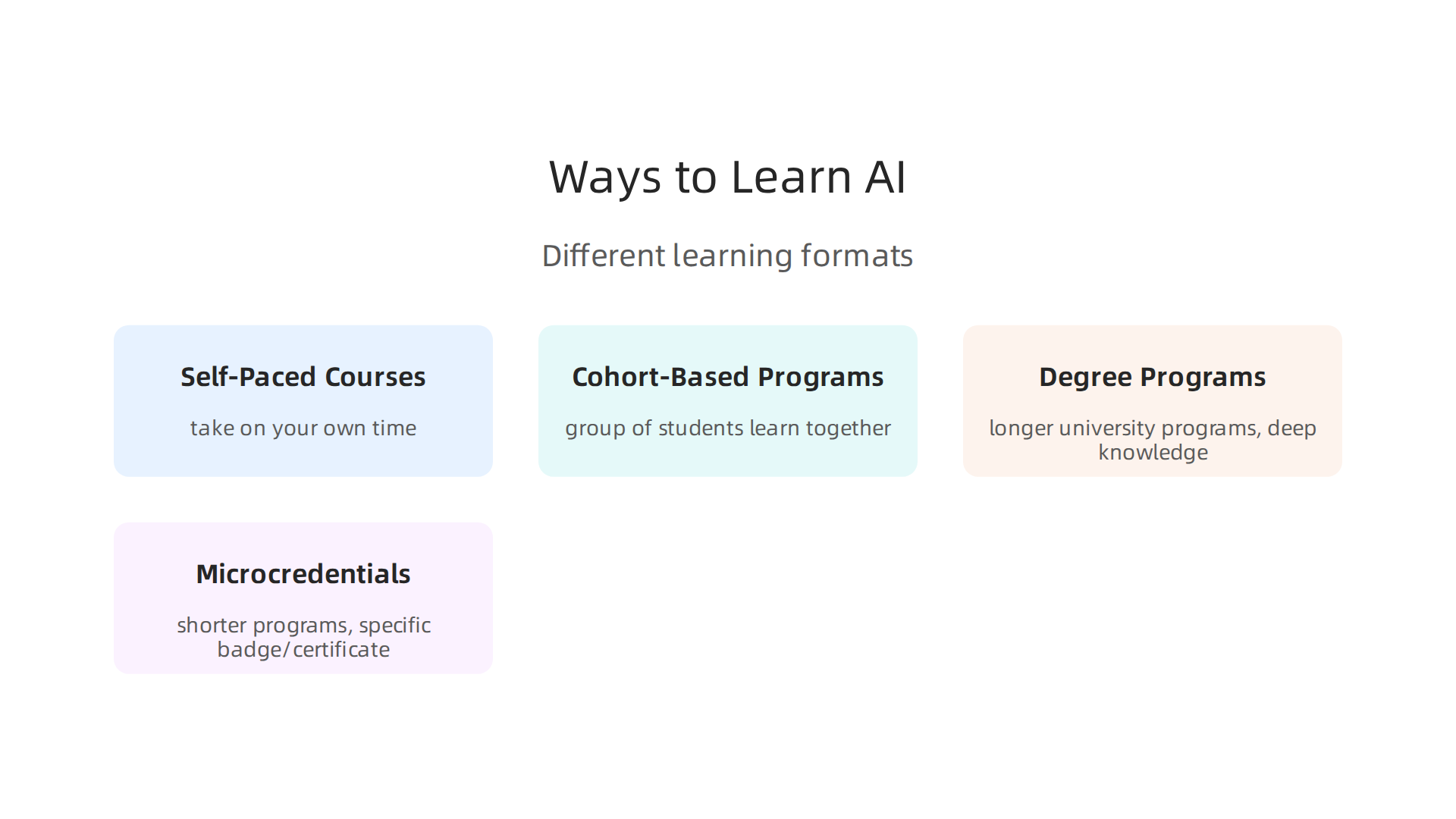
- Self-Paced Courses: These are classes you take on your own time, whenever you want. They are often flexible and good if you have a busy schedule. Many online platforms offer these, sometimes for free or a small fee. They’re great for picking up specific skills or getting an introduction to a topic.
- Cohort-Based Programs: These programs bring a group of students together to learn at the same time. You often have live classes, group projects, and direct help from teachers. This can be more engaging and offer a better sense of community.
- Degree Programs: These are longer university programs, like a bachelor’s or a
data science masters. They offer deep, broad knowledge and a recognized qualification. They are a big commitment of time and money but can open many doors. - Microcredentials and Certifications: These are shorter programs that give you a special badge or certificate for a certain skill. They are faster than a degree and show you have specific abilities, like being good at
data analyst trainingor a certain type of AI. Many companies offer their own certifications, which can be very valuable in 2026. For example, some certifications focus on specific areas like Google’s AI Essentials for beginners or IBM’s AI Engineering Professional Certificate for more technical learners Best AI Certifications in 2026: Beginner, Business, Prompt ….
How to Pick a Good Program
When looking at any AI learning program, think about these things:
- What you will learn (Learning Outcomes): Does the course clearly say what skills you’ll gain? Make sure it matches what you want to achieve, whether it’s understanding how to build AI tools or simply using
ai powered homework helpmore effectively. - Hands-on Projects: Does the program include real projects? Learning by doing is super important in AI. You want to build things that show off your skills.
- Teacher Experience: Who is teaching the course? Do they have real-world experience in AI? Good teachers make a big difference.
- How you are tested (Assessment Rigor): How will the program check if you’ve learned the material? Strong tests and projects ensure you truly understand the content.
- Career Support: Does the program offer help with finding a job after you finish? This could include resume help or connections to companies.
By carefully looking at these points, you can choose the best path for your learning journey in mastering ai and make sure your efforts lead to real growth. If you are looking for specific certifications in data analysis that are useful for AI careers, you might want to explore these top data analysis certifications 2026 for AI professionals.
Now that you know how to choose the right AI learning paths, the next big step is putting it all into action. For busy professionals, this means making a clear plan. A good 6 to 12 month learning roadmap helps you stay on track with mastering ai without getting overwhelmed. It’s all about breaking down your big goal into small, steady steps.
Setting Up Your AI Learning Roadmap
Think of your roadmap as a step-by-step guide. It combines studying new ideas with doing real projects and reviewing what you’ve learned. This helps you keep up your energy and truly understand AI.
Here’s a simple way to plan your journey:
- Months 1-2: Build the Basics. Start with the fundamental ideas of AI. This includes learning basic programming skills, understanding data, and getting familiar with core AI concepts like how computers learn. Many AI courses in 2026 begin with these essential building blocks, covering things like math for AI and machine learning Artificial Intelligence Course Syllabus 2026 – AlmaBetter.
- Months 3-4: Expand Your Knowledge. Once you have the basics down, explore different parts of AI. This could be machine learning, deep learning, or understanding how AI models are built. Try to get a broad view of the AI world.
- Months 5-6: Focus and Create. This is where you pick a specific area that excites you or helps your job goals. Maybe it’s generative AI, or perhaps you want to get better at
data analyst training. Work on projects that use these new skills. Building real things is key to trulymastering ai. For example, a good AI curriculum in 2026 will usually cover areas like generative AI and how agentic systems work Artificial Intelligence Courses Syllabus for 2026. - Ongoing: Review and Grow. After about six months, look back at what you’ve learned. What went well? What was hard? Then, adjust your plan for the next six months. This helps you balance learning new concepts (breadth) with becoming very good at specific skills (depth).
Balancing Breadth and Depth
Your job goals help decide if you need to learn a lot of different things (breadth) or become an expert in one specific area (depth).
- For Breadth: If you manage teams, need to understand how AI affects your business, or simply want to use tools like
ai powered homework helpmore effectively, focus on a wide range of AI concepts. This gives you a general understanding without needing to know every technical detail. - For Depth: If you want to build AI systems, analyze complex data, or work towards a
data science masters, you’ll need to go deep into specific topics. This means spending more time on technical skills, coding, and specialized projects. Getting a Google Data Analytics Professional Certificate vs Degrees and Top Certifications in 2026 can be a great way to show deep knowledge in data.
No matter your path, staying informed about the latest AI news is super important.
Get clear daily AI updates from The AI Newsletter Worth Reading.
After you have a good plan for learning AI, the real magic happens when you start doing things. This means building projects, working with data, and using the right tools. It’s how you truly get good at mastering ai. Learning by doing helps turn what you read in books into real skills you can use.
Project-Based Learning: Building Skills That Matter
Working on projects is one of the best ways to learn.

Instead of just reading, you get to build things, solve problems, and see how AI works up close. These projects show what you can do and help you learn skills that you can use in many jobs.
Here are some types of projects that are great for showing off your skills:
- Data Analysis Projects: Try exploring a real-world dataset. This could mean looking at sales numbers, public health data, or social media trends to find interesting patterns. This is great for
data analyst training. Many good portfolio examples start with exploring data and showing what you find Portfolio Projects That Get You Hired for AI Jobs. - Predictive Models: Build a model that tries to guess future outcomes. For example, you could predict house prices, student performance, or customer behavior. Projects like a Student Performance Prediction System are excellent for showing problem-solving skills.
- Generative AI Systems: Create something new with AI. This could be a tool that writes job application letters, like a resume assistant, or a system that summarizes customer feedback. Many experts say that building a system like a "production RAG system" (which means a smart chatbot that uses outside information) is key for showing deep AI skills in 2026 8 AI Engineer Portfolio Projects That Actually Get You Hired.
These projects help you not just learn, but also build a portfolio. A strong portfolio is super important if you want to aim for a data science masters or a top AI job.
Essential Tools, Frameworks, and Workflows
To build these projects, you’ll need to use some tools. Think of them as your building blocks for AI.
- Programming Languages: Python is a favorite for AI because it’s easy to use and has many helpful libraries.
- Libraries and Frameworks: These are like special toolkits that help you do complex AI tasks without writing everything from scratch. Examples include TensorFlow and PyTorch for machine learning, and LangChain for building bigger AI systems.
- Cloud Platforms: Services like Google Cloud, AWS, or Azure let you use powerful computers and AI services without having to buy them yourself. They are very useful for bigger projects.
When you work on projects, try to use "reproducible workflows." This means setting up your project in a way that someone else can easily understand and run your code to get the same results. This shows you have good habits, which is important for any professional in AI. Learning how to choose the right data analysis tools for AI is a skill in itself How to Choose Data Analysis Tools in 2026 for AI Professionals.
Remember, the goal is to practice. Every project you complete helps you get better at mastering ai and understanding how these smart systems really work.
Learning by doing is great, but showing off what you’ve built is just as important. To truly succeed in mastering ai, you need to present your projects in a way that catches the eye of hiring managers and helps you get into top programs. This means creating strong portfolios and case studies.
Building a portfolio and case studies that get noticed
A case study is like a story about your project. It explains what you did, why you did it, and what you learned. This helps others understand your skills much better than just looking at your code. Experts say that a well-made portfolio can really impress recruiters in 2026, especially if it shows off in-demand skills like building smart systems that use lots of information
10 AI Portfolio Examples That Impress Recruiters (2026 …).
Here’s how to structure a helpful case study:
- The Problem: Start by clearly saying what problem your project tries to solve. For example, "People need help writing cover letters" or "Businesses want to know what customers think."
- Your Approach: Explain how you planned to solve the problem. Which AI tools did you pick? What steps did you take? This part shows your thinking process.
- The Results: Share what your project achieved. Did it correctly guess house prices? Did it summarize text well? Show the good outcomes.
- Limitations: Be honest about what your project couldn’t do or what challenges you faced. This shows you understand the real world of AI.
- Reproducibility: Explain how someone else could run your code and get the same results. This is about making your work clear and easy to check. Having clear setup steps and working instructions is key for a strong portfolio The Six-Figure AI Engineering Portfolio That Landed Me a ….
Tips for showcasing your work:
- Code and Notebooks: Don’t just show your code. Use tools like GitHub to organize it neatly. For data projects, share your notebooks (like Jupyter notebooks) where you can explain your steps and show your
data analyst trainingin action, including charts and graphs. - Model Cards: These are like info sheets for your AI models. They explain what the model does, how it was trained, and any potential issues. This is especially good if you’re aiming for a
data science mastersdegree. - Deployment Demos: If your project works like a real application, make a short video or even a simple website where people can try it out. This brings your project to life! For example, if you made an
ai powered homework helptool, letting someone type a question and see the AI respond is powerful. - Tailor for Your Audience: Think about who will see your portfolio. A recruiter might want to see how you solve real business problems, while a technical manager might want to dive into your code.
By creating detailed case studies and smart ways to show your work, you’re not just building projects. You’re building a clear story of your skills and dedication to mastering ai. If you want to dive deeper into the process of working with data, you can learn more about Your Guide to Mastering the Data Science Process.
To keep up with the latest advancements in AI and make sure your portfolio projects are always relevant, it’s smart to stay informed.
Get clear daily AI updates from The AI Newsletter Worth Reading.
Career strategies: transitioning, upskilling teams, and staying current
Once you’ve shown your skills by creating clear case studies and a strong portfolio, the next step is to use those skills in your career. This means figuring out how to move into AI jobs or help your current workplace use AI better. In 2026, finding people with AI skills is really tough for companies. Actually, AI skills have become the most difficult for employers to find globally, even more so than traditional engineering jobs Global Talent Shortage Reaches Turning Point as AI Skills Claim …. This means there are lots of chances for you to grow.
Pivoting into AI roles
If you want to move into an AI role, start by looking at your current skills. Think about what you already do that can help with AI projects. Maybe you’re great at handling data, which is key for any AI system. Or perhaps you’re good at spotting problems that AI could solve. It’s not just about learning to code; it’s also about seeing how AI fits into real-world problems. Many jobs are now adding tasks that need human skills like empathy and good judgment, which are important when working with AI tools.
Consider getting specific training or certifications to fill any gaps. For example, a data science masters degree or a good data analyst training program can make a big difference. Many people also find that certain top data analysis certifications for AI professionals can quickly show employers you have the right knowledge.
Upskilling teams and fostering continuous learning
Companies also need to help their current workers learn about AI. This is called "upskilling." It’s not just for people who work with computers. Every team can benefit from understanding AI, from marketing to customer service. Many large companies are creating special programs for this. For example, some companies set up "AI Academies" inside their own walls to teach all their employees, no matter their job role, about AI. Lloyds Banking Group is one such example, launching an internal AI Academy in 2026 for all 67,000 employees Corporate AI Training: Build vs Buy vs Hybrid (2026) – IntuitionLabs.
Here are some ways organizations are helping their teams with AI:
- Internal Academies: These are like mini-schools inside a company, offering lessons and workshops on different AI topics. They help everyone from beginners to advanced users.
- Mentoring Programs: Pairing someone new to AI with an experienced person can help a lot. The mentor guides the learner and shares practical tips.
- Continual Learning: AI changes so fast that learning can’t be a one-time thing. Companies use regular workshops, online courses, and even AI-powered learning platforms to keep skills fresh.
The goal is to make sure everyone feels comfortable and ready to use AI in their daily work. This makes the whole company stronger and helps everyone in mastering AI. It’s about building a culture where learning and adapting to new tools is a normal part of the job.
Summary
AI is evolving fast in 2026 and this article shows a practical, step-by-step approach to get competent without burning out. It explains why AI literacy matters now—employers face a global shortage of AI talent—and breaks the learning journey into clear parts: the technical, product, and leadership skills companies want; the math and core concepts to master; and how to pick courses, certifications, and programs that map to real job outcomes. You’ll get a recommended 6–12 month roadmap, hands-on project ideas (data analysis, predictive models, generative systems), and guidance on tools and reproducible workflows. The piece also covers how to craft portfolio case studies that impress recruiters and how to pivot or upskill teams inside organizations. Overall, readers will finish with an actionable plan to learn, demonstrate, and apply AI skills that employers actually hire for.