

The New Era of Corporate Learning: Why AI Platforms Matter in 2026
Let’s be honest. Traditional corporate training often feels like a chore. One-size-fits-all courses waste time for experienced employees while leaving others behind. In 2026, that old model simply does not cut it anymore.
The shift is happening fast. Companies now turn to an ai-powered learning platform to personalize training at scale. These systems analyze how each person learns, what they already know, and what skills they need next. The result? Teams close skills gaps much faster than with standard methods.

A recent review of the top AI-powered learning platforms in 2026 shows how these tools deliver adaptive recommendations and real-time feedback. Instead of forcing everyone through the same module, the platform adjusts instantly. That means learners focus on what matters most to them.
This smarter approach also boosts retention. Employees feel supported when training fits their actual job. They stay longer and grow faster. And with the rapid pace of AI development, staying competitive means updating skills constantly. Whether you need a data analysis course or want to become a tableau certified data analyst, an ai powered learning platform can build a path just for you.
Want to keep up with every shift in AI and learning? Grab Your Daily AI Shortcut for simple daily insights that help you stay ahead.
What Sets AI-Powered Learning Platforms Apart?
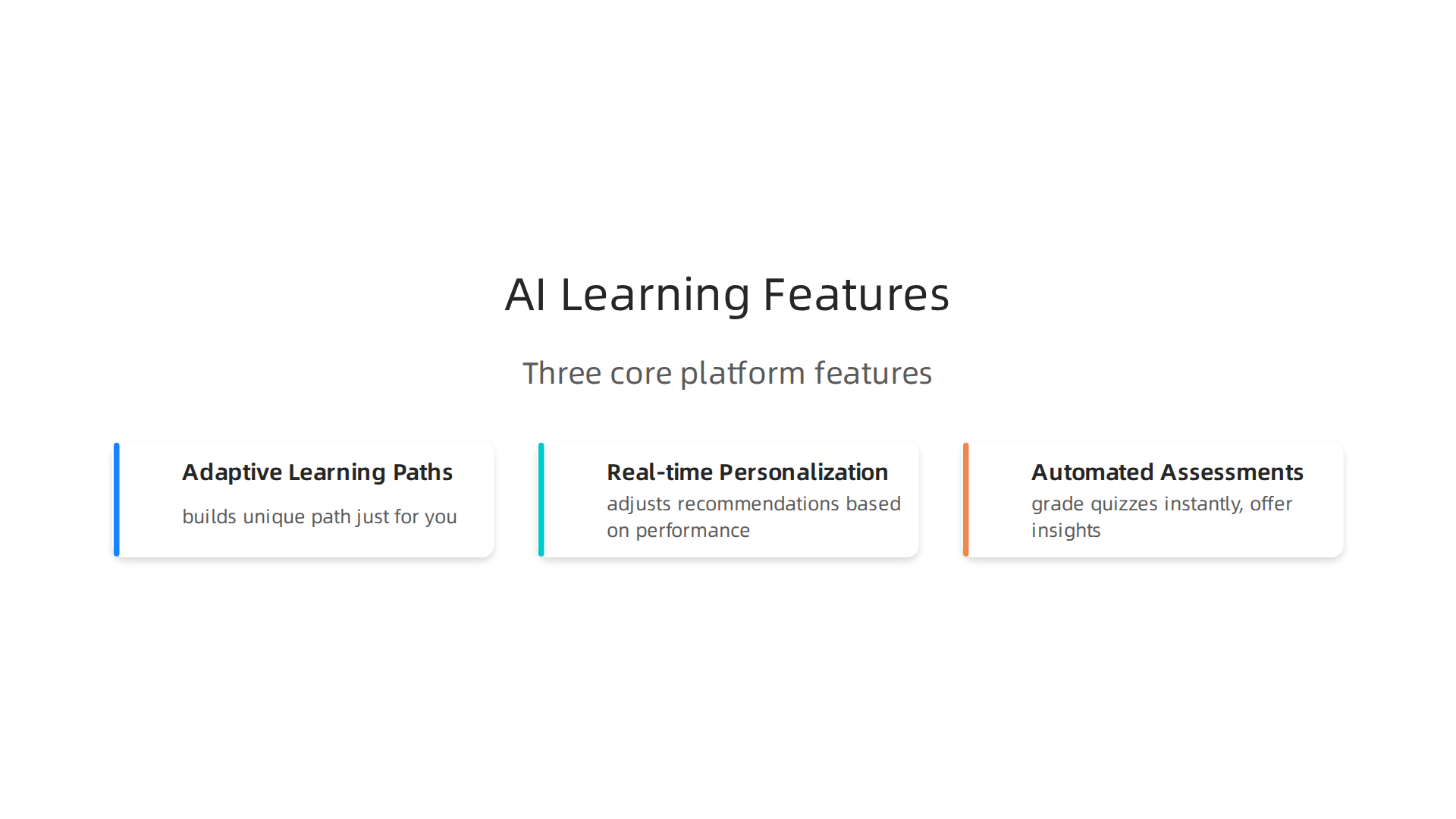
So, what actually makes an ai-powered learning platform different from the online courses you took five years ago? It is not just about watching videos on a screen. The real magic happens under the hood. These platforms use three core features that completely change how you learn.
Adaptive learning paths
Old training made everyone start at the same spot. An ai powered learning platform does the opposite. It uses machine learning to figure out what you already know and what you still need to learn. It builds a unique path just for you.
A deep dive into the Top 12 AI-powered learning platforms in 2026 shows that adaptive learning is the number one feature on most lists.
The platform maps your current skills and your goal skills. Then it creates a bridge between them using only the lessons you actually need. No more sitting through something you mastered years ago.
Real-time personalization
The adaptation does not stop after the first lesson. These platforms watch how you perform in real time. If you breeze through a module, it bumps you ahead. If you struggle, it offers extra resources right away.
The 7 Best AI-Powered Learning Platforms in 2026 all excel at this kind of real-time recommendation. The system adjusts your course recommendations based on your performance and preferences. For example, if your goal is to finish a specific data analysis course or become a tableau certified data analyst, the platform will keep those goals front and center. It will recommend the perfect next module to keep you moving forward.
Automated assessments and feedback
Nobody likes waiting weeks for test results. AI fixes that. Automated assessments grade your quizzes instantly. Smart feedback loops point out exactly where you went wrong and suggest a quick video or article to help.
These systems do more than just track completions. They analyze your responses and give you immediate insights. This cuts down administrative work for managers and helps you learn faster. It feels like having a tutor available whenever you need one.
The ability to see your skills grow in real time keeps motivation high. And once you complete a few courses, the next logical step is to get certified and prove your expertise. You can browse the top data analysis certifications 2026 for AI professionals to see which credential matches your career path.
These smart features make an ai-powered learning platform feel less like a tool and more like a personal guide. In the next section, we will look at how to pick the right one for your team.
Essential Features to Look for in an AI Learning Platform
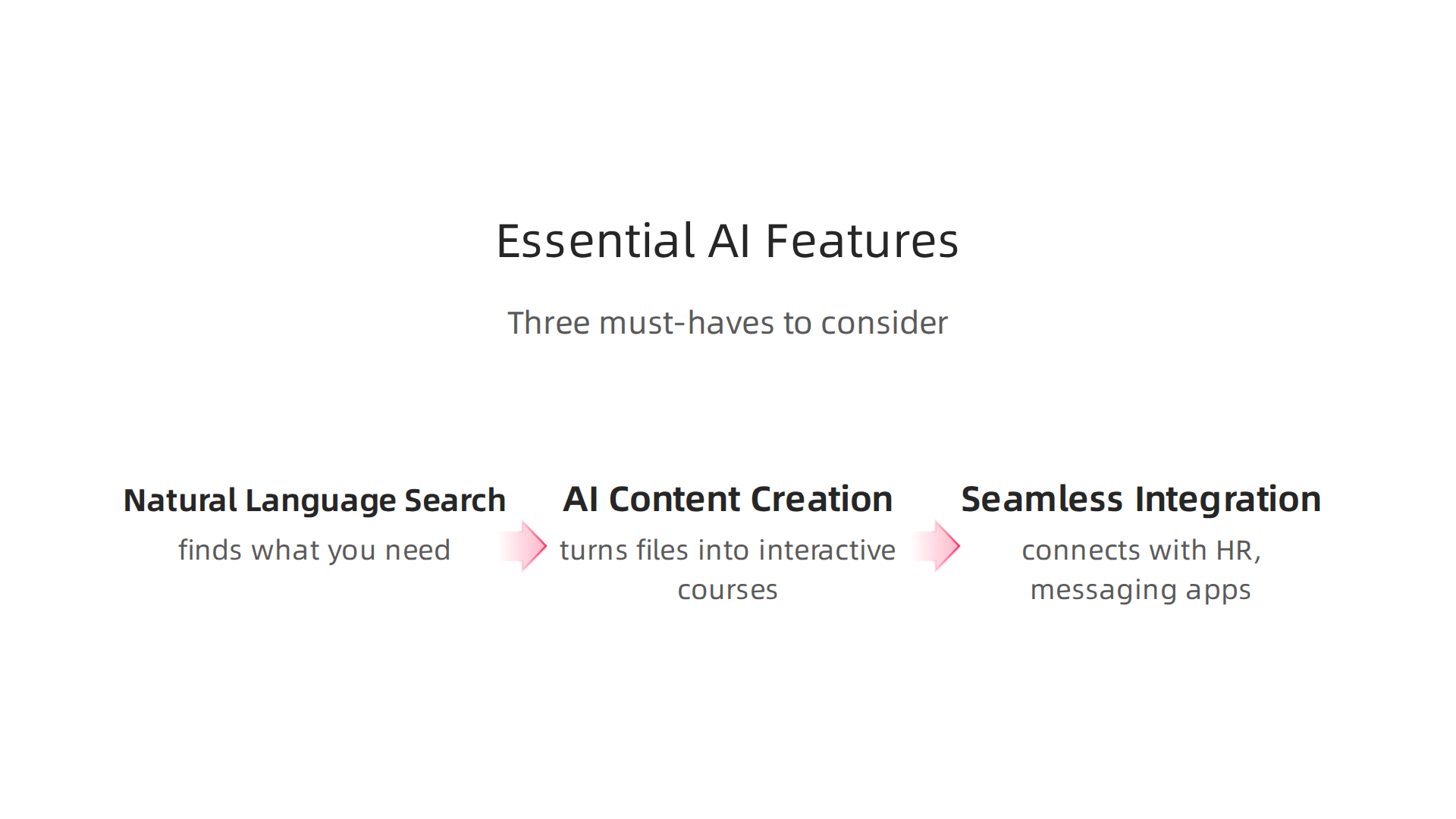
Not all AI learning tools are built the same. When you start shopping for one, you will notice a few features that separate the helpers from the hype. Here are three must-haves to look for.
Natural language search that feels like talking
You know the drill. You log into a training portal. You type three keywords into a search bar. You get back a confusing list of PDFs from years ago. That is frustrating.
A good ai powered learning platform fixes this with natural language search. You can type a full question like "find a good data analysis course for beginners" and the system understands what you mean. It returns exactly what you need.
One of the best examples of this is Harmony Search from Docebo. It is an AI chat that lets you explore content using normal conversation.
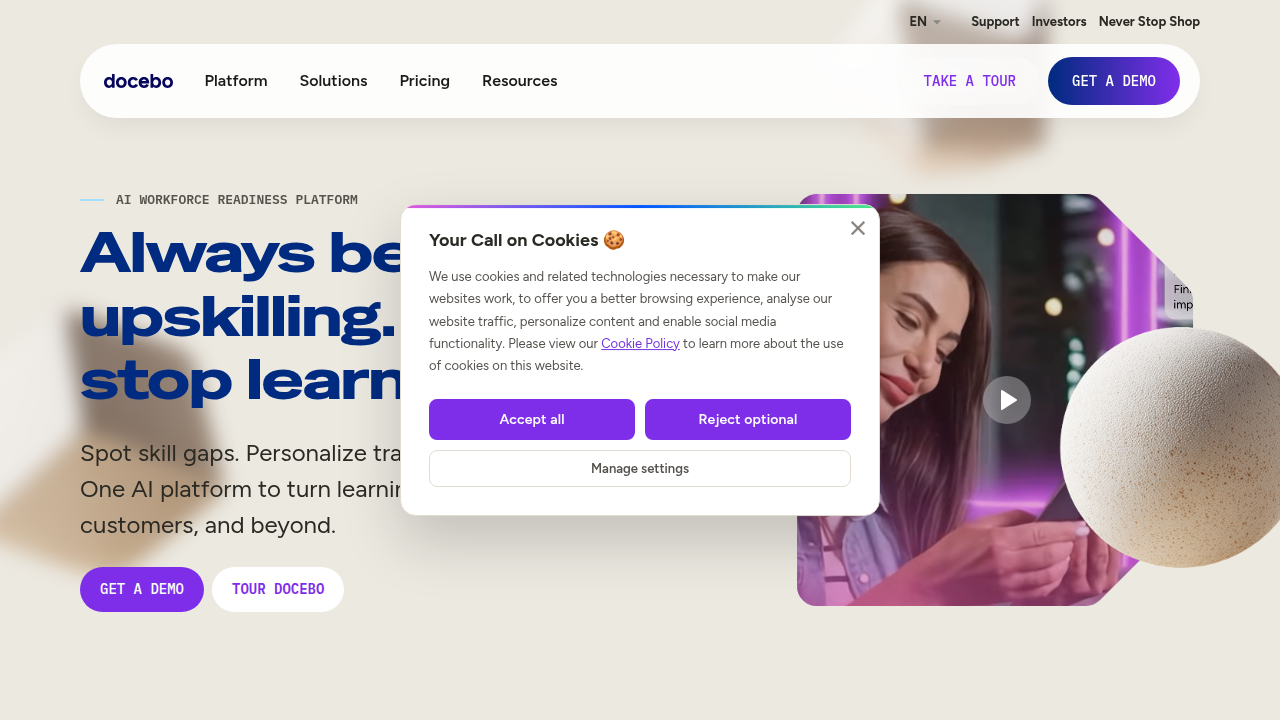
According to the 2026 roundup of top AI learning platforms from Docebo, this natural language feature makes finding the right material fast and intuitive. No more digging through folders.
AI that creates and updates content for you
Building courses from scratch takes forever. You have to write text, record videos, and build quizzes. Then you have to update everything when things change.
The top platforms now include AI that does the heavy lifting. They can turn a PDF, a video, or a set of notes into a full interactive course with quizzes and summaries. The iSpring knowledge hub highlights how AI assistants can generate course text, correct grammar, create outlines, and much more. This saves you weeks of work.
Imagine you want to become a tableau certified data analyst. Instead of hunting for the perfect course, you feed the platform the certification guide and it builds a custom learning path for you. That is the power of AI-generated content.
Seamless integration with your existing tools
Here is the thing. An ai-powered learning platform does not work well if it lives in its own bubble. You need it to connect with the tools your team already uses.
Look for platforms that plug into your HR system, your messaging apps like Slack, and your productivity tools. The best AI learning platforms in 2026 according to N+ all focus on working smoothly across devices and without setup headaches. When the platform talks to your calendar, your project management software, and your communication tools, learning fits into your workflow instead of interrupting it.

This integration keeps everything in one place. You get reminders, progress updates, and recommendations without leaving the apps you already open every day.
Once you know what features matter, the next step is to pick a platform that matches your goals. If you want to stay on top of AI developments while you learn, you can join The Deep View Newsletter for simple daily AI insights. It helps you keep up without spending hours reading.
Top AI-Powered Learning Platforms Compared
Now that you know what features matter, let’s look at the top platforms that put them into practice. The market has several strong choices, but three stand out in 2026: Docebo, Coursera, and Udemy Business. Each takes a different approach to being an ai-powered learning platform, so the best one for you depends on your size, budget, and goals.
Docebo is built for large organizations that need serious scalability. Its AI features include Harmony Search, which lets you ask questions in natural language, and Creator, which turns your existing files into full courses with AI avatars and quizzes. Docebo also auto-tags content and assigns skills to learners automatically. This makes it a strong pick if you manage training across hundreds or thousands of employees, customers, or partners. The company’s own 2026 guide to top AI LMS and AI-powered learning platforms highlights how the platform adapts to each person’s role and performance data. Pricing is custom quote per enterprise, so you need to contact sales.
Coursera targets individual learners and small to medium teams. Its AI features suggest courses based on your goals, generate practice quizzes, and offer personalized learning paths.
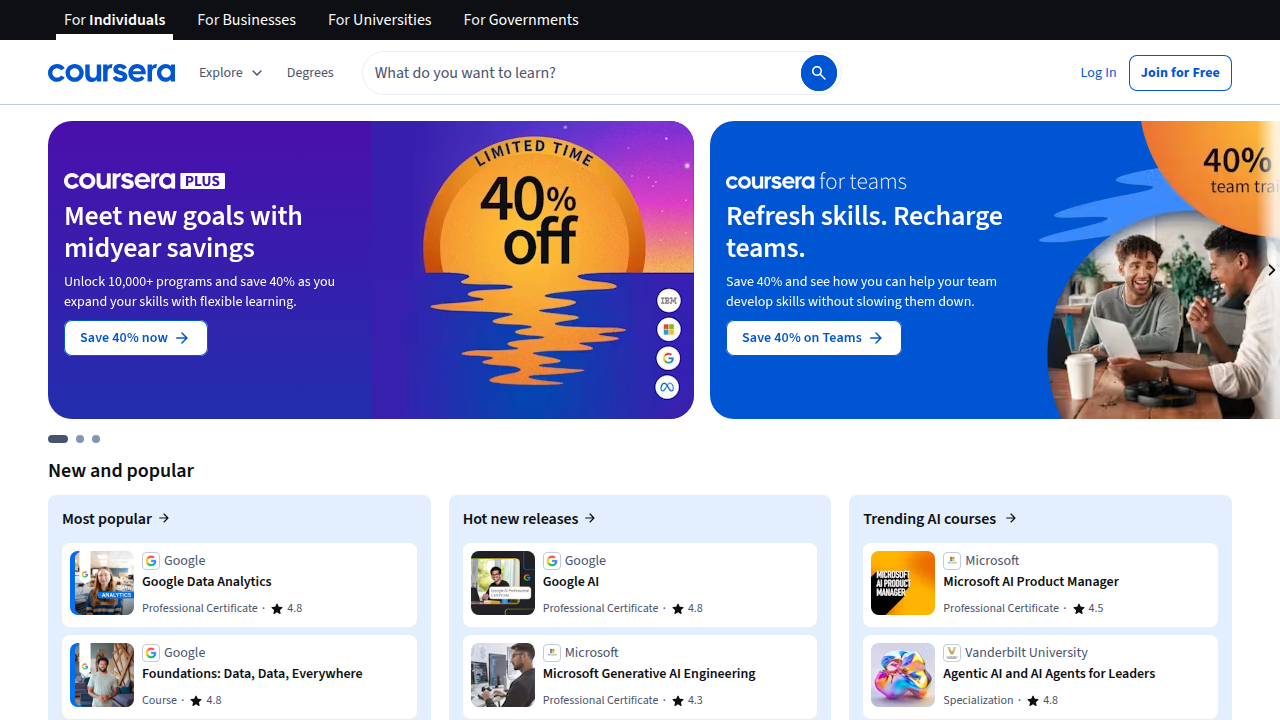
If you want to become a tableau certified data analyst, Coursera can recommend the right courses from top universities and help you track progress. Pricing is a per-user monthly subscription, which makes it affordable for teams of any size.
Udemy Business focuses on workplace training with a huge library of existing courses. Its AI recommends content based on job role and past learning, and it can create custom learning paths for teams. Udemy Business also offers AI-powered search so you can find a specific data analysis course quickly. Pricing is per-user annual subscription, and it scales well for midsized companies.
When comparing these platforms, pay attention to integration depth. Docebo connects deeply with HR systems, Slack, and calendars, while Coursera and Udemy Business offer lighter integrations. Scalability is also critical. Docebo handles global training with localized content and supports millions of users. Coursera and Udemy Business work well for thousands but may need extra customization for very large enterprises.
If you want to understand how these tools fit into a broader AI toolkit, check out our guide to best AI productivity tools for 2026 to see how learning platforms compare with other AI assistants.
The right ai-powered learning platform for you combines the features you need with a pricing model that fits. Docebo leads in enterprise depth, Coursera wins on affordability for individuals, and Udemy Business offers a solid middle ground for teams. Pick the one that matches your size and goals, and you will turn learning from a chore into an advantage.
How to Evaluate an AI Learning Platform for Your Organization
You have seen the top platforms side by side. But how do you figure out which one actually fits your organization? It is not just about cool AI features. You need a structured evaluation that focuses on your real needs, your data, and your team’s readiness.
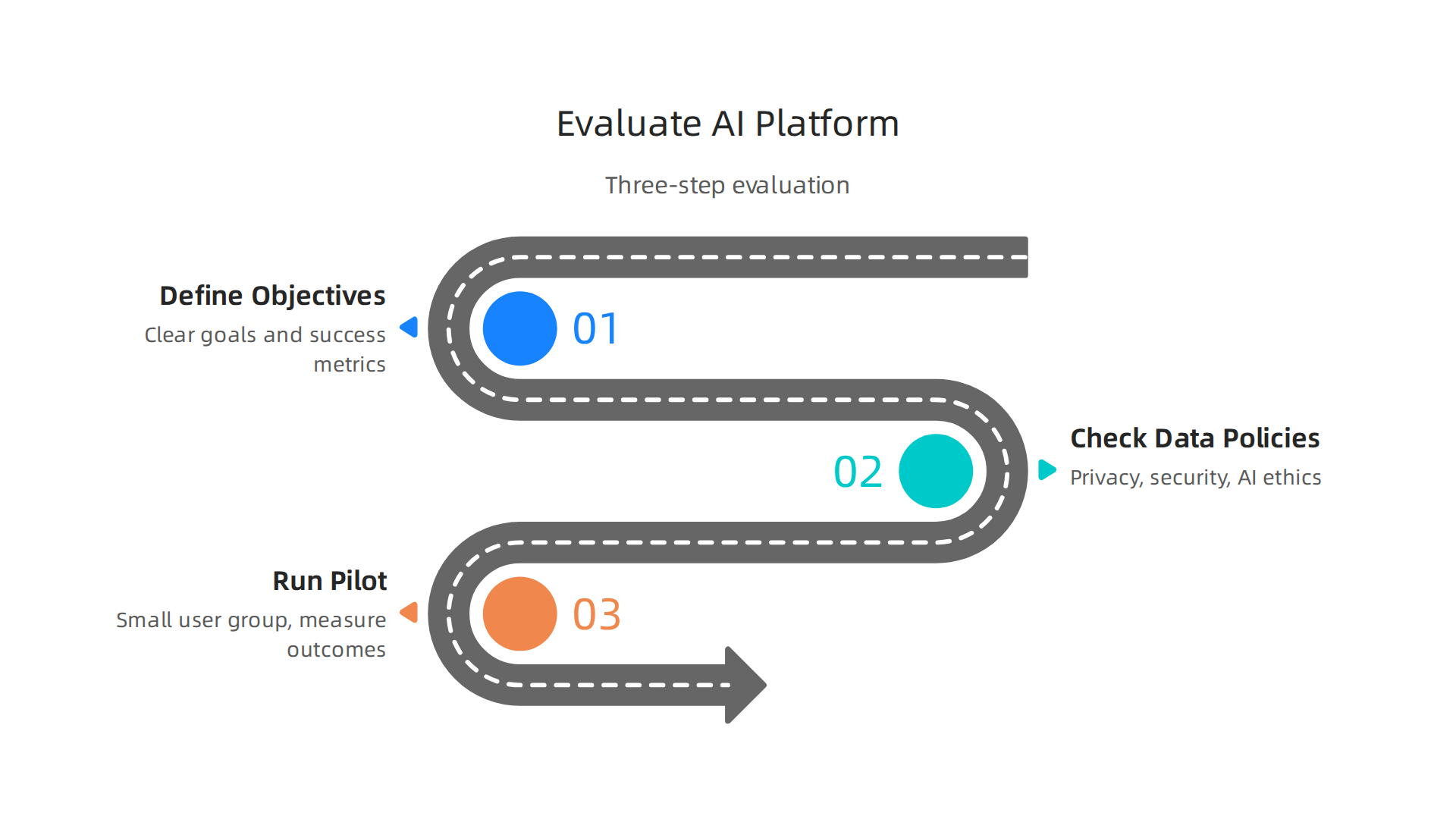
Start by defining clear learning objectives and success metrics before you look at any demo.

What do you want people to actually get better at? Common goals include higher course completion rates, faster skill development, or better job performance. You also need concrete numbers to track success. Think about metrics like completion rates, time to proficiency, assessment scores, or how often learners apply new skills on the job. Without these measurements, you cannot tell if the platform is working. Many organizations skip this step and end up with a tool that looks good but delivers no results. A practical guide to AI for education in 2026 recommends measuring baseline outcomes before any pilot starts so you have a fair comparison.
Next, dig into data privacy, security, and AI ethics policies. An AI-powered learning platform runs on your people’s data. That includes their progress, performance, and sometimes their personal information. You need to know where that data is stored, who can access it, and how it is used to train AI models. Ask the vendor about encryption, compliance with regulations like GDPR or SOC 2, and whether they sell or share your data. Also ask about AI ethics: does the platform have safeguards against bias in recommendations or assessments? If the platform uses AI to grade or suggest career paths, you want to be sure it treats all learners fairly. A recent survey of eLearning trends in 2026 highlights that trust and consistency are replacing unverified content libraries in the market. That means vendors who are transparent about security earn more confidence.
Finally, run a pilot program with a small user group before you commit to a full rollout. Pick a real team or department that represents your typical learners. Give them access to the platform for a month or two. Then measure the outcomes against your baseline metrics. Watch for practical issues like how easy the platform is to use, whether the AI recommendations actually help, and how much support users need. Pilots reveal problems you would never catch in a sales demo. They also give you real feedback from real people, which helps you convince stakeholders later.
For example, if you are training a team to become better at data analysis, choose one team for the pilot and track their improvement using the platform’s analytics. If the pilot shows real progress, you have strong evidence to expand. If not, you can adjust or choose another platform.
Take your time with evaluation. The right platform will make learning feel natural and effective. And if you want to stay ahead of AI trends in learning and beyond, consider subscribing to a daily newsletter that delivers simple AI insights to your inbox. Your Daily AI Shortcut is one option that helps busy professionals keep up without the noise.
Real‑World Success Stories and ROI
You have evaluated platforms and planned your pilot. Now let us talk about what you can actually expect. Real companies are seeing big results from AI-powered learning platforms. And the data backs it up.

Let us start with training time. When an AI powered learning platform replaces standard one-size-fits-all courses, training time often drops by 30 to 50 percent. That is because the AI skips what people already know and focuses on what they actually need to learn. A global manufacturer spent $50,000 on new software training and generated $200,000 in extra output in just six months. That is a 300 percent return. According to recent enterprise learning ROI benchmarks for 2026, effective training programs typically deliver 125 to 400 percent ROI. Companies with strong learning programs also see 218 percent higher income per employee and 57 percent higher retention.
Employee performance also jumps. Personalized learning paths mean every learner gets content that matches their role, skill level, and goals. That leads to faster skill development and better on-the-job results. For example, a team working toward a data analysis course can use an AI platform to identify exactly which skills they need to build. Instead of sitting through hours of basics they already know, they jump straight to advanced topics. This targeted approach improves assessment scores and helps learners apply new skills faster. If you want to help your team move into data roles, looking at the available top data analysis certifications for 2026 can point you in the right direction.
Cost savings are another big win. AI-powered platforms reduce the need for travel, in-person trainers, and printed materials. Self-paced content also means fewer work hours lost to scheduled training sessions. One investment bank saved $1.12 million per year after deploying an AI data platform. They also cut ticket volumes by 50 percent and saved users an average of 5 to 10 minutes per day. Those minutes add up fast across a large team.
The bottom line is this. An AI-powered learning platform does not just make training faster. It makes training smarter. And when training is smarter, your whole organization moves forward faster.
If you want to keep up with the latest AI tools and trends without the overwhelm, you can join The Deep View Newsletter for simple daily AI insights delivered to your inbox. It is a practical way to stay ahead.
The Future of AI in Learning and Development
Where is all of this heading? The pace of change is only getting faster. AI-powered learning platforms are evolving from simple content delivery systems into intelligent learning partners. Let us look at three big trends shaping 2026 and beyond.
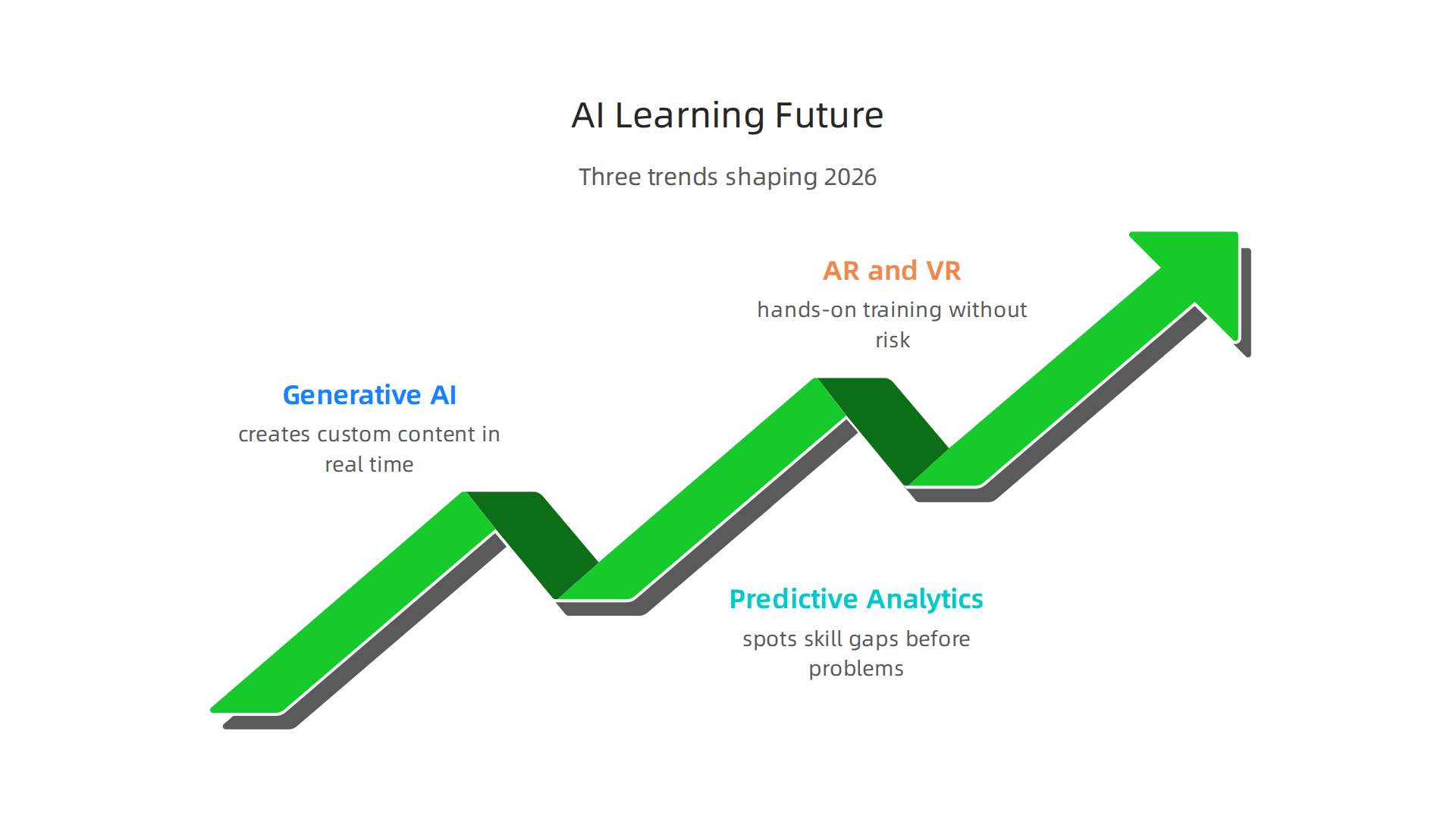
Generative AI Creates Custom Content in Real Time
Instead of spending weeks building a training course, imagine an AI platform that writes it for you in minutes based on your team’s specific needs. That is already happening. According to the AI in Learning and Development Report (2026), 84 percent of L&D practitioners now use AI to speed up content production. But the real shift is moving beyond speed. Generative AI can now create personalized learning paths, practice scenarios, and even assessments on the fly. That means every employee gets the right lesson at the right moment without waiting for a human designer to update the material. As AI tools become more powerful, you can explore some of the best AI productivity tools for 2026 to see how far the technology has come.
Predictive Analytics Spots Skill Gaps Before They Become Problems
You do not have to wait until a team falls behind to know they need training. Predictive analytics uses data from your employees’ current skills, learning history, and job performance to forecast where gaps will appear next. This is one of the top learning and development trends for 2026. Instead of reactive training, you can offer proactive learning. For example, if the platform sees that your data team is moving toward a new tool like Tableau, it can recommend a targeted data analysis course before the team even asks. That keeps your workforce ahead of the curve.
AR and VR Create Hands-On Training Without the Risk
Some skills are hard to learn from a screen. Surgery, heavy machinery operation, or emergency response all require practice. But sending people to a physical training site is expensive and sometimes dangerous. That is where augmented reality (AR) and virtual reality (VR) come in. According to 11 Game-changing L&D trends in 2026, VR and AR are among the most exciting eLearning trends, revolutionizing how learners experience training. An AI-powered learning platform can now deliver immersive simulations that feel real. A factory worker can practice a complex assembly line repair in VR. A sales rep can rehearse a difficult client conversation with an AI avatar. All of it happens safely and can be repeated as many times as needed.
These three trends are not science fiction. They are already rolling out inside leading organizations. The future of learning is about personalization, prediction, and immersion. And it is all powered by AI.
Summary
This article explains why AI-powered learning platforms have become essential for corporate training in 2026, replacing one-size-fits-all courses with personalized, adaptive learning paths. It outlines the core capabilities—adaptive learning, real-time personalization, and automated assessments—and the practical features to prioritize like natural language search, AI content generation, and tool integrations. The piece compares leading vendors (Docebo, Coursera, Udemy Business), explains how to evaluate and pilot a platform with clear metrics and privacy checks, and shares real ROI examples showing faster training, cost savings, and performance gains. Finally, it looks ahead to trends such as generative AI, predictive analytics, and AR/VR that will deepen personalization and immersion. After reading, you’ll know how to choose, test, and measure an AI learning platform that fits your team’s goals and budget.