

In 2026, our digital lives are loud. Our email inboxes are full, and our phones are constantly buzzing with new messages. It often feels like everyone is fighting for our attention online. But what if the key to truly reaching customers isn’t always more digital noise? What if it’s something older, something physical?
Actually, a proven method called direct mail marketing is making a big comeback. People are getting tired of too much screen time and digital overload. They are now really noticing and appreciating receiving something real in their mailbox.

This rising interest in physical touchpoints offers a fresh chance for businesses to connect.
This isn’t just a feeling. Studies from 2026 show that direct mail often gets much better results than many digital efforts. For example, the average response rate for direct mail is around 4.4% across different industries. That’s a lot higher than the typical email response rate of about 0.12% Direct Mail Response Rates 2026: Data That Proves It.
But here’s the thing: today’s direct mail isn’t just like your grandma’s old flyers. Smart marketers are using it as part of a bigger plan, often called integrated marketing communications. They are mixing classic direct mail techniques with new, powerful tools like Artificial Intelligence (AI) to make it even better.
By using AI, businesses can figure out exactly who to send mail to. This means less wasted paper and more people who are actually interested in what you offer. This AI-driven targeting and careful measurement can really boost your ROI, or return on investment. It’s about being a savvy marketing analyst, using all the best tools available today. For marketers who want to really succeed, learning how to create a solid AI marketing plan template is very helpful.
For anyone working in marketing today, understanding how to blend these old and new methods is key. If you’re looking for a digital marketing certification, knowing about modern direct mail strategies can give you an edge, especially in areas like CRO marketing, which aims to get more people to take action.
Want to stay ahead on how AI can make all your marketing efforts, including direct mail, much stronger? Get clear daily AI updates from The AI Newsletter Worth Reading.
1) The state of the direct mail channel (what marketers need to know)
Today, many smart companies are using direct mail marketing in new and exciting ways. It’s not just big businesses anymore. Even smaller brands and different industries are seeing great success with it. For example, financial services, travel, and retail companies are finding that direct mail helps them connect better with customers. In 2026, some of these industries see average response rates higher than the overall average, showing how strong direct mail can be when used well Direct Mail Response Rates by Industry: 2026 Benchmarks.
One big strength of direct mail is how personal it feels. When someone gets a letter or package in their hands, it often feels more important than just another email. This can make people trust your brand more, which is a huge plus. It also helps your message stand out because there’s much less clutter in a physical mailbox than in a digital inbox. This helps a lot with CRO marketing, or getting more people to take action, because they feel a stronger, more direct connection to your message.
However, direct mail also has its limits. It can cost more money to send a physical piece than an email for each person. Also, it takes longer for mail to get to people than a digital message. That’s why it’s so important to use it wisely. You need to target your audience very well, making sure you send mail only to those who are most likely to be interested. This is where new AI tools really help, as they let a marketing analyst make smart choices about who gets what.
By putting direct mail together with digital tools, you create what’s called integrated marketing communications. This means all your messages work together, whether they are online or offline. A skilled marketing analyst knows how to track results from both direct mail and digital campaigns. This way, they can see exactly what works best and make changes to get even better results. If you are looking to become a better marketing analyst, learning about AI for marketing consultants can be very helpful. This complete view helps companies grow and make the most of their marketing money. It’s about being smart with every step.
Today, the real magic happens when you bring Artificial Intelligence, or AI, into your direct mail marketing plans. AI helps you make much smarter choices about who gets your mail and what messages they see.

It takes direct mail from a good idea to a truly powerful tool.
Using AI to Pick the Right People
One of the biggest ways AI helps is by using special tools called predictive models and propensity scoring.
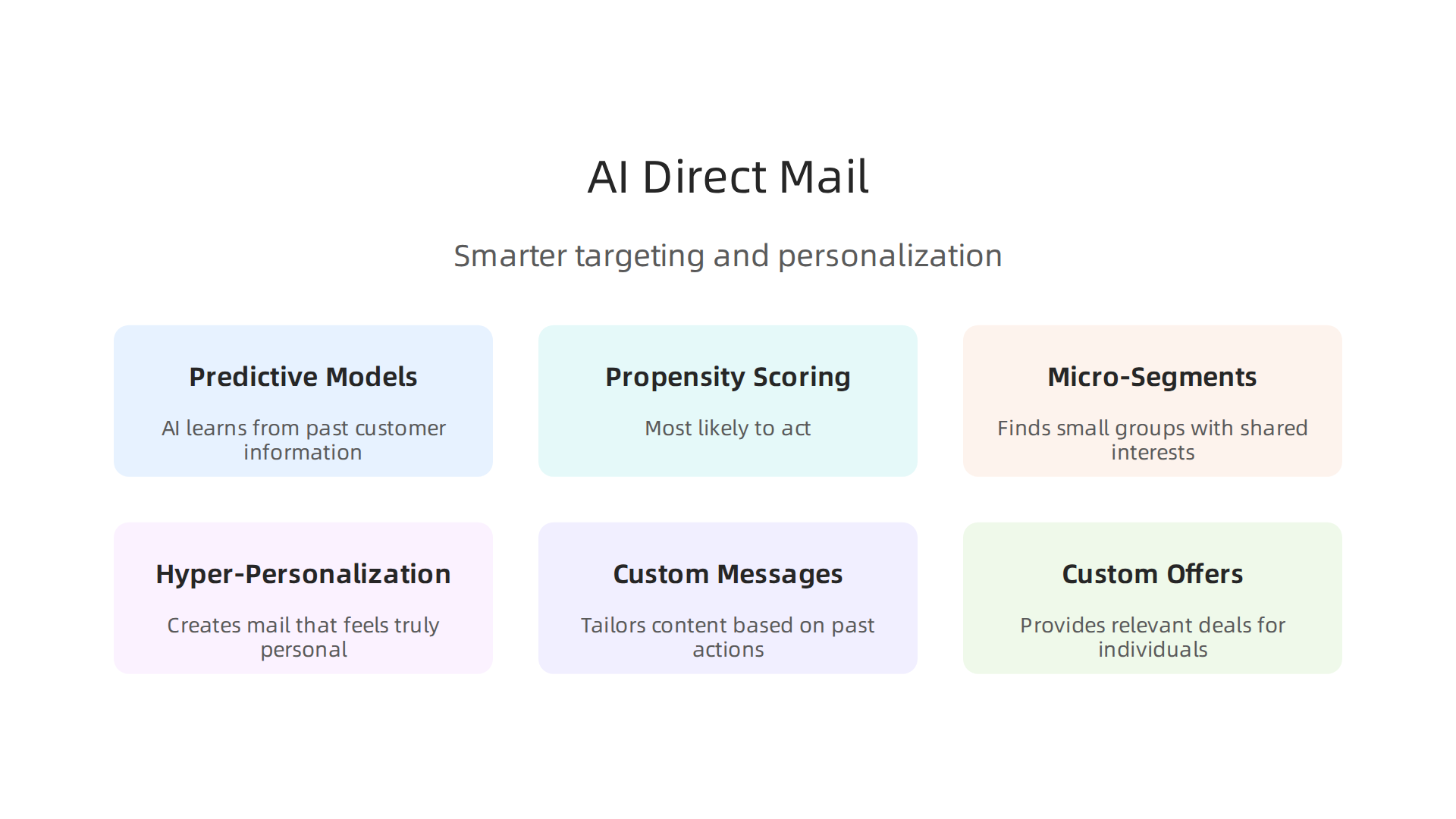
Think of it like this: AI looks at tons of information about your past customers. It learns what kinds of people bought your products before, or what made them open a piece of mail. Then, it can guess which new people are most likely to do the same thing. This is called "propensity scoring" because it tells you how likely someone is to act.
This means instead of sending mail to a big, general list, you send it only to the people who are most likely to care. This makes your direct mail marketing much more effective and saves you money. AI can help you find small groups, called micro-segments, within your audience, each with their own interests. This way, every piece of mail feels like it was made just for them 2026 Direct Mail Trends: How AI and Automation Are Transforming the Channel. Learning about how AI uses data to make smart predictions is key for any marketing analyst. If you want to understand more about these types of smart, data-driven actions, you might find this guide on Prescriptive Analytics Explained Your Expert Guide to Data Driven Action very helpful.
Making Mail Super Personal
Once AI helps you pick the right people, it then helps you create mail that feels truly personal. This is called hyper-personalization. AI looks at what someone has done before, like their past purchases or how they’ve interacted with your brand online. Then, it helps create custom messages and offers just for them How can AI make your direct mail campaigns smarter?.
For example, if AI knows a customer likes outdoor gear, their direct mail piece might show pictures of hiking boots and offer a discount on tents. If another customer buys kitchen gadgets, their mail would show new cooking tools. This kind of individual-level personalization, even for many people at once, helps a lot with CRO marketing. It makes people feel seen and understood, which often leads them to take the action you want, like visiting your store or website. In 2026, experts say that top-performing marketing teams are using AI to make their messages personal and connect better with customers based on their actions State of Direct Mail 2026 | Direct Mail Business Insights & Trends.
By using AI, your direct mail becomes a powerful part of your integrated marketing communications, working hand-in-hand with your digital efforts to deliver messages that truly hit home.
Staying on top of the latest AI trends is crucial for any marketing professional. If you’re looking for clear, daily updates on how AI is changing the game, consider checking out The AI Newsletter Worth Reading.
By using AI, your direct mail becomes a powerful part of your integrated marketing communications, working hand-in-hand with your digital efforts to deliver messages that truly hit home. But even with smart AI, you still need to make sure your mail looks good and says the right thing. This is where testing different creative formats and words comes in.
Creative Formats and Copy That Convert (Testing Frameworks)
Just like you test different ads online, you should test different parts of your direct mail. This helps you find out what works best to get people to act. It’s not enough to just send out mail; you need to send out the best mail.
Which Creative Elements to Test First
When you want to improve your direct mail marketing, certain parts of your mail piece are more important to test first.
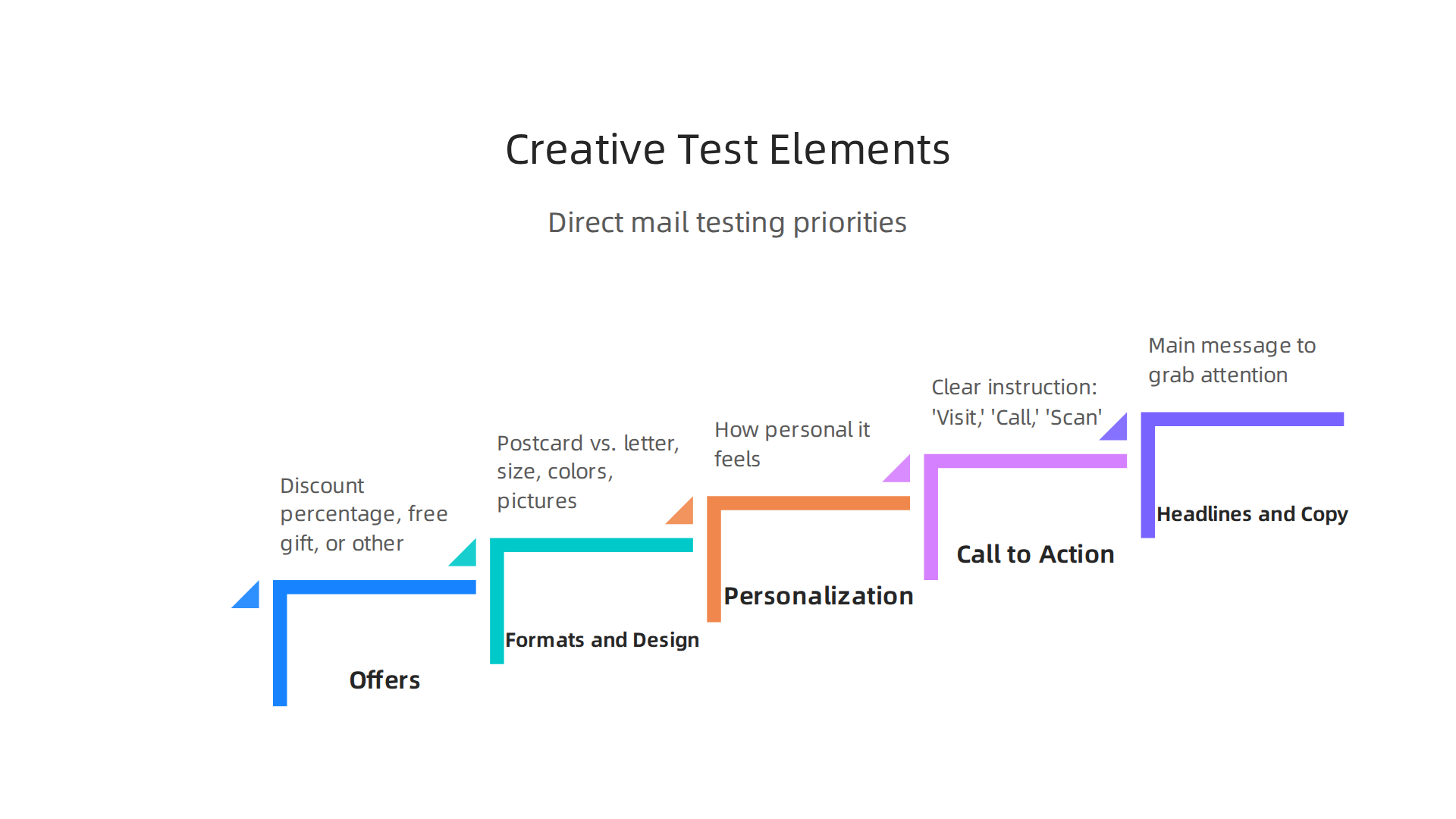
These are the elements that can make the biggest difference in how many people respond. Experts in 2026 suggest focusing on these key areas Direct Mail A/B Testing: 2026 Playbook for Higher …:
- Offers: What kind of deal are you giving? Is it a percentage off, a free gift, or something else? Testing different offers can greatly change how many people respond 12 Direct Mail Testing Ideas & Trends for Marketers in 2026.
- Formats and Design: Does a postcard work better than a letter in an envelope? What about the size, colors, or pictures you use?
- Personalization: While AI helps make mail personal, you can still test how personal it feels. Does using someone’s first name, or showing them products they looked at online, get a better reaction?
- Call to Action (CTA): This is what you want people to do. Is it "Visit our website," "Call now," or "Scan this QR code"? Make sure it’s clear and exciting.
- Headlines and Copy: The main message and the words you use matter a lot. Test different ways to grab attention and explain your offer.
Generally, the audience and the offer are often the most important things to test first, as they can make up a large part of your campaign’s success Direct Mail Testing – A Best Practices Guide for Modern ….
How to Test Smartly and Save Money
Testing your direct mail doesn’t have to be expensive or wasteful. The goal is to learn quickly without sending too much mail that doesn’t work.
- Test One Thing at a Time: This is called A/B testing. You create two versions of your mail piece. One version (A) is your normal mail, called the "control." The other version (B) has just one change. For example, everything is the same except for the discount percentage. This way, you know exactly what caused any difference in results How to Measure and Effectively Test Your Direct Mail Campaigns.
- Use Small, Random Groups: Don’t test on your whole customer list. Pick a small, random group of people for your test. This helps make sure your results are fair and not just a fluke Direct Mail Split Testing: Test Small Before You Scale. The U.S. Postal Service suggests testing about 10% of your prospects to get good results How to Develop an Effective Direct Mail Testing Strategy.
- Track Everything: You need to know which version of your mail led to a sale or a website visit. Use special codes, unique phone numbers, or landing pages to track responses accurately.
- Learn and Repeat: Once you find a "winner" from your test, use that winning version for a larger mailing. Then, start a new test, changing another single element. This way, your direct mail marketing keeps getting better and better.
For anyone serious about tracking and understanding these kinds of results, developing strong data analysis skills is key. You might find a Google Data Analytics Professional Certificate helpful to boost your CRO marketing efforts.
Even if you have the best message and a great offer, your direct mail marketing won’t succeed unless it reaches the right people. This means having high-quality mailing lists. Think of it this way: you wouldn’t send a pet food ad to someone who doesn’t own a pet. Good lists are the foundation for successful direct mail campaigns.
4) Lists, data enrichment, and segmentation best practices
Even if you have the best message and a great offer, your direct mail marketing won’t succeed unless it reaches the right people. This means having high-quality mailing lists. Think of it this way: you wouldn’t send a pet food ad to someone who doesn’t own a pet. Good lists are the foundation for successful direct mail campaigns.
How to Evaluate Your Mailing Lists
Before you buy or use any list for your mail campaigns, you need to check its quality.
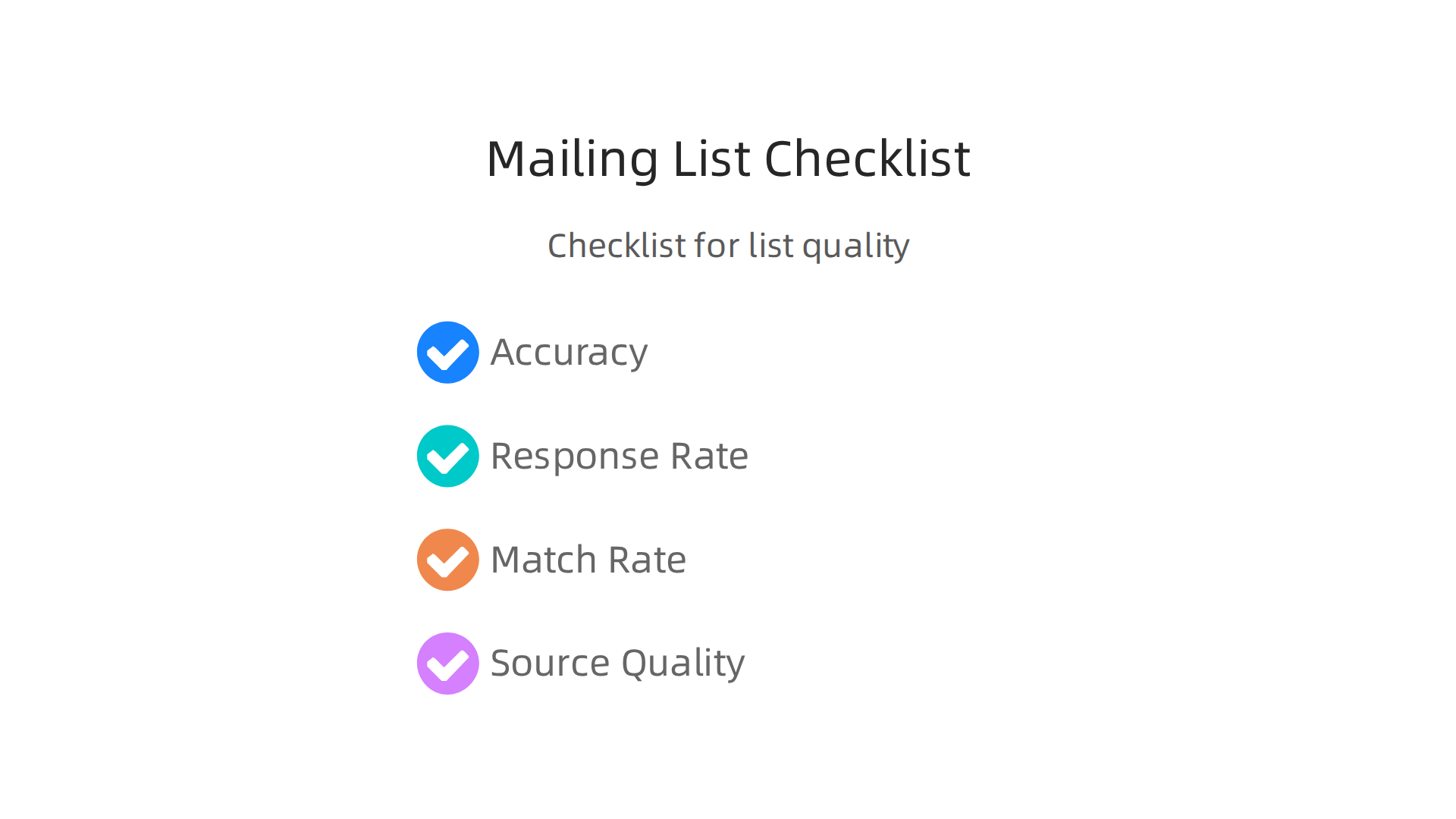
A poor list can waste money and hurt your campaign results. Here’s what to look for:
- Accuracy: Are the names and addresses correct and up-to-date? Old or wrong information means your mail won’t get to where it needs to go.
- Response Rates: This is how many people react to your mail. For existing customers (called "house lists"), a good response rate can be 5% to 9%. For new people you’ve never mailed before ("prospect lists"), 2% to 4.4% is a good goal for direct mail response rates in 2026. The average response rate for all direct mail in 2026 is about 4.4% Direct Mail Response Rates 2026: Data That Proves It.
- Match Rates: This is about how well a new list matches your existing customer information. A high match rate helps you avoid sending mail to people already on your list or helps you add more details to existing customer profiles. This process is part of data enrichment.
- Source Quality: Where did the list come from? Reputable sources are key to getting good data. If you are a marketing analyst, understanding these data sources is vital for effective integrated marketing communications.
Data Enrichment and Segmentation for Better Results
Once you have a good basic list, you can make it even better through data enrichment. This means adding more information about the people on your list. For example, you might add details like their age, interests, or what they’ve bought from you before. This extra information helps you personalize your mail even more, which can lead to better outcomes for your direct mail marketing.
After enriching your data, the next step is segmentation. This means dividing your big list into smaller groups based on shared traits. For example, you might segment your list into:
- New Customers: People who recently bought something.
- Long-Time Customers: Your most loyal buyers.
- People Interested in Specific Products: Based on their past behavior or stated interests.
Segmentation helps you send different messages to different groups. A personalized message often works better than a general one. While you want to personalize as much as possible, you also need to think about how easy it is to print and send different versions of your mail. Finding a balance between sending a perfectly unique mailer to everyone and making the production process easy is important for efficiency. For those looking to stay informed about the latest in AI and how it impacts data and marketing, it’s smart to keep up with current trends. Get clear daily AI updates from The AI Newsletter Worth Reading.
To truly excel in data-driven marketing, understanding how to use business intelligence tools and analyze data is essential. This can make a big difference in your cro marketing efforts. If you’re looking to dive deeper into how data analysis can power smart decisions, consider exploring resources on What Is Business Intelligence AI Powered Insights for Smart Decisions in 2026.
Knowing how to send direct mail marketing messages to the right people is just one part of the puzzle. The next big step is figuring out if your mail actually worked. This is called measurement, attribution, and calculating your Return on Investment, or ROI. It means understanding if the money you spent on mailing brought in more money or good results for your business.

5) Measurement, Attribution and Calculating ROI for Direct Mail
After all your hard work in choosing lists and segmenting them, you need to know if your direct mail marketing efforts paid off. In 2026, simply counting how many people responded isn’t enough. Smart marketers want to know the true extra sales or interest that came only from the mail piece. This is called "incrementality."
How to See the Real Impact of Your Mail
To measure the true impact of your direct mail, you can use special testing methods:
- Control Groups and Holdout Tests: This is like a science experiment for your mail. You pick a group of people who are similar. Then, you choose a small part of this group (maybe 5% to 15%) and don’t send them any mail. This is your "control group" or "holdout group" How to Measure Incrementality of Direct Mail Campaigns. The rest of the group gets your mail. After the campaign, you compare what the people who got the mail did (like buying something) with what the people who didn’t get the mail did. The difference shows the real, extra effect of your direct mail Why Direct Mail Incrementality Is Hard to Measure – Lob. This helps you see if your mail caused new actions, or if those people would have acted anyway. To make sure your tests are fair, you should change only one thing at a time in your mail, like the offer or the pictures How to Measure and Effectively Test Your Direct Mail Campaigns.
- A/B Tests: While not exactly the same as holdout tests, A/B tests are also important for direct mail. You send two slightly different versions of your mail to two similar groups to see which one works better. This helps you improve your mail over time.
Important Numbers to Track
As a marketing analyst or someone interested in cro marketing, you’ll want to look at more than just basic response rates. Here are some key numbers (Key Performance Indicators, or KPIs) to track:
- Response Rate: This is still important. It tells you how many people responded to your mail by calling, visiting a website, or using a coupon.
- Cost Per Acquisition (CPA): How much did it cost you to get one new customer through your direct mail campaign? You divide the total cost of the campaign by the number of new customers you gained from it.
- Customer Lifetime Value (CLTV) Uplift: This looks at whether your direct mail makes customers spend more money with you over a longer time. Did the mail make them more loyal or buy more items in the future? This is a deeper look at the lasting impact of your direct mail marketing.
Thinking About All Your Marketing
Direct mail marketing rarely works alone. People might see your mail, then visit your website, or see an ad online. This means your mail works with other parts of your integrated marketing communications. To get a full picture, you need to understand how direct mail works with your digital marketing efforts. For example, if you’re a data analyst, you might want to learn more about how business analytics can help you track these complex connections. Find out more about how to Powering Enterprise Decisions with AI-Augmented Business Analytics. This way, you can see how all your marketing channels help each other.
Sending out direct mail is exciting, but you must also make sure you follow all the rules. In 2026, compliance, privacy, and postal regulations are very important for any business using direct mail marketing. If you don’t follow these rules, you could face problems like fines or your mail not getting delivered. This part will help you understand what you need to know to stay out of trouble.
Following Postal Rules for Direct Mail
The United States Postal Service (USPS) has clear rules about how mail should be prepared and addressed. These rules cover things like the size of your mail, how you write the address, and how you classify your mail. If your mail does not meet these rules, the Postal Service can delay it, send it back, or even refuse to deliver it. This is why it’s so important to get it right What regulations do I need to follow for direct mail?.
For example, the USPS is always looking to make address quality better. This means your mailing lists need to have correct apartment numbers, street directions, and complete fields. If your addresses are not good enough, more of your mail might not reach the right people What Do I Need To Know About Postal Regulations for Direct Mail in …. Keeping up with these postal changes helps your direct mail marketing reach its audience effectively.
Protecting Privacy and Handling Opt-Outs
Consumer privacy is a big deal today. When you send direct mail, you are using people’s personal information, like their address. It’s important to know that direct mail has different privacy rules than email. For instance, the CAN-SPAM Act applies to emails, but there isn’t a direct federal law for direct mail that makes you offer an "opt-out" in every piece of mail [Cookieless Direct Mail: Privacy-First Marketing 2026 | MPA].
However, people still have ways to stop getting unwanted mail. For example, they can register with services like the Direct Marketing Association’s (DMA) Mail Preference Service (MPS). If someone signs up for this, their name goes on a "delete" list that many national direct mail marketers use [Unsolicited Mail, Telemarketing and Email – GovInfo]. It’s good practice for businesses to respect these lists to build trust and avoid bothering people who don’t want your mail. Also, if a customer specifically tells you they don’t want to receive mail from your company, you should remove them from your lists. The USPS also has rules about how it collects and uses personal information [AS-353 – Guide to Privacy, the Freedom of Information Act …].
Keeping Customer Data Safe
When you use both digital marketing and direct mail marketing, you collect a lot of customer data. Keeping this data safe is key. Businesses need to have strong systems in place to protect personal information. This includes making sure your data lists are stored securely and that only authorized people can access them. As a marketing analyst, being aware of these data protection steps is critical, especially when combining different marketing methods in your integrated marketing communications. To ensure you’re making smart choices about your data and staying competitive, it helps to stay informed on the latest trends in technology.
Get clear daily AI updates from The AI Newsletter Worth Reading.
Understanding how to keep data safe is part of being a good data professional. If you’re looking to grow your skills in this area, you might want to learn more about how data specialists are crucial for modern businesses. Protecting customer data is not just about following the law; it’s about earning and keeping your customers’ trust.
Data security is a big topic. Learn why Data Specialists Are More Critical Than Ever in today’s world, especially with the rise of AI.
When you do direct mail marketing, it’s not just about sending letters on their own. The best way to use direct mail today, in 2026, is to make it work together with other marketing tools like email, online ads, and even special codes. This is what we call integrated marketing communications. It helps your messages reach people in many ways, making your overall marketing stronger.
Making Direct Mail Work with Online Tools
Imagine your direct mail piece as a friendly hello that can lead to more online talks. Companies are now using direct mail in smart ways, sending it at just the right time to go along with emails or online advertisements. This helps get people’s attention and keeps your brand fresh in their minds. For example, some teams use special computer programs powered by AI to figure out the best time to send a mail piece after someone has visited a website or opened an email. This makes the whole process smoother and more personal. In fact, many leaders use AI to make their marketing programs better, especially for direct mail, helping them get good results [State of Direct Mail 2026 | Direct Mail Business Insights & Trends]. AI can help analyze customer information across different channels to decide what message to send, to whom, and when to send it [How can AI make your direct mail campaigns smarter?].
This way of working is known as "omnichannel" because it uses all the different ways to talk to customers. It helps create a clear path for customers, whether they are looking at an ad on their phone, checking an email, or holding a letter in their hands. As a marketing analyst, understanding these flows is key to seeing how well your campaigns are working. For more details on this, you might find our guide on How to Optimize Your AI Marketing Funnel in 2026 helpful.
Connecting Offline Mail to Online Actions
A great way to link direct mail to digital marketing is by using special tools like QR codes and personalized URLs (PURLs).
- QR Codes: These are those square bar codes you can scan with your phone. When someone gets a mail piece with a QR code, they can scan it to go straight to a specific webpage, a video, or a special offer online. This is an easy way for people to move from looking at your mail to taking action on your website.
- Personalized URLs (PURLs): These are unique web addresses created just for one person. For example, a PURL might look like yourcompany.com/johnsmith. When John Smith types in his PURL, he sees a webpage made just for him, perhaps with his name, products he might like, or offers that fit his past interests.
Using QR codes and PURLs helps businesses measure how well their direct mail marketing is doing. You can see how many people scanned the code or visited their unique page. This data helps you understand what works and what doesn’t, allowing for better CRO marketing (meaning, making more people do what you want them to do). These connections help extend the life and impact of your direct mail campaign.
In 2026, AI also plays a huge part in making these personalized experiences. AI tools can create direct mail pieces that are one-to-one personalized for each person, and they can do this very quickly [AI In The Direct Mail Industry Statistics 2026]. This means that the images or words on a mail piece can change based on who is getting it, creating "hyper-personalization" which is a big trend for this year [From Print to Performance: 2025 Direct Mail Recap and 2026…]. It allows businesses to connect what they know about a customer from digital interactions to what they send in the mail, creating a truly personal touch. You can think of modern direct mail like web pages that connect with customer systems to send out personalized mail based on what customers do online [AI Personalization In Direct Mail Campaigns | Martech Podcast].
For marketing professionals looking to stay competitive, learning about how AI reshapes different marketing channels is key. Consider exploring how AI for Marketing Consultants: A 2026 Guide to Staying Competitive can boost your skills.
Summary
This article explains why direct mail is making a comeback in 2026 and how marketers can use AI to make it work harder. It covers the current state of the channel, explains AI-driven targeting and hyper-personalization, and shows which creative elements to test first to improve conversion rates. The guide also walks through list quality, data enrichment, and practical segmentation best practices, plus how to measure true impact with holdout tests and key KPIs like CPA and CLTV uplift. It highlights postal rules, privacy obligations, and data security steps you must follow, and it shows how direct mail fits into an omnichannel marketing plan using QR codes and PURLs. After reading, marketers will know how to design smarter direct mail campaigns, run low-cost tests, track results precisely, and combine offline mail with digital tools to increase ROI.