

Introduction
The AI world moves fast. Really fast. In 2026, the global artificial intelligence market is forecast to hit $347 billion, according to the latest AI Market Size Statistics 2026. On top of that, worldwide AI spending could reach $2.52 trillion this year, a 44% jump from the year before based on the $2.52 trillion AI spending forecast.
With numbers like that, it is no surprise that professionals feel overwhelmed. New models launch every week. Companies raise billions overnight. Research papers pile up faster than anyone can read them.
So how do you keep up?
The answer is a skill called data scouting. Data scouting is the disciplined practice of collecting, filtering, and analyzing information to spot meaningful trends before they become obvious. It is not about consuming everything. It is about knowing what matters and why.
Think of it like this. A data scout does not just gather data. They look for signals in the noise. They ask the right questions. They connect dots that others miss.

Whether you are an AI professional, a founder, or a marketer, learning to think like a data scout helps you make smarter decisions faster.
This skill matters more than ever. In fact, data specialists are more critical than ever in this fast moving environment. Their ability to analyze and interpret data directly shapes business outcomes.
This article gives you a practical framework for becoming an effective data scout in 2026. You will learn how to find reliable sources, analyze data with purpose, and turn insights into action.
And if you want a simple way to stay informed every day without the overwhelm, Your Daily AI Shortcut delivers clear daily AI insights straight to your inbox.

Let us start with the first step: understanding what makes a great data scout.
What Is Data Scouting?
So what exactly does it mean to be a data scout in 2026?
It is not about opening fifty browser tabs every morning and trying to read everything. That approach leads to burnout, not insight. A data scout works differently. They move with purpose.
Think of data scouting as the modern version of competitive intelligence. Companies have used competitive intelligence for decades to track rivals, spot market shifts, and avoid costly mistakes. But today, the game has changed. The volume of information is massive, and the pace of change keeps accelerating. A human alone cannot keep up. That is why data scouting combines old school curiosity with new school structure.
A data scout does three things well. First, they choose where to focus. They do not try to watch everything. They pick the signals that matter most for their goals. Second, they build a repeatable process for collecting and filtering information. This might mean setting up smart alerts, using curated news sources, or running regular audits of key topics. Third, they connect the dots. They ask questions like "Why did this happen?" and "What does this mean next?"
At its heart, data scouting is a skill anyone can learn. It starts with curiosity. You have to actually want to understand what is happening. But curiosity alone is not enough. You need a framework. Without structure, you drown in noise.
According to a recent guide on competitive intelligence in 2026, successful teams turn raw data into insights their whole organization can use. That is the goal. Not just knowing more, but knowing the right things and acting on them.
If you want to build these analytical skills from the ground up, take a look at this practical resource on mastering the data science process. It covers the mindset and methods that make a great data scout.
Now that you know what data scouting is, let us talk about where to find the best signals in 2026.
The Data Scout’s Toolkit: Essential Tools and Techniques
Having a solid framework is great, but a data scout also needs the right tools to put it into action. In 2026, the best approach mixes automated AI tools with good old human judgment. You let the machines handle the heavy lifting of finding and filtering. You handle the thinking.
So what tools should you have in your kit? The most common ones fall into three buckets.
First, RSS aggregators. Tools like Feedly or Inoreader let you subscribe to specific sources. You tell them what you care about, and they bring the updates to you. No endless scrolling. No algorithm deciding what you see.
Second, AI powered news summarizers. These platforms use artificial intelligence to scan thousands of stories, pull out the key points, and hand you a short summary. If you want to see what is out there, check out the latest reviews of AI news summarization and aggregation platforms for 2026.
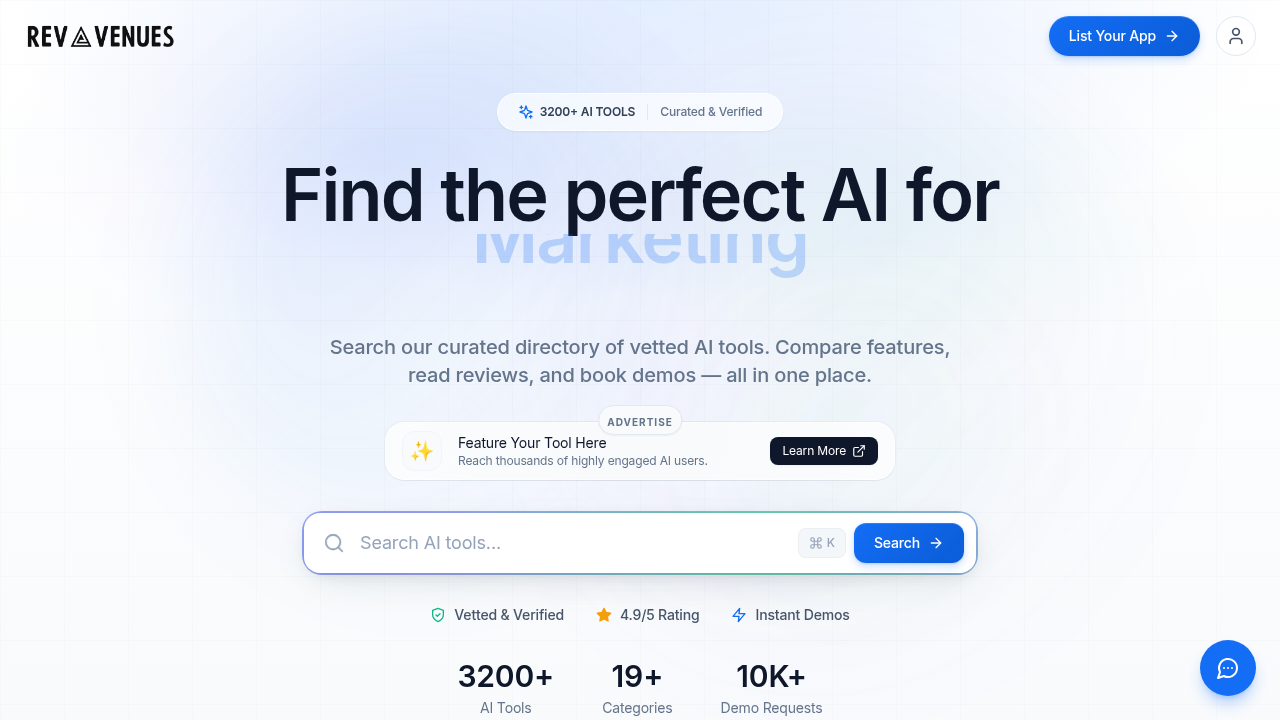
Tools like Brief and Last24.ai can save you hours every week.
Third, curated newsletters. A good editor does the hard work of picking the most important stories. You just read one email and you are up to speed. Many of the best AI productivity tools now come with newsletter versions.
The right mix depends on your goals. A solo data scout might rely on two newsletters and an AI tool. A team of five might use a shared RSS feed and a weekly deep dive. Start small. Test one tool for a week. If it helps, keep it. If not, move on.
And if you want a simple way to stay informed every morning without the hassle, join a newsletter that delivers just what you need.
Leveraging AI to Scout AI News
Now that you have your toolkit, the next step is to use it with purpose. The smartest data scouts in 2026 do not just read AI news. They let AI tools scout the AI landscape for them.
How? These tools work around the clock. They scan thousands of sources, from research papers to blog posts. Then machine learning models filter everything by topic, sentiment, and source authority. You get only what matters. No noise.
For example, you can set up a custom GPT agent that pulls from news APIs and sends you a daily digest. Or use an app like Rize, which uses AI to summarize the top stories each day. If you want to compare your options, check out the best news apps in 2026 tested by Zapier.

You can also create smart alerts. These do not just fire every time a keyword appears. They wait until a story meets your criteria, like high authority or strong positive sentiment. That is the difference between a flood of updates and a steady stream of useful signals.
For more on following key players and breakthroughs, read our guide on tracking AI innovators.
When your tools do the scanning, you do the thinking. That is how a data scout stays ahead.
Human Curation and Expert Networks
Here is the thing. Even the smartest AI tools miss context. They can tell you what happened but not always why it matters. That is where human curation comes in.
A good data scout in 2026 knows when to hand the reins back to a person. Expert communities and newsletters do this well. They take machine speed and add human judgment. For example, The Deep View newsletter sends vetted, concise summaries every day. No fluff. Just the signal you need.
If you want to see how different newsletters compare, check out this list of top AI newsletters for staying informed in 2026. It shows which ones work best for busy readers.
The real power comes from mixing both approaches. Let AI scan the horizon. But let humans decide what actually matters. That blend gives you the best of both worlds: scale and depth.

For more on who to follow, read our guide on tracking AI innovators.
When you combine machine efficiency with human insight, you stop being just a reader. You become a true data scout who sees the full picture.
Developing a Data Scouting Workflow
So how do you build a workflow that turns all that information into actual decisions? It comes down to five simple steps: Monitor, Aggregate, Filter, Analyze, and Distribute.
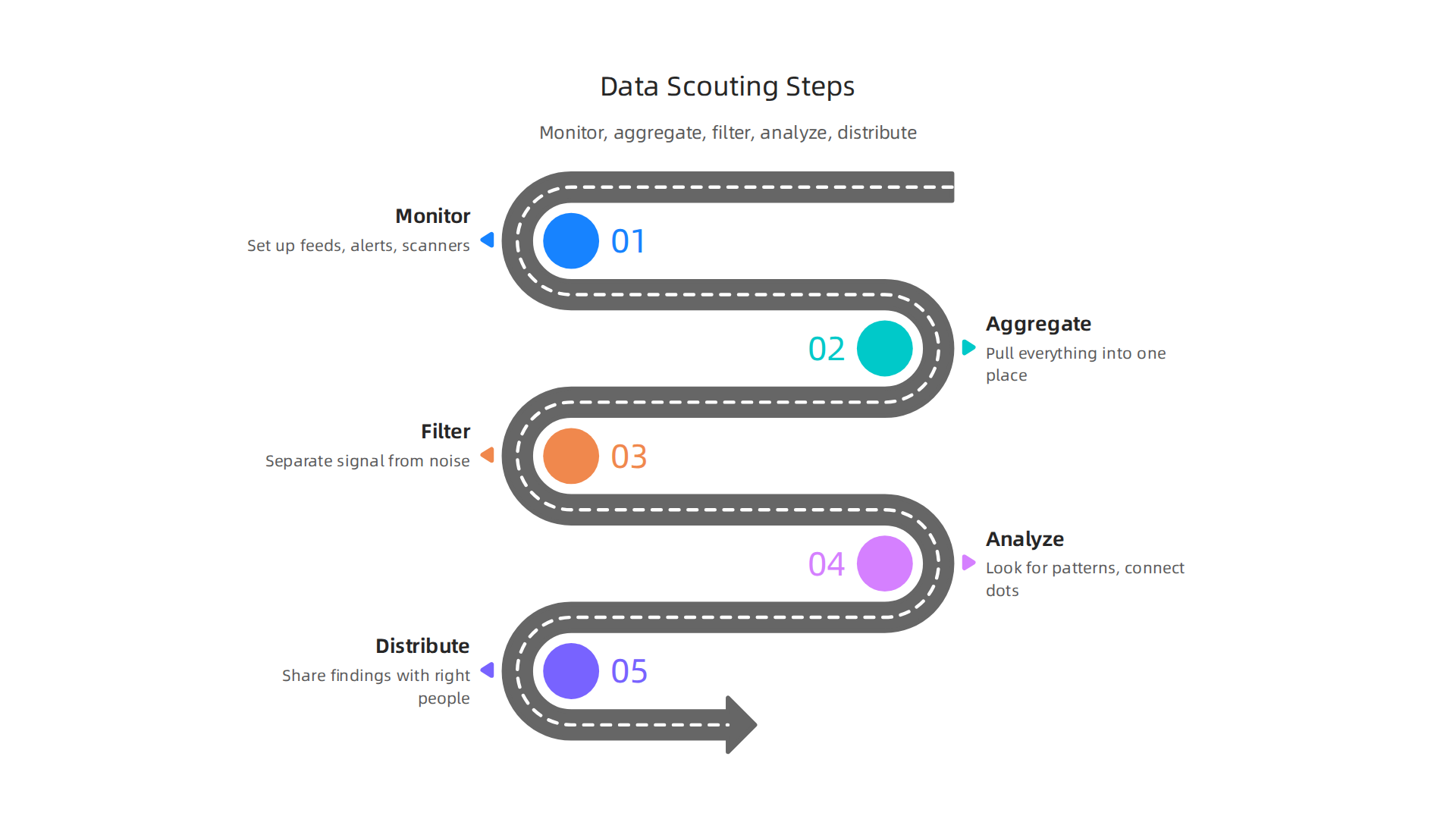
Start with monitoring. Set up feeds, alerts, and scanners that watch your key sources around the clock. This is where AI tools really shine. They can track thousands of competitors, news outlets, and research labs at once without getting tired. According to a competitive intelligence practical guide, setting clear objectives and picking the right technology makes this first step much more effective.
Next comes aggregation. Pull everything into one central place. A dashboard works. A simple spreadsheet works. Even a shared document works. The goal is simple: stop hunting for information and start actually processing it.
Then filter. This is where you separate signal from noise. Not every product launch matters. Not every rumor deserves your time. Ask yourself one honest question: does this affect my strategy? If the answer is no, let it go.
Now analyze. This is the human step. Look for patterns across months of data. Connect dots between different sources. Ask what a competitor’s move really means for your market. The competitive intelligence step by step guide from Klue recommends categorizing intel by competitor or market segment so you can find it fast when you need it.
Finally, distribute. Share your findings with the right people in the right format. A quick summary for executives. A detailed report for your product team. A one pager for sales. The insight is useless if it just sits in a folder gathering dust.
Here is the thing most people miss: revisit your workflow often. What worked last month might not work this month. Sources dry up. New tools appear. Keep refining. For a deeper look at how to structure your whole analysis approach, check out our guide on mastering the data science process.
That is the real loop. Monitor, aggregate, filter, analyze, distribute. Then do it again tomorrow. Simple on paper, powerful in practice.
From Raw Data to Actionable Insights
Here is where most people get stuck. They spend all their energy collecting news, reports, and numbers, but they never take the next step. Raw news is just data. It is not an insight yet. An insight comes from synthesis and critical thinking.
So how do you turn a pile of facts into something useful? Start with pattern recognition. Look for moves that keep repeating. Cross reference what one competitor says with what another does. Then ask the most important question: so what? If you cannot explain why a piece of information matters to your strategy, it is not an insight yet.
Actionable insights have three traits. They are specific, not vague. They are timely, meaning they apply to decisions you are making right now. And they are tied to your strategic goals.

A good test is whether you can write down one decision the insight changes. If you cannot, keep digging.
For a deeper look at why this human step matters, check out our article on why skilled data specialists are more critical than ever. The competitive intelligence analysis guide from Contify explains that the best reports do not just collect updates. They explain what those updates mean for pricing, product strategy, or growth.
Making sense of all this data takes practice. One easy way to stay sharp is to get a daily dose of what matters. Join The Deep View Newsletter for simple daily AI insights that help you separate signal from noise every morning.
Key Metrics and KPIs for Data Scouts
Once you know how to turn raw data into insights, the next step is tracking how well you are doing that. That is where KPIs come in. For any data scout, metrics help show if your process is working or needs a fix.
Four common KPIs work well for this. A Relevance Score measures how much of what you collect actually matters to your goals. A Timeliness Index tracks whether you catch information early enough to act on it. Source Diversity checks if you rely on one type of source or spread your net wide. An Actionability Rate looks at how many of your insights lead to a real decision or change.
Regularly reviewing these numbers keeps your workflow aligned with your goals. Markets shift. Your focus should shift too. For a deeper look at building strong analysis habits, check out our guide on mastering the data science process.
The Valona guide on what is competitive intelligence? a practical guide emphasizes that setting clear objectives and monitoring sources regularly is key to collecting reliable information. That same discipline applies directly to how a data scout measures their own performance every day.
Overcoming Information Overload: Filtering Noise
Even with solid KPIs in place, the biggest challenge for any data scout is the flood of information coming at you every day. You have news alerts, social media updates, research papers, podcasts, and emails all competing for your attention. It is easy to feel like you are drowning.
The numbers back this up. According to the speakwiseapp.com blog on information overload statistics for 2026, 80% of workers now experience information overload, up from 60% in 2020. The average knowledge worker toggles between applications over 1,200 times per day. That is a lot of switching.
So how do you cut through the noise? The answer is simple but not easy. You need clear filtering criteria.
Source credibility comes first. Not every source deserves your time. Ask yourself: Is this a recognized expert? Does the source have a track record of accurate predictions? If the answer is no, skip it.
Relevance is next. Does this piece of information connect to your current goals or the KPIs you track? If not, let it go. You do not need to know everything. You need to know what matters to your workflow.
Novelty is the third filter. If you already know the insight, you do not need to read it again. Focus on new signals that change your understanding or decisions.
A few practical techniques can help you apply these filters every day.
First, set up tiered alerts. Use tools to flag only high-priority updates. Routine news goes to a low-priority folder you check once a day. Breaking changes that affect your KPIs hit your main inbox.
Second, use a daily digest. Instead of checking ten different sources throughout the day, batch them into a single reading block. This protects your focus. The data scout who reads one curated list in the morning often beats the one who checks notifications every twenty minutes.
Third, rely on trusted curators. Find one or two people or services that already filter the noise for you. They do the hard work of deciding what matters.
If you want a ready-made solution, join The Deep View Newsletter for simple daily AI insights. It delivers a curated daily digest straight to your inbox.
Another smart move is to learn how top professionals stay ahead. Our guide on how to become a Meta data scientist and beat information overload shares strategies that apply directly to any data scout role.
Remember, the goal is not to consume everything. The goal is to consume the right things at the right time. Filtering noise is a skill, and with practice, it gets easier.
Critical Thinking and Source Evaluation
Once your filters are running, you still need to judge what gets through. Not every AI headline that passes your noise filter is worth believing. As a data scout, your job now is to evaluate sources rigorously.
The CRAAP test is a simple framework for this. It stands for Currency, Relevance, Authority, Accuracy, and Purpose.
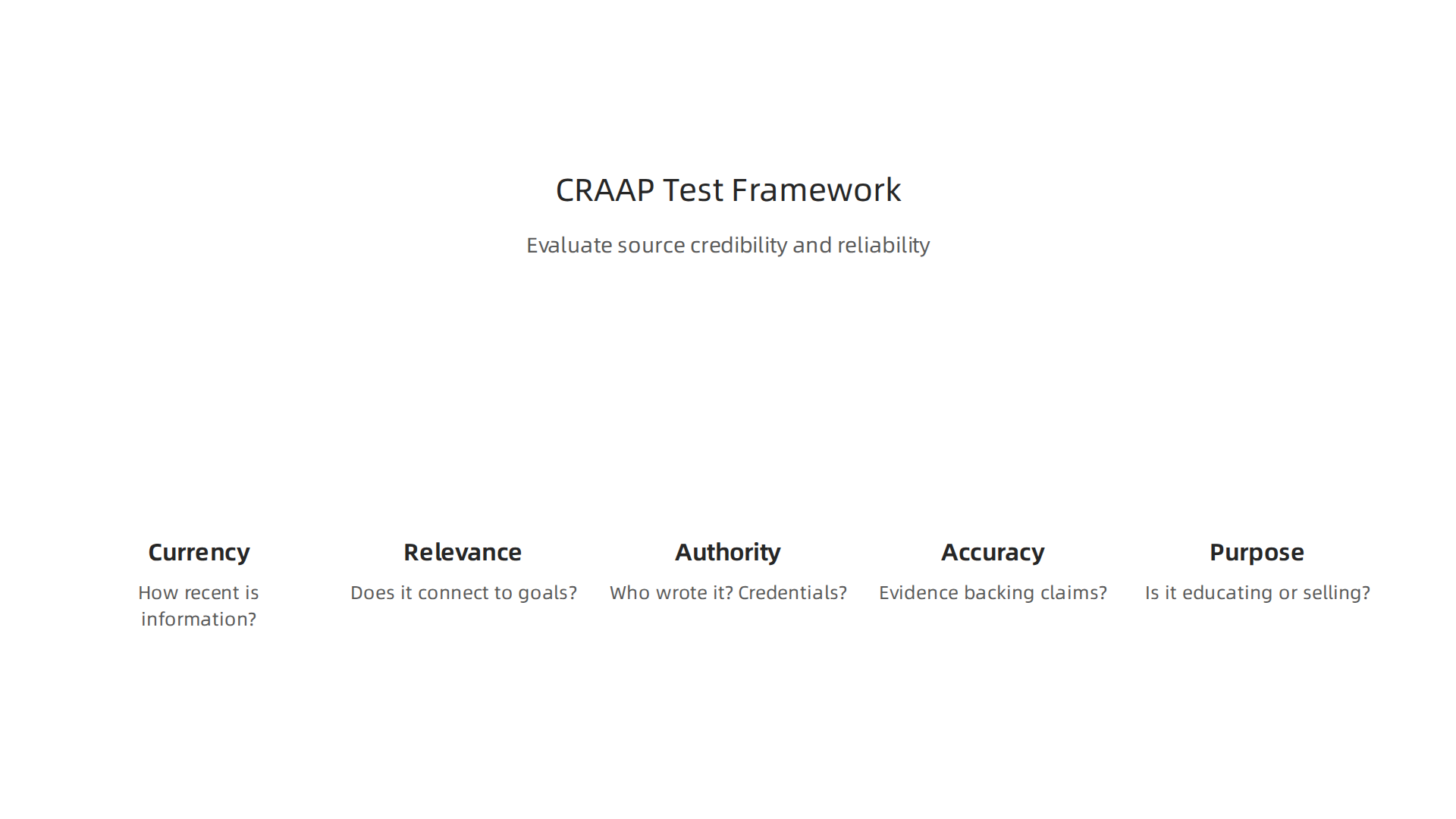
Authority is the most important check. Who wrote this? What are their credentials? Are they a recognized expert or just repeating speculation? The Decision Lab notes that information overload destroys decision quality when people skip source evaluation entirely.
Currency matters too. AI moves fast. A six-month-old article on model performance is likely already outdated.
Accuracy means looking for real evidence. Are there citations, data, or research backing up the claims? Can you verify the facts yourself?
Purpose asks why the content exists. Is it educating you or selling you something?
Cross-referencing is a habit that separates good data scouts from great ones. When you see a big claim, check it against at least two other credible sources. Look for primary sources like research papers or official announcements. Then compare with expert commentary to see if the interpretation holds up.
For a deeper look at building analytical skills, check out our guide on mastering the data science process.
Combine strong filtering with solid source evaluation, and you become a data scout who truly understands the landscape.
Case Studies: Data Scouting in Action
Real-world examples show how data scouting leads to real wins. Here are three stories that prove the value of staying curious and systematic.
A startup that listened when no one else did. A small e-commerce company wanted to break into a crowded market. Instead of copying the big players, they acted as true data scouts. They scanned customer reviews across forums and social media. They spotted a pattern: customers were frustrated by confusing product descriptions that led to returns. No competitor was fixing this. The startup built a tool to simplify descriptions. Within six months, they captured a big piece of the market. This aligns with PwC’s 2026 AI predictions that highlight finding value in overlooked areas.
Enterprise success through competitive intelligence. A large manufacturer was losing customers to a rival with lower prices. Their data scout team monitored competitor hiring patterns, pricing changes, and product launches. They noticed the rival was hiring salespeople faster than production workers. That meant the rival was pushing volume over quality. The manufacturer adjusted by focusing on reliability and maintaining prices. They kept their margins and won back loyal customers.
A costly lesson from a research lab. A well-funded lab spent months developing a new AI model. When they tried to publish, they discovered another team had already released the same idea. They had failed to scout academic papers and patent databases. This wasted time and money. The lesson: data scouting must include research and open-source activity, not just market competitors.
Each of these cases shows a different side of data scouting. The startup found a hidden opportunity. The enterprise outsmarted a rival. The lab learned a hard lesson about coverage.
If you want to stay on top of AI trends without the overload, Your Daily AI Shortcut delivers simple daily insights to your inbox. And for more on building your scouting skills, read about why data specialists matter more in the AI age.
The Future of Data Scouting in the AI Era
Looking ahead, data scouting in 2026 and beyond will look completely different from the manual approaches we’ve described. The biggest change? AI itself becomes the scout’s best tool.
Scouting gets personal and predictive. In the past, a data scout had to know what to look for and where to look. Soon, AI systems will do that heavy lifting. These systems will learn your industry, your competitors, and your goals. Then they will surface signals you might never have noticed. The AI predictions for 2026 from Salesforce describe an "orchestrated workforce" where AI agents collaborate across departments. For a data scout, this means your tools will automatically scan news, patents, social chatter, and research papers. They will flag shifts in real time. No more manual digging through dozens of tabs.
Agentic AI will handle the boring parts. The monitoring and filtering steps that take hours of your week? Soon, those will be fully automated. AI agents will be assigned to "watch" specific topics — a competitor’s hiring spree, a new regulation, a research breakthrough. They will summarize changes and even recommend next actions. This frees you up to do what humans do best: think strategically about what the data means.
The human role becomes about strategy and ethics. As AI handles the raw scouting, your job shifts. The real value now comes from asking the right questions, interpreting results with context, and making sure your scouting practices stay ethical.

Skills like critical thinking, data analysis, and understanding what is data visualization become even more important. In fact, the best data analyst skills for 2026 will include both technical knowledge and a strong ethical compass. To build those skills, check out this guide to mastering the data science process.
The future of data scouting is not about humans versus machines. It is about humans and machines working together to spot opportunities faster and more wisely.
Summary
This article explains data scouting — the disciplined practice of collecting, filtering, and analyzing information to spot meaningful trends before they become obvious — and offers a practical framework for doing it in 2026. It covers what a data scout does, the mix of RSS readers, AI summarizers, and curated newsletters that form an effective toolkit, and how to combine machine speed with human judgment. You’ll get a five-step workflow (Monitor, Aggregate, Filter, Analyze, Distribute), guidance for turning raw data into specific, timely insights, and the KPIs to track your process. The piece also shows how to filter noise with credibility, relevance, and novelty checks, how to evaluate sources methodically, and real case studies that demonstrate outcomes. Finally, it looks ahead to how agentic and predictive AI will automate routine scouting while elevating human roles in strategy and ethics. After reading, you’ll be able to set up a lean scouting process, pick tools that save time, and produce insights your team can act on.