
Why R still matters for AI in 2026 — scope, strengths, and expectations
You might think that R, a coding language, is mainly for old-school statistics. But actually, R still plays a very important part in today’s world of artificial intelligence (AI) in 2026. While other tools get a lot of buzz for building big AI systems, R is often the smart choice for certain teams and jobs. It truly shines when you need to dig deep into data, understand what’s really happening, and make sure your work can be checked by others.

R is a great friend to those who work with data because of its strong tools for numbers and graphs. It helps you clean up messy data, look for patterns, and create clear reports. This is called data wrangling and reproducible analysis. For example, if you’re a data scientist or an AI/ML engineer focused on research and getting clear answers from data, R has many special tools and packages that make your work easier. It helps you build AI models that are easy to understand and explain. However, it’s true that for huge, super-fast AI systems that need to run all the time in a factory or on a website, other coding languages might be used more often. But for careful analysis and testing out new AI ideas, R is still a top pick.
This guide will walk you through how to use R for important parts of artificial intelligence. We will look at hands-on ways to use R in your work. We’ll explore different tools you can use with R, talk about how to get your AI projects ready for real-world use, and even cover how to make sure your AI is fair and safe. This is called AI governance, and it’s super important for trust and clear results, making sure AI work can be repeated and understood by others, as highlighted in "Reproducibility: The New Frontier in AI Governance".
If you want to grow your skills in this field, learning how to choose and use the right tools, including R, is key. Many people wonder how to become ai ml engineer or are looking for the best ai for coding. Getting a good handle on different programming languages like R will definitely help you in your career.
Want to keep up with all the big changes in AI? Get clear daily AI updates from The AI Newsletter Worth Reading.
Understanding R’s role in the AI stack: strengths, weaknesses, and when to choose it
To truly understand where R fits in with artificial intelligence today, it helps to look at what it does best and where it might not be the top choice. R is like a trusted workshop for certain kinds of AI work. Its biggest advantage lies in how good it is at statistical modeling and really digging into data to see what’s happening. This is called exploratory data analysis.
For example, R has many special tools, like the Tidyverse collection of packages (dplyr, ggplot2), that help you clean up data, change it, and make great charts to show your findings. This makes R an excellent choice for researchers, statisticians, and data scientists who need to understand data deeply and explain their models clearly. If you are focused on making sure your AI results can be checked and understood by others, R’s strength in this area is a big plus. It’s built for careful, step-by-step analysis.
However, R does have some trade-offs. While it’s great for statistics, its ecosystem for deep learning and very large-scale machine learning is not as big as Python’s. Python, with tools like TensorFlow and PyTorch, often takes the lead for building huge AI systems that need to run constantly in real-world products. This means that if you’re building a cutting-edge deep learning model or need to put an AI solution into a website or app, Python might be the best AI for coding for that specific job. As many experts point out, R excels in statistical analysis, while Python leads for machine learning and deep learning, especially in production settings Python vs R for Data Science in 2026 — Which One Should You ….
So, how do teams decide when to use R for their r artificial intelligence projects? It comes down to a few things:
- Data Size and Type: For medium-sized datasets and complex statistical tasks, R is often perfect.
- Model Types: If your work involves classic statistical models or advanced data visualization, R shines. For deep neural networks, Python typically has more mature tools.
- Reproducibility Needs: If it’s very important to show exactly how your AI model was built and how it works, R’s design makes this easier.
- Talent Availability: Does your team already have people with strong data scientist skills in R? Or are they more familiar with Python? The skills of your team matter a lot.
Choosing the right tool is a key part of how to become an AI/ML engineer. It’s not about one language being better overall, but about picking the best tool for the specific task and team.
Want to keep up with all the big changes in AI? Get clear daily AI updates from The AI Newsletter Worth Reading.
When using R for r artificial intelligence projects, knowing the right tools, or packages, is key. R has many special packages that help you with different parts of building an AI solution, from getting your data ready to making your models.
Packages for Data Wrangling and Feature Engineering
Before you can build any AI model, you need to prepare your data. This often means cleaning it up, changing its shape, and creating new features that your model can learn from. R is very strong here, largely thanks to the "Tidyverse" collection of packages.
- dplyr: This package helps you easily sort, filter, and change your data. Think of it as a helpful assistant that rearranges your data tables exactly how you need them.
- ggplot2: Once your data is clean, you’ll want to see what it looks like. ggplot2 is famous for making beautiful charts and graphs. These pictures help you understand your data better and explain your findings to others.
- tidyr: This package is great for making your data "tidy." Tidy data is organized in a way that makes it easy to work with in R.
- readr: Often, your data starts in files like CSVs.
readrhelps you bring that data into R quickly and easily.
Many experts say that R’s tidyverse tools are very good for managing and showing data clearly Python vs R for Data Science: Complete Comparison Guide – Boundev. R has a lot of built-in features for analyzing data, more so than Python, which often needs extra packages for similar tasks R vs Python for Data Analysis — An Objective Comparison.
Machine Learning and Deep Learning in R
While Python often gets the spotlight for big deep learning projects, R still has strong tools for machine learning, especially for typical statistical models.
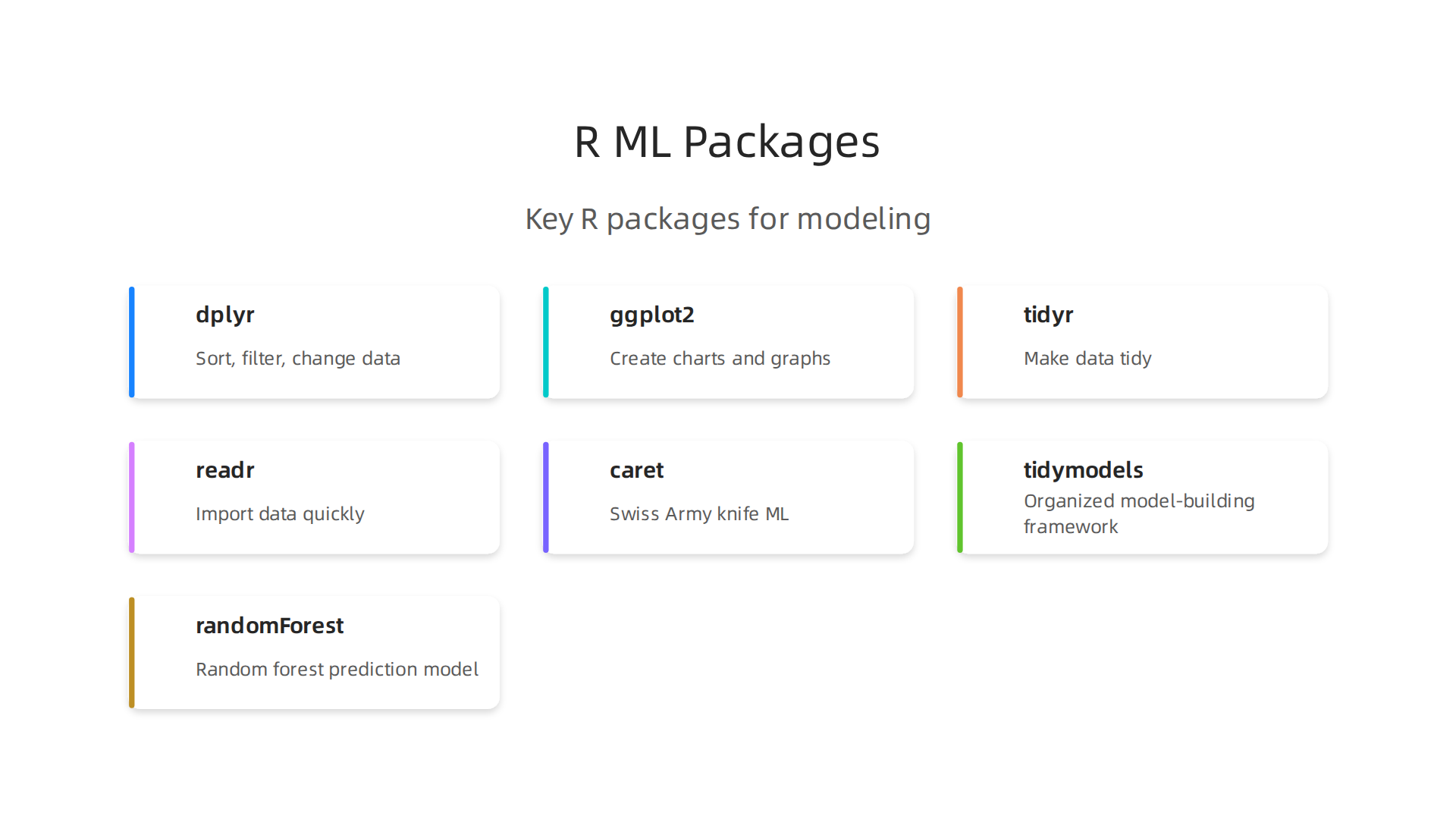
- caret: This is like a Swiss Army knife for machine learning in R. It helps you train many different types of models and compare them to find the
best ai for codingfor your specific problem. It makes the whole process smoother. - tidymodels: This is a newer set of packages that works well with the Tidyverse. It offers a clear and organized way to build machine learning models, focusing on ease of use and good practices.
- randomForest: If you need to build a powerful prediction model using a method called "random forests," this package is your go-to.
It’s true that Python has more libraries for deep learning, like TensorFlow and PyTorch R vs Python in Datascience. But for many types of machine learning tasks, especially those tied to statistics, R’s packages like caret and mlr3 are very capable R vs Python in 2025: A Complete Comparison for Data …. To become a great how to become ai ml engineer, understanding both R and Python’s toolkits is very helpful.
Structuring Your Package Stack for Collaboration
Working on r artificial intelligence projects often means working with a team. To make sure everyone can understand and use the code, it’s good to organize your packages and work in a smart way.
- Project-based work: Using RStudio Projects helps keep all your code, data, and settings for one project together. This means when someone else opens the project, everything is set up correctly.
- Clear code and comments: Always write your code simply and add notes (comments) to explain what you’re doing. This helps others, and even your future self, understand your work.
- Version control: Tools like Git allow you to track changes to your code. This is very important for teamwork and making sure you can go back to older versions if needed.
- Environment management: Making sure everyone uses the same versions of packages can prevent problems. Tools like
renvhelp "lock" the package versions for a project, making it very reproducible.
Using these methods helps make sure your r artificial intelligence projects are easy to share and reproduce, which is important for dependable AI work. Learning to organize your projects well is a key skill for any data professional. You can explore programs that teach you to master data careers through advanced data engineering and science programs.
Working on r artificial intelligence projects often means starting with a big mess: raw data. But to make sense of it and build useful models, you need to turn that mess into something clean and organized. This is what data preparation and feature engineering are all about. They are the first and most important steps in any AI journey.
Data Ingestion and Initial Cleaning
First, you need to get your data into R. This often means reading files like CSVs or Excel sheets. The readr package, which we mentioned earlier, is excellent for this. It helps you bring data into R quickly and correctly.
Once the data is in R, the real work begins. Data is rarely perfect. It might have missing pieces, wrong entries, or be in a format that’s hard to work with. This is where packages like dplyr and tidyr shine.
dplyrhelps you clean your data by letting you filter out rows you don’t need, pick specific columns, or change values. Think of it as a tool for tidying up your data table.tidyrhelps you change the shape of your data. Sometimes data is "wide" (many columns), and other times it needs to be "long" (fewer columns but more rows).tidyrmakes these changes easy, which is important for getting your data ready for models. Many experts agree that R’stidyversetools make data cleaning and visualization much easier than other tools Python vs R for Data Science – StrataScratch.
Making your data clean and in the right shape is a must. If your data is bad, your AI model will also be bad, no matter how clever the model is. For anyone looking to understand how to choose data analysis tools in 2026 for AI professionals, R’s data wrangling capabilities are a strong point.
Feature Engineering for Smarter Models
After cleaning, the next big step is "feature engineering." This means creating new pieces of information, or "features," from your existing data that can help your AI model learn better. For example, if you have a date column, you might create new features like "day of the week" or "month" because these could be important for your model’s predictions.
In R, you can do feature engineering using functions from dplyr or by writing your own custom code. These new features then become part of your data set. The goal is to give your model the best ai for coding knowledge it needs to make accurate guesses.
These data preparation steps, from cleaning to feature engineering, are not standalone tasks. They usually flow right into building and testing your AI models. It’s helpful to think of them as a "workflow." Tools like tidymodels help you tie these steps together with your modeling choices in a clear way. This means you can easily see how your data preparation impacts your model’s performance, as building "workflow sets" can combine preprocessors and model choices effectively 15 Screening Many Models.
Reproducible Preprocessing Steps
For r artificial intelligence projects to be trustworthy and repeatable, your data preparation steps must be clear and reproducible. This means that if someone else follows your steps, they should get the exact same results. To do this:
- Write clear code: Make sure your cleaning and feature engineering code is easy to read and understand.
- Add comments: Explain why you made certain choices in your code.
- Save your steps: Instead of doing things by hand, write down all your data prep steps as code. This way, you can run them again anytime.
Learning to manage these steps well is crucial for anyone who wants to know [how to become ai ml engineer] in 2026. It ensures your AI solutions are reliable and can be updated easily.
After your data is clean and ready, the next big step in r artificial intelligence is choosing and building your models. This is where you decide which type of AI will best learn from your data to make predictions or find patterns. R offers many tools for this, from basic machine learning to more advanced models.
Choosing the Right Algorithms and Metrics
When it comes to building AI models, you have many choices. These range from simpler, "classical" methods like linear regression or decision trees to more complex ones like gradient boosting or even deep learning. The tidymodels package suite in R is a great helper here. It provides a common way to work with many different models, making it easier to try them out.
Picking the right model often depends on your data and what you want to achieve. For example, if you want to predict a number (like house prices), you’d use a regression model. If you want to put things into groups (like spam or not spam), you’d use a classification model.
Once you build a model, you need to know if it’s any good. This is where "evaluation metrics" come in.

For predicting numbers, you might look at how close your predictions are to the real values. For grouping, you might check how many items were correctly classified. tidymodels also helps you easily calculate these important numbers to see your model’s performance.
Robust Cross-Validation and Hyperparameter Tuning
To make sure your AI model works well on new data, not just the data it learned from, you need strong testing methods. Two key ideas here are cross-validation and hyperparameter tuning.
- Cross-Validation: Think of this as giving your model many mini-tests. Instead of just one training and one testing set, you split your data into several parts, called "folds." Your model learns on some folds and then gets tested on a different fold. You do this several times, rotating which fold is used for testing. This gives you a more reliable idea of how well your model truly performs. The
rsamplepackage, part oftidymodels, makes setting up cross-validation in R easy. For example, you can use 10-fold cross-validation, where the data is split into 10 equal parts, and the model is tested on each part in turn, averaging the results Estimating performance with cross validation in R. - Hyperparameter Tuning: Models have settings called "hyperparameters" that aren’t learned from the data directly. They are set before the model learns. Finding the best combination of these settings is called hyperparameter tuning. It’s like finding the perfect recipe adjustments for your cake. R’s
tunepackage, also intidymodels, helps you try out different settings and pick the ones that give the best results. You can use it to create a grid of possible settings and test them using cross-validation Hyperparameter tuning. Themodeltuningpackage also offers intuitive tools for this modeltuning: Model Selection and Tuning Utilities. After tuning, you can then choose the best model to finalize your workflow.
These steps help you build a more robust and trustworthy r artificial intelligence solution. For those aspiring to mastering AI jobs 2026 discover top roles in demand skills and high salaries, understanding these practices is essential.
Benchmarking and Comparing Models
It’s often useful to compare your R models to others. This process, called benchmarking, helps you understand if your chosen model is truly the best ai for coding for your specific problem. You might compare:
- Different models within R (e.g., a simple linear model versus a complex gradient boosting model).
- Your R model against models built in other tools or languages like Python. While R is strong for data analysis and statistical modeling, Python often shows strong performance in areas like deep learning Benchmarking Octave, R And Python Platforms For Code Prototyping In Data Analytics And Machine Learning Applications Programming.
R also has packages like torch that let you explore advanced models such as deep learning, bringing capabilities similar to PyTorch directly into R torch.pdf. This allows for a wide range of comparisons. Tools like tidymodels allow you to set up workflows for many models and compare them side-by-side using metrics, which helps you see how each model performs on the same data.
Staying up-to-date with the latest AI trends and tools is crucial for making informed decisions in model building and evaluation.
The world of AI is always changing. Make sure you don’t miss out on important updates.
The AI Newsletter Worth Reading
The world of r artificial intelligence is always changing, and one of the biggest changes is how we use deep learning. While traditional machine learning is powerful, deep learning takes things a step further, especially with very large and complex data, like images or sounds. R has come a long way in supporting these advanced AI methods.
Deep Learning Support in R
For a long time, Python was seen as the main language for deep learning. But R has steadily grown its capabilities. Today, R offers great tools and ways to use deep learning.
- Native R Packages: Packages like
torchallow you to build and train neural networks right inside R. This package works a lot like PyTorch, a popular deep learning framework, but is written fully in R. This means you can use R’s familiar code style for complex deep learning tasks. Thetorchpackage includes tools for building neural networks, making them faster with your computer’s graphics card (GPU), and handling data in special ways needed for deep learning Torch for Deep Learning. - Connecting with Python: Sometimes, you might want to use big Python deep learning tools like TensorFlow or Keras directly. R makes this possible through special "interfaces" or "wrappers." This means you can write R code that "talks" to Python’s deep learning engines, letting you use the strengths of both languages. This mix-and-match approach is very helpful if you need the latest deep learning features from Python but prefer to do your data analysis and reporting in R.
When should you use native R deep learning tools versus calling Python? If you’re already deep into the R ecosystem for your data tasks and want to keep everything in one place, R’s native packages are a great choice. They are excellent for research, quick experiments, and integrating with R’s strong statistical tools. However, for cutting-edge models, very large datasets, or if you’re working in a team that mainly uses Python for deep learning, calling Python frameworks from R can give you the best ai for coding flexibility. Studies often compare Python and R, noting that Python tends to do very well with deep learning tasks and large computations Comparative Study of R, Python, and Julia.
Training and Fine-Tuning Advanced Models
Building a deep learning model involves training it over many cycles, called "epochs," and feeding it data in small groups, or "batches." It’s like teaching a child by showing them many examples, one small group at a time. After training, you often "fine-tune" the model. This means taking a model that’s already learned a lot from one task and teaching it new, smaller details for your specific problem. This saves a lot of time and effort.
In R, packages like torch provide clear ways to manage this training process. You can set up your training loops, control how the model learns, and save its progress. For those wondering how to become ai ml engineer or aiming for roles that involve databricks learning, understanding these deep learning principles in R is a valuable skill.
Practical Tips for Deployment
After you’ve built and fine-tuned your r artificial intelligence model, the next step is to make it useful in the real world. This is called deployment. It means getting your model to work on new data, often as part of an app or a service.
- Packaging Models: A common way to get models ready for deployment is to package them using tools like Docker. This puts your model and all the necessary R programs into one neat, portable "container." This makes sure your model works the same way everywhere, from your computer to a big cloud server. In 2026, using Docker for R scripts and models is considered a best practice for production environments Running R in Production: Best Practices for 2026.
- Serving Predictions: You can turn your R model into a web service using packages like
plumber. This lets other programs or websites send data to your model and get predictions back. It’s like creating an API for your AI model. For instance, you can easily deploy an R model as a containerized API with Docker and Plumber Deploying an R Model as a Containerised API. - Monitoring: Once deployed, it’s vital to watch how your model performs. Is it still accurate? Is the data it’s seeing similar to the data it learned from? Tools and methods for "MLOps" (Machine Learning Operations) help you monitor your models in 2026, ensuring they keep working well and stay relevant MLOps in 2026: Best Practices for Scalable ML Deployment. This helps you ensure your AI solution stays trustworthy and useful over time.
Now that your r artificial intelligence solution is trustworthy, the next step is to make sure it can handle more work as needed. This is where scaling comes in. Scaling means making your R models work for more users or with larger amounts of data without slowing down or breaking.
Scaling Strategies for R AI
When your R-based AI solution gets popular, you need ways to handle more requests.

- Containers for Scale: While we already talked about using Docker to package your models, containers are also key for scaling. You can run many copies of your containerized R model. When demand goes up, you simply start more containers. This helps your
r artificial intelligencesolution keep up. - Orchestration Tools: For managing many containers, especially across different servers or in the cloud, tools like Kubernetes are used. Kubernetes helps arrange and manage these containers automatically, starting new ones when traffic is high and removing them when things are quiet. This creates a powerful, flexible setup for your AI services. Learning about scalable infrastructure is important for those working with AI platforms Scalable Kubernetes Infrastructure for AI Platforms.
- Serverless and Managed Inference: Sometimes, you don’t want to worry about servers at all. Serverless options let you upload your R code, and the cloud provider handles all the scaling for you. This means your model only runs when someone uses it, and you only pay for that time. Managed inference services also take care of the heavy lifting, giving you an API endpoint without needing to manage the underlying machines. Many production machine learning services use containerization and optimized formats for serving models efficiently Model Deployment: Serialization, Containerization and API for …. These modern methods help you focus on your
best ai for codingand less on infrastructure. - Performance Testing: Before you scale, it’s a good idea to test your R model to see how well it performs under stress. This means sending it a lot of fake requests to see how many it can handle per second and if it responds quickly. This helps you figure out how many copies of your model you might need.
By using these strategies, your R models can serve many users reliably, helping your organization Unlock Maximum Business Value with Strategic AI Adoption.
Advanced Monitoring and Observability
Beyond basic checks, advanced monitoring makes sure your R AI models stay sharp over time. It’s about getting a clear picture of what your model is doing and how well it’s working.
- Data Drift Detection: Models are trained on certain data. If the new data your deployed model sees changes a lot from what it learned, it might start making bad predictions. This is called "data drift." Advanced monitoring tools watch for these changes, letting you know when your model might need retraining. This also includes checking that preprocessing steps are consistent between training and deployment YOLO26 Model Deployment Best Practices.
- Observability: This means you can understand the internal workings of your model and its surrounding system. It’s about having enough information (like logs and metrics) to understand why a model made a certain prediction or why a service might be running slowly. Good observability is crucial for quickly fixing problems and improving your
r artificial intelligenceapplications. - Alerting: Setting up alerts means you get a warning right away if something goes wrong. For example, if your model’s accuracy drops below a certain point or if too many errors happen, an alert can tell your team so they can jump in and fix it.
Staying on top of these complex developments in AI deployment and monitoring can be a challenge, but it’s important for anyone in the field.
Get clear daily AI updates from The Deep View Newsletter.
The AI Newsletter Worth Reading
Production Best Practices: Reproducibility, Governance, and Responsible AI with R
After making sure your R AI models can handle lots of users and data, it’s time to think about how to keep them reliable and fair in the long run. This means setting up good rules and ways of working, from how you build your models to how you keep them running day to day. It’s all about making your r artificial intelligence solutions trustworthy and accountable.
Making R Projects Reproducible
Imagine you build an amazing r artificial intelligence model, but a few months later, no one can get it to work the same way again. That’s a problem! Reproducibility means that anyone can get the same results from your code and data, any time. This is super important for trust and for fixing things if they go wrong.
Here’s how to make your R projects reproducible:
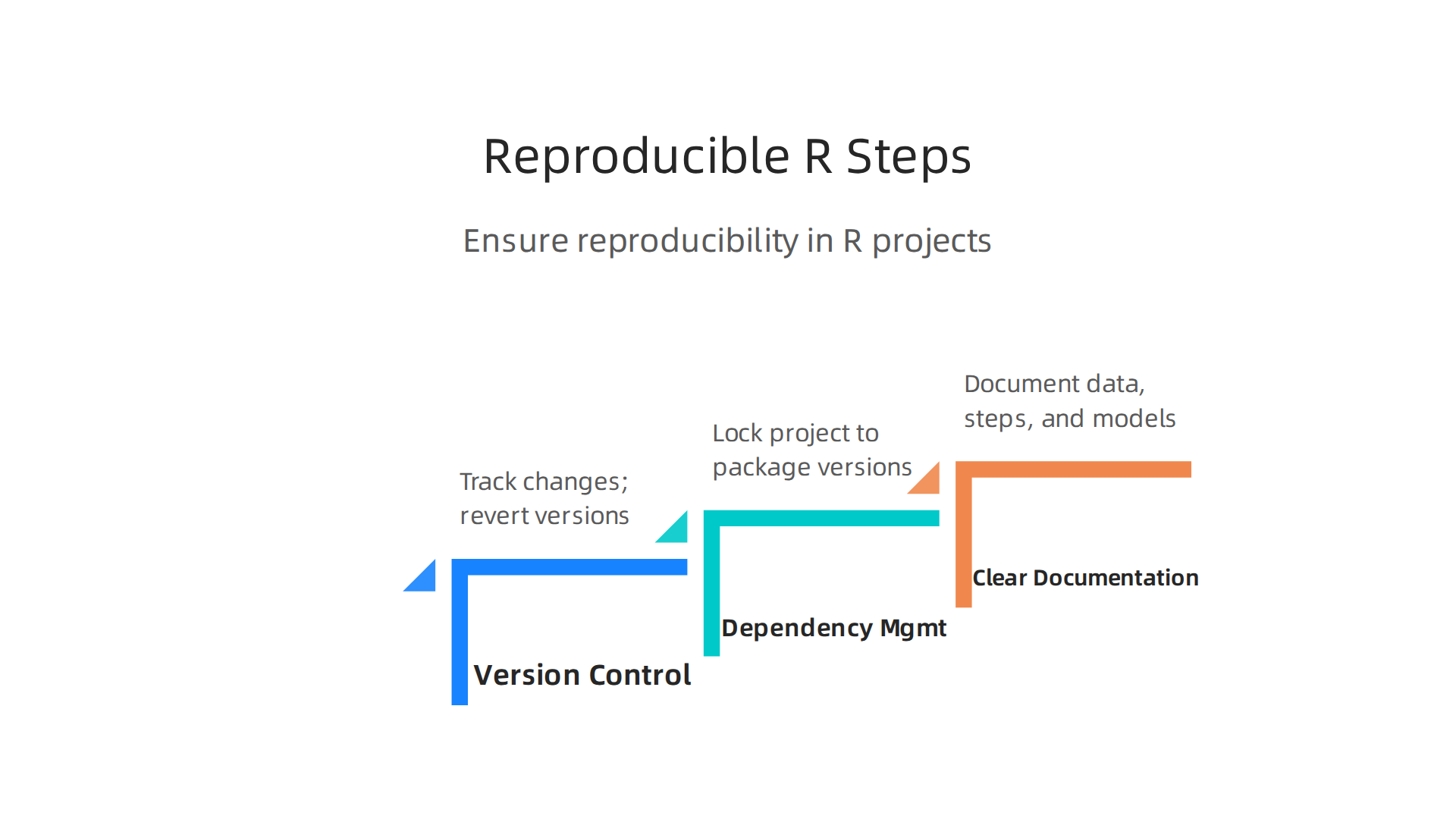
- Version Control: This is like a save history for your code. Tools like Git help you track every change. If something breaks, you can easily go back to an older, working version. This also lets teams work on the same project without stepping on each other’s toes. Using version control is a key practice for
best ai for coding. - Dependency Management: R models often use many different packages. It’s important to make sure everyone uses the exact same versions of these packages. Tools like
renvhelp "lock" your project to specific package versions. Then, combining this with Docker containers means you can package your R version, system tools, and all your specific R packages into one neat bundle, ready to deploy anywhere Running R in Production: Best Practices for 2026. This makes sure your model always runs in the environment it was designed for. In fact, many recommend treating machine learning deployment like regular software deployment, using version control and dependency management Always Be Deploying. How to make R great for machine learning in (not only) Enterprise.. - Clear Documentation: Every
r artificial intelligenceproject needs clear notes. What does the data mean? What steps did you take to clean it? What does the model do? Good documentation helps others understand and use your work, making it easier to scale reproducibility Scaling Reproducibility: An AI-Assisted Workflow for Large ….
Governance and Responsible AI
Putting AI into action means you also need rules and ways to check that everything is working as it should, fairly and safely. This is called governance. It’s about being responsible.
- Accountability: Who is responsible if the AI makes a bad decision? Defining roles and responsibilities is important for clear accountability. This includes setting up ways to monitor, test, and handle problems when they come up Trustworthy & Responsible AI.
- Testing Strategies: Beyond just checking if your model works, you need to test it for fairness and bias. Does it treat different groups of people differently? Is it secure? Regular testing helps reduce risks. It’s a key step for anyone learning how to become AI ML engineer and looking to build reliable systems.
- Responsible AI Guidelines: Many groups, like the OECD, have put out guidelines for responsible AI. These help companies think about fairness, safety, and making sure humans stay in control. It’s about making sure your AI helps people without causing harm OECD Due Diligence Guidance for Responsible AI (EN).
Ongoing Validation
Even after your model is running and being watched, you can’t just set it and forget it. Constant checking, called ongoing validation, is needed.
- Continuous Monitoring: As we discussed, data can change over time (data drift), which means your model might not work as well as it used to. Good monitoring systems watch for these changes.
- Data Quality Checks: Ensure that the data coming into your model is clean and consistent. If the input data changes in quality or how it’s handled, it can throw off predictions. Checking that preprocessing steps are the same between training and deployment is very important for models in production YOLO26 Model Deployment Best Practices.
- Retraining: When you see data drift or a drop in performance, it’s often a sign that your model needs new training data or to be retrained. This process helps your model stay smart and useful over time. Platforms used for data processing and model training, like those often discussed in relation to
databricks learning, can be crucial for these steps.
Summary
This article explains why R remains a valuable language for AI work in 2026, especially for teams focused on statistical rigor, exploratory analysis, and reproducible research. It outlines R’s core strengths—Tidyverse for data wrangling and visualization, tidymodels and caret for modeling, and packages like torch for deep learning—while acknowledging Python’s lead for very large-scale deep learning in production. The guide covers practical workflows: ingesting and cleaning data, feature engineering, model selection, cross-validation and hyperparameter tuning, benchmarking, deployment with Docker and plumber, and strategies for scaling with containers or serverless platforms. It also emphasizes production best practices—version control, dependency management with renv, monitoring for data drift, and governance for fairness and accountability. After reading, you will know when to choose R, which packages and workflows to use, and how to package, deploy, and govern R-based AI solutions effectively.