

Introduction
Data analytics is one of the hottest skills in the job market right now. Whether you work in healthcare, retail, finance, or tech, companies everywhere need people who can take raw numbers and turn them into smart decisions.

But with so many training options out there, it can be tough to know where to start.
Here’s the good news. The Google Data Analytics Professional Certificate has become one of the most trusted entry points for beginners. It is designed for people with zero experience, taught on Coursera, and recognized by over 150 employers in the United States.
In fact, according to Google’s own survey, 75% of graduates report a positive career outcome after finishing the program.
But it is not the only path. The demand for skilled data professionals is huge. Across the globe, businesses are scrambling to find people who can analyze information and spot trends. For example, the data analytics market was valued at over $82 billion in 2025 and is expected to keep growing fast. In Germany alone, nearly 150,000 IT jobs remain unfilled, and many of those require analytics skills.
That is why this guide exists. We will compare the Google Data Analytics Professional Certificate with other top certifications and online degrees. You will learn what each option costs, how long it takes, and which one fits your goals best. Whether you want a quick career boost or a full degree, you will find useful answers here.
Want to stay ahead of the curve? Subscribe to the Your Daily AI Shortcut for simple daily AI insights that keep you informed about the latest trends in data and technology.
First, let’s look at the best top data analysis certifications for 2026 and see how they stack up against each other.
Why Data Analytics Certifications Matter in 2026
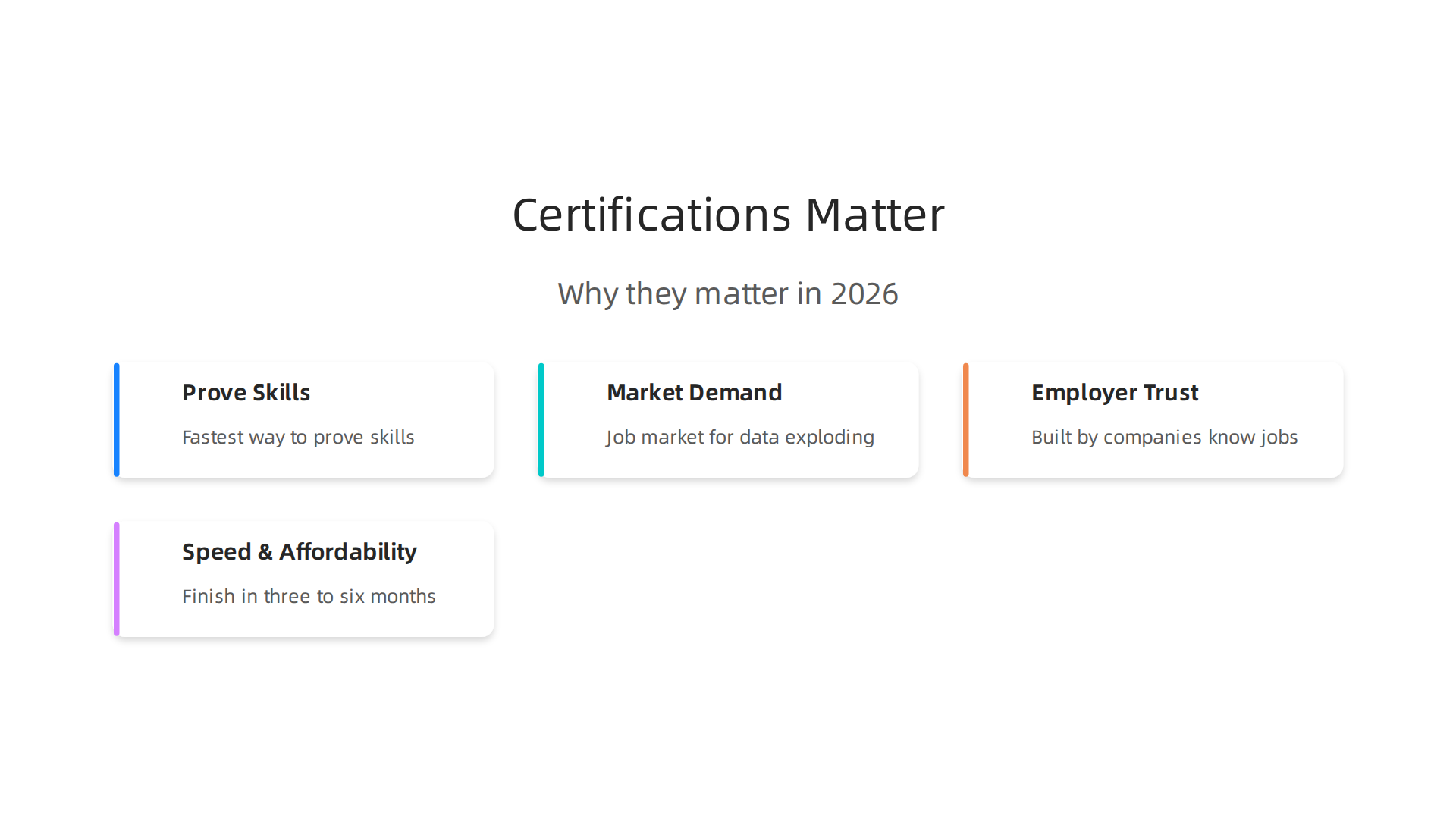
You might have heard that a four-year degree is the only way to land a good data job. But in 2026, that is not really true anymore. Companies care more about what you can do than where you studied. They want people who can actually work with tools like SQL, Python, and Tableau. And certifications are one of the fastest ways to prove you have those skills.
Here is the thing. The job market for data analytics is still exploding. According to research from StackFuel, the demand for data and AI experts keeps growing, and nearly 150,000 IT jobs in Germany alone are unfilled. That is a huge opportunity. Hiring managers are not waiting for new graduates. They want people who are ready to work today.
Certifications from big names like Google, IBM, and SAS carry real weight. Why? Because these programs are built by companies that actually know what the job requires. When you finish the Google Data Analytics Professional Certificate, for example, you show employers that you understand how to collect, clean, and analyze data using real-world tools. That matters a lot more than just listing a degree on your resume.
Another reason certifications matter is speed and affordability. A typical online certificate takes between three and six months. Compare that to a two-year associate degree or a four-year bachelor’s program. For many people, learning fast and getting a credential quickly makes sense. You can start applying for jobs much sooner.
If you want to learn more about how to choose the right credential, check out our guide on the best data analysis certifications for AI professionals. It covers different paths and what each one leads to.
So yes, certifications matter in 2026. They give you a shortcut to prove your skills, and the market is hungry for them.
That is why we will compare the top programs in the next section.
Google Data Analytics Professional Certificate: In-Depth Review
Let us start with the most popular choice. The Google Data Analytics Professional Certificate is the most talked-about entry-level credential in 2026. You have probably seen ads for it. But does it actually deliver what it promises? Let us break down the curriculum, the cost, and the real job outlook so you can decide if it is right for you.
What you will actually learn
Google designed this program with input from major companies like Tableau, Accenture, and Deloitte. That means the skills match what hiring managers want right now. You will work through eight main courses that start with the basics. First, you learn how to ask smart questions about data.
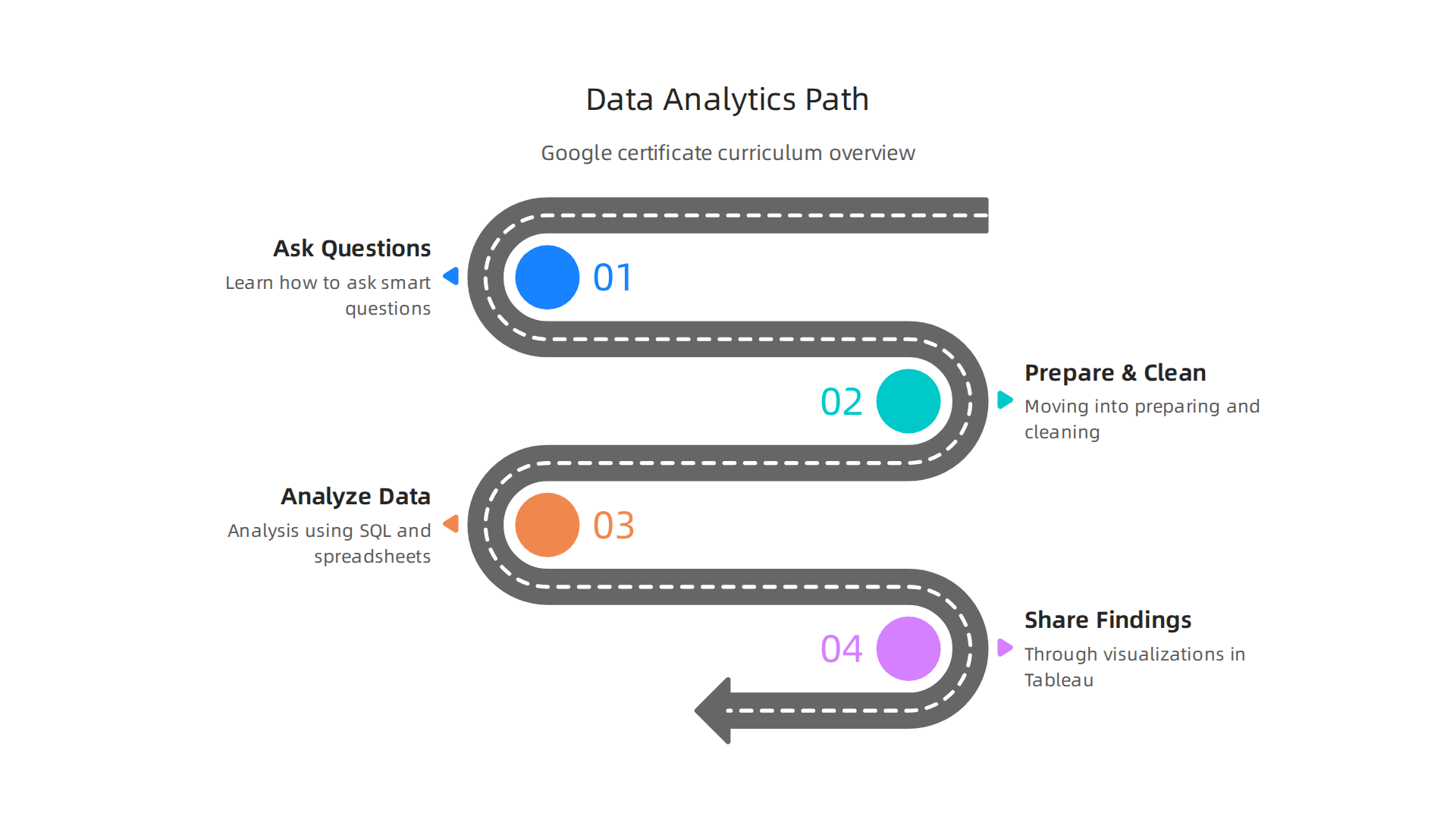
Then you move into preparing and cleaning data. After that comes analysis using SQL and spreadsheets. Finally, you learn how to share your findings through visualizations in Tableau. You also get an introduction to R programming and Python.
The program even added a new optional course on using AI tools for data analytics. This covers how tools like Gemini and ChatGPT can help with data summaries and cleaning tasks.
You do not just watch videos. There are quizzes, hands-on activities, and a final capstone project where you work through a real case study from start to finish. This project becomes something you can show employers.
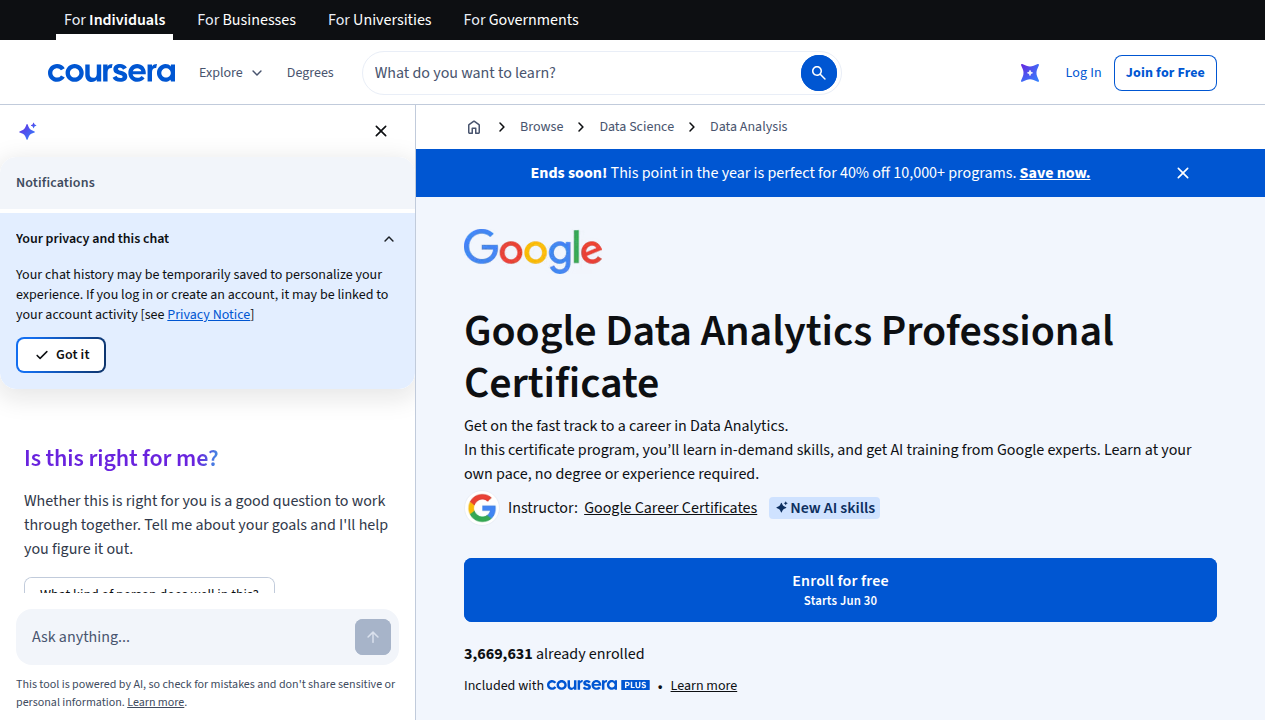
For a full list of every course and skill, you can visit the official Google Data Analytics Certificate page.
Cost and how long it takes
This is where the certificate stands out the most. It costs about $49 per month on Coursera. If you study 10 hours per week, you can finish in about six months. That puts your total cost under $300.
Compare that to a data science bootcamp. Most bootcamps cost between $7,500 and $15,000. A data science degree online can cost $40,000 or more. For a tiny fraction of the price, you get a credential from Google that employers recognize.
For a detailed look at the exact monthly cost and different time options, check out this in-depth review of the Google certificate cost in 2026.
Will this certificate get you a job?
Here is the honest truth. The certificate alone will not guarantee a job. But it gives you a massive head start. According to ZipRecruiter data, people with this certificate report earning an average of $81,500 per year. The top 10 percent earn over $112,000. Google also gives you access to an employer consortium of over 150 companies that hire from this program.
For an honest take on the Google Data Analytics Certificate’s job outcomes from someone who talked to hiring managers, it is smart to watch reviews before you commit.
The real key is pairing the certificate with your own practice projects. Use the tools you learn on public datasets. Build a strong portfolio. If you need help with the next steps, our guide on landing a remote data analyst job in 2026 covers resume tips and interview strategies.
Staying current with AI and data trends matters a lot for your career growth. To make this easy, you can join The Deep View Newsletter for simple daily AI insights.
Final verdict
The Google Data Analytics Professional Certificate is the best value entry point for beginners in 2026. It is affordable, respected by employers, and teaches the tools you actually need for the job. Just remember that it is a starting point, not a finish line. Treat it as the foundation of your learning journey, and you will get real value from it.
Top Alternative Data Analytics Certifications
The Google Data Analytics Professional Certificate is a fantastic starting point. But it is not the only good option out there. Depending on your goals, technical comfort, or the industry you want to enter, another certification might fit you better. Let us look at three strong alternatives that offer different paths into the data field.
IBM Data Analyst Professional Certificate
IBM’s program is a close competitor to Google’s. The main difference is technical depth. While Google uses R for programming, IBM focuses on Python. Many hiring teams prefer Python because it is more widely used across data science and machine learning roles.
The IBM certificate costs about $39 per month on Coursera and takes around four months to finish. That is shorter than Google’s six-month timeline. You learn Python, SQL, Excel, and IBM Cognos Analytics for dashboards.
A key difference is the hands-on portfolio work. According to Forbes, the IBM Data Analyst Professional Certificate is a top pick for building a strong portfolio. The projects push you to solve real cleanup and analysis problems, which looks great in job applications.
One downside is that IBM has less brand recognition than Google for general audiences. But inside data teams, IBM is well known. If you want more technical depth and Python skills, this is a solid choice.
Microsoft Certified: Data Analyst Associate (PL-300)
Microsoft’s certification targets a specific tool: Power BI. Power BI is used by 97 percent of Fortune 500 companies according to Microsoft.
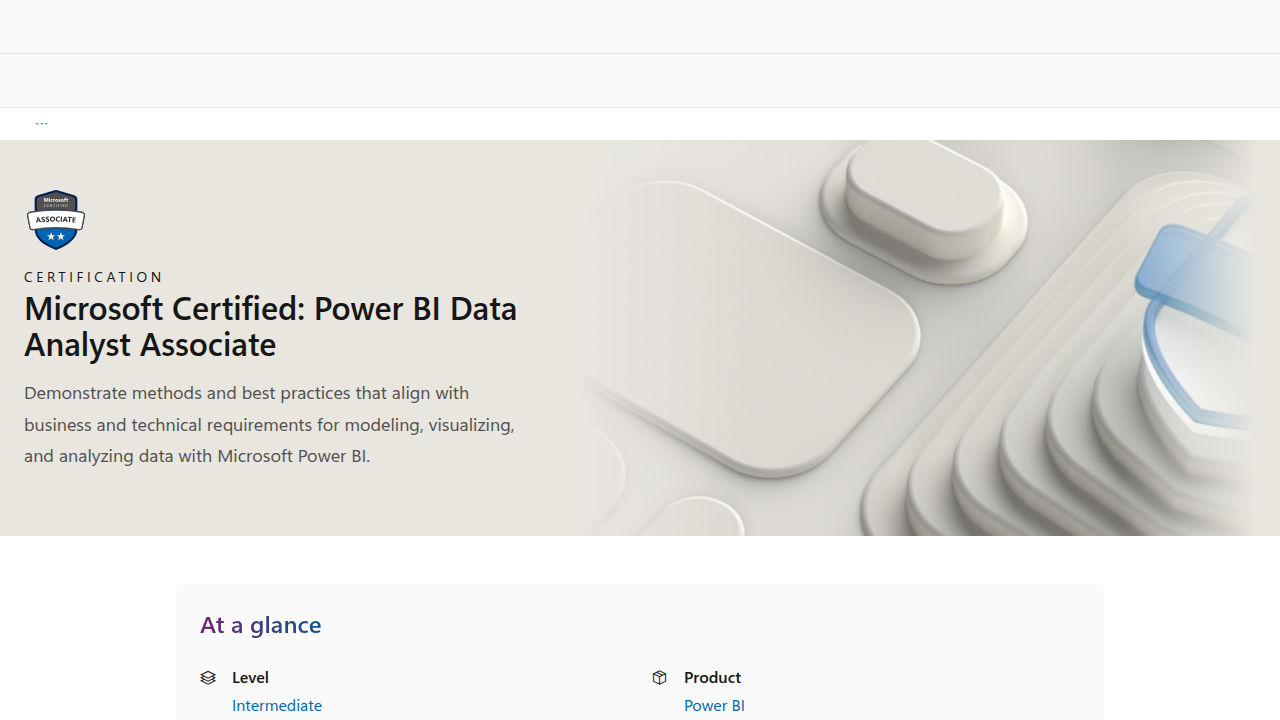
That alone makes this certification very valuable if you plan to work in corporate environments.
The PL-300 exam costs around $165. You can prepare using free Microsoft learning paths or paid courses on Coursera. The certification itself proves you can build dashboards, clean data with Power Query, and use DAX formulas for business calculations.
This is an intermediate level credential. It assumes you already have some experience with data analysis or Excel. If you are a complete beginner, you might want to start with Google or IBM first. But if you already know the basics of SQL and Excel, this certification can fast-track you into business intelligence roles.
The certification expires after one year, but Microsoft offers free renewal through an online assessment. That keeps your skills current without extra cost.
SAS Certified Data Scientist
SAS is an older but still very respected analytics platform. Large companies in banking, healthcare, and government rely on SAS for serious statistical analysis. If your target industry uses SAS, this certification is a door opener.
To earn the SAS Certified Data Scientist credential, you need to pass multiple exams. Each exam costs $180. There is no set course; you prepare on your own or through SAS training materials. This is an intermediate to advanced certification, so it expects you already know SAS programming.
One major advantage is that this certification never expires. Once you earn it, it is yours for life. That is rare in the tech world, where most certifications need yearly renewal.
The downside is that SAS is less common in startups and newer tech companies. So think about where you want to work before committing to this path.
Which one should you choose?
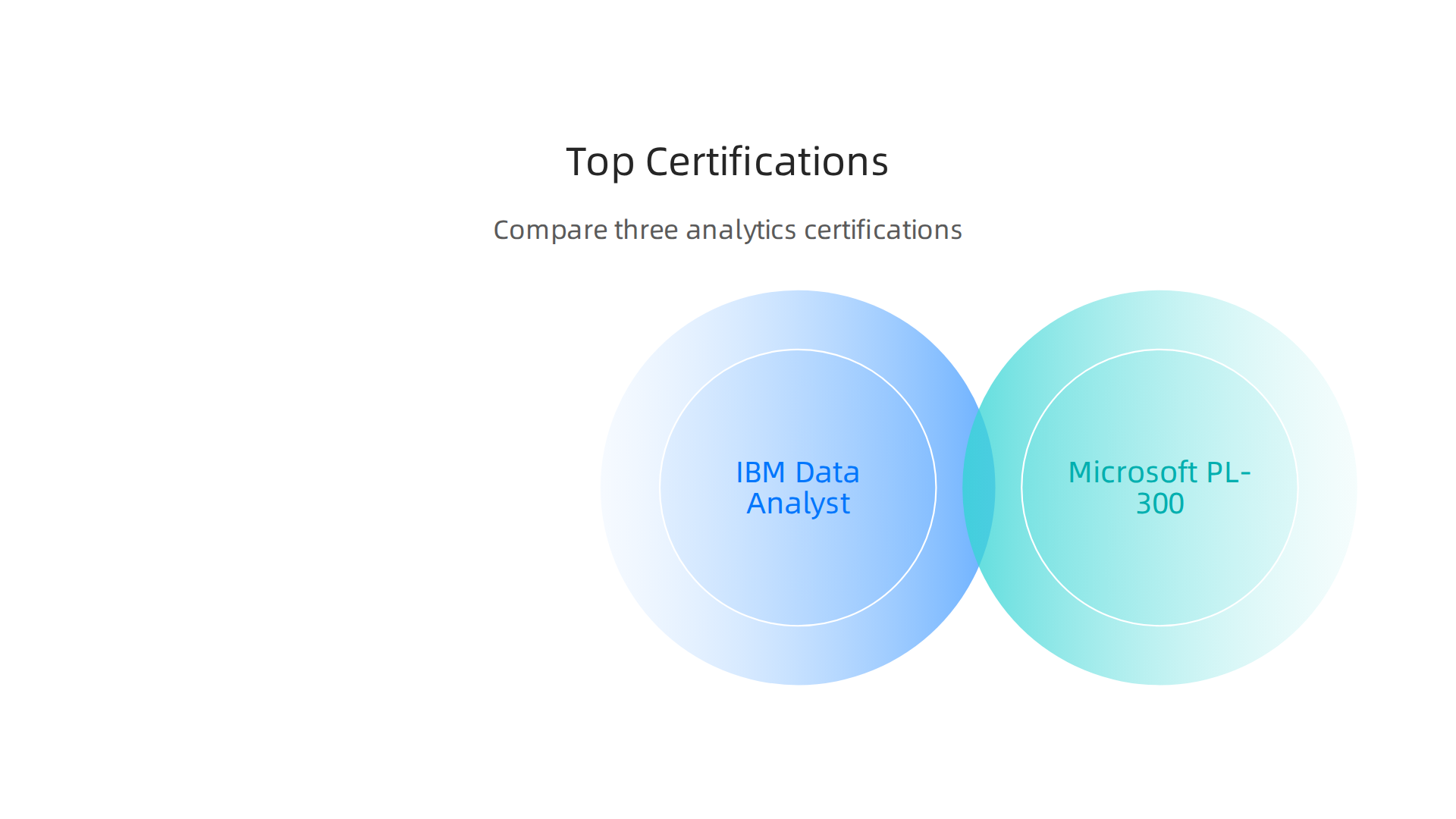
Here is a quick comparison to help you decide.
| Certification | Best For | Cost | Time | Level |
|---|---|---|---|---|
| IBM Data Analyst | Beginners who want Python | $39/month | 4 months | Beginner |
| Microsoft PL-300 | Corporate BI roles | $165 exam | 2-4 months | Intermediate |
| SAS Data Scientist | Banking, healthcare, government | $180 per exam | Variable | Intermediate/Advanced |
If you are unsure where to start, the 12 Best Data Analytics Certifications in 2026 guide from Dataquest breaks down all options with cost and time comparisons.
For a broader view of how these certifications fit into the AI landscape, check out our guide on top data analysis certifications 2026 for AI professionals.
No matter which path you choose, each of these credentials teaches real skills that employers want in 2026. The best certification is the one that matches your goals and gets you building projects you are proud to show.
Data Analytics Online Degrees: Top Programs
If you are serious about building a long career in data, a full degree might be the right move. Certifications like the Google Data Analytics Professional Certificate give you job ready skills fast. But a bachelor’s or master’s degree offers deeper theory, broader education, and often stronger networking opportunities. Let’s look at the best online degree programs for 2026.
Bachelor’s in Data Analytics Online
A bachelor’s degree is ideal if you are starting from scratch or want a four year credential. Online programs let you study from home while working.
Western Governors University (WGU) offers a respected online bachelor’s in data analytics. Tuition is around $3,875 per six month term, not per credit. That means you can finish faster and pay less. Most graduates complete the program in under three years. The degree covers SQL, Python, statistics, and data visualization. Check out the WGU online data analytics bachelor’s degree for full details.
Other strong bachelor’s programs include University of Richmond, Drake University, and Elon University. According to Hakia’s rankings of the best data analytics degree programs, these schools offer high graduation rates and strong median salaries. On campus programs can cost over $50,000 per year, so online options like WGU are much more affordable.
Master’s in Data Analytics Online
A master’s degree is great if you already have a bachelor’s and want to advance into senior roles like data scientist or analytics manager. Many top universities now offer affordable online master’s.
Georgia Tech’s Online Master of Science in Analytics (OMS Analytics) is one of the best values in higher education. Tuition is just $327 per credit hour for Georgia residents, $343 for U.S. students, and $360 for international students. The total program cost is around $11,772. That is incredibly low for a top 10 ranked program. You can explore Georgia Tech’s Online Master of Science in Analytics for admission details.
Boston University offers a Master of Science in Applied Data Analytics online at $567 per credit, totaling $18,144. University of the Potomac has a $450 per credit option. According to TechGuide’s list of top online master’s in data analytics programs, these are among the most affordable and respected programs in 2026.
If you prefer flexible payment, you can also browse online master’s and MSc data analytics degrees on Coursera from partner universities. Many programs allow you to pay by course.
For undergraduates, US News ranks the best undergraduate data science programs including UC Berkeley, Stanford, and MIT. These are mostly on campus, but some offer online courses.
Degree vs. Certification: Which One Is Right for You?
A certification like the Google Data Analytics Professional Certificate gives you specific job skills in a few months. A degree gives you a broader foundation in math, statistics, and critical thinking. Many employers value degrees for higher level positions. But if you need to start working quickly, a certificate is a great first step.
If you decide to go the degree route, you will also want to learn how to apply data skills practically. Our guide to mastering the data science process can help you bridge theory and real world work.
And to stay current with how AI is changing the data field, join Your Daily AI Shortcut for simple daily AI insights.
Whichever path you choose, investing in your data education is a smart move for 2026.
Data Analytics Certifications vs Degrees: Key Trade-offs
When you decide between a certification and a degree, the right choice depends on your career goals, budget, and timeline.

Let’s compare the main trade-offs.
Cost. A certification like the Google Data Analytics Professional Certificate costs around $35 per month on Coursera. Most people finish in about four months, so the total is roughly $150. A bachelor’s degree can cost $40,000 or more. A master’s degree ranges from $11,000 to $18,000 for affordable online options.
Time. Certifications take months. Degrees take years. If you need to start working quickly, a certification gets you job-ready skills fast.
Employer perception. Many hiring managers now accept certifications as proof of competence. According to BrainStation’s guide on whether you need a degree to be a data analyst, a four-year degree is no longer a strict requirement. Skills and a strong portfolio matter more. Still, some regulated roles or senior positions may prefer a degree.
For a deeper look at which credentials carry the most weight in 2026, check out our roundup of top data analysis certifications for AI professionals. It breaks down what employers in the AI space are looking for.
Cost Comparison
The previous section compared the general cost of degrees and certifications. Now, let’s focus specifically on the Google Data Analytics Professional Certificate and how its price tag compares to other options in 2026.
This program runs on a monthly subscription through Coursera. Most learners finish within six months. Financial aid is available directly through Coursera for those who need it, which brings the cost down significantly. You can read more about the program structure in Coursera’s own guide.
Looking at the wider market, certification costs vary. For a detailed breakdown of certification costs across different providers, the 2026 analysis on Dataquest shows that some exams cost as little as $165, while advanced credentials can exceed $600.
University data science degrees still cost much more. A data science degree online can easily run over $40,000. But degrees do open doors to some senior roles where a bachelor’s is preferred. You have to weigh that long-term cost against your career goals.
The key is to invest in the right training for the job you want. If you want to enter the field quickly without taking on debt, a certification is a solid path. To understand the career trajectory this can lead to, check out this resource on how to land a remote data analyst job in 2026.
Figuring out the best financial path in tech can feel overwhelming. But you don’t have to track all the trends alone. For a simple daily shortcut to the most important news and cost-saving tips in AI and tech, join The Deep View Newsletter. It makes staying informed easy.
Time Commitment
Time is another big factor in your decision. How quickly do you want to start working as a data analyst?
The Google Data Analytics Professional Certificate usually takes about six months. You study a few hours each week through Coursera. That is a short commitment for a career change. Data science bootcamps can be even faster, often finishing in three to four months.
Degrees take much longer. A bachelor’s degree in data analytics typically takes four years. However, some programs let you speed things up. For instance, this accelerated data analytics bachelor’s program at WGU can be completed in less than three years if you move quickly. Master’s degrees usually take one to two years, and you need a bachelor’s first.
The good news is you can start with a certification to get a job, then work toward a degree later if you want to move into senior roles. To explore other options that fit a tight schedule, take a look at this list of top data analysis certifications for 2026.
Employer Perception
How do employers actually view the Google Data Analytics Professional Certificate? The answer depends on the company and the role.
For many hiring managers, the certificate proves you have practical, hands-on skills. You have cleaned data in spreadsheets, written SQL queries, and built visualizations in Tableau. That matters more than ever in 2026. According to the CareerY guide to best data analyst certifications in 2026, 91% of employers say IT certifications play a role in hiring decisions. And for career changers with no prior data experience, the certificate fills a credibility gap fast.
At the same time, some industries still prefer degrees. Government agencies, healthcare organizations, and large financial firms often list a bachelor’s degree as a requirement. The BrainStation article on whether you need a degree to become a data analyst explains that many hiring managers have shifted to a skills first approach, but traditional sectors move slower.
Here is the reality: the certificate alone won’t land you the job. Employers want proof you can apply what you learned. That means pairing your certification with a strong portfolio of two to three real projects. For tips on how to build that portfolio and stand out, read this guide on how to land remote data analyst jobs in 2026.
Employer perception is also changing as AI reshapes data work. To stay ahead of what hiring managers value next, get a quick daily overview of AI trends by joining Your Daily AI Shortcut.
How to Choose the Right Path for Your Career
So you have learned how employers view the Google Data Analytics Professional Certificate. Now comes the real question: which path is actually right for you? The answer depends on three things: your current skills, your budget and timeline, and what the job market demands.
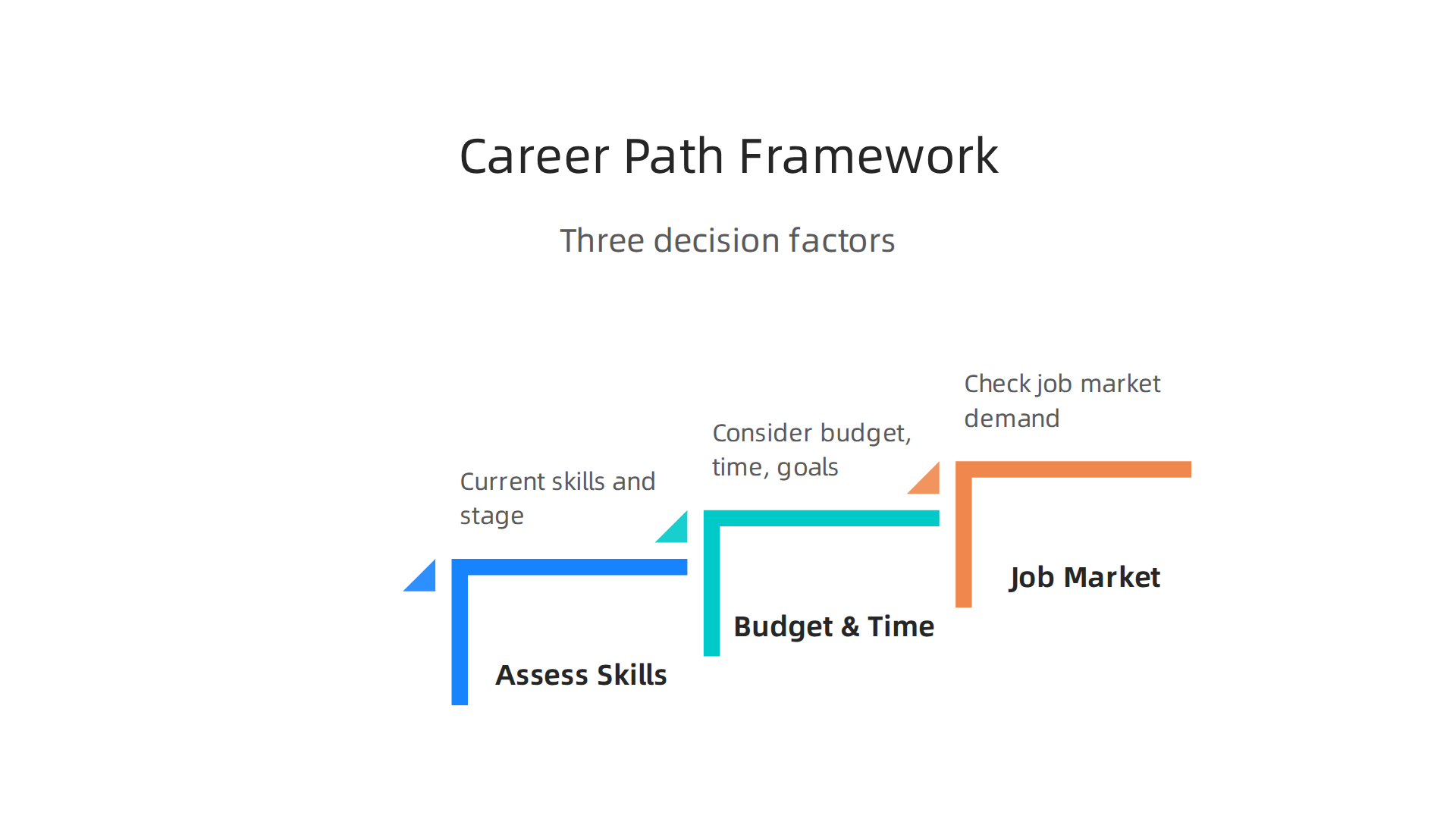
Assess your current skills and career stage.
If you are brand new to data, the google data analytics professional certificate is a great starting point. It requires no prior experience and teaches the fundamentals of SQL, spreadsheets, and Tableau. If you already know some programming, a data science bootcamp might help you level up faster. And if you are aiming for roles that require deep statistical knowledge or a research background, a data science degree online could be a better fit. Think about where you are today. Are you a complete beginner? The certificate works. Do you have a few years of experience? A bootcamp or advanced certification may skip the basics.
Consider budget, time, and long-term goals.
The Google certificate costs roughly $50 per month on Coursera and takes three to six months to finish. That is why it is often called the best bang for your buck among entry level credentials. On the other hand, a coursera data analytics certificate from a university can cost more but may carry extra weight in traditional industries. A data science bootcamp typically runs between $10,000 and $20,000 and lasts 12 to 24 weeks. A degree takes two to four years and costs far more. So match your financial situation and your career timeline. If you need a job fast, the certificate gives you a solid foundation quickly. If you are planning for a long academic path, a degree might serve you better.
Use job market data to identify required credentials.
In 2026, the demand for data professionals is still strong. According to the StackFuel article on the best data analytics certifications in 2026, 149,000 IT jobs are unfilled in Germany alone and the need for data experts continues to grow across industries. But not all credentials are valued equally. The LinkedIn post on top data analytics certifications for the 2026 job market lists the Google Data Analytics Certificate alongside Microsoft and AWS certifications as a top choice for employers. Look at the job postings in your target industry. Do they ask for a degree? A certification? Both? That will tell you which path to prioritize.
In the end, the right choice matches your personal situation. For a deeper look at which data credentials carry the most weight this year, check out this guide to top data analysis certifications 2026 for AI professionals.
Career Outcomes: What Employers Look For in 2026
You have put in the work and chosen your path. Now comes the real test: what do hiring managers actually want to see in 2026?

Let’s break down the skills, credentials, and education that open doors.
Top skills employers demand
Every job posting for data analysts asks for a similar set of technical skills. SQL is non-negotiable. Python comes next, especially for cleaning data and building simple models. Data visualization tools like Tableau or Power BI are also standard. And machine learning basics are now expected even for entry-level roles. If you have the google data analytics professional certificate, you already learned SQL, spreadsheets, and Tableau. That gives you a solid head start.
Certifications matter more than ever
More job listings now list certifications as a preferred or required qualification. According to the article on best data analyst certifications in 2026, certifications are most valuable for career changers and entry-level candidates because they fill a credibility gap. The Google Data Analytics Professional Certificate is listed as the best starting point for beginners. Hiring managers use credentials to quickly check that you have completed structured training and can handle the basics.
Degrees still open doors for senior roles
For entry-level and mid-level jobs, a four-year degree is no longer a strict requirement. The guide on whether you need a degree to be a data analyst confirms that employers now prioritize skills and portfolios over formal education. However, for senior positions, leadership tracks, and regulated industries, a degree still carries weight. If you plan to move into management or data science later, consider pairing your certificate with a degree over time.
The key takeaway: in 2026, the strongest candidates combine a certification like the Google Data Analytics Professional Certificate with a portfolio of real projects and a willingness to keep learning. Because AI tools and techniques change fast, staying informed is a job requirement in itself. Read up on why data specialists are more critical than ever in the age of AI to see how your role is evolving. And if you want simple daily updates on AI trends that affect data professionals, join The Deep View Newsletter for simple daily AI insights.
Next Steps: Getting Started with the Google Data Analytics Certificate
You have read about the job market and know what employers want. Now it is time to take action. Here is a simple three-step plan to begin.
Step 1: Enroll and use the free trial
Head over to Coursera and sign up for the program. You get a seven-day free trial before any payment is due. That gives you plenty of time to explore the first course and decide if it fits your style. After the trial, the Google Data Analytics Professional Certificate on Coursera costs about $49 per month. Most learners finish in three to six months, so your total cost lands between $150 and $300. That is far less than a data science bootcamp or a degree.
Step 2: Create a study schedule and join a community
The program is self-paced, which is great for flexibility but also easy to put off. Set a realistic schedule. Even ten hours per week lets you finish in under six months. Pick a consistent time, maybe early mornings or weekend blocks, and stick to it.
You do not have to go it alone. Join online communities on Reddit, Discord, or LinkedIn where other learners share tips, ask questions, and post wins. Having a study buddy or a group keeps you accountable when motivation dips.
Step 3: Build portfolio projects as you learn
The certificate includes hands-on activities and a final capstone project. Do not just complete them to pass. Polish them up and add them to your portfolio. Hiring managers want to see real work, not just a credential. Each project shows you can clean data, run analysis, and present findings.
For more details on how this certificate compares to other credentials, check out the overview of top data analysis certifications in 2026. Then take that first step. Enroll today, use the free week, and start building the skills that open doors.
Summary
This article compares the Google Data Analytics Professional Certificate with other certifications and online degree options to help beginners choose the fastest, most affordable route into data work. It explains what the Google certificate teaches, its hands‑on capstone, price (about $49/month on Coursera), and realistic job outcomes, while also profiling strong alternatives—IBM, Microsoft (PL‑300), and SAS—and online degree programs like WGU and Georgia Tech. You’ll get a clear cost, time, and employer‑perception comparison between short certificates, bootcamps, and multi‑year degrees, plus practical advice on building a portfolio and using the certificate as a launchpad. The guide finishes with a simple three‑step plan to enroll, stay accountable, and create projects that hiring managers actually value. Readers will finish knowing which credential best fits their budget, timeline, and target roles—and what concrete next steps to take to get hired.