

Introduction
The explosion of AI investment opportunities in 2026 is both exciting and overwhelming. Every week brings a new model launch, a fresh funding round, or a breakthrough that could reshape entire industries. If you are an investment analyst or just someone trying to build wealth with technology stocks, the sheer volume of hype can make smart decisions feel impossible.
That is where factor investing comes in.
Factor investing is not a new idea. It dates back decades and is grounded in academic research. Simply put, it is an approach that targets measurable characteristics of securities, known as factors, to explain differences in risk and return. Instead of guessing which AI stock will be the next winner, you focus on persistent traits like value, momentum, quality, and low volatility. These factors help you cut through the noise and build a portfolio based on evidence, not headlines.
Think of it as investing 101 for the AI age: rules that have worked for generations now applied to the most dynamic sector in the market. Whether you are a seasoned pro or just starting your investing thesaurus of strategies, factor-based thinking gives you a clear edge.
In this article, we provide a research-backed blueprint for applying factor investing to AI. You will learn the key factors that matter most, how to build and test your own factor models, ways to manage risk in a volatile landscape, and what the future holds for this systematic approach.
To get started on the right foot, check out our guide to screening AI stocks with Zacks Investment Research — a practical first step for any factor-based strategy.
And if you want to stay ahead of the daily AI news cycle that influences which factors are hot, join Your Daily AI Shortcut. It is a simple newsletter that delivers the most important AI insights straight to your inbox so you never miss a shift in the market.
What Is Factor Investing in the AI Era?
Let’s get back to basics for a moment. Factor investing is a way to build a portfolio by focusing on specific traits that have historically led to better returns. These traits are called factors. According to the factor investing approach, it targets measurable characteristics of securities that help explain differences in risk and return.
The most common factors include value (buying cheap stocks), momentum (stocks that are rising), quality (companies with strong finances), low volatility (stable stocks), and size (smaller companies).
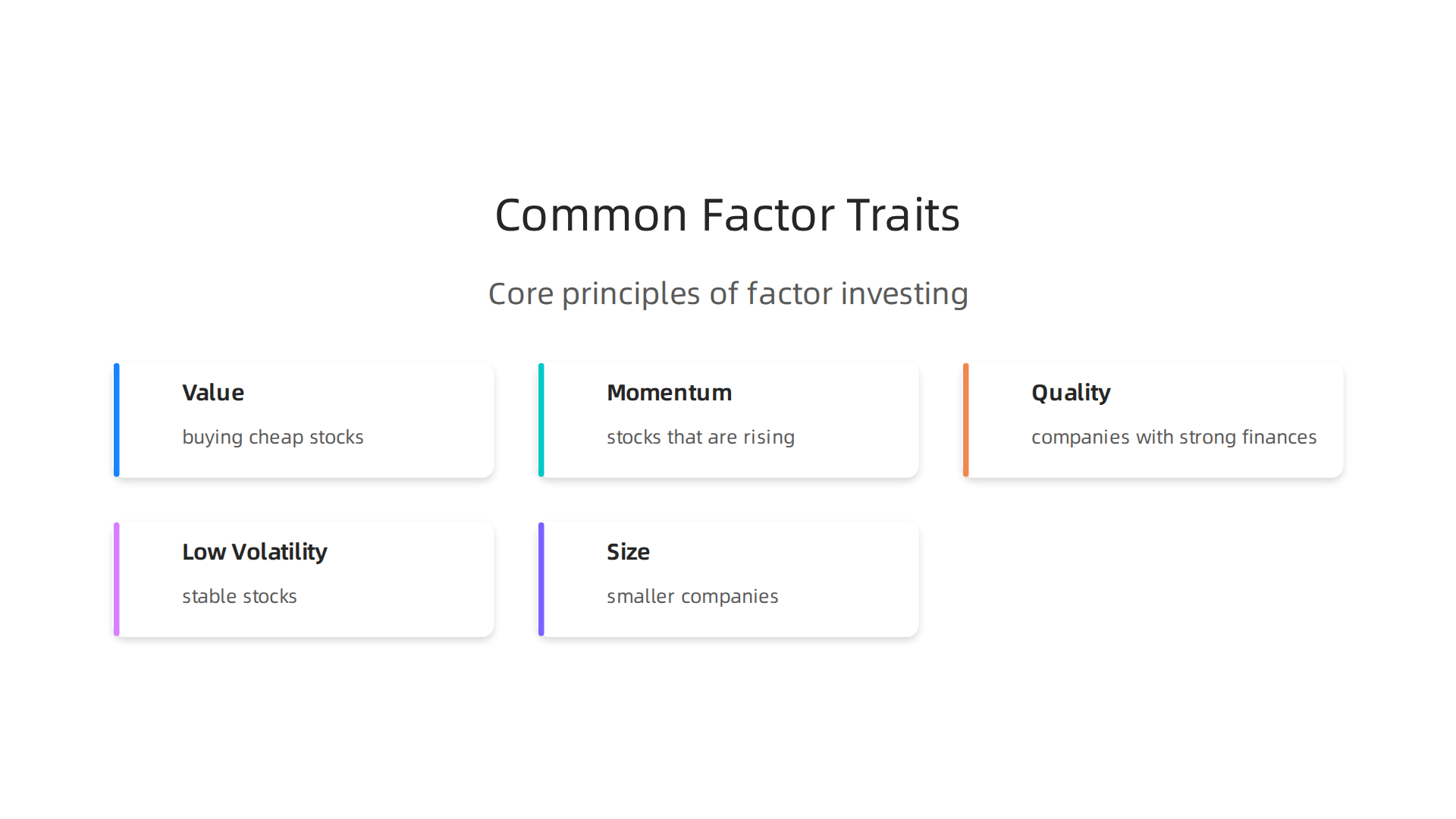
Each factor has a solid research history showing it can beat the market over time when used correctly.
Now here’s where it gets interesting for AI investors. Traditional factor investing uses older, static data like price-to-earnings ratios or quarterly earnings. But in 2026, AI lets us find new factors much faster. Machine learning can scan millions of data points in seconds. Things like social media sentiment, patent filings, or even the tone of earnings calls. This is called alternative data, and it is changing factor discovery completely.
Instead of waiting for financial reports, AI-enhanced models can pick up signals in real time. For example, a spike in positive sentiment about a new AI model might become a momentum signal weeks before the stock price moves. That is the power of combining factor investing with modern AI tools.
To understand which companies are leading these innovations, check out our guide to tracking AI innovators what business leaders must know in 2026. It helps you spot the movers and shakers behind the next wave of factor opportunities.
The bottom line: factor investing is not just about old-school metrics anymore. In the AI era, it becomes a living, breathing system that adapts to new data. And if you want to stay ahead of the signals that drive these factors, Your Daily AI Shortcut delivers the most important AI insights every day so you never miss a shift.
Key AI-Powered Factors Driving Returns in 2026
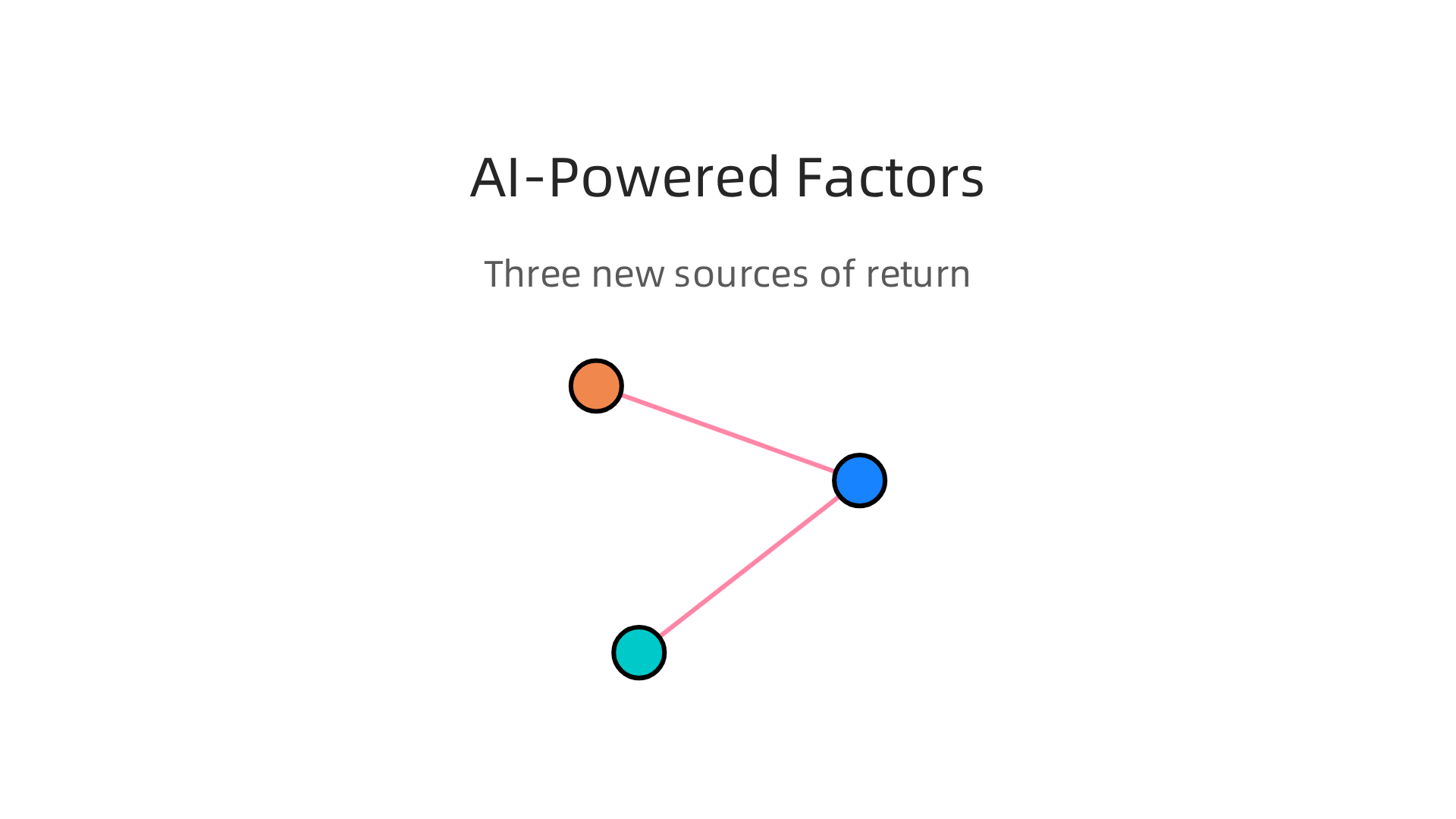
Now that you understand how AI transforms factor investing, let’s look at the specific factors that are working best this year. These aren’t the same old value or size factors your parents used. In 2026, AI gives us three powerful new ways to find returns that traditional models miss.
Momentum Factor Enhanced by AI
Momentum has always been about buying stocks that are already rising. But old momentum models relied on price data from the last 6 to 12 months. That’s slow. Today, AI scans news articles, social media posts, and even Reddit threads in real time. A machine learning model like gradient boosting can detect a trend forming long before the stock price moves. For example, a sudden spike in positive chatter about a company’s new product. The model flags that as a momentum signal. Studies show that using alternative data this way greatly improves prediction accuracy. The gradient boosting machine learning approach is a common backbone for these systems. By combining thousands of weak signals into one powerful trend detector, AI momentum factors give you a real edge.
Quality Factor Redefined
Quality used to mean looking at return on equity or debt ratios. That still matters, but AI takes it much deeper. Now, natural language processing can read earnings call transcripts, 10-K filings, and corporate governance documents. It looks for subtle signs like the tone of management’s language, changes in risk disclosure wording, or hidden liabilities buried in footnotes. This unstructured data reveals quality traits that numbers alone miss. A company might look solid on paper but have red flags in how executives talk about future earnings. AI catches that. It redefines quality as a dynamic, real-time assessment rather than a static checklist.
Sentiment Factor: Reading the Room
The third big factor is sentiment. Markets move on emotion as much as on fundamentals. AI uses natural language processing to measure the mood of investors, analysts, and the media. It scans thousands of news headlines, earnings call Q&A sessions, and SEC filings every day. Then it scores overall sentiment positive, negative, or neutral. When sentiment suddenly turns sour on a stock, the model may signal a short-term drop. When sentiment improves, it could mean a buying opportunity. This factor works especially well when combined with momentum, because strong sentiment often reinforces a trend. Investment analysts use this to validate their own hunches.
If you want to spot the companies leading these AI factor breakthroughs, check out our coverage of the 8 fastest-growing AI companies reshaping industries in 2025. These are the firms building the tools that drive modern factor strategies.
The takeaway: AI-powered momentum, quality, and sentiment factors give you signals that human analysis alone can’t match. They make factor investing smarter, faster, and more responsive to today’s markets.
Step 1: The Data Pipeline
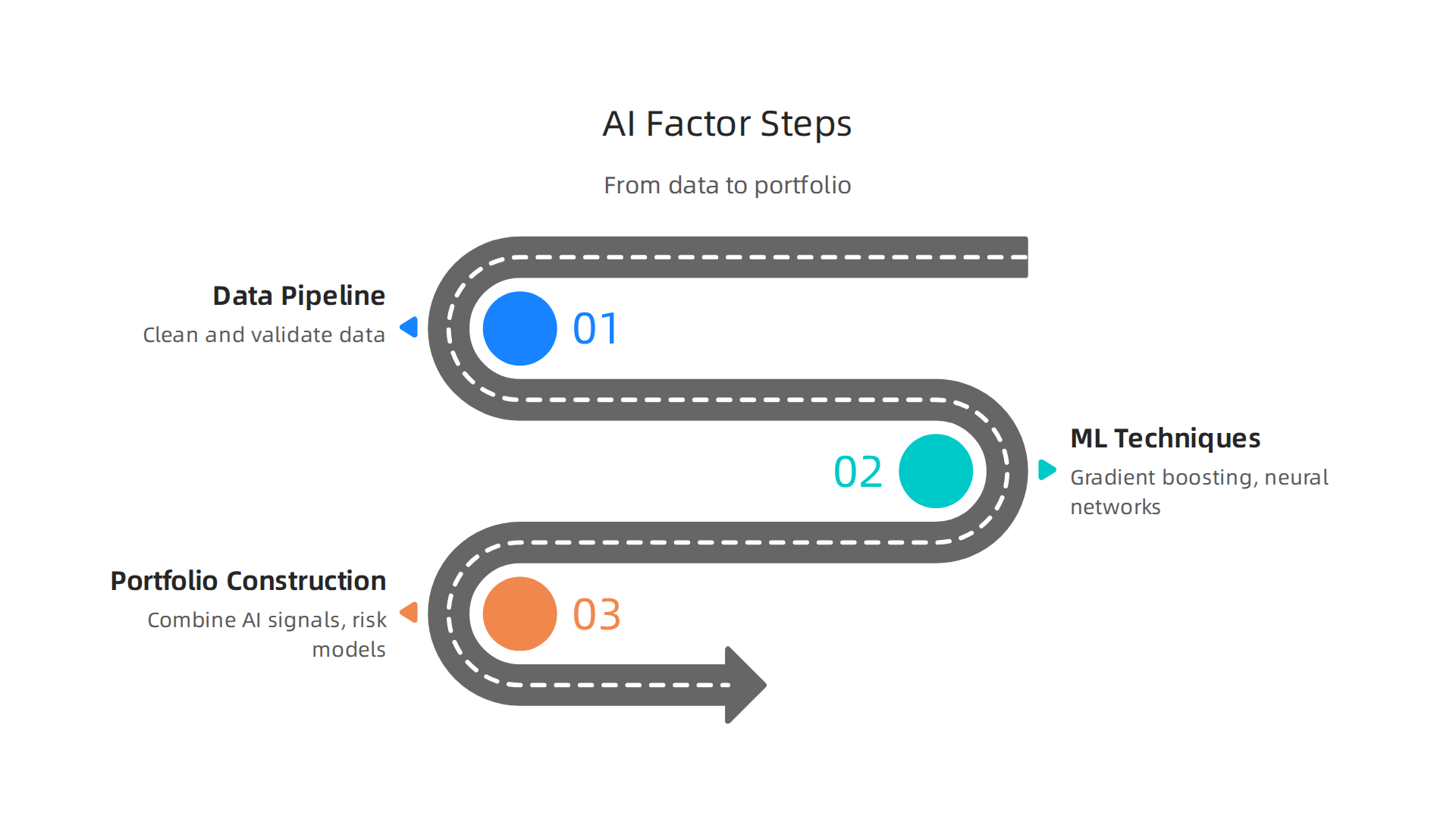
Traditional factor investing used clean, structured data like stock prices and earnings reports. AI models need much more. They feed on alternative data. Things like satellite images of store parking lots, web scraping of product prices, and transaction data from credit cards. But raw data is messy. You have to clean it, fill in missing values, and make sure the signals are real. This step takes time, but it matters most. Garbage in means garbage out, no matter how smart your model is.
Step 2: Machine Learning Techniques
Once the data is ready, you choose a machine learning method. Two of the most popular for factor investing are gradient boosted trees and neural networks. Gradient boosting is an ensemble learning algorithm that combines many weak models into one strong predictor. It is great for tabular data and works well with messy, real world information. For a clear explanation of what gradient boosting is, check out this resource from IBM. It shows how the algorithm learns from its mistakes over and over until it gets really accurate.
Neural networks are another option. They are better at spotting complex patterns in huge datasets, like satellite images or social media text. But they take more computing power and data to train well. Many investment teams use both methods together. They let gradient boosted trees handle the structured financial data while neural networks process the unstructured text and images.

This combo gives the best of both worlds.
If you want to learn more about building data systems for these models, read this guide to mastering the data science process. It walks through each step from raw data to working model.
Step 3: Portfolio Construction
Now you have AI factor scores for hundreds or thousands of stocks. What next? You cannot just buy every stock with a high momentum score. You need to build a real portfolio. This means combining your AI signals with traditional risk models. You have to think about diversification, sector exposure, and how much risk you are willing to take. Optimization algorithms help you pick the right mix. They balance the AI factor signals against constraints like keeping your portfolio not too heavy in one industry or one type of stock.
The goal is a portfolio that captures the return potential of AI factors while staying safe and balanced. It takes a blend of data science and old school investing know how.
Staying on top of these fast moving developments is tough. That is where getting a daily dose of curated AI news helps. Join The Deep View Newsletter for simple daily AI insights delivered straight to your inbox. It keeps you informed without the noise.
Risk Management with AI Factor Models
Building AI factor models sounds exciting. But here is the catch: these models can easily fool you. The biggest risk is overfitting. Overfitting happens when your model learns the training data too well, including random noise and weird patterns that don’t repeat in the real world. The model looks amazing on paper but fails when you use it on new data. For factor investing, overfitting is dangerous because you might think you have found a real profit signal when actually you just memorized past luck.
Why is overfitting so common in AI factor models? Two reasons: high dimensionality and data snooping. High dimensionality means you have way more input variables than you have data points. With hundreds of alternative data features, your model can find fake correlations just by chance. Data snooping happens when you test many different factor definitions on the same dataset until one works. That result is not real. It is just statistical noise. This problem is well known in machine learning. You can read more about what overfitting is and why it matters in this detailed explanation from TDWI.
So how do you protect yourself? Smart investment analysts use several techniques together.
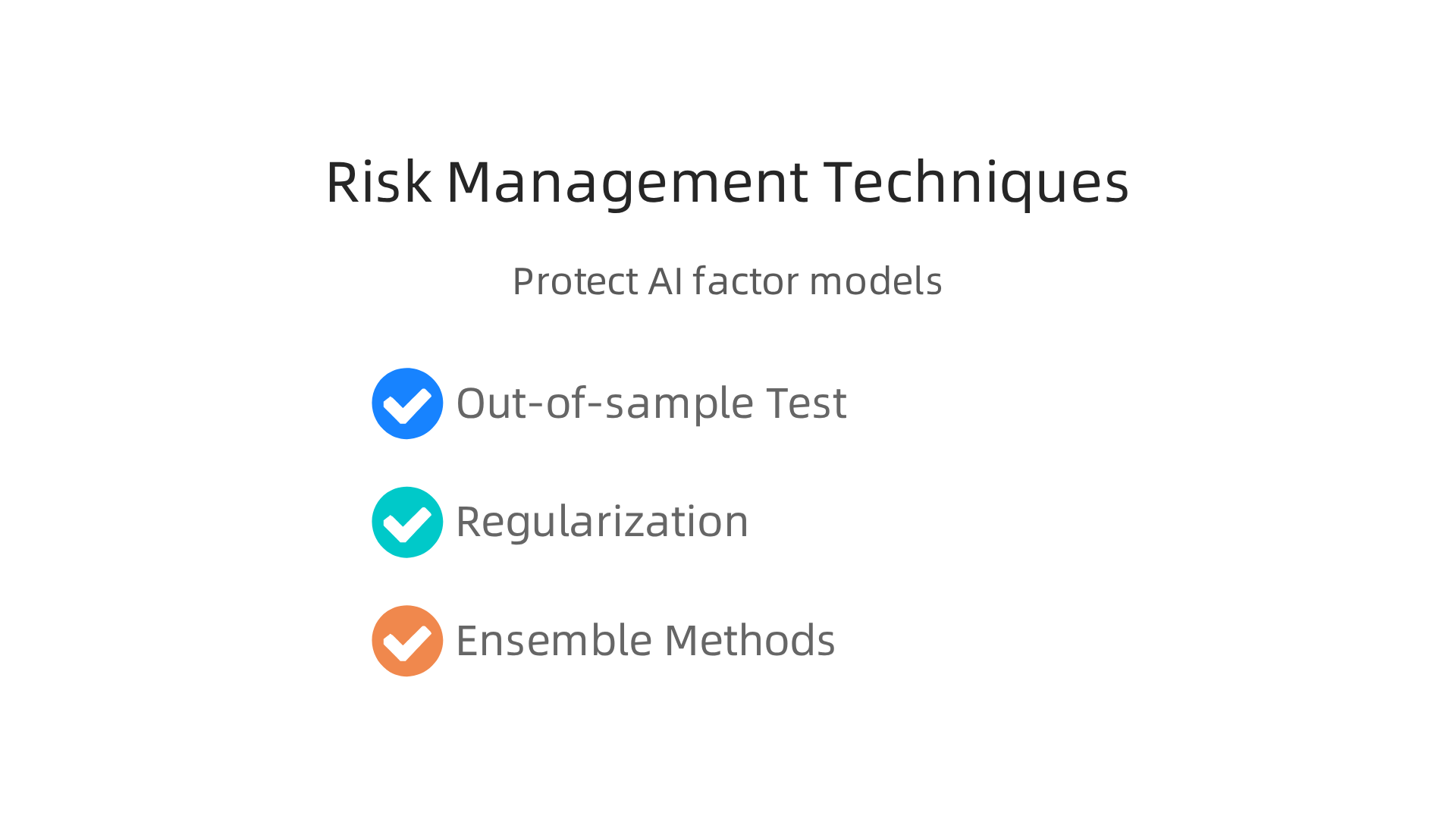
First, out-of-sample testing. You split your data into three parts: training, validation, and a final test set that you never touch until the very end. If your model only performs well on the training set but poorly on the test set, you have overfitting. This is the classic check.
Second, regularization. Techniques like L1 and L2 regularization punish the model for using too many features. They force the model to be simpler and more general. You can think of it as giving the model a gentle pressure to not get too attached to any one signal.
Third, ensemble methods. Instead of relying on one model, you combine predictions from many models. Gradient boosted trees already do this internally. But you can go further by averaging models trained on different subsets of data or different time periods. Ensembles smooth out the noise and give more stable factor scores.
Beyond building the model, real-time risk monitoring is critical. Factor regimes change. A momentum factor that worked last year might reverse tomorrow. AI can help detect these shifts early. You can set up monitoring dashboards that track factor performance over rolling windows. If a factor suddenly stops working, the system alerts you to reduce exposure or hedge the risk. Some advanced teams even use AI to predict regime changes by analyzing market conditions and news sentiment. This lets them adjust factor exposures before the loss hits.
Staying sharp on these risk management practices separates a durable factor investing strategy from a house of cards. If you want to explore how to screen for investments using AI tools, check out this guide on how to screen AI stocks with investment research. It gives you a practical starting point for building a disciplined process.
Performance Evidence: What the Data Says About AI Factor Investing
Now that you know how to manage risks, let’s look at the actual performance data. Does AI factor investing really deliver better results than traditional methods? Here is what the evidence shows.
Several empirical studies in 2026 have compared AI-driven factor strategies to standard factor ETFs. The results are compelling but come with important caveats. On average, AI factor models have posted higher Sharpe ratios than traditional value or momentum ETFs. The Sharpe ratio measures risk-adjusted return. A higher number means you are getting more return for each unit of risk you take. Many AI models also show lower maximum drawdown. That is the biggest drop from a peak to a trough. Lower drawdown means the strategy holds up better during market crashes.
Another key metric is the information ratio. This tells you how much extra return the AI strategy generates compared to a benchmark, per unit of tracking error. Top AI factor models often report information ratios above 0.5, which is considered strong. Traditional factor ETFs rarely beat that number.
But here is the catch: you cannot just look at one study. Overfitting can make a model look amazing on paper but fail in live trading. Always check confidence intervals. If a study reports a Sharpe ratio of 1.2, ask if the 95% confidence interval includes zero. If it does, the result is not statistically reliable. You can read a clear explanation of overfitting from AWS to understand why this matters.
Performance persistence is also critical. A factor strategy that works for one year might fade the next. The best AI factor models show persistence over multiple market cycles, not just one bull run. Researchers use techniques like walk-forward analysis to test whether the performance holds up across time.
For investment analysts, the message is clear: AI factor strategies can offer real advantages, but only if you validate the evidence properly. If you want to build these skills, start by mastering the data science process. And to stay updated on the latest AI investing research, check out Your Daily AI Shortcut. It delivers simple daily insights straight to your inbox.
Implementing AI Factor Strategies: A Practical Guide for Institutions and Individuals
Once you have validated the evidence and built your core skills, the next step is putting AI factor investing into action. The right path depends heavily on whether you are an institution or an individual investor.
For Institutions: Build or Outsource?
Large institutions like pension funds and asset managers face a big decision. You can build an in-house team of data scientists and quantitative analysts, or you can outsource to a specialized quantitative asset manager.

Building in-house gives you total control, but it comes with high costs for talent, data feeds, and computing power. A report from CPP Investments shows that successful institutional adopters focus on strategic talent planning and creating a test-and-learn culture. They start small with minimal viable products instead of trying to transform everything at once. If you are thinking about building, read more about how to choose the best enterprise AI platform for your organization to set up the right technology foundation.
Outsourcing to an established quant firm can be faster and cheaper upfront. Many firms now offer AI-driven factor strategies as separate managed accounts. The downside is less transparency and less customization. You must also carefully check the provider for overfitting, just like you would with your own model.
For Individuals: ETFs and Robo-Advisors
Individual investors do not need a data science department. Several AI-focused factor ETFs are now available that use machine learning to pick value, momentum, or quality stocks. Robo-advisors are also starting to include AI factor models in their portfolios. Research from the Ontario Securities Commission shows that retail investors tend to get better results when they blend AI suggestions with their own judgment. This human-plus-machine approach helps you stay disciplined during volatile markets.
Common Pitfalls to Watch For
No matter your size, watch out for three common traps. First, data costs. Clean, high-quality data feeds are expensive, especially for alternative data like satellite imagery or credit card transactions. Second, latency. If your model takes too long to process, the market can move before you execute a trade. Third, regulatory concerns. Regulators worldwide are focused on fairness and transparency in AI investing. The Alliance Bernstein guide for asset managers stresses that you must balance automation with human oversight to stay accountable.
Start small, test often, and keep learning. That is the real secret to successful implementation.
Future Trends: The Next Generation of AI Factors
AI factor investing is not standing still. The tools, data sources, and models are evolving fast. If you want to stay ahead, you need to know what is coming next.

Let us look at three big trends that will shape the future of factor investing.
Alternative Data Is Exploding
Traditional factors use price and financial statement data. The next generation of factors will use data you would not expect. Think geolocation signals from mobile phones, weather patterns that affect crop yields, and supply chain shipping data that tells you which retailers are stocking up.
This shift is already happening. A recent report shows that three-quarters of buy-side firms now use non-traditional data in their research, and nearly two-thirds plan to increase spending on alternative data in the next year. The main reason is the rise of AI tools that can make sense of these large, messy datasets. As one industry analysis puts it, the growth in the alternative data market, which is projected to reach $276.9 billion by 2033, is fueled by AI and machine learning technologies that help investors extract actionable insights from data sources like web traffic, satellite imagery, and credit card transactions.
For the investment analyst, this means new factors are becoming available. A factor based on foot traffic data can predict retail earnings before the company reports. A factor based on supply chain data can spot production bottlenecks weeks ahead of a competitor.
NLP and Generative AI Unlock Sentiment
Large language models are changing how investors read the news. Instead of just counting how many times a stock is mentioned, these models can understand tone, sarcasm, and context. They can read hundreds of analyst reports, earnings call transcripts, and social media posts, then score the overall sentiment for each company.
This is a big upgrade for factor investing. Sentiment analysis has always been a useful factor, but older methods were noisy. GPT-like models produce much cleaner signals. Hedge funds are already using these tools to adjust their portfolios in real time based on shifts in public perception. The ability to react faster to market-moving news gives them a real edge.
AI Models That Rotate Factors on Their Own
Here is where things get really interesting. Instead of picking one factor and sticking with it, reinforcement learning models can watch the market and switch between factors as conditions change. When momentum is strong, the model leans into momentum. When the market turns volatile, it shifts toward low volatility or quality factors.
These models learn from trial and error. They get better over time. For anyone serious about factor investing, this is the frontier. You do not have to predict which factor will work next. You let the AI figure it out and adjust automatically.
If you want to stay on top of these fast-moving trends, a great place to start is following trusted sources that cut through the noise. The Your Daily AI Shortcut delivers simple daily insights that help you understand what these advances mean for your own strategy.
The future of factor investing is here. It is faster, smarter, and more data-driven than ever. The question is whether you are ready to adapt.
Common Pitfalls in AI Factor Investing and How to Avoid Them
Using AI for factor investing is exciting. But it is also easy to fall into traps that can cost you money. Let us look at three common mistakes and how to avoid them.
Overfitting and Survivorship Bias
This is the biggest trap. Overfitting happens when your model learns the past noise instead of the true signal. It performs great on historical data but fails in the real world. Survivorship bias makes it worse. If you only test on companies that are still around today, you miss the ones that failed.
How do you avoid this? Always use out-of-sample testing. Walk-forward analysis is your friend here. A great resource on managing these model risks is the CFA Institute’s AI in asset management book. It covers how to balance automation with human judgment and evaluate new types of model risk.
Ignoring Transaction Costs and Capacity
A factor can look amazing in a backtest. But when you try to trade it in the real market, the costs eat all your returns. Small-cap factors and high-turnover strategies are especially dangerous. Every time you buy or sell, you lose a little bit. Over many trades, those bits add up fast.
The fix is simple. Model your transaction costs honestly. Include slippage, commissions, and market impact. A factor must beat these costs to be worth your time.
Lack of Factor Diversification
It is tempting to put everything into one factor that has been working well. But factors can fall out of favor for years. If you concentrate too much on one style, you can suffer long drawdowns.
The solution is to combine factors that do not move together. Pair a momentum factor with a value factor or a low volatility factor. Diversification smooths your ride and protects you from big losses. The Ontario Securities Commission published an AI and retail investing report that shows how AI tools can guide better decisions around portfolio diversification and risk management.
Staying on top of these challenges means constantly learning and testing your assumptions. If you want to dig deeper into how data quality affects your models, check out this guide on data specialists in the age of AI. It shows you why the human element still matters, even in an AI-driven world.
Summary
This article offers a practical, research-backed blueprint for applying factor investing to AI-era markets, showing how traditional factors (value, momentum, quality) are transformed by AI and alternative data. It walks through the full process—from building a clean data pipeline and choosing machine-learning methods (gradient boosting, neural nets) to constructing diversified portfolios and monitoring live risk. You’ll learn how AI enhances momentum, quality, and sentiment signals, why overfitting and data snooping are the biggest hazards, and which validation techniques (out-of-sample testing, regularization, ensembles) reduce model risk. The piece also reviews empirical performance evidence, implementation choices for institutions and individuals, cost and regulatory traps, and near-term trends like NLP improvements and factor-rotating reinforcement learners. After reading, you should be able to evaluate AI factor signals, set up basic validation checks, and decide whether to build, buy, or use ETF/robo options for exposure.