

Introduction
Picture this: instead of sending every piece of data to the cloud and waiting for a response, your device thinks for itself. That is edge AI in a nutshell. And in 2026, it is no longer a futuristic concept. It is happening right now, in your smartphone, your car, and even the factory floor down the street.
So what is edge AI exactly? Simply put, it is artificial intelligence that runs directly on local devices rather than relying on distant cloud servers. This shift from cloud-based to on-device intelligence brings two huge benefits: speed and savings. When your device processes data locally, there is no lag from sending information back and forth. That means real-time decision-making becomes possible. Your smart thermostat adjusts the temperature instantly. Your self-driving car brakes the moment it detects a hazard.

No waiting. No buffering.
The numbers tell the story of just how fast this market is growing. According to one recent analysis, the global market is expected to reach around USD 165 billion by 2035. That is a compound annual growth rate of over 20% between 2026 and 2035. What is driving this explosion? Two big factors. First, the number of Internet of Things (IoT) devices keeps climbing every year. Second, new AI chipsets are getting cheaper and more powerful, making on-device intelligence practical for almost any gadget.
But there is more to edge AI than just speed and cost savings. It also tackles privacy head-on. When your data never leaves your device, there is less risk of a breach. That matters a lot for industries like healthcare, finance, and manufacturing where sensitive information is everywhere.
Of course, edge AI is not a single technology. It covers everything from tiny chips that run lightweight machine learning models to full-blown LLM AI systems optimized for local use. Tools like deepsearch AI and notes AI are already showing what is possible when intelligence lives on the edge.
This article will give you a complete, evidence-based look at edge AI in 2026. We will cover the core technologies that make it work, the leading tools available today, real-world applications you can use right now, and the trends shaping where this field is heading next. If you want to stay ahead of the curve, this is your starting point.
And if you want daily updates on breakthroughs like edge AI and other fast-moving AI developments, consider subscribing to a trusted source. The field moves fast, and staying informed is the best way to stay competitive. That is exactly what the Your Daily AI Shortcut delivers: simple, practical insights straight to your inbox every day.
Let us dive in.
What Is Edge AI and Why It Matters in 2026
Let’s get more specific about what edge AI actually means. At its core, edge AI is the practice of running artificial intelligence algorithms directly on a local device instead of sending data to a remote cloud server. That device could be your smartphone, a smart camera, a sensor on a factory machine, or even a drone. According to a detailed guide on the topic, edge AI enables devices to run models locally, providing real-time insights and automated actions close to the source. This approach drastically reduces round-trip latency and enhances responsiveness for time-critical applications.
So what makes this shift so important in 2026? Three big reasons stand out.
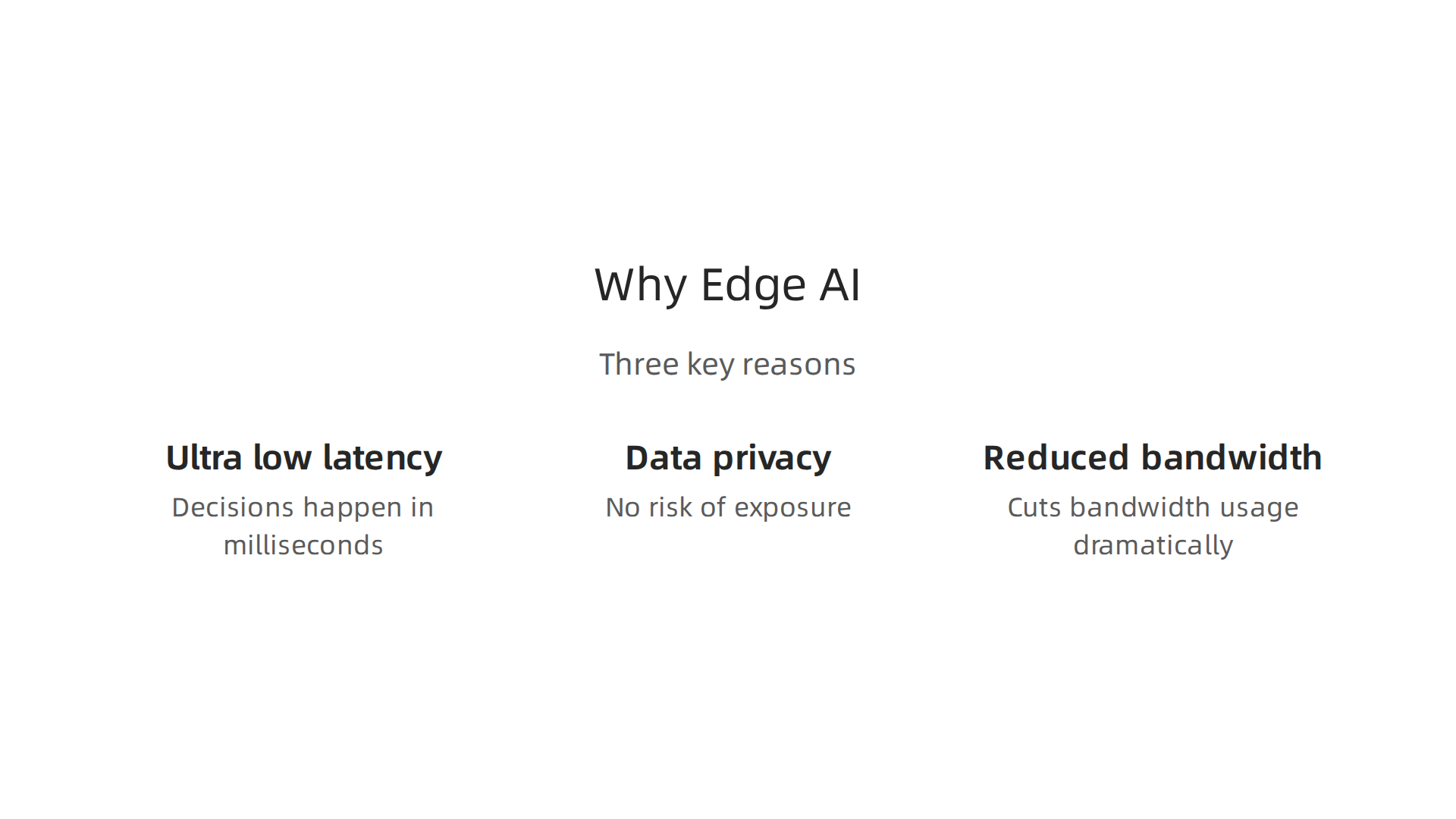
Ultra-low latency. When your device doesn’t have to wait for data to travel to a cloud server and back, decisions happen in milliseconds. For an autonomous vehicle, that delay could mean the difference between a safe stop and a collision. For a surgical robot, it means instant adjustments that protect a patient. This real-time capability is a game changer.
Data privacy and offline operation. When your data never leaves your device, there is no risk of exposure during transmission or storage on a third-party server. That is huge for industries handling sensitive information, like healthcare records or financial transactions. Plus, edge AI works perfectly without an internet connection. Your smart factory keeps running even if the network goes down.
Reduced bandwidth costs. Sending every video feed, sensor reading, or audio clip to the cloud costs money. Edge AI processes most of that data locally and only sends important summaries or alerts to the cloud. That cuts bandwidth usage dramatically.
In 2026, these benefits are driving critical adoption in three areas. Autonomous vehicles rely on edge AI for split-second decisions like braking and lane changes. Industrial robotics use it for real-time quality control and predictive maintenance on the factory floor. And real-time health monitoring systems, from wearable ECG patches to hospital vital sign monitors, depend on edge AI to detect problems instantly and alert caregivers without cloud lag. As the field expands, on-device intelligence is becoming a standard feature across new hardware, including smartphones and smart home devices.
Core Technologies Powering Edge AI
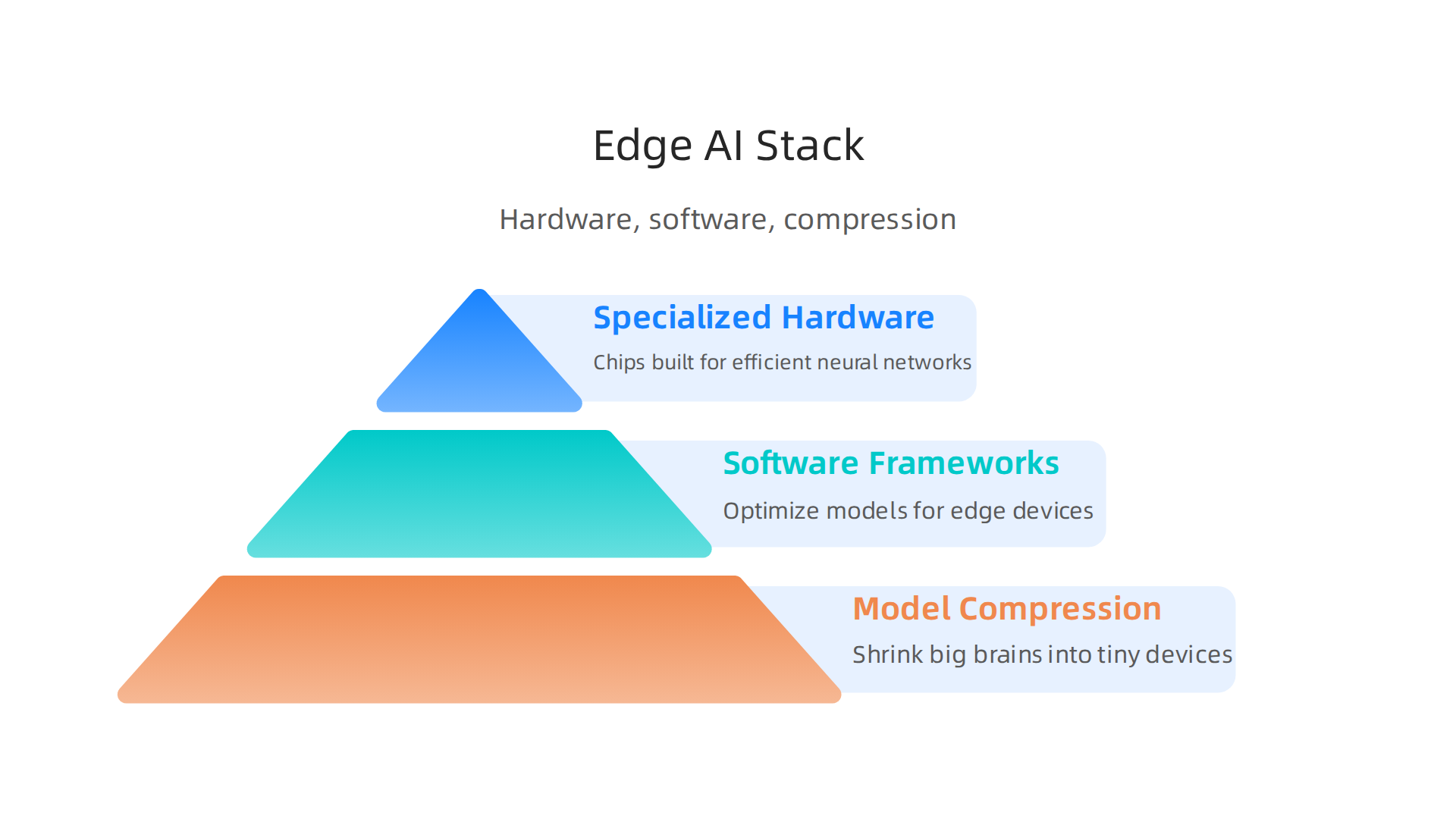
So what actually makes edge AI possible? It is not just one thing. It takes a careful mix of specialized hardware, smart software, and clever compression tricks to run powerful models on tiny, low-power devices. Let’s look at the three layers that make this work.
Specialized Hardware: Built for the Edge
General-purpose CPUs are too slow and too power hungry for most edge AI workloads. That is why the industry has developed dedicated chips designed for efficient neural network inference. You have probably heard of NPUs (Neural Processing Units), TPUs (Tensor Processing Units), FPGAs, and low-power microcontrollers. These chips are built from the ground up to run AI calculations fast while sipping very little power.
Take the example of an edge AI chip from DEEPX. According to a benchmark comparison, it delivers about 40 frames per second per watt, while a traditional GPU manages only about 2 frames per second per watt. That is a 20x difference in efficiency. And the best part? The DEEPX chip runs on just 2 to 3 watts of power, compared to 40 watts for a typical GPU. These numbers show why performance per watt has become the key metric in edge AI, as highlighted in a recent analysis on the topic.
Top chips in 2026 include the NVIDIA Jetson AGX Orin (up to 275 TOPS), Hailo-8 (26 TOPS at 2.5 W), and Google Coral Edge TPU (4 TOPS at 2 W, optimized for TensorFlow Lite).

Each one targets a different balance of power, performance, and cost.
Software Frameworks: The Brains Behind the Chip
Hardware alone is useless without the right software to make it sing. That is where frameworks like TensorFlow Lite, PyTorch Mobile, ONNX Runtime, and Edge Impulse come in. These tools let developers take a trained AI model and optimize it so it can run efficiently on edge devices.
The real magic happens in software optimization. As the semiconductor industry outlook for 2026 notes, a well-optimized smaller model running on efficient silicon will outperform an over-specced model on a power-hungry chip in almost every production scenario. That means the framework and tuning choices matter just as much as the hardware. If you are a developer building edge AI solutions, knowing how to select the right tools is crucial. For a deeper look at building advanced AI systems, you can check out this guide on how developers build advanced AI solutions using modern frameworks.
Model Compression Techniques: Fitting Big Brains into Tiny Devices
A massive deep learning model like GPT-4 or a large vision model cannot run on a $20 microcontroller. That is where model compression comes in. The three main techniques are quantization, pruning, and knowledge distillation.
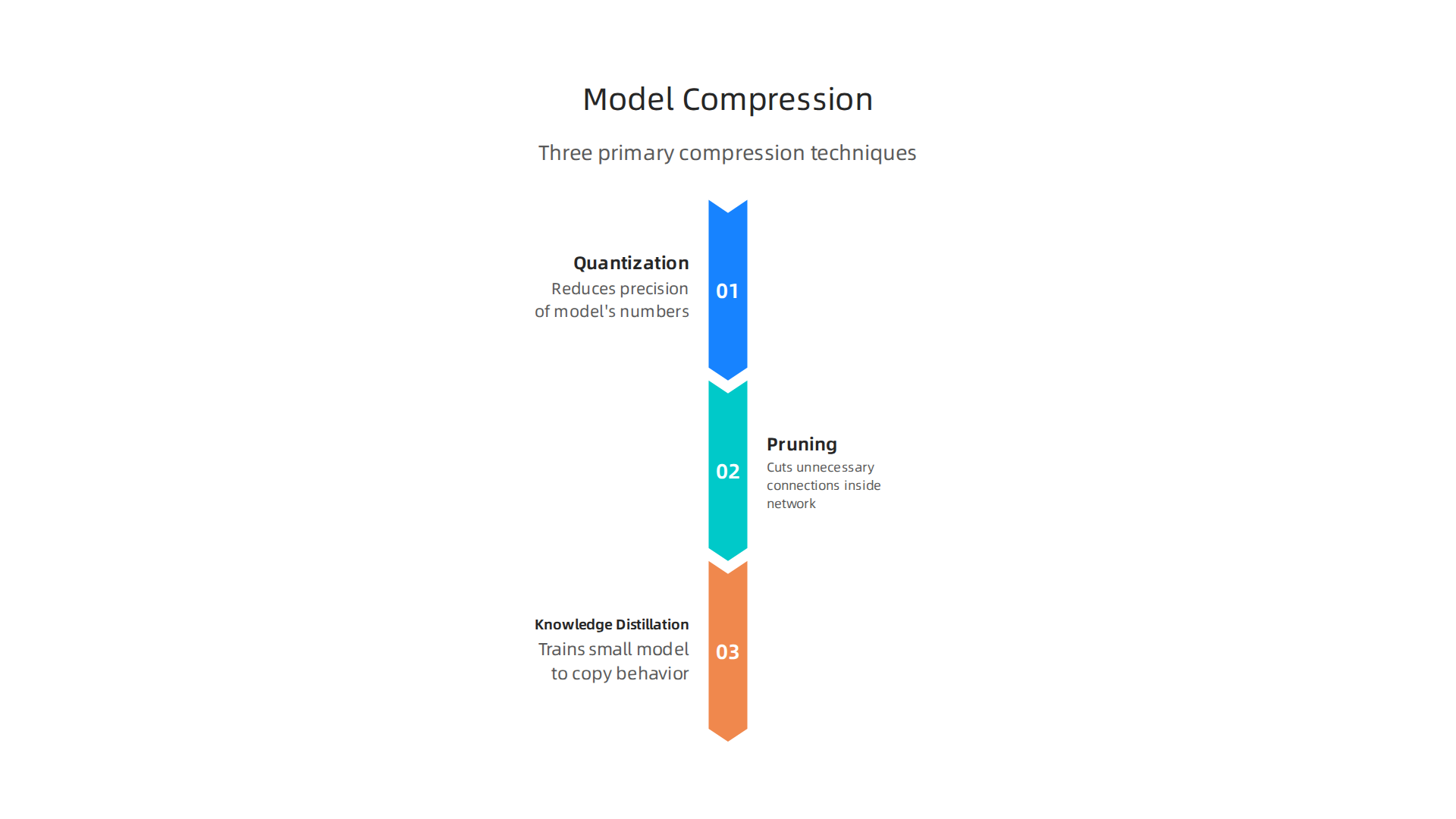
- Quantization reduces the precision of the model’s numbers (for example, from 32-bit floats to 8-bit integers). That shrinks the model size and speeds up inference with minimal accuracy loss.
- Pruning cuts out unnecessary connections inside the neural network. It removes the "dead weight," making the model smaller and faster without hurting performance much.
- Knowledge distillation trains a small "student" model to copy the behavior of a large "teacher" model. The student ends up nearly as accurate while being a fraction of the size.
These techniques are what allow edge AI to run complex tasks like real-time object detection, face recognition, or voice commands on devices that have less power than a light bulb. And the best part is that all three methods have matured to the point where they are easy to apply with modern tools.
If you want to stay on top of the latest edge AI trends and hardware releases, getting a daily dose of actionable insights can save you hours of research. That is exactly what The Deep View Newsletter offers simple, expert-curated AI news delivered to your inbox every day. Join thousands of AI professionals who use it to stay ahead. Subscribe to Your Daily AI Shortcut now.
Leading Edge AI Tools and Platforms (2026)
Hardware and model compression get the spotlight, but the real day-to-day work of edge AI happens inside software tools. These are the platforms that let you take a trained neural network and actually run it on a phone, a camera, a drone, or a factory sensor. In 2026, the ecosystem is mature enough that you can go from idea to deployment in hours instead of weeks. Here are the tools you need to know.
TensorFlow Lite and MediaPipe
Google’s TensorFlow Lite is the go to framework for running models on mobile and embedded devices. It converts TensorFlow models into a lightweight format that runs fast on CPUs, GPUs, and NPUs. Pair it with MediaPipe, and you get pre built pipelines for tasks like face detection, hand tracking, and object classification. Together, they give you a cross platform solution that works on Android, iOS, Linux, and microcontrollers. If you are building a smart camera or a gesture controlled app, this is where you start.
Edge Impulse
Not everyone wants to write code. Edge Impulse is a no code platform that handles the whole pipeline: collect sensor data, label it, train a model, and deploy it to a target device. It supports everything from accelerometers to audio to camera feeds. The platform handles quantization and pruning automatically, so you don’t need a deep learning PhD to ship an edge AI product. It is especially popular in industrial IoT, predictive maintenance, and wearable devices.
Intel OpenVINO, NVIDIA TensorRT, and Qualcomm AI Engine
These three tools are purpose built for squeezing every drop of performance out of specific hardware.
Intel OpenVINO optimizes models for Intel CPUs, GPUs, and VPUs. It is widely used in smart retail and edge servers where you already have Intel hardware.
NVIDIA TensorRT is the optimization toolkit for NVIDIA GPUs like the Jetson series. It reduces precision, fuses layers, and tunes kernels to maximize throughput. If you are using a Jetson Orin or Xavier, TensorRT is mandatory.
Qualcomm AI Engine runs on Snapdragon and other Qualcomm chips. It includes a neural processing SDK, a model zoo, and tools for quantization. With on device AI hardware now in nearly 9 out of 10 smartphones sold in 2025, Qualcomm’s tools are the backbone of mobile edge AI. The Snapdragon X2 Elite, for example, delivers up to 85 TOPS within a 15 watt power budget, making it a top choice for always on vision and voice.
Each tool has its own strengths, but they all solve the same problem: making AI models fast enough and small enough to run on devices that don’t have a data center attached.
The companies that win at edge AI are not the ones with the biggest models. They are the ones that choose the right tools and optimize relentlessly. If you want to stay on top of the latest platform updates and hardware releases, you need a steady stream of actionable insights. That is exactly what The Deep View Newsletter delivers: simple, expert curated AI news sent to your inbox every day. Join thousands of professionals who use it to stay ahead. Subscribe to Your Daily AI Shortcut now.
Real-World Applications and Use Cases
All those tools and hardware chips are impressive on paper. But where does edge AI actually make a difference today? The answer is across industries you interact with every day. From the car you drive to the factory that builds your phone, edge AI is already working behind the scenes.
Smart Manufacturing
Factories are the biggest playground for edge AI right now. The reason is simple: downtime costs money. A single conveyor belt failure on a production line can stop the whole plant for hours. That is where predictive maintenance comes in.
Vibration sensors, thermal cameras, and acoustic monitors sit right on the equipment. They feed data to a small edge computer running a trained model.

That model watches for tiny changes in vibration pattern or temperature that happen just before a bearing fails. When it spots trouble, it sends an alert instantly. No waiting for the cloud. No sending huge data streams over the network.
This approach cuts unplanned downtime by up to 50% in real-world deployments. One automotive plant using edge-based computer vision inspects thousands of parts every hour for surface defects. The system rejects bad parts instantly without stopping the line. You can explore more examples in the latest research on top edge AI use cases in manufacturing.
Quality checks also benefit. High resolution cameras on the assembly line run object detection models locally. They catch scratches, dents, and assembly mistakes that human eyes would miss. The result is a 30% improvement in product quality according to early adopters.
Autonomous Vehicles
Self driving cars are the ultimate edge AI challenge. A car traveling at 60 miles per hour covers nearly 90 feet per second. In a potential crash scenario, a tenth of a second matters. There is no time to send camera images to the cloud and wait for a response.
That is why every autonomous vehicle has an onboard computer running multiple AI models at once. Cameras, lidar, radar, and ultrasonic sensors all stream data to a central processor. Edge AI models detect pedestrians, lane markings, traffic signs, and other vehicles in real time. The car makes split-second decisions to brake, steer, or accelerate without any outside help.
The same technology powers advanced driver assistance systems in regular cars. Features like automatic emergency braking, lane keeping, and adaptive cruise control all rely on edge AI. These systems process sensor data locally and act in milliseconds. The 2026 trends in edge AI show that automotive companies are investing heavily in this area because the safety benefits are massive.
Healthcare
Wearable devices are becoming tiny health clinics on your wrist. Modern fitness trackers and medical wearables run edge AI models that analyze heart rate, blood oxygen, skin temperature, and movement patterns.

Instead of sending all that data to the cloud, the device processes it locally.
This matters for two reasons. First, speed. If a continuous glucose monitor detects a dangerous drop in blood sugar, it needs to alert the user immediately. Sending data to a server and waiting for a response could be dangerous. Second, privacy. Medical data is sensitive. Keeping it on the device reduces the risk of a data breach.
Portable ultrasound devices now run edge AI to help doctors diagnose conditions in rural clinics without reliable internet. The AI analyzes the image on the device itself and highlights potential problems. This brings expert level diagnostics to places that don’t have specialists available.
Wearable seizure prediction devices are another breakthrough. They continuously monitor brain activity patterns and can warn the wearer five to ten minutes before a seizure starts. That gives enough time to get to a safe place.
Where to Go from Here
Edge AI is already reshaping manufacturing, transportation, and healthcare. The tools we covered earlier make it possible to build these systems without a huge team. But the field changes fast. New hardware, new models, and new use cases appear every month.
If you want to stay on top of the latest developments, keeping a steady source of reliable information is key. That is where a daily newsletter focused on AI breakthroughs can save you hours of research. You can read about which edge AI chips are shipping, what models work best on low power devices, and how companies are deploying these systems in the real world. For a deeper dive into on-device intelligence, check out how Apple AI 2026 drives enterprise growth with edge focused capabilities.
The companies that win at edge AI are the ones that act early and optimize relentlessly. Now you know both the tools and the applications. The next step is picking a use case and building.
Challenges and Considerations
Edge AI is powerful, but it’s not without problems. Before you jump into building, you need to understand the main hurdles. Let’s go through the three biggest ones.
Security Vulnerabilities
Edge devices live in the real world. That means they are physically accessible. Someone could tamper with a sensor on a factory floor or steal a device from a remote location. Unlike cloud servers locked in data centers, edge devices are exposed. This opens the door to adversarial attacks where someone feeds fake data to the model on purpose. For example, a bad actor could trick a quality inspection camera into missing a defect by placing a small sticker on the lens. Companies need to plan for device-level security, encryption, and tamper detection. The discussion around challenges in deploying edge AI in the defense industry highlights how serious these security concerns can become when lives are at stake.
Power and Thermal Constraints
Most edge devices run on batteries or limited power. A camera on a factory ceiling might have a tiny processor that gets hot under heavy load. Running a large neural network 24/7 on that chip could drain the battery in hours or cause the system to overheat. That is why engineers use techniques like model pruning and quantization to shrink AI models. But even with those tricks, you are still working within tight limits. You have to balance how fast the model runs against how much power it uses. This is one reason edge AI often uses smaller, specialized chips instead of the powerful GPUs found in data centers.
Fragmentation
The edge AI hardware market has many competing chips and tools. You have options from NVIDIA, Intel, Qualcomm, ARM, and many startups. Each chip comes with its own software stack, model format, and optimization tools. A model that works perfectly on one device may not run at all on another without major rework. This fragmentation slows down development and makes it hard to scale. Developers need tools that work across different hardware. Picking the right platform early can save months of headaches later. If you are evaluating options, take a look at how to choose the best enterprise AI platform for your organization.
Staying on top of these challenges requires continuous learning. The field evolves quickly, and new solutions appear all the time. One way to keep up is to get a daily dose of curated insights. Join The Deep View Newsletter for simple daily AI insights straight to your inbox.
Deployment and Best Practices
So you have your edge AI model ready. The real work begins now. How do you actually roll it out to the real world without breaking things? The smartest teams follow a few proven practices.
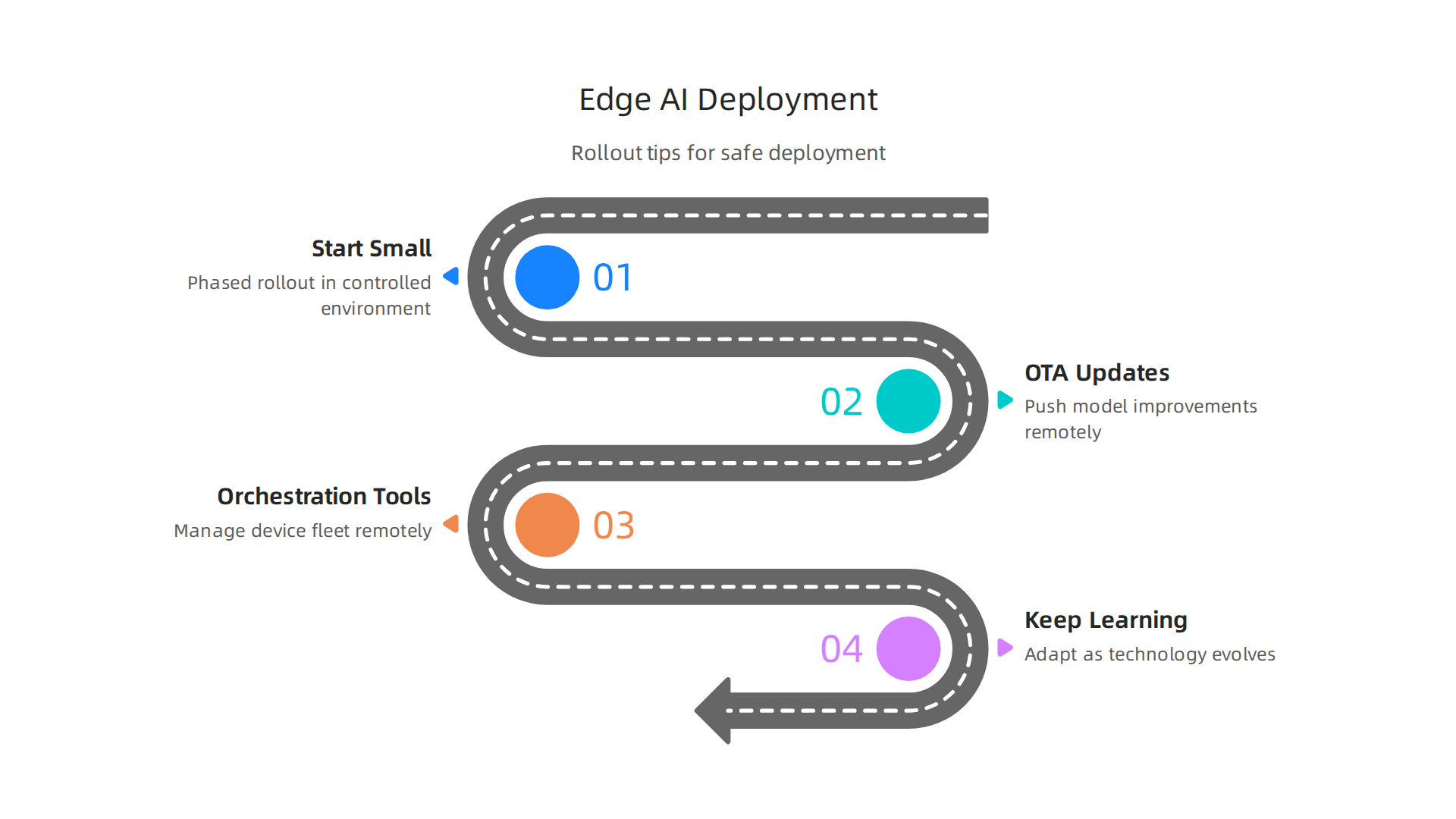
Start Small with a Phased Rollout
Don’t try to deploy your edge AI model across 10,000 devices at once. That is a recipe for disaster. Instead, begin with a proof-of-concept on a single device type. Test it in a controlled environment first. Check for performance, accuracy, and stability. Once that works, scale to a small group of devices. Then expand gradually. This phased approach catches problems early when they are cheap to fix. It also gives your team time to learn what works before going all in.
Use Over-the-Air (OTA) Updates
Your edge AI model will not be perfect on day one. Conditions change. New data comes in. Security threats evolve. That is why you need over-the-air updates. OTA lets you push model improvements and security patches to devices remotely. No one has to walk out to a factory floor or climb a cell tower to update each device manually. This keeps your fleet current without breaking your operational budget. According to the 2026 Edge Computing overview, automated management is critical for scaling especially when devices are widely dispersed.
Leverage Edge Orchestration Tools
Managing hundreds or thousands of edge devices by hand is impossible. You need orchestration tools. Platforms like Azure IoT Edge, AWS Greengrass, and KubeEdge act like a flight controller for your entire fleet. They handle device registration, model deployment, health monitoring, and automatic failover. They also let you roll out updates to groups of devices based on location, model version, or risk level. This is the backbone of any serious edge AI deployment. The 2026 Edge AI Transformation video explains how companies use Kubernetes variants to manage thousands of endpoints seamlessly.
Keep Learning and Adapting
Edge AI technology moves fast. What works today might be outdated by next quarter. Following a phased rollout, using OTA updates, and picking the right orchestration tools will set you up for success. But staying current requires daily effort. That is why many leaders choose a dedicated source for curated insights. If you want to keep your edge AI knowledge sharp without the noise, join Your Daily AI Shortcut for simple daily AI insights straight to your inbox.
The Future of Edge AI: Trends to Watch
Edge AI is evolving fast. The market is projected to grow from $30 billion in 2026 to over $118 billion by 2033, according to the Edge AI Market Report. But beyond the numbers, three major trends are reshaping what edge AI can do in the real world.
Federated Learning Keeps Data Private
One of the most important shifts is federated learning at the edge. Instead of sending all your sensitive data to a central server, your devices learn together while keeping data local. Multiple factories can improve a shared quality control model without ever exposing proprietary production data. This solves compliance and competitive concerns at the same time. According to the 2026 edge AI trends analysis on LinkedIn, federated learning lets you train models across distributed devices without centralizing sensitive data.
The Edge-Cloud Continuum
The old choice between edge and cloud is disappearing. The future is a smooth continuum. Simple decisions happen instantly on the device. Complex analysis gets handed off to the cloud when needed. This hybrid approach gives you the speed of edge processing with the power of cloud compute. The Dell edge AI predictions for 2026 highlight that organizations are splitting workloads strategically for the best results. If you want to stay current with these shifts, check out how developers build advanced AI solutions with modern platforms.
Energy-Harvesting AI
New ultra-low-power chips can now run AI on energy harvested from the environment. Solar panels, radio frequency waves, even body heat. These sensors can operate for years without changing a battery. That makes truly autonomous monitoring possible in places you could never wire before. As these chips get cheaper, expect to see them everywhere from smart agriculture to remote infrastructure.
These trends are shaping how every industry will use AI in the coming years.
Summary
Edge AI means running artificial intelligence directly on local devices instead of relying on remote cloud servers, and in 2026 it’s practical across phones, cars, factories, and wearables. This article explains why on-device intelligence matters—ultra-low latency, stronger privacy, and big bandwidth savings—and then breaks down the three technical layers that make it possible: specialized low-power chips, software frameworks for optimization, and model-compression techniques like quantization, pruning, and distillation. You’ll find a tour of leading tools (TensorFlow Lite, Edge Impulse, OpenVINO, TensorRT, Qualcomm AI Engine), concrete industry use cases in manufacturing, autonomous vehicles, and healthcare, plus deployment best practices such as phased rollouts, OTA updates, and orchestration. The piece also covers major challenges—security, power constraints, and fragmentation—and points to trends to watch like federated learning, the edge-cloud continuum, and energy-harvesting chips. After reading, you’ll understand which technologies and practices to prioritize when evaluating or building edge AI solutions and how to move from prototype to safe, scalable deployment.