

Why Airtable + AI Matters Now
In 2026, many teams use tools like Airtable to keep their work organized.
Airtable is a smart database that helps people manage projects, track customers, and handle all kinds of information. It’s used by over 500,000 groups around the world, including big companies. It has even grown to serve more than 15 million active users each month globally Airtable in 2026: Usage, Revenue, Valuation & Growth …. Now, with the rise of smart computer programs, something exciting is happening: Airtable is becoming a central place for AI-powered help.
Think of it this way: Airtable is already great at holding your important data. But when you add artificial intelligence (AI) to it, it can do even more. This means your data can become "smarter." AI can help you automate tasks, make better decisions, and even create new content. Airtable itself has launched new features, like "Omni," which is its own AI layer to help businesses make sense of their data Airtable News | June, 2026 (STARTUP EDITION). This combination, often called Airtable AI, is changing how businesses work. It’s making no-code tools like Airtable into powerful hubs for getting things done.

The big problem for many teams today is too much information. It can be hard to keep up with all the new AI tools and how they can fit into your daily work. Many leaders and workers need clear, simple steps on how to bring AI into their Airtable setup. They want to know how to use these new generative AI platforms to make their work easier, without feeling lost or overwhelmed. Maybe they dream of quickly putting together great media kit examples or even using an AI to act as a best ai presentation maker right from their Airtable data.
This guide is here to help you cut through the confusion. You will get easy-to-follow steps for setting up Airtable with AI. We will also talk about how to keep your information safe, show different ways to connect AI tools to Airtable, and help you understand if these changes are truly worth the effort. It’s time to learn how AI models in 2026 are transforming every major industry, and how you can use this power within Airtable to make your work better and smarter.
With so much happening in the world of AI every day, it’s easy to feel left behind. To make sure you’re always in the know, consider subscribing for a dose of daily intelligence.
The AI Newsletter Worth Reading
Overview: What ‘Airtable AI’ Means in 2026
When we talk about Airtable AI in 2026, we are talking about more than just a single tool. It’s a mix of different ways to make Airtable smarter. This can include features built right into Airtable, special add-ons from other companies, or even custom setups that connect Airtable to advanced AI programs. Basically, it’s about using artificial intelligence to get more done with your data in Airtable.
There are three main ways this works:
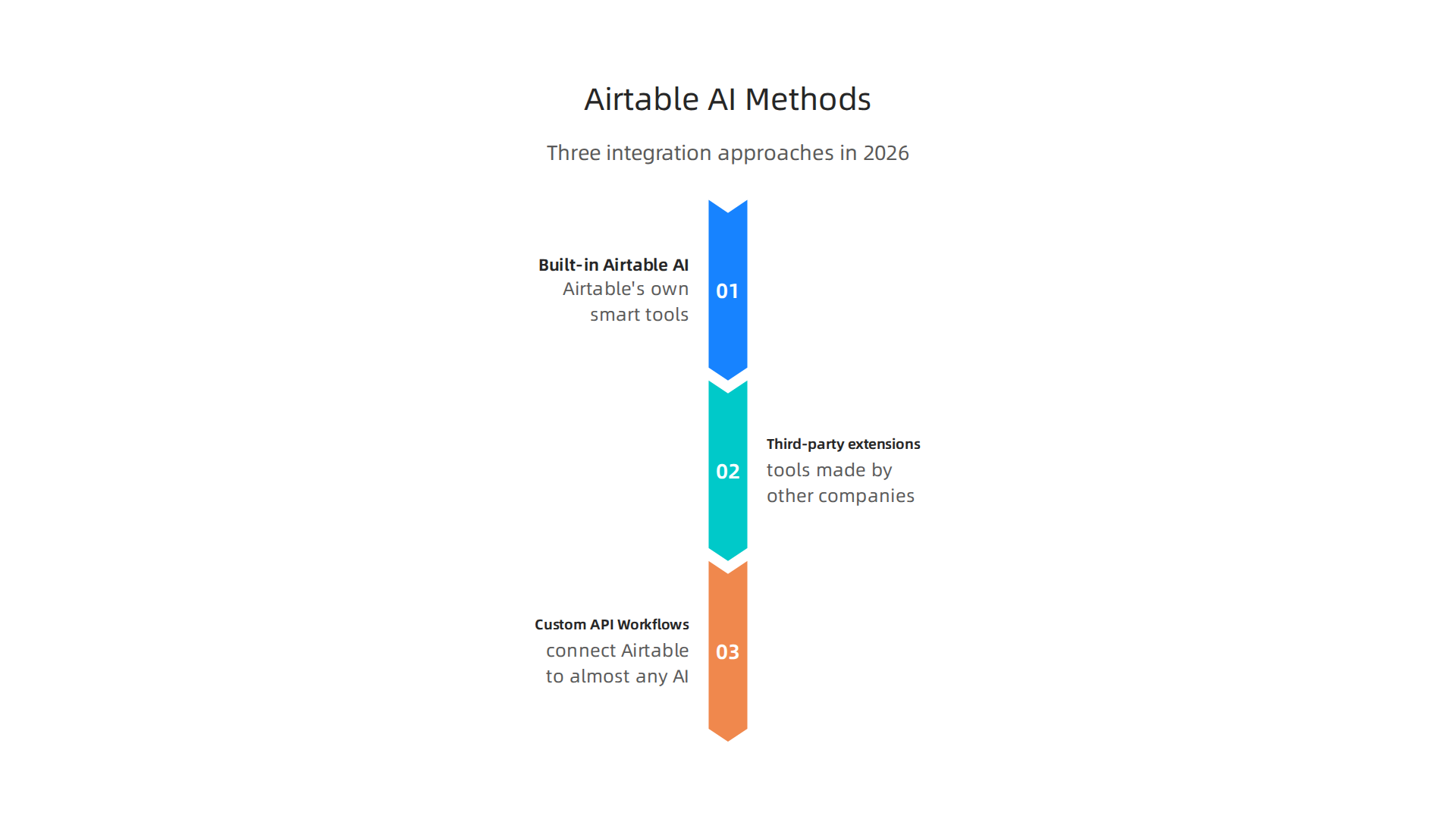
- Built-in Airtable AI features: Airtable has its own smart tools, like "Omni," which helps you work with your data. These are tools made by Airtable itself to help users get started with AI. For example, you can use built-in AI to make new elements for your Airtable setup, like interfaces, just by describing what you want AI-generated interface elements in Airtable. You can also use AI to help with automations, like generating text for your records Airtable automation actions: Generate with AI.
- Third-party AI extensions: These are tools made by other companies that you can connect to your Airtable. They add new powers that Airtable might not have on its own.
- Custom API-driven workflows: For those who like to build their own solutions, you can connect Airtable to almost any AI tool using an API.
Think of an API as a special door that lets different computer programs talk to each other. This lets you use strong generative AI platforms or even make a flow AI how developers build advanced AI solutions that pulls data from Airtable to do complex tasks.
The most common way this works is that Airtable acts like a super organized storage place for all your information. Then, other smart AI services, often called Large Language Models (LLMs) or Machine Learning (ML) services, connect to Airtable. These services then use the data to understand things, make guesses, or create new content. For example, your data could be used to generate personalized marketing messages or even act as a best AI presentation maker for your next big meeting.
So, who gets the most out of Airtable AI? Actually, many different kinds of people and teams benefit:
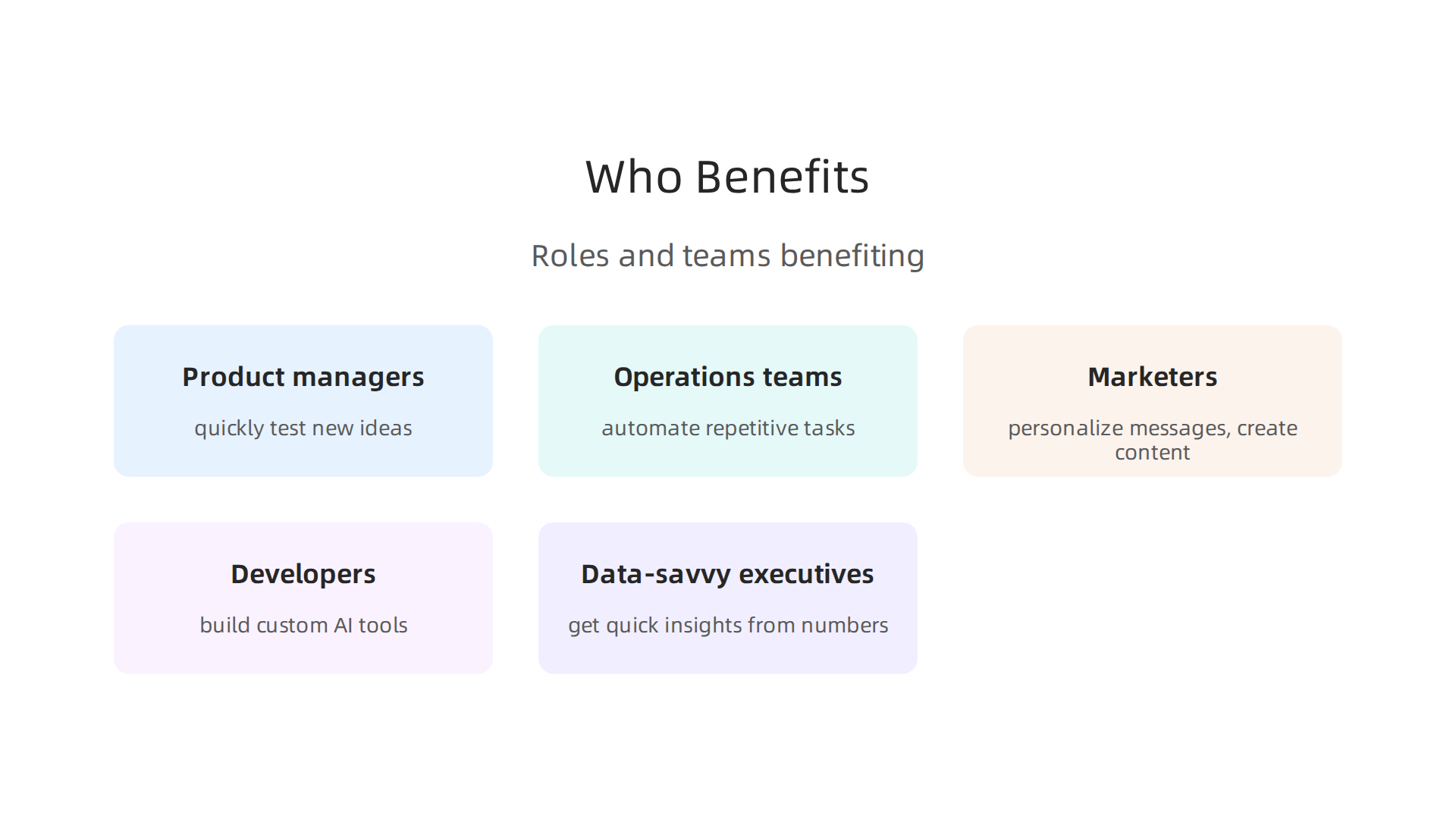
- Product managers can quickly test new ideas and organize feedback.
- Operations teams can automate repetitive tasks, making their work faster.
- Marketers can personalize messages and create content like media kit examples much more easily.
- Developers can build custom AI tools that sit right on top of their Airtable data.
- Data-savvy executives can get quick insights from their numbers without needing a data scientist for every question.
In short, Airtable AI is all about making your data active and intelligent, helping you make better choices and work smarter in 2026.
Top Use Cases: Where Airtable + AI Delivers Fast Value
Now that we know what Airtable AI is, let’s look at how people are actually using it right now to get great results. AI adds smarts to your Airtable data, helping you do more with less effort. Here are some of the top ways teams are getting fast value in 2026.
Making Data Richer and Easier to Sort
One big help from Airtable AI is making your data better and more organized. Imagine you have many records, like customer feedback or product ideas. AI can look at these records and:
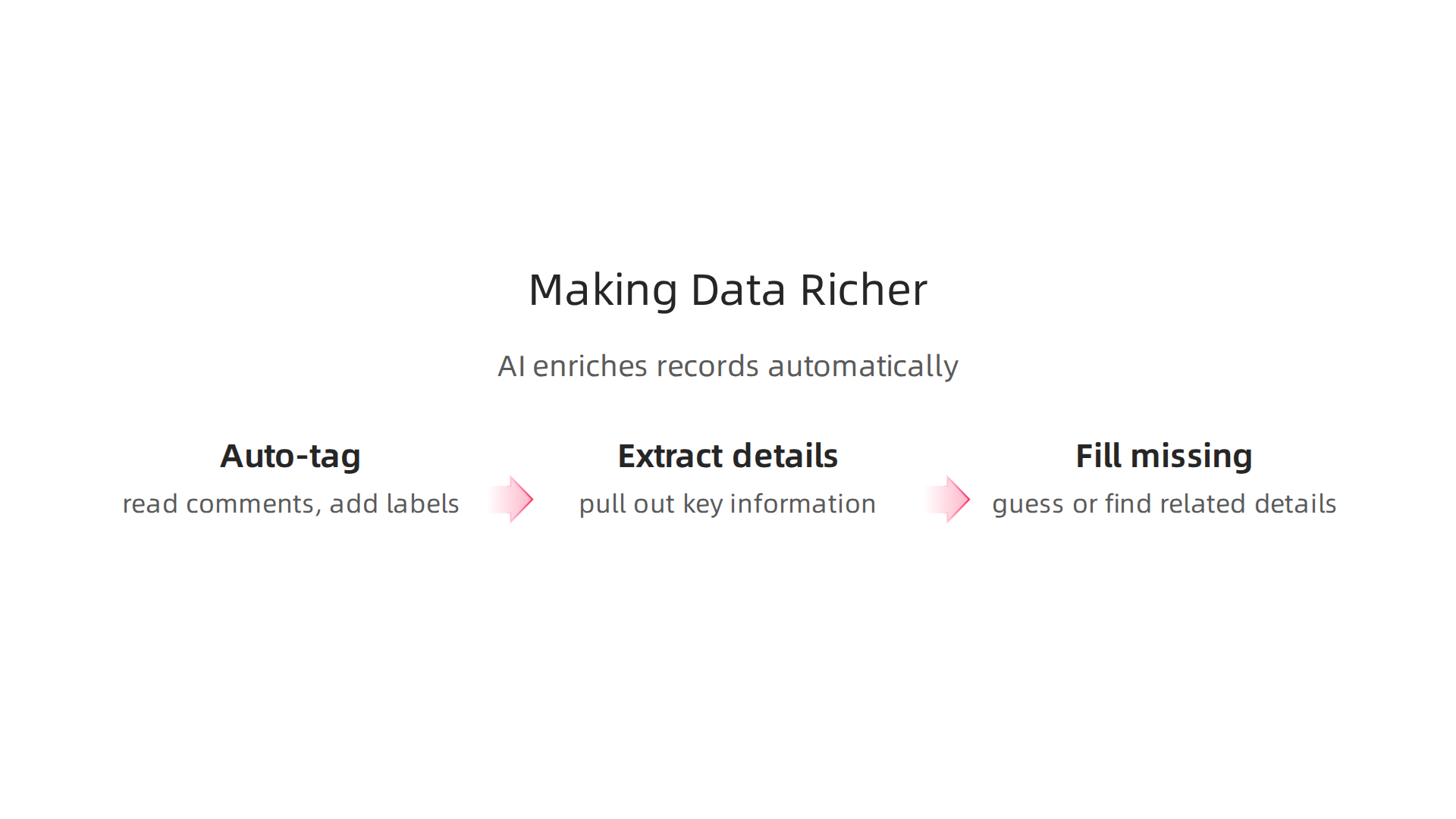
- Tag things automatically: It can read comments and add labels like "bug report" or "feature request" so you don’t have to do it by hand.
- Pull out key details: AI can find important information, like names, dates, or specific product numbers, from a block of text and put them into their own fields.
- Fill in missing parts: If you have some information, AI can often guess or find other related details to complete your records.
This process is called data enrichment and classification. It helps keep your Airtable bases clean and useful, saving you a lot of time. Airtable has built-in features that help you use AI right in your fields for tasks like these Using Airtable AI in fields. For professionals who handle a lot of information, understanding how AI works with data is key, as data specialists are more critical than ever in the age of AI.
Smart Workflows and Quick Summaries
Airtable AI also shines when it comes to automating tasks that used to take a lot of thinking or writing. Think about:
- Automated reports: Instead of writing weekly updates, AI can gather data from your Airtable base and draft a summary for you.
- Meeting notes: If you link your notes to Airtable, AI can help pull out the main points and action items.
- Content creation: For marketers, AI can help generate ideas for blog posts, social media captions, or even help make a best AI presentation maker for your next pitch, all based on your stored data.
These AI-powered automations can draft personalized messages and create dynamic text, which is great for reaching many people without writing each message manually. You can see more about how this works in an in-depth guide to Airtable AI Airtable AI: The Complete Guide (2026). For those looking to improve their marketing efforts, learning how to optimize your AI marketing funnel in 2026 can greatly benefit from these smart workflows.
Better Decisions and Task Assignments
Finally, Airtable AI can act like a smart helper for making decisions and directing work.

This is especially helpful for operations teams. It can help with:
- Smart task assignment: Based on details like project type or team member skills in Airtable, AI can suggest who should get the next task.
- Priority scoring: AI can look at different factors and give a score to help you know which tasks are most important to tackle first.
- Predictive fields: AI can even guess future outcomes, like how long a project might take, helping you plan better.
These abilities mean teams can work more smoothly and make smarter choices every day. Omni, a feature inside Airtable Interfaces, can query your live data and give you prioritization suggestions in real time, helping leaders augment AI smart strategies for leaders to drive growth in 2026. This way, Airtable AI truly helps you unlock smarter ways to work and make your data more actionable.
Now that we’ve seen how powerful Airtable AI can be for making data richer, creating smart workflows, and helping with decisions, let’s look at how you can set it up yourself. Getting Airtable AI integrations working is easier than you might think, but it does need a few careful steps.
Get Ready: Data, Keys, and Privacy
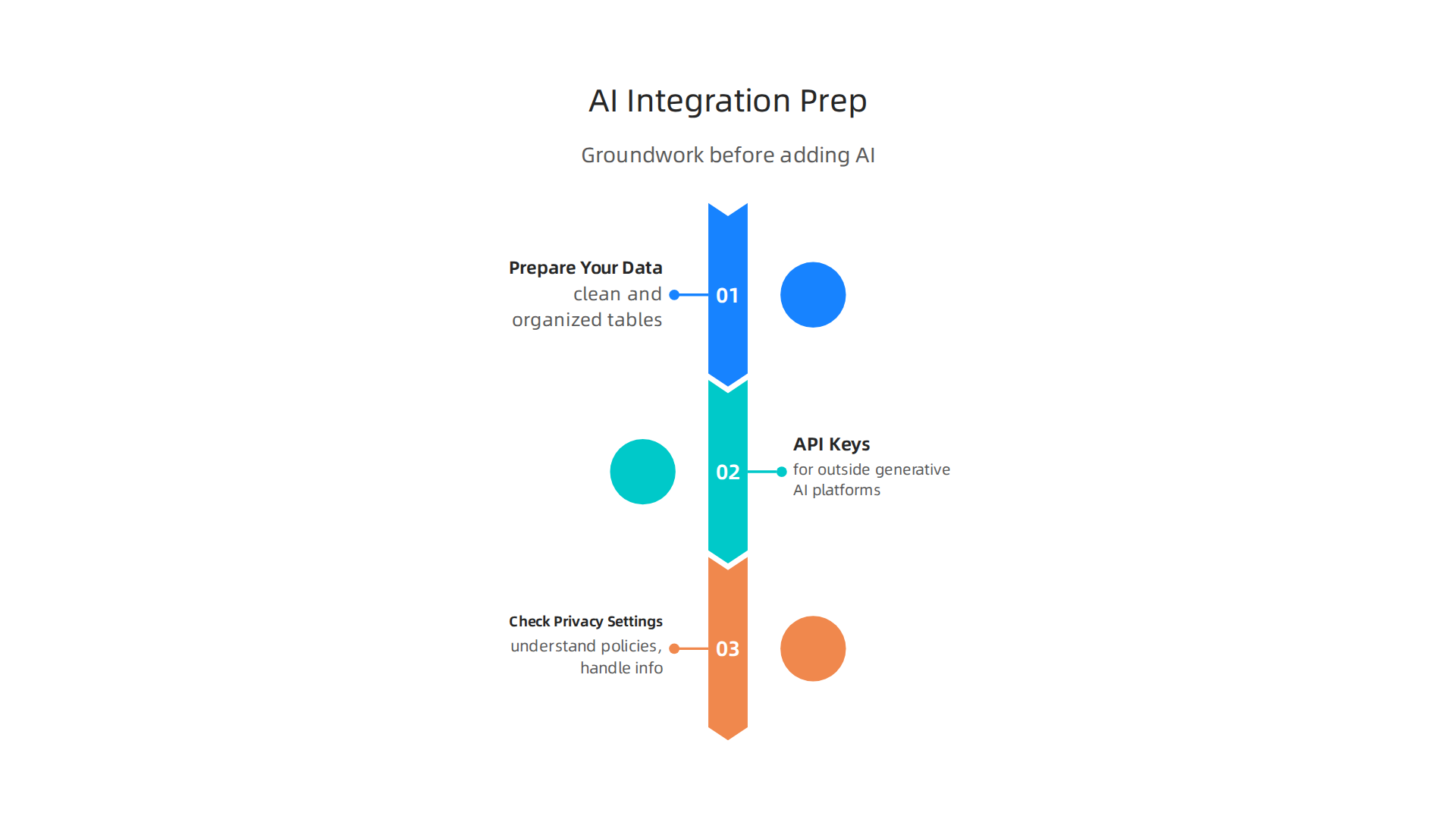
Before you start adding AI to your Airtable bases, some groundwork helps a lot.
Think of it like getting your ingredients ready before cooking.
- Prepare Your Data: For AI to work well, your data needs to be clean and organized. Make sure your tables are set up logically. Good data models help the AI understand what it’s looking at and give you better results. Airtable itself has many tools to help you get your data in shape.
- API Keys for Outside Tools: If you plan to connect Airtable to other generative AI platforms like OpenAI or Google Gemini, you’ll need API keys from those services. These keys are like special passwords that let Airtable talk to the AI without you having to log in every time. You can learn more about how to connect Airtable to any API by checking out useful guides How To Connect Airtable To Any API [2026 Guide].
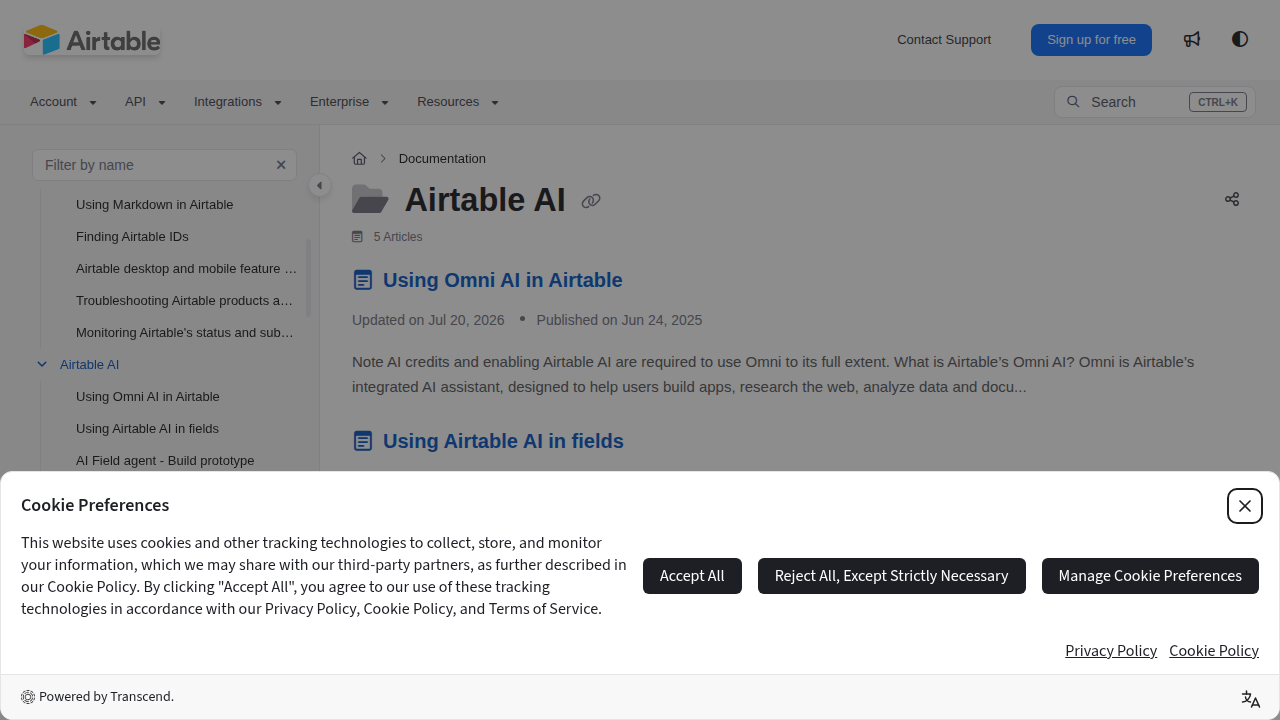
- Check Privacy Settings: Always think about the kind of data you’re sharing with AI. Make sure you understand Airtable’s privacy policies and how any outside AI tools handle your information. It’s smart to keep sensitive data safe. Airtable has official documentation on its AI features, which you can find in the Airtable AI support pages.
How to Connect Airtable with AI
Once your groundwork is done, you can start bringing AI into your Airtable projects. There are a few main ways to do this:
- Airtable’s Built-in Features: Airtable has its own AI tools directly within the platform. For example, you can add an "AI field" to your table that can automatically write summaries or tag information. Omni, Airtable’s AI layer, can even help you build new parts of your database or interfaces with simple commands AI-generated interface elements in Airtable.
- Automation Actions: You can set up automations in Airtable that use AI. For example, when a new record is added, an automation can tell AI to generate a description or classify it. This saves a lot of manual work. You can use the "Generate text" action within Airtable automations to make this happen Airtable automation actions: Generate with AI.
- Webhooks and External APIs: For more complex tasks, you might use webhooks to send data from Airtable to an external AI service and then bring the results back. Or you can directly use the Airtable Web API to build custom connections with advanced AI models. This lets you tap into powerful AI tools beyond what’s built into Airtable itself.
Learning to integrate different systems is a valuable skill in 2026.

For more advanced insights into building AI solutions, explore resources on Flow AI How Developers Build Advanced AI Solutions.
Test, Check, and Improve Your AI Setup
Setting up Airtable AI isn’t a "set it and forget it" task. It’s important to test things and make sure they’re working right.
- Test It Out: Run your AI features and automations with some test data first. See if the AI is giving you the results you expect. Does it tag things correctly? Are the summaries useful?
- Quality Checks: Always review the AI’s output. Sometimes AI can make mistakes or give strange answers. Regularly checking the quality helps you make sure your data stays accurate.
- Plan for Changes: If something goes wrong, know how to undo it or fix it. Having a "rollback strategy" means you can always go back to how things were before if an AI integration causes problems. Following a guide for modern workflows can help you prevent misfires and ensure your data stays correct 2026 Airtable Automation Guide for Modern Workflows.
By taking these steps, you can confidently add AI to your Airtable bases, making your work smarter and more efficient.
Setting up Airtable AI for smarter workflows doesn’t stop at just plugging it in. To truly get the most out of it, especially as your needs grow, you need to think about how these AI automations will run and scale. This means understanding different ways to trigger AI tasks and how to keep everything running smoothly without breaking the bank or hitting roadblocks.
Different Ways AI Automations Can Work
When you use Airtable AI, you usually set up tasks to happen in one of two main ways:
- Trigger-Driven Enrichment: This is like setting up a switch. When something specific happens in your Airtable base, it "triggers" the AI to do a task right away. For example, when you add a new customer name, the AI might instantly find their company info. This is great for quick updates and when you need fresh information fast. However, if you have many triggers happening at once, it can sometimes be slower or cost more because the AI is working constantly.
- Batch Processing: This is like gathering up all your work and doing it all at once later. Instead of the AI working on each new item as it comes, you collect many items and then tell the AI to process them together. For example, you might have the AI summarize all new articles once a day. This can be more cost-effective and faster for large amounts of data, as the AI can be set to work during off-peak times. But the downside is that your information won’t be updated instantly. Choosing between these depends on how fast you need your data and how much you want to spend.
For any AI automation, a smart strategy is key. Experts suggest setting up different levels of human review for AI decisions, especially for important tasks, to ensure accuracy and trust in the system Enterprise AI Automation Strategy for Scale (2026).
Making Your AI Automations Grow
As your business grows, your Airtable AI setup needs to grow too. This is called scaling.

Here are some things to think about:
- Rate Limits: Think of these as speed limits for your AI. Outside generative AI platforms often have rules about how many requests you can send them in a certain amount of time. If you send too many, your automation might slow down or stop.
- Batching Strategies: Instead of sending one piece of data at a time to an outside AI service, you can send groups or "batches" of data. This is more efficient and helps you stay within those rate limits.
- Caching: This means saving results that the AI has already given you. If the AI is asked the same question twice, it can just give the saved answer instead of doing the work again. This saves time and money.
- Reliable Automations: You want your automations to work every time. This means building them so that if something goes wrong, they can try again or pick up where they left off without messing up your data. This is called idempotency, ensuring that running an operation multiple times has the same effect as running it once. To truly scale AI workflows across your business in 2026, it’s vital to have strong centralized systems and clear processes, not just fancy new tools Scaling AI Requires New Processes, Not Just New Tools.

You can learn more about how to manage these advanced AI systems in resources like Pillar: A Comprehensive Guide to Scaling AI Workflow Automation Across Global Enterprises in 2026.
If you are looking for tips on how to keep up with the fast-changing world of AI, you might find Tracking AI Innovators: What Business Leaders Must Know in 2026 helpful.
Keeping an Eye on Your AI Work
Once your Airtable AI automations are running, you need to make sure they’re doing what you expect.
- Logging: This is like keeping a diary of everything your AI does. It records when tasks run, what data they processed, and what results they gave. This helps you figure out what happened if something goes wrong.
- Alerts: These are like warning bells. If an AI automation fails or starts behaving strangely, an alert can tell you right away so you can fix it.
- Audit Trails: An audit trail is a record of all changes made to your Airtable records by AI. This is super important for checking that the AI is acting correctly and for compliance reasons, especially when dealing with important business data. Monitoring is a key practice for managing your AI solutions at scale Guide to Artificial Intelligence Automation Solutions 2026.
By paying attention to these automation patterns, triggers, and scaling tips, you can build a more robust and efficient Airtable AI system that truly makes your work easier in 2026.
Stay on top of the latest advancements and insights in the world of artificial intelligence. Get clear daily AI updates from The AI Newsletter Worth Reading.
To really trust your Airtable AI system, you also need to think about how secure your data is and if you are following all the rules. This is called security, compliance, and data governance. It means making sure your AI uses data correctly, keeps it safe, and meets all legal requirements in 2026.
Keeping Your Data Private
When you send your important company information or customer details to outside AI tools, especially generative AI platforms, you want to be careful. A key idea here is "data minimization." This means you should only send the smallest amount of data needed for the AI to do its job. For example, if the AI only needs a customer’s first name, don’t send their full address.
It’s even more important when dealing with "Personally Identifiable Information" or PII. This is any data that can directly point to a person, like names, emails, or phone numbers. Before sending PII to any third-party AI, think about if it’s truly necessary. Many experts agree that keeping data quality high and respecting privacy rules are big challenges and chances for growth in AI systems today, especially with new laws like the EU’s AI Act Machine Learning Practitioners’ Views on Data Quality in Light of EU …. Learning more about these challenges can help you avoid the real dangers of AI in 2026.
Rules for Outside AI Tools
When your Airtable AI setup uses services from other companies, like those large language models (LLMs) that help it create text, you need clear agreements. These agreements should spell out what the vendor can do with your data, how long they can keep it, and who can look at it. This is about "contractual and policy considerations."
It’s like having a clear set of rules for anyone handling your valuable information. This helps make sure that even though you are using an outside service, your data is protected under your company’s standards. Dealing with these outside AI tools needs a strong plan for how to manage risks and make sure everything is transparent Third-Party AI Risk and Supply Chain Transparency Guide.
Smart Ways to Protect Your Data
Beyond choosing what data to share and having good contracts, there are technical steps you can take to boost security for your Airtable AI.
- Tokenization: This means swapping out sensitive data for random, non-sensitive symbols or "tokens." So, the AI works with the tokens, not the real data, which keeps the original safe.
- On-Prem Proxies: These are like special filters that sit between your Airtable and the outside AI. They can check and clean data before it leaves your system, adding an extra layer of protection.
- Encrypted Fields: You can encrypt, or scramble, specific fields in Airtable that hold sensitive data. Only people or systems with the right "key" can unscramble and read it.
- Audit Logging Strategies: As discussed before, keeping detailed logs of what your AI does is crucial. For security, these audit logs help you track who accessed what data and when. This way, if there’s ever a problem, you can quickly find out what happened and fix it.
Building strong data governance rules is really about making sure your AI follows all the right steps. In 2026, many experts agree that managing your data well is the core of making sure your AI meets all the compliance rules Data Governance Frameworks for AI Compliance | 2026. By thinking about these safety steps from the start, you can use Airtable AI with more confidence and peace of mind.
After making sure your Airtable AI setup is safe and follows all the rules, the next big question is: Is it actually helping your business grow? We need to know if it’s giving you good value for your money. This is called measuring Return on Investment, or ROI. It means finding out if the good things it brings are bigger than the time and money you put in.
What to Track: Key Performance Indicators (KPIs)
To see if your Airtable AI is doing its job, you need to look at specific numbers, often called Key Performance Indicators or KPIs. These are like scorecards for your AI’s work. Here are some important ones to track:
- Time Saved: How much time do people save because the AI does tasks faster? For example, if it used to take 3 hours to sort data, and now it takes 30 minutes with AI, that’s a big time saver.
- Error Reduction: Is the AI making fewer mistakes than humans used to? Less errors mean less re-work and better quality.
- Throughput Improvements: Can your team get more done in the same amount of time? This means the AI helps complete more tasks or projects.
- Lead Conversion Lift: If your Airtable AI helps with sales tasks, does it lead to more potential customers becoming actual buyers? This is a direct boost to your business.
How to Measure Your AI’s Success
Just listing KPIs isn’t enough; you need a good plan to measure them.
- Define Your Starting Point: Before you use Airtable AI, know what your numbers look like right now. This is your "baseline." For instance, how long does a task take before AI?
- Start Small (Pilot Program): Don’t change everything at once. Pick a small area or team to try out the AI first. This helps you see what works and what doesn’t. Experts suggest choosing 3 use cases that can show real value within six months Scaling AI Workflow Automation in 2026.
- A/B Testing: This is like comparing two ways of doing things. One group uses the AI (Group A), and another group does it the old way (Group B). Then, you compare their results. This helps you clearly see the AI’s impact.
- Track as You Grow: Once the pilot shows good results, start using AI in more places. Keep tracking your KPIs to make sure the good results continue even as you scale up. Getting your first use case right and building trust in it is key before expanding AI Scalability: A Practical 2026 Guide.
For businesses looking to fully understand how these new tools can help, learning about how to make smart choices for AI growth is important. A good next step could be reading about how to choose the best enterprise AI platform for your organization.
Making a Case Study Template
When you see good results from your Airtable AI, it’s smart to write it down. A case study template helps you capture everything important. This way, you can show others exactly how the AI helped.
Here’s what to include:
- The Challenge: What problem were you trying to solve before using Airtable AI?
- The Solution: How did you use Airtable AI to fix the problem? Mention any generative AI platforms or specific features you used.
- Costs: How much money and effort did it take to set up and run the AI?
- Implementation Time: How long did it take to get the AI up and running?
- Performance Results: Share your KPIs. How much time was saved? How many errors were reduced? What was the "lead conversion lift"?
- Qualitative Feedback: What did people say about using the AI? Did they like it? Did it make their jobs easier or better? This personal feedback is very valuable.
By carefully measuring these things, you’ll have a clear picture of how much value your Airtable AI brings.
To keep up with the latest advancements in AI and learn more strategies for success, consider subscribing.
The AI Newsletter Worth Reading
After seeing how much value your Airtable AI brings, the next step is to make sure it keeps working well for a long time. This means setting up good rules and plans for its care. You want your AI tools to be useful not just today, but also tomorrow and beyond.
Keeping Your Airtable AI Running Smoothly
For your Airtable AI to be a lasting helper, you need a plan for its ongoing management. Think of it like taking care of a car; regular check-ups keep it in top shape.
Set Up a Governance Plan
A "governance plan" is just a set of rules for how your team uses and manages Airtable AI. It helps everyone know what to do and how to keep things safe and working right. This plan should cover:
- Roles: Who is in charge of checking the AI’s work? Who can make changes? Making these roles clear helps avoid confusion.
- Review Cadence: How often will you check your AI-powered bases? Regular checks ensure everything is running as expected and that the AI is still giving good results.
- Change Management: What happens when you want to update the AI or change how it works? You need a careful way to make changes so you do not break anything important. For 2026, many companies are setting up detailed data governance frameworks for AI compliance to manage these changes safely.
Manage Your Costs Wisely
Using generative AI platforms like those integrated with Airtable often means paying for how much you use them. It is important to keep an eye on these costs.
- Tracking API Spend: Know how much you are spending on the AI’s brainpower. This helps you understand where your money is going.
- Optimizing Prompts: The way you ask the AI a question (called a "prompt") can change how much it costs. Learning to write clear, short prompts can save you money. Airtable even offers tips on using Airtable AI in fields to get better results from your prompts.
- Caching Answers: If the AI gives the same answer many times, you might be able to save that answer and use it again without paying for the AI to figure it out each time. This is called "caching."
Plan for the Future of Your AI
AI technology changes very fast. What works great today might need updating tomorrow.
- Monitoring Model Drift: Sometimes, AI models start to give different answers over time, even if the questions are the same. This is called "model drift." You need to watch for this so your AI stays accurate.
- Periodic Retraining: Just like people, AI models can learn new things. Sometimes you need to "retrain" your AI with fresh information to keep it smart and relevant.
- Migrating to Newer Models: New and better AI models come out all the time. Have a safe plan to switch to these newer models when they offer big improvements without causing problems for your work. Learning about smart strategies for leaders to drive AI growth can help you plan for these changes.
By following these best practices, your Airtable AI will remain a powerful and cost-effective tool, helping your business grow and adapt in 2026 and beyond.
Summary
This article explains why combining Airtable with AI is a practical, high-impact move for teams in 2026, turning a structured database into a smart automation hub. It covers what