

Why AI Study Tools Matter Now
In today’s fast-paced world, learning new things can feel like a race. For busy professionals, finding time to learn new skills or understand complex topics is a real challenge.

The amount of information out there is huge, and it keeps growing every day. How can you keep up without feeling overwhelmed?
This is where AI study tools come in. They are changing how we learn and grow. These smart tools use artificial intelligence to help you learn faster and better. They can make skill development much easier, even if you don’t have a lot of time. For example, some tools can help with interview ai practice, getting you ready for new job challenges.
Many people are already using AI for learning. Surveys in 2026 show that a lot of students are using AI in their studies, with some reports saying almost all students use it in some way Student Generative Artificial Intelligence Survey 2026.

People who use AI often say it helps them learn better AI in Education Statistics 2026: Insights from Save My Exams. It helps them quickly sort through tons of information. This means you can focus on what’s important, instead of getting lost in too many details. AI tools can help with ai mastering new subjects by giving you quick summaries or personalized practice.
The big problem today is information overload. There’s so much to read and learn, it’s hard to know what’s true or what’s worth your time. That’s why we need tools that are not only quick but also trustworthy. AI study tools are designed to cut through the noise, giving you focused and helpful information. They make it easier to stay ahead in your field and gain new abilities.
If you are looking to find the right digital helpers, understanding how to find the best AI tools 2026 for your specific needs is key. As AI continues to grow, staying updated is super important. To help with that, check out The AI Newsletter Worth Reading for daily updates: The AI Newsletter Worth Reading.
How AI Study Tools Actually Help: Benefits and Limitations
AI study tools don’t just help you find information; they change how you learn it. They bring many good things to the table, but it’s also smart to know their downsides.
What’s Good About AI Study Tools?
These smart helpers can really boost your learning in many ways:
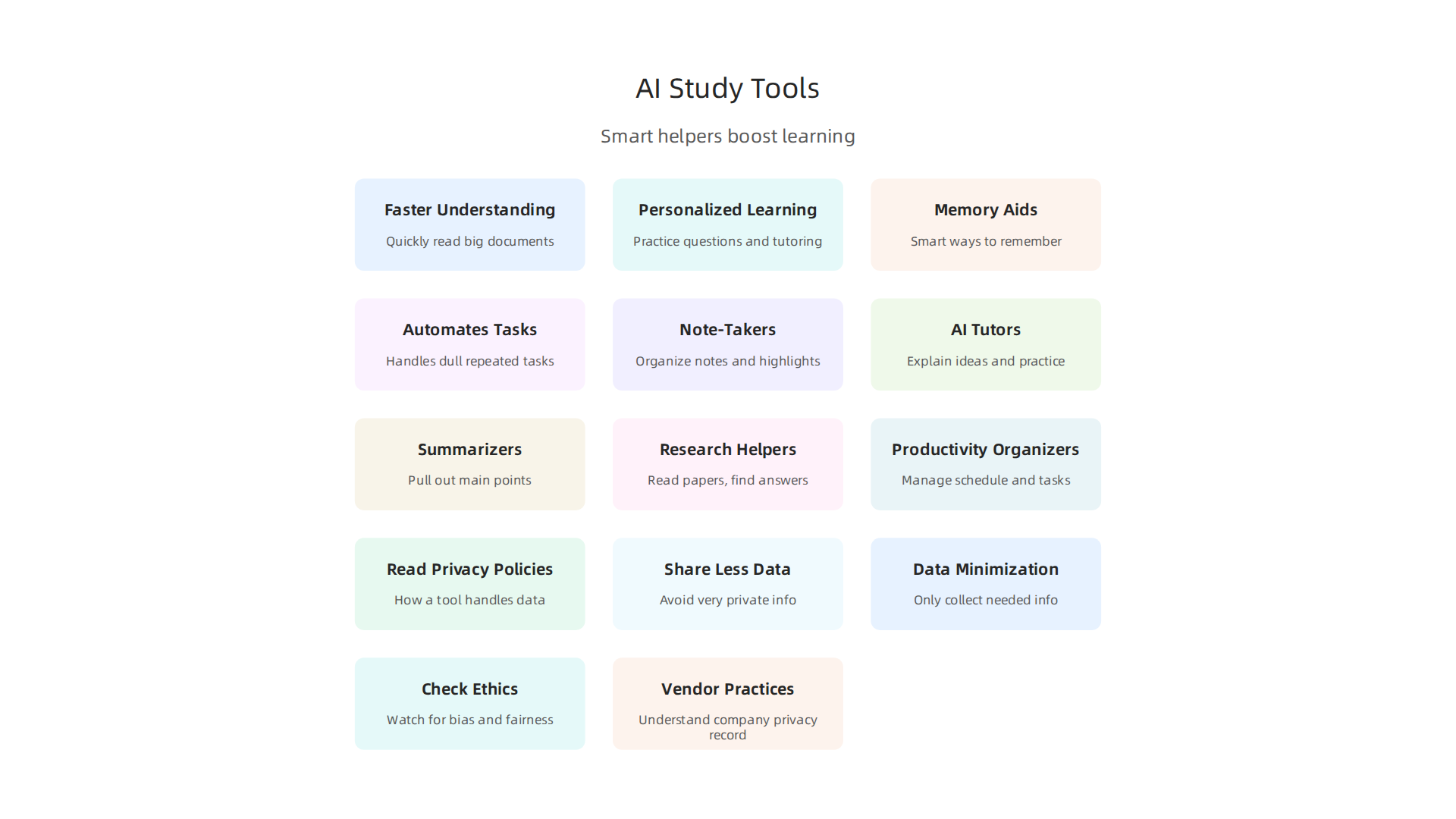
- Faster Understanding: AI tools can quickly read big documents and give you the main ideas. This is like getting a super-fast summary. It saves you a lot of time and helps with content synthesis, meaning putting different pieces of information together easily.
- Learning Just for You: AI can make practice questions and lessons that fit exactly what you need. If you are getting ready for a job interview, an interview ai tool can give you practice questions and feedback. This makes learning feel more personal, like having a private tutor. It helps with ai mastering new subjects by focusing on your weak spots. You can even find "readdy ai" tools that offer quick, tailored learning paths.
- Memory Aids: Some AI tools use smart ways to help you remember things better. They can remind you to review facts you learned earlier, making sure they stick in your mind.
- Doing More with Less Time: AI can handle the dull or repeated parts of studying. This frees you up to focus on understanding the harder stuff. In fact, many people already feel this benefit. A report from 2026 showed that 65% of people in companies using AI said it made them more productive and efficient at work Rising AI Adoption Spurs Workforce Changes.
What to Watch Out For with AI Study Tools
Even with all these benefits, AI study tools are not perfect. It’s important to use them wisely:
- AI Can Make Mistakes: Sometimes, AI tools can make up information that is not true. This is called "hallucination." It means you should always check important facts from another source to make sure they are correct.
- Fairness Issues: AI learns from data. If that data is not fair or complete, the AI can sometimes show bias. This means it might not give fair or helpful answers to everyone.
- Protecting Your Information: When you use AI tools, you might put in personal information or things you are studying. You need to be careful about your data privacy and understand how these tools use and protect your data. Learning about the real dangers of AI in 2026 can help you understand these risks better.
- Don’t Rely Too Much: It’s easy to let AI do all the heavy lifting. But true learning comes from thinking for yourself and understanding deeply. While AI helps, it’s still up to you to learn and verify. A 2026 survey found that while many students use AI, only a small number felt it completely changed their learning, with about a quarter saying it gave them no clear value AI in Higher Education Global Survey 2026.
Knowing what AI study tools can and can’t do is a good first step. The next step is to understand the different kinds of these tools and how to pick the best ones for you. Not all AI tools are made for the same thing, so choosing wisely can make a big difference in your learning journey.
Different Kinds of AI Study Tools
AI study tools come in many shapes and sizes. Here are the main types you’ll see in 2026:
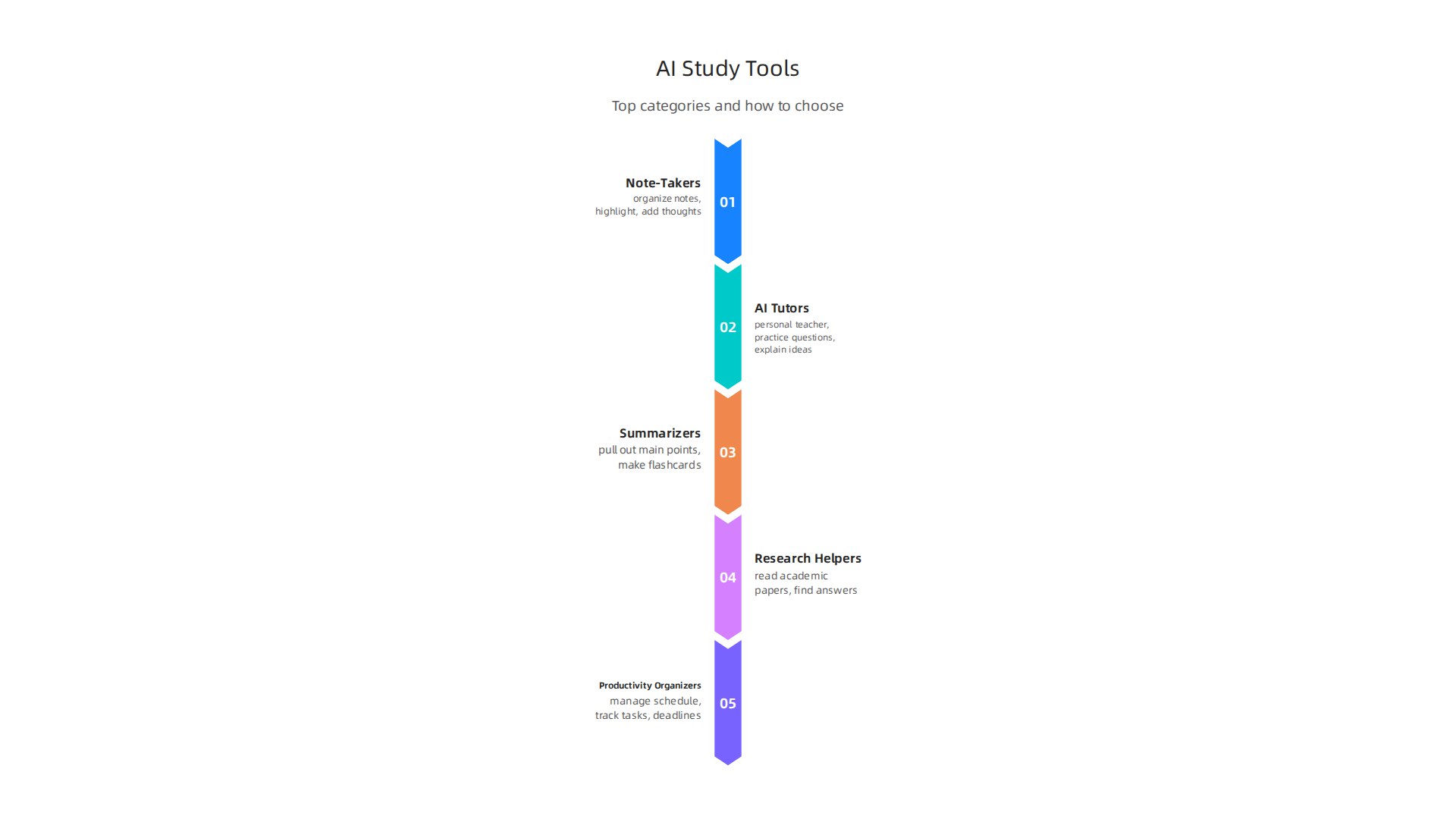
- Note-Takers and Annotators: These tools help you organize your notes, highlight important parts, and add your own thoughts. They can even make smart summaries of your notes.
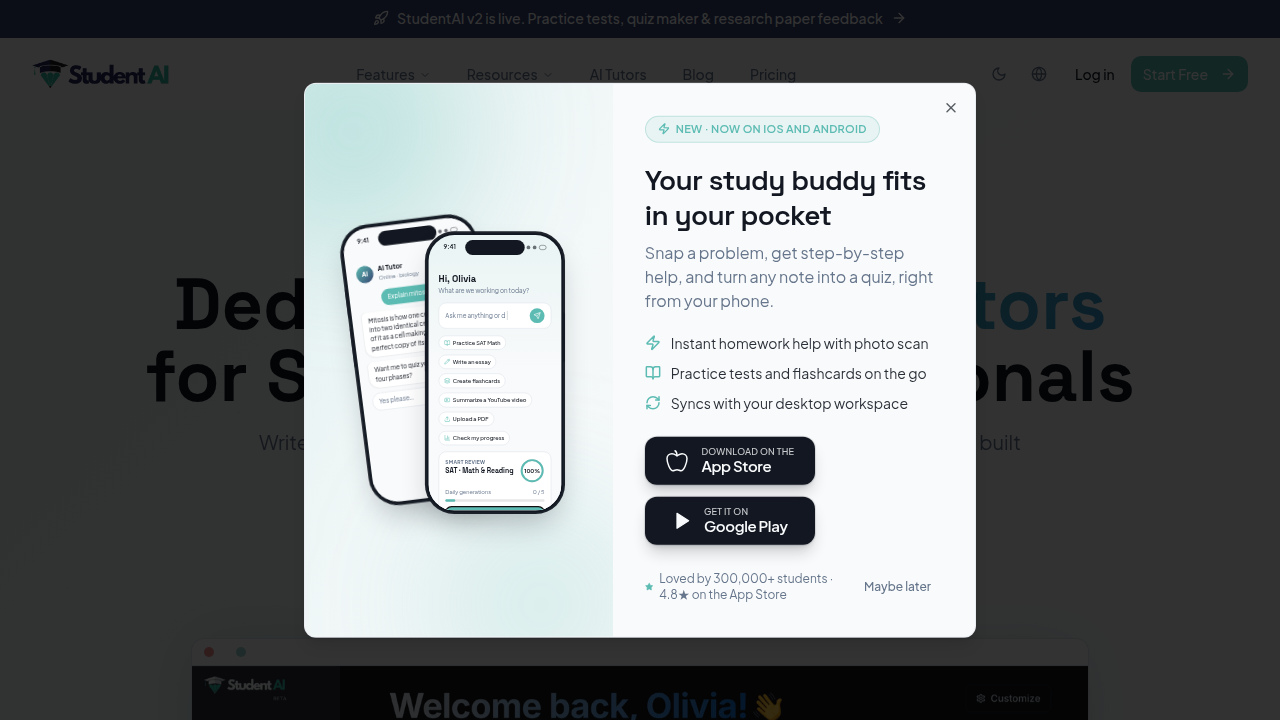
- AI Tutors and Practice Buddies: These are like having a personal teacher. They can give you practice questions, explain hard ideas, and help you get better where you’re struggling. Some even offer specific help like an interview ai for job talks or tools that focus on ai mastering new subjects. You might also find "readdy ai" tools that quickly create custom learning plans just for you. Programs like Khanmigo or StudentAI.app fit into this group, offering explanations and practice tests Best AI Tools for Students in 2026: The Complete Guide – StudentAI.
- Summarizers and Flashcard Makers: If you have a long article or a big textbook, these tools can quickly pull out the main points. They can also turn those points into flashcards, helping you review faster. StudyPDF is one such tool that makes flashcards and quizzes from your uploaded files 10 Best AI Study Tools for Students in 2026.
- Research Helpers: These AI tools can read many academic papers and help you find answers to your research questions. They save you time digging through tons of information. Elicit is a good example of an AI research assistant Best AI Tools For Students 2026: Guide to Smarter Studying.
- Productivity Organizers: These tools help you manage your study schedule, track tasks, and remember deadlines. MyStudyLife is a popular tool for planning and organizing your studies Best AI Study Tools for Students in 2026 | Apps, Websites & ….
How to Choose the Right AI Study Tools for You
Picking the best AI tool means thinking about what you need. Here are some simple questions to ask yourself:
- What are your learning goals? Do you need help with notes, understanding tough topics, preparing for tests, or doing research? Your goal should guide your choice.
- Does it actually work well? Look for tools that have good reviews and show that they are effective. Some studies, like those from Fora Soft, compare different tools to help you see which ones are best for certain tasks AI Study Tools: 9 Best Compared for 2026 – Fora Soft.
- How does it handle your information? This is very important. Make sure the tool protects your data privacy. Trustworthy AI tools should be clear about how they use your data and respect your personal information. Many guidelines, including those from the European Commission in 2026, stress the need for AI tools to be transparent and protect privacy EU AI Ethics Guidelines for Education (2026).
- Does it fit into how you already study? The best tools work smoothly with your current habits. If it’s hard to use or doesn’t fit your way of learning, you probably won’t use it much.
- What does it cost? Many tools offer free versions or trials. Decide if a free tool meets your needs or if a paid option offers enough extra value to be worth the money.
By thinking about these points, you can find the AI study tools that truly help you learn smarter and more effectively.
To stay on top of all the latest AI advancements and how they might affect your learning and work, make sure you get clear daily updates.
The AI Newsletter Worth Reading
Using AI study tools is not just about having them. It’s about knowing how to fit them into your daily study routine so they truly help you. Just like choosing the right tool, using it well makes a big difference.
Integrating AI Study Tools into Daily Workflows
Bringing AI study tools into your learning can seem tricky at first. But by taking simple steps, you can make them a natural part of how you study.
Here’s a step-by-step guide:
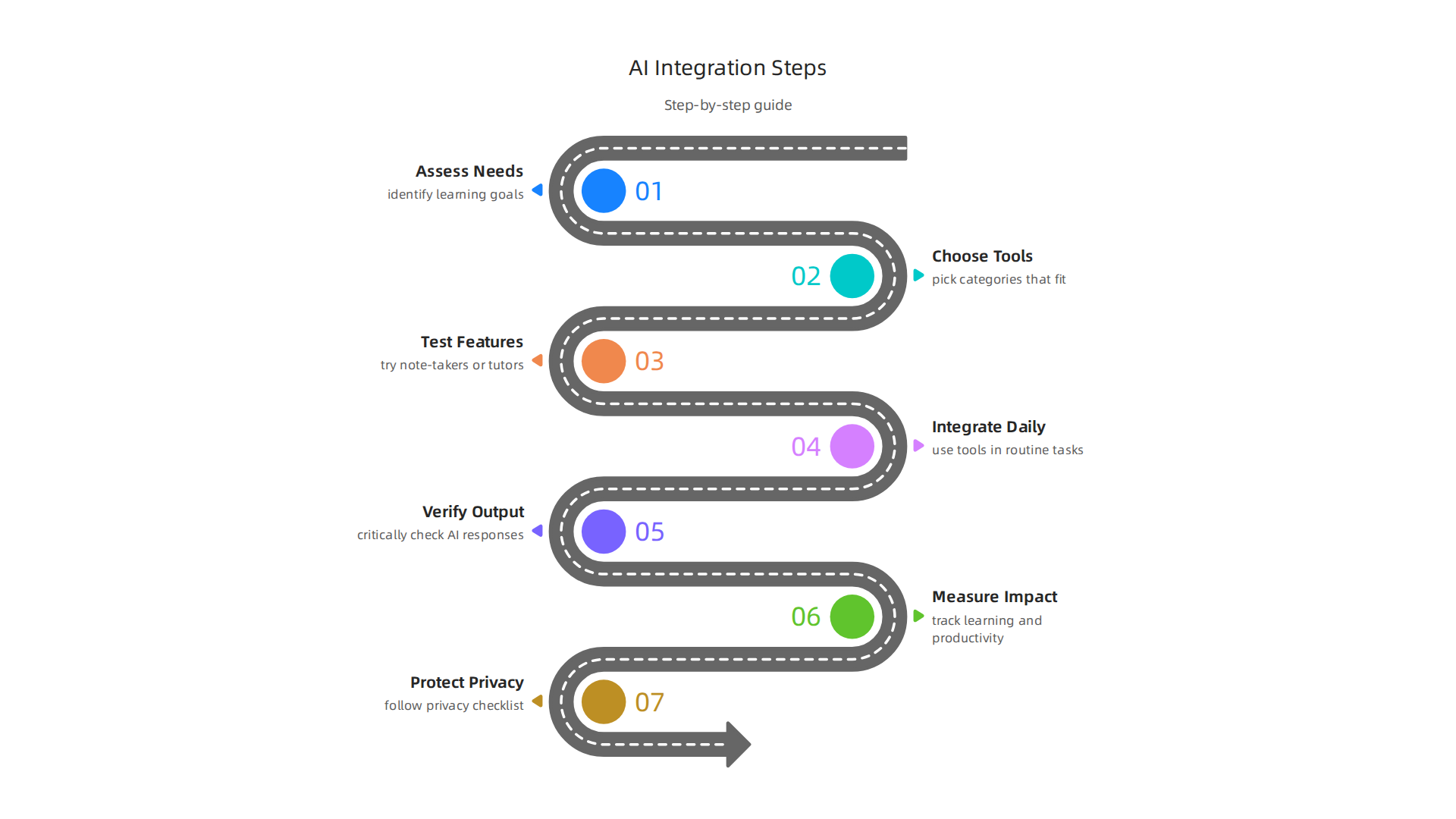
- Start Small: Don’t try to use many new AI study tools all at once. Pick just one or two that address your biggest needs, like a summarizer for long readings or an AI tutor for a tough subject.
- Set Clear Goals: Before you use an AI tool, know what you want it to do. For example, "I will use this AI note-taker to create summaries of my lectures" or "I will use this practice buddy to get 80% on my math quizzes."
- Learn the Ropes: Spend a little time to understand how your chosen AI study tool works. Most tools have tutorials or simple guides. The better you know the tool, the more you’ll get out of it.
- Build New Habits: Try to use your AI tools at specific times or for specific tasks. Maybe you always use the summarizer right after a lecture, or the flashcard maker before a review session. Making it a habit helps it become part of your normal workflow.
- Review and Adjust: After a week or two, think about how the AI tool is working for you. Is it saving you time? Helping you learn better? If not, maybe you need to use it differently or try a different tool. You might even find that some AI tools work better as general best AI productivity tools for 2026 rather than specific study helpers.
Balancing Automation with Critical Thinking and Verification
While AI study tools are powerful, they are helpers, not perfect thinkers. It’s super important to keep your own brain active and always check what the AI gives you.

- Always Double-Check Facts: AI tools can sometimes make mistakes or "hallucinate" information, meaning they make things up that sound real but aren’t. Always confirm important facts, numbers, or ideas with your textbook or a reliable source. Remember that AI guidelines for teachers recommend teaching students to question AI output and look out for incorrect information.
- Think for Yourself: Don’t just copy and paste what an AI writes. Use it to get ideas, summarize, or explain things, but then put it in your own words and add your own thoughts. AI should support your learning, not do all the thinking for you.
- Understand How it Works: Trustworthy AI tools should be open about how they use your data and how they get their answers. This transparency helps you know when to trust the output and when to be more careful. Rules are being set to ensure Artificial Intelligence in Classrooms: Ethical Dimensions are technically sound and respect data privacy.
- Be Aware of Bias: AI can sometimes show bias based on the data it was trained on. This means it might present information in a way that isn’t fair or complete. It’s good to be aware of the real dangers of AI in 2026, including issues like bias.
- Focus on Understanding, Not Just Answers: The goal of studying is to learn and understand, not just to get the right answer quickly. Use AI study tools to help you grasp hard concepts, explore different viewpoints, or practice skills, but make sure the actual learning happens in your head. Knowing why data annotation tech is critical for AI accuracy can help you appreciate the human effort behind good AI and understand its limitations.
By carefully integrating AI study tools and always keeping your critical thinking sharp, you can make the most of these new technologies to boost your learning journey.
By carefully integrating AI study tools and always keeping your critical thinking sharp, you can make the most of these new technologies to boost your learning journey. But how do you know if these tools are really helping you learn and work better? It’s important to measure their impact, just like you would with any other study method.
Measuring Impact: Metrics for Learning and Productivity
To truly understand if your AI study tools are making a difference, you need to look at how they change your learning and how productive you are. This means setting up simple ways to track your progress.
Think of it like a scientist running a small test to see what works best.
Here are some key things you can measure:
- Time-to-Competency: This is about how fast you learn something new or become good at a skill. For example, if you use an AI tutor for a tough math topic, do you understand it faster than before? If you use a tool for "ai mastering" a new skill, does it cut down the time you need to feel confident? Measuring how quickly you grasp new ideas can show how well your AI tools are working. These are also known as important ways to track how well AI-driven training programs perform, helping you see the real benefits 10 KPIs for AI-Driven Training Programs.
- Retention Rates: This measures how much you remember over time. Do the AI-generated flashcards or practice quizzes help you recall information better a week or a month later? If you use AI study tools to review, you might find you don’t forget as much, which is a big win for your learning.
- Task Completion Time: How quickly can you finish your schoolwork or study tasks? An AI summarizer can drastically reduce the time spent reading long articles. An AI writing assistant might help you draft essays faster. Many people find that AI can make them more efficient, with one survey showing 65% of employees believe AI has improved their productivity and efficiency Rising AI Adoption Spurs Workforce Changes. This lets you spend more time on deeper learning or other important activities.
- Quality of Output: Are your assignments, notes, or projects better when you use AI? For example, an AI grammar checker can improve your writing, or an AI research tool might help you find more complete information. Look for higher grades or more positive feedback on your work.
Running Small Experiments and Tracking ROI
It doesn’t have to be complicated to see if AI study tools are worth it. You can do small experiments:
- Pick one area: Choose one subject or task where you’ll use an AI tool, like using an AI summarizer for your history readings.
- Compare: For a few weeks, track your metrics (like how fast you read and how well you remember the history facts). For another few weeks, study history without the AI tool and track the same things.
- Look at the numbers: Did you save time? Did you understand more? Did your grades go up? Comparing these simple numbers will give you a clear picture.
This helps you track the "Return on Investment" (ROI) for your learning. ROI basically means getting more out of something than you put into it. If an AI tool saves you hours of study time and boosts your grades, its ROI is high. For example, knowing the proven metrics for linking AI adoption to productivity, such as reductions in task completion time and improvements in output quality, can show a clear return Linking AI Adoption to Productivity: 5 Proven Metrics and a….
By thinking about these simple measures, you can better understand which AI study tools truly support your learning goals and help you progress in your academic journey. Finding the right tools is part of mastering AI in 2026 and using it to your advantage. If you want to keep up with the latest advancements in AI that can impact your studies and productivity, consider getting timely updates.
Get clear daily AI updates from The AI Newsletter Worth Reading.
Using AI study tools smartly also means thinking about something super important: keeping your personal information safe and using these tools in a fair way. When you use any online tool, especially those with AI, you share information. So, understanding privacy, security, and ethical rules is a must. This helps you protect yourself and use technology responsibly.
Privacy, Security, and Ethical Considerations
When you pick out different AI study tools, it’s like choosing a lock for your diary. You want to make sure your private thoughts stay private. This is what we call "data governance" and "consent." It’s all about who owns your data, how it’s used, and if you agree to that use.
Data Governance: Who Controls Your Information?
Data governance means there are rules about how your information is handled. For AI study tools, this includes:
- What data is collected: Does the tool need your name, your grades, or just your study questions?
- How it’s stored: Is your information kept safe with good locks (encryption) so no one can easily see it? Experts suggest looking for tools that encrypt data both when it’s being sent and when it’s sitting still Secure AI Tools for 2026: Compliance and Risk Management.
- How it’s used: Will the AI use your questions to teach itself and others, or only for your own learning? Many tools in 2026 are getting better at helping you keep your data private, with things like browser add-ons that hide sensitive words before they even get sent to the AI The Best AI Privacy Tools for ChatGPT, Claude, and ….
You want AI study tools that have clear rules about how they protect your privacy.
Consent: Saying "Yes" to Data Use
When you agree to a tool’s terms, you give your consent. It’s important to know what you’re saying "yes" to.
- Read the fine print: Does the privacy policy clearly state whether your study notes or questions will be used to make the AI better for everyone? Or will they stay just for you? If a policy says vague things like "we may use data to improve our services," it often means your information could be used for training, so be careful Best Privacy-Focused AI Tools (Protecting Your Data In 2026).
- Opt-out options: Can you tell the tool "no, don’t use my data for training"? Many good tools give you this choice. Companies really need to make sure they follow rules about not keeping your information longer than needed and letting you opt out of data use AI Risk & Compliance in 2026: What Enterprises Must ….
Vendor Risk: Choosing Your Tools Wisely
The company that makes your AI study tools is called a vendor. You need to trust them to keep your data safe.
- Reputation matters: Choose tools from companies that are known for being careful with user data.
- Ask questions: If you’re unsure, look for answers in their help sections or contact them. It’s smart to look for tools that specifically mention strong security features.
Understanding the real dangers of AI in 2026, including privacy, can help you make better choices.
A Quick Checklist for Ethical AI Use
Here’s a simple checklist to help you pick and use your ai study tools responsibly:
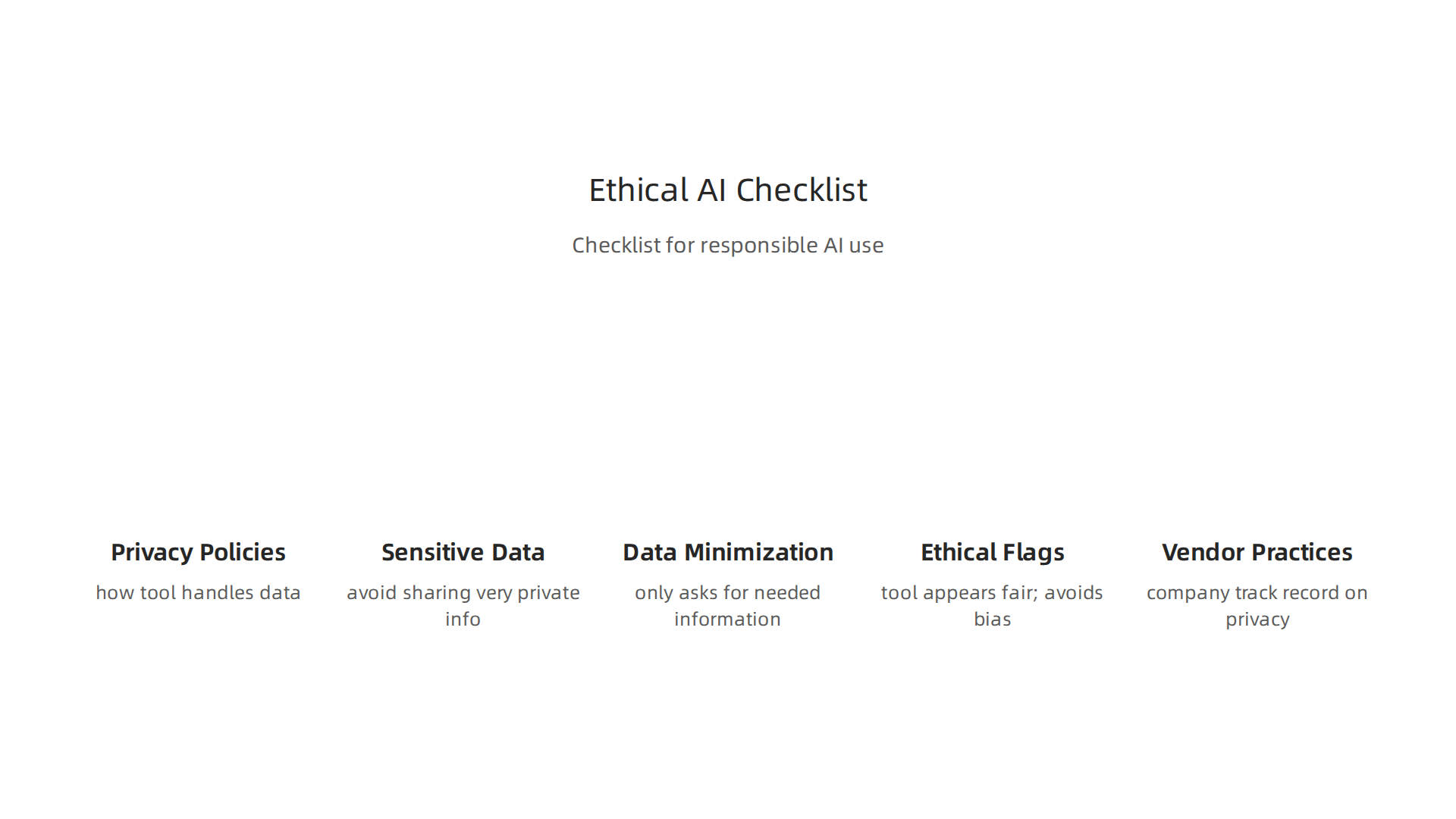
- Read Privacy Policies: Always take a moment to look at how a tool plans to handle your data.
- Share Less Sensitive Data: Try not to put very private information into any AI tool if you don’t have to. The less you share, the safer you are.
- Look for Data Minimization: Does the tool only ask for the information it truly needs to work? Good tools try to collect as little sensitive data as possible.
- Check for Ethical Flags: Does the tool seem fair? Does it avoid showing unfair bias or giving wrong information based on certain groups of people? Sometimes, it’s about common sense. If something feels off, it probably is.
- Understand Vendor Practices: Know if the company that made the tool has a good track record for privacy and security.
By keeping these things in mind, you can enjoy the benefits of AI study tools without putting your personal information at risk. It’s all part of being smart about technology in 2026.
Being smart about technology in 2026 also means looking ahead. AI study tools are always getting better, and knowing what’s coming next helps you stay on top. Let’s explore the cool new things to watch out for and how you can get ready.
Future Trends and Building a Skill Roadmap with AI
AI study tools are not standing still. They are getting smarter and more helpful every day. In 2026, we are seeing some exciting new trends that will change how we learn and work.
New Trends in AI-Assisted Learning
One big trend is that AI study tools are becoming more like personal tutors. They are getting better at understanding your needs, not just giving you answers. Here are some things to look for:
- Voice-First Tools: Imagine talking to an AI that helps you learn, just like you would talk to a friend. These tools let you use your voice to ask questions and get help. This makes learning feel more natural.
- Source-Grounded Information: A very important trend is that AI tools are now built to show you exactly where their information comes from. This means you can always check the facts. This is super helpful when you’re doing research or learning new things. Many of the best AI Study Tools for 2026 already use these features to make learning reliable.
- Super Personalized Learning: AI will learn how you best understand things. It will make study plans that fit you perfectly, showing you more of what you need help with and less of what you already know.
- AI Mastering Complex Ideas: Future tools will be even better at breaking down tough topics into easy-to-understand parts. This helps with "ai mastering" any subject, no matter how hard it seems.
Skills Professionals Need with AI Study Tools
It’s not just students who can use these amazing tools. Professionals in all jobs can use AI to learn new skills and do their work better. Here are some important skills to focus on:
- Talking to AI Clearly (Prompt Engineering): This means learning how to ask AI the best questions. If you ask clear questions, the AI can give you much better answers. This is a top skill for anyone using AI in 2026.
- Checking AI’s Work: AI is smart, but it’s not perfect. You still need to use your own brain to check if the information it gives you is correct and makes sense.
- Using AI for Specific Job Tasks: You can use AI study tools for many work-related things. For example, practicing for a job interview using "interview ai" tools can help you feel more ready. Some tools even offer "readdy ai" features to prepare you for new work challenges.
- Staying Updated: The world of AI changes very quickly. It’s a skill in itself to keep up with new AI tools and how to use them for your job or studies.
Your 6-12 Month Skill Roadmap
Here’s a simple plan to help you get good at using AI study tools:
- Months 1-3: Get Started. Pick one or two easy AI study tools. Use them for everyday tasks like writing summaries, making study notes, or checking your ideas. Focus on learning how to give clear commands to the AI.
- Months 4-6: Grow Your Skills. Once you are comfortable, try more advanced AI tools that are useful for your specific job or studies. Learn to combine what the AI tells you with your own knowledge. Try using AI to help you solve problems or get new ideas.
- Months 7-12: Become an Expert. Start using AI for bigger projects. This could mean practicing with "interview ai" for your next career step, or using advanced "ai mastering" techniques to become a leader in your field. The goal is to truly be able to mastering AI in 2026 to help your career grow.
To help you stay on top of all these fast changes in AI, there’s a great resource.
Get clear daily AI updates from The AI Newsletter Worth Reading.
Summary
This article explains why AI study tools matter today and how they can help busy learners and professionals learn faster and smarter. It describes concrete benefits—faster summaries, personalized tutoring, memory aids, and productivity boosts—while also calling out key limits like hallucinations, bias, and data-privacy risks. The piece breaks down main tool types (note-takers, tutors, summarizers, research helpers, productivity organizers), gives practical guidance for choosing tools that fit your goals and budget, and shows how to integrate them into daily routines. It also explains simple metrics and small experiments to measure impact and ROI, and offers an ethics checklist for protecting your data. Finally, the article highlights future trends (voice-first help, source-grounding, super-personalization) and a 6–12 month roadmap for building AI skills so you can use these tools responsibly and effectively.