

It’s 2026, and AI is changing how we work faster than ever. For folks building new things, like developers and product teams, it can feel like a lot to take in. There’s so much new information about AI every day, it’s tough to know what’s truly important for your work and what’s just noise. This is where understanding tools like Flow AI becomes super important.
Many businesses are trying to figure out their AI plan for 2026 to stay ahead What’s Your AI Strategy for 2026? The Roadmap to Future-Proofing AI Innovation. But it’s hard to make smart decisions when there’s so much going on. We often find ourselves lost in a sea of data, struggling to pick out the useful bits for our decisions AI needs.

If you want to keep up with important AI changes, it’s vital to stay informed on Tracking AI Innovators: What Business Leaders Must Know in 2026.
This article will help you understand why Flow AI matters right now. We’ll look at what this platform can do, what developer tools it offers, and how it connects with your other systems. We’ll also talk about the costs and how to keep things safe when building with app kits AI. By the end, you’ll have a clear guide on how to make smart choices for AI solution development and use Flow AI as a powerful AI assistant for developers. To get even more straightforward daily insights into AI, consider joining Your Daily AI Shortcut.
Flow AI is like a smart toolbox for people who build computer programs. It’s a special platform designed to help developers create powerful AI systems more easily. Think of it as having all the right parts and instructions to build something complicated without starting from scratch.
At its heart, Flow AI has a few main parts:
- Core Components: These are the smart building blocks. They include pre-made AI tools that can do different jobs, like understanding human language or spotting things in pictures. It also has ways to connect to many kinds of data, so the AI can learn and work with information from different places. These connections often use something called APIs, which are like special doorways that let different computer programs talk to each other Team Status Report Presentations. Flow AI also offers "app kits AI," which are like starter packs for building common AI features into applications.
- Runtime Models: This is about where and how Flow AI’s smarts actually work. Some parts of Flow AI run in the "cloud," which means they use big computer servers over the internet. This is good for heavy tasks that need a lot of power. Other parts can run "at the edge," meaning they work right on a device, like a smart camera or a robot. This helps with making quick "decisions AI" needs without sending data far away.
- Integration Endpoints: These are the ways Flow AI connects to other software you already use. Developers use things called APIs (Application Programming Interfaces) and SDKs (Software Development Kits) to link Flow AI’s power to their own apps and systems. These tools make Flow AI a useful "AI assistant for developers." Many helpful AI tools are available to simplify complex tasks for businesses in 2026 AI Tools with Descriptions.
When we talk about how Flow AI is put together, there are a few important ideas for developers:
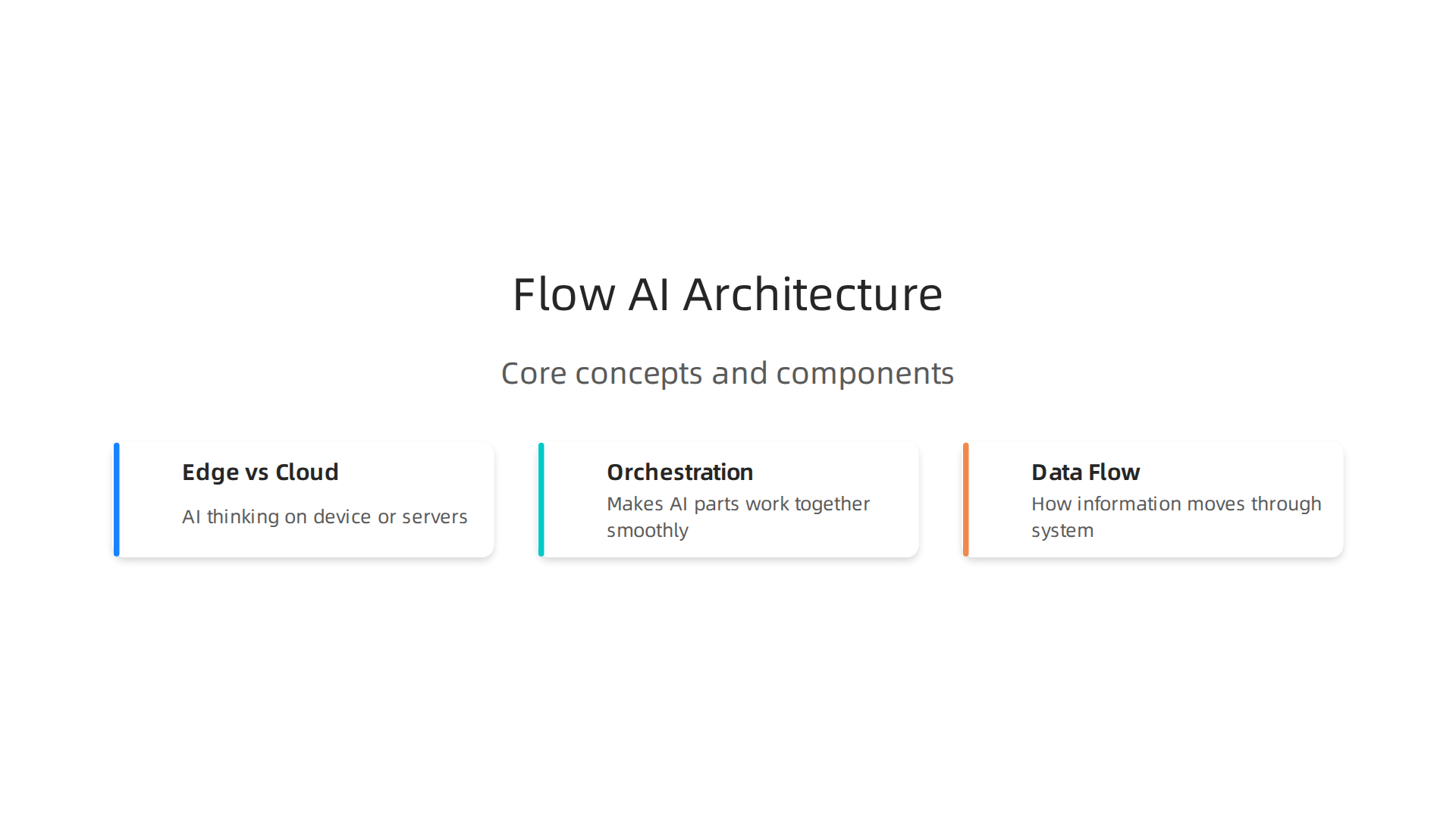
- Edge vs. Cloud: Developers choose if the AI thinking happens mostly on the device (edge) or on big internet servers (cloud). This choice depends on how fast the AI needs to react and how much data it needs to handle.
- Orchestration: This is like a conductor leading a band. Orchestration in Flow AI makes sure all the different AI parts work together smoothly. It guides how tasks flow from one AI component to the next, which is key for successful "AI solution development."
- Dataflow: This simply means how information moves through the Flow AI system. It’s about making sure the right data gets to the right AI tool at the right time. Understanding dataflow helps developers build AI systems that are efficient and reliable. You can find more details on how AI systems are changing various workflows in reports like the Agentic AI in Engineering and Manufacturing: Industry Perspectives.
For developers looking to stay on top of the latest in AI, learning about how these systems are built is a must. If you want to learn more about when AI started, you can explore the When Did AI Start Uncover the True Timeline of Artificial Intelligence.
For developers, getting Flow AI to do cool things means using special tools. These tools are like the wrenches, screwdrivers, and blueprints that help you build and put together your AI projects. They make it much easier to turn ideas into working "ai solution development" systems.
Developer Tools: SDKs, APIs, CLIs, and Local Dev Workflows
Think of developer tools as your personal "ai assistant for developers." Flow AI offers several kinds of these tools to help you build smart "app kits AI" features and powerful AI solutions.
- SDKs (Software Development Kits)
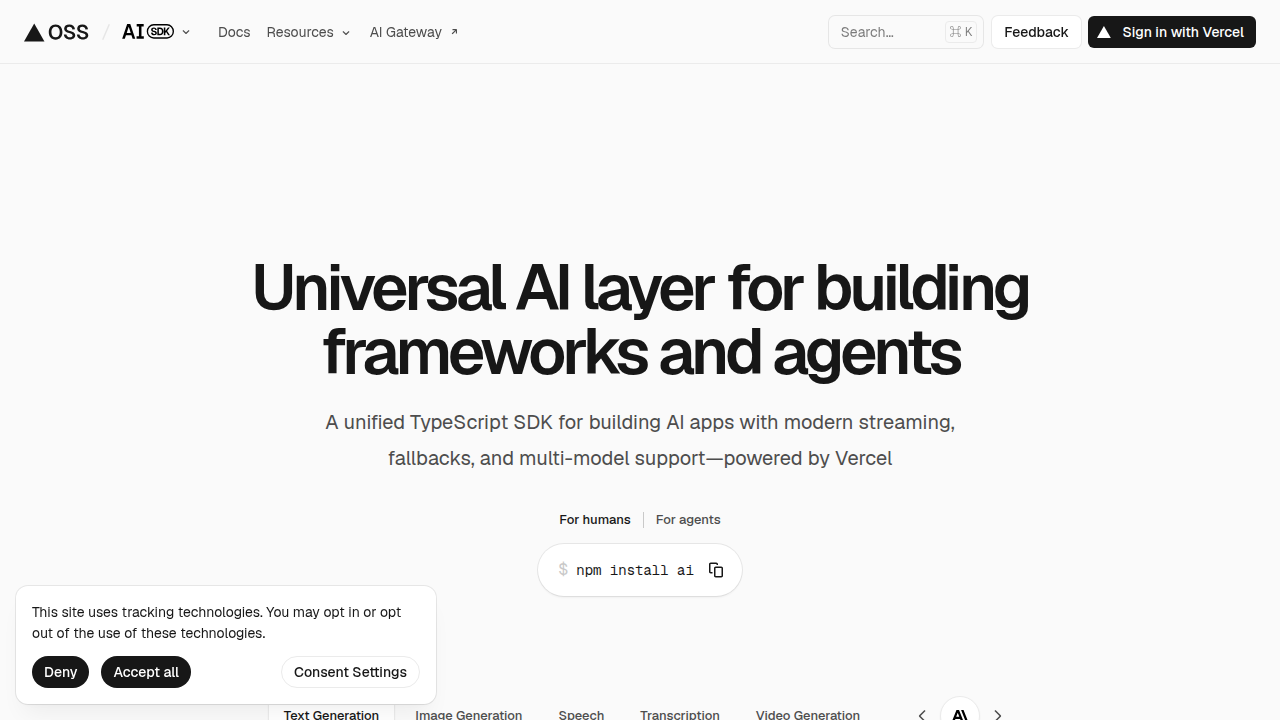
SDKs are like big boxes of parts and instructions for building specific things. Flow AI provides SDKs that let developers write code in different programming languages, such as Python or JavaScript. These SDKs have ready-made code snippets and functions that connect directly to Flow AI’s core smarts. This means you don’t have to build every piece from scratch. For example, if you want to use a smart AI feature in your app, an SDK helps you plug it in quickly. Many platforms offer helpful SDKs to get started building AI applications, like the Microsoft Foundry Quickstart. You can also find guides like Getting Started – AI SDK that show how to use these kits.
-
APIs (Application Programming Interfaces)
APIs are like special doors that let different computer programs talk to each other. When you use Flow AI, its APIs allow your app to send information to the AI and get "decisions AI" needs back. This is how your app can ask Flow AI to do a task, like understanding what someone is saying or sorting through pictures. APIs are super important for making Flow AI work with other software you already use. -
CLIs (Command Line Interfaces)
CLIs are tools that let developers type commands into a computer to control Flow AI. Instead of clicking buttons, you use text commands. This might sound old-fashioned, but it’s very fast and powerful for experienced developers. CLIs help automate tasks, manage different parts of your Flow AI project, and get quick information. -
Local Development and Testing
It’s important to test your AI projects to make sure they work right. Flow AI lets developers set up a mini version of the system on their own computer. This is called "local development." It means you can try out new ideas, fix problems, and see how your Flow AI solution behaves without affecting the main system or needing a live internet connection all the time. This helps developers work faster and find mistakes early.
When you’re building with Flow AI, these tools help connect it to different parts of your overall project:

- Back-End Services: This is the "brain" part of many applications that handles data and logic. Flow AI easily connects to these services, adding smart AI power to your app’s core functions.
- Data Pipelines: These are like streams that carry data from one place to another. Flow AI can fit into these pipelines to process data as it flows through, learning from it or making real-time "decisions AI" might need.
- Front-End Embedding: This means putting Flow AI features directly into the parts of an app that users see and interact with, like buttons or text boxes. For example, a chatbot built with Flow AI could be directly embedded into your website.
Using these tools well is key for any developer working with Flow AI in 2026. They help speed up the process of building smart systems, ensuring everything works together smoothly. If you’re looking for more ways to stay on top of daily AI news and insights, consider subscribing to Your Daily AI Shortcut. You can also explore how other "Best AI Productivity Tools for 2026" are helping developers create amazing things.
Getting started with Flow AI involves a clear path for developers, much like following a recipe to bake something tasty. Once you have the tools, knowing the steps helps you build amazing AI projects, or "ai solution development" systems, more smoothly.
How Developers Get Started with Flow AI
Here’s a simple path a developer might follow to build with Flow AI:
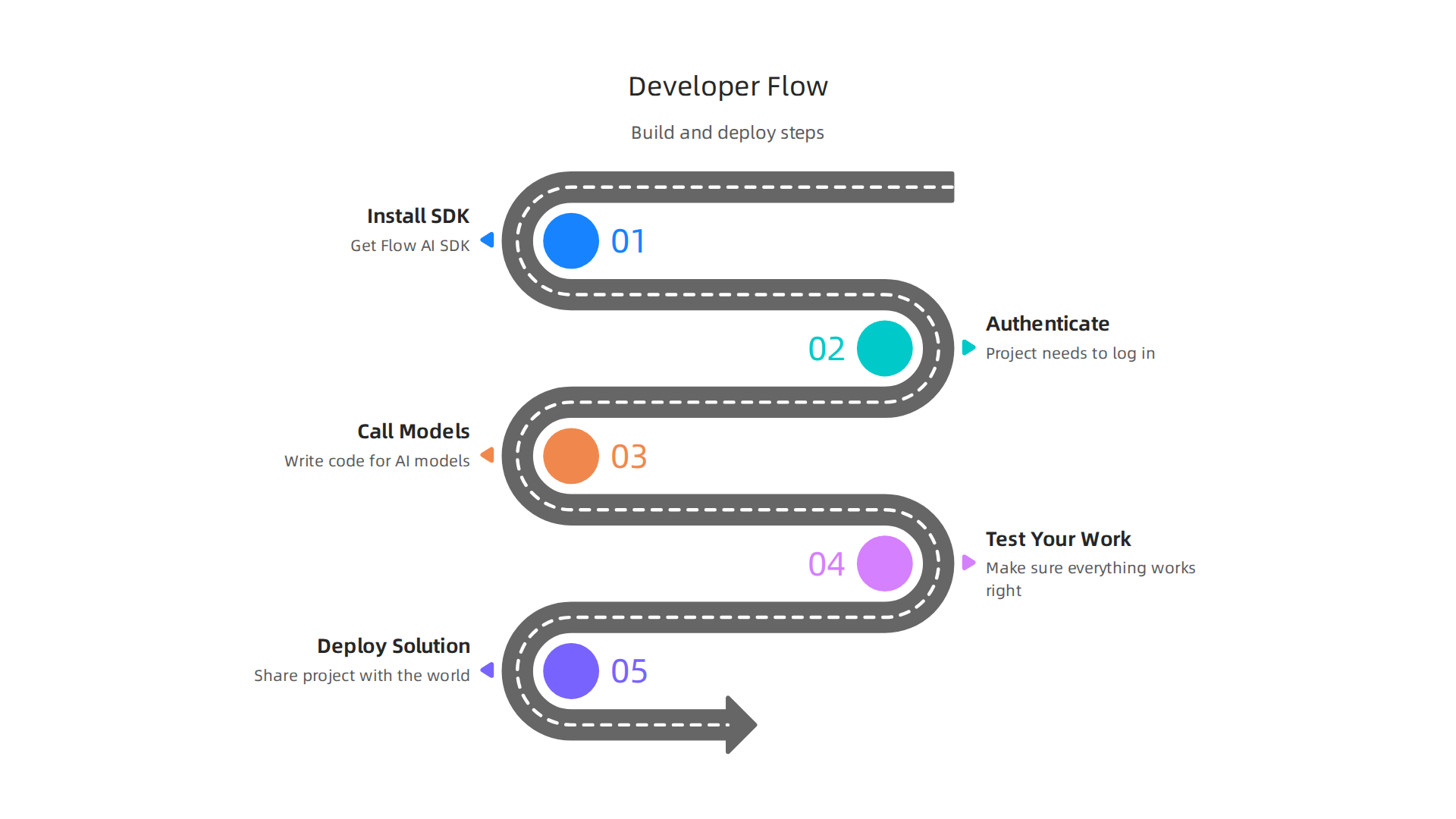
- 1. Install the SDK: First, you’ll need to get the Flow AI SDK for your chosen programming language. This is like unboxing your new toolbox. For example, some developers might use a quickstart guide like the Quickstart CrewAI Documentation to begin.
- 2. Authenticate: Next, your project needs to "log in" to Flow AI. This step is called authentication. It tells Flow AI who you are and that you’re allowed to use its smart features. Think of it as showing your ID to get into a special building.
- 3. Call Models: With the SDK set up and authenticated, you can start making Flow AI do work. This means writing code that tells the AI models what to do, like asking for "decisions AI" needs or to understand information. Guides such as the Google AI Studio quickstart can help you learn how to make these calls.
- 4. Test Your Work: Before your AI project goes live, it’s very important to test it. You can do this on your own computer, as mentioned before, to make sure everything works just right. This helps catch any problems early on.
- 5. Deploy Your Solution: When you’re happy with your project, you’ll want to share it with the world. This is called deployment. It means moving your "ai solution development" from your computer to where others can use it. For instance, you could learn how to set up and deploy an AI agent on the Flow blockchain using a guide like Eliza on Flow.
How Flow AI Connects to Other Systems
Flow AI doesn’t work alone. It’s built to connect with many other important parts of how software is made today. These connections help Flow AI act as a smart "ai assistant for developers."
- Cloud Services: Many companies use big computer systems in the cloud, like those from Amazon, Google, or Microsoft. Flow AI easily hooks into these cloud services, giving your cloud-based apps smart features.
- Continuous Integration/Continuous Deployment (CI/CD): This is a fancy way to say that when developers make changes to code, those changes are automatically checked and sent out. Flow AI can be part of this automatic process, making sure your "app kits AI" features are always up to date.
- Containerization: Imagine packaging your entire AI project, along with everything it needs to run, into a neat little box. That’s containerization. It means your Flow AI solution can run the same way everywhere, no matter the computer.
- Observability: Once your Flow AI project is running live, you want to watch it to make sure it’s working well. Observability hooks are like sensors that let you see what your AI is doing and how it’s performing.
By following these steps and using these connections, developers can build powerful AI systems with Flow AI in 2026. These tools make it simpler to integrate smart features into almost any kind of software. If you’re always looking for ways to make your development process better, exploring the Best AI Productivity Tools for 2026 can offer even more insights.
After building and connecting your Flow AI projects, the next big step is making sure they work well for many people, all the time. This means thinking about how to design your "ai solution development" so it can grow and stay healthy in the real world.
Architecture, Scaling Patterns, and Observability for Production
When you create an AI project with Flow AI, you want it to handle a lot of work. This is called scaling. Scaling means your AI system can serve many users or process huge amounts of data without slowing down or breaking.
There are two main types of work AI does:
- Inference: This is when the AI uses what it learned to make smart guesses or
decisions AIneeds. For example, if you build anapp kits AIto suggest movies, inference is when it recommends a movie to a user. - Training: This is when you teach your AI new things with more data. Training workloads can be very big and need lots of computer power.
Flow AI helps you think about how these parts grow. Sometimes, your AI needs to remember past talks with a user. This is called a "stateful flow." Other times, each new request is fresh, and the AI doesn’t need to remember anything from before. This is a "stateless flow." Flow AI can support both kinds of needs for your ai solution development. Platforms like the Gemini Enterprise Agent Platform are built to help developers scale and optimize these kinds of AI agents.
To make sure your Flow AI projects always work well, you need to watch them closely. This is called observability.

It means you have ways to see what your AI is doing inside, catch problems early, and fix them fast.
Here’s how you do that for Flow AI systems in 2026:
- Logging: Imagine your AI writes down everything it does, like a diary. This "diary" is called logs. Looking at logs helps you understand what happened step-by-step if something goes wrong.
- Monitoring: This is like a health check for your AI. You set up tools to constantly watch how fast your Flow AI is working, if it’s using too much computer power, or if it’s making good
decisions AIexpects. - Debugging: When you find a problem, debugging is the process of figuring out why it happened and how to fix it. Good observability tools act like an
ai assistant for developers, giving you clues to solve issues quickly. Having clear data about how your AI is performing is key here, and that’s why data specialists are more critical than ever in the age of AI.
By planning for strong architecture, smart scaling, and careful observability, you can build Flow AI solutions that are ready for prime time. These steps help your AI projects run smoothly and serve many users reliably.
If you want to keep up with the latest AI trends and insights that impact your daily work, consider joining our community. Your Daily AI Shortcut delivers simple daily AI insights directly to your inbox.
After making sure your Flow AI projects can handle a lot of work, it is also important to look at how well they are actually doing. This means checking their speed, how much they cost, and if they are safe to use. You need to set clear goals for these things when you are building your ai solution development.
Performance, cost, and security: what to benchmark and monitor
When you build an app kits AI with Flow AI, you want it to work fast and not cost too much. You also need to make sure it is secure. Here are the main things to watch closely:
How well is your AI performing?
You need to measure some key numbers to know if your Flow AI is working well. These are called Key Performance Indicators, or KPIs:
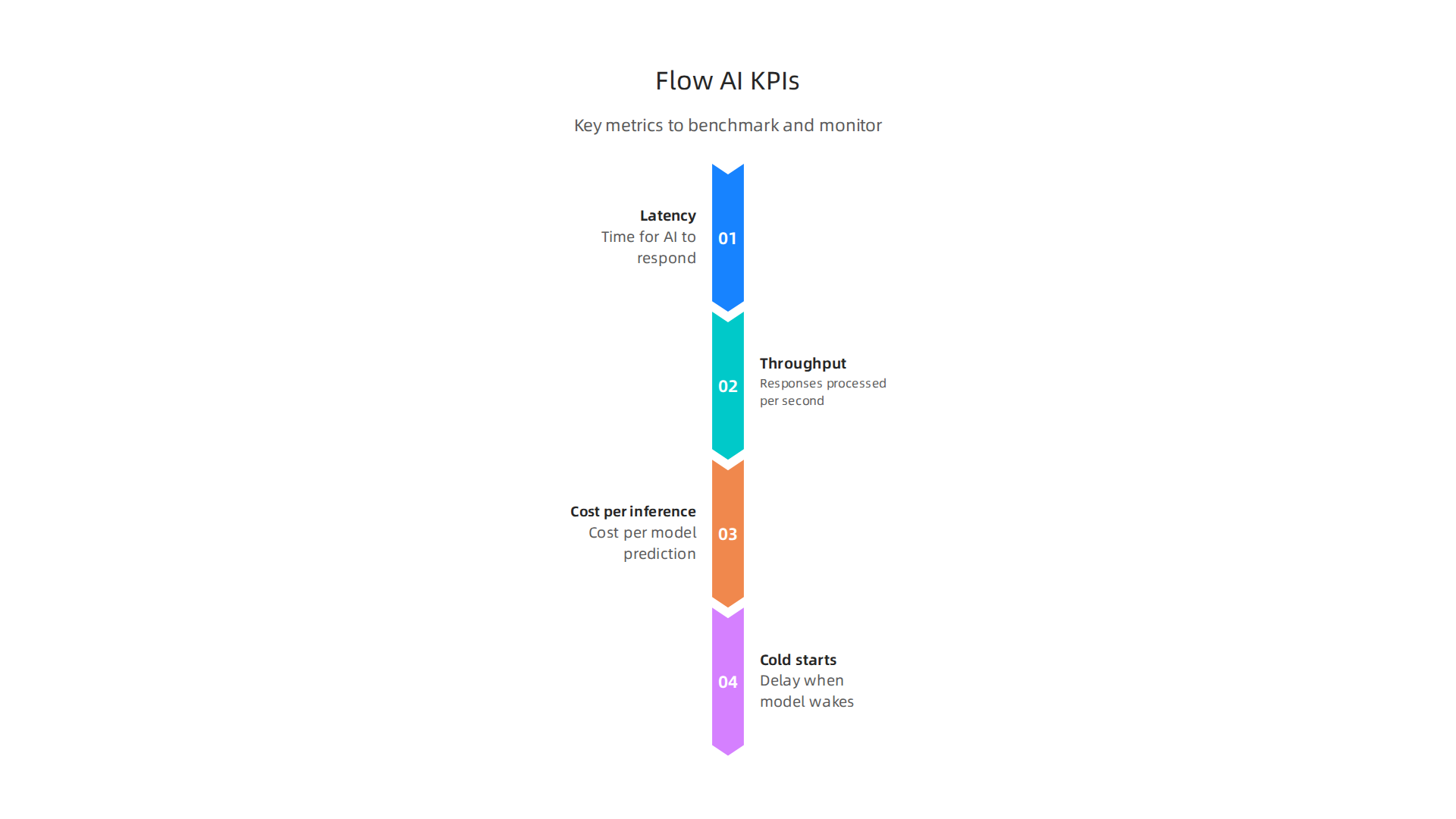
- Latency: This is how long your AI takes to give an answer. If a user asks a question, how many seconds does it take for the AI to reply? You want this to be as low as possible.
- Throughput: This is about how many answers your AI can give in a certain amount of time. Can it handle 100 questions per second, or only 10? More is often better, especially if many people are using your AI.
- Cost per inference: Every time your AI makes a smart guess or
decisions AIneeds, it costs a little bit of money. This is important to track so your project stays within budget. Research, such as the Performance and Cost Benchmarking of Real-Time Data Platforms v1 by GigaOm, can help you understand how to measure these costs. - Cold starts: Sometimes, if your AI hasn’t been used for a while, it needs a moment to "wake up." This first answer might take a little longer. You need to decide if this delay is okay for your users.
Often, you will find you need to make choices. For example, making your AI super fast might cost more money. Or saving money might mean it is a bit slower. Finding the right balance for your ai solution development is key.
Keeping your AI safe and secure
Security and following rules are very important for any Flow AI project. You are often dealing with important data, so you need to keep it safe.
- Data residency: This refers to where your data is physically stored. Some countries have strict laws that say data must stay within their borders. Your Flow AI setup needs to follow these rules.
- Encryption: This is like putting a secret lock on your data. Only people with the right key can open and see it. All your data, whether it is sitting still or moving, should be encrypted to protect it.
- Access control: You need to decide exactly who can see or change your AI models and the data they use. Not everyone should have access to everything. This protects against mistakes or bad actors.
- Governance: This is about having clear rules and ways to make sure your AI is always used in a fair, safe, and correct way. This includes understanding and reducing risks, like when an AI makes up information, sometimes called the "hallucination tax," which is important for dependable enterprise AI solutions, as noted in The Hallucination Tax: Defensible Enterprise AI. Knowing what to do when problems arise is part of being a good
ai assistant for developers. Keeping up with overall AI safety is also crucial, as detailed in the International AI Safety Report 2026.

By keeping a close eye on these points, you can make sure your Flow AI project is not only powerful and efficient but also trustworthy and secure. For more insights on managing AI adoption, spending, and risks, you might look at reports like the Flexera 2026 AI Pulse Report: Adoption, spend and risk. Knowing how to monitor and evaluate all this data is also essential, and there are many resources that can help you learn How to Choose Data Analysis Tools in 2026 for AI Professionals.
After making sure your Flow AI projects can handle a lot of work, it is also important to look at how well they are actually doing. This means checking their speed, how much they cost, and if they are safe to use. You need to set clear goals for these things when you are building your AI solution development.
Practical use cases, templates, and developer-first case studies
Once you know your Flow AI project is secure and performs well, the next step is to put it to use. This means building real-world tools that help people and businesses.

Flow AI makes it easier for developers to create helpful AI solutions with many examples and starter kits.
Building smart apps with Flow AI
Flow AI helps developers make different kinds of smart apps. Here are some examples of what you can build:
- Retrieval-augmented apps: Imagine an app that can quickly find answers from huge amounts of information. This is great for customer support or making a smart search tool for your company’s documents.
- Docs assistants: These are like smart helpers that can read and understand your manuals or reports. They can answer questions about them, write summaries, or even help you create new documents.
- Automated pipelines: Think of these as smart assembly lines for data. They can collect information, make sense of it using AI, and then use that understanding to make
decisions AIsystems need. This saves a lot of time and effort. - Real-time agents: These AI tools can react super fast, almost like a real person. They can power smart chatbots, help with live monitoring, or act quickly in online games. You can find many ideas for these in a collection of 500+ AI Agent Projects & Use Cases. For those interested in seeing how these AI agents fit into coding, understanding an LLM coding workflow going into 2026 can be very helpful.
Building mobile apps with AI is also a big trend in 2026. You can learn how to create your own apps using these smart tools, as shown in tutorials like How to Actually Build Mobile Apps with AI in 2026.
Speed up your work with templates and checklists
One of the best ways Flow AI helps developers is by offering ready-to-use templates and checklists. These tools mean you don’t have to start from scratch. Instead, you can begin prototyping your ai solution development in days, not weeks.
- Starter templates: These are like pre-built blueprints for your AI apps. They have the basic parts already in place, so you can focus on adding your unique ideas. For example, there are templates to Accelerate Building Automations with Prebuilt Business Processes. They are especially useful for setting up an
app kits AI. You can also find help with overall app structure from resources like the Guide to app architecture – Android Developers. - Developer checklists: These guides help you make sure you’ve thought of everything important for your project. This prevents you from missing key steps and keeps your project on track.
Using these tools makes Flow AI a great ai assistant for developers. By having a clear plan and using these helpful starting points, you can make powerful AI tools faster and more easily. For other ways to boost your building speed, check out some of the Best AI Productivity Tools for 2026.
To keep up with all the new tools and insights in AI, make sure you’re always informed.
Join Your Daily AI Shortcut for simple daily AI insights.
Summary
This article explains Flow AI as a developer-focused platform that bundles prebuilt models, data connectors, runtime options, and starter "app kits" to speed AI solution development. It covers the core architecture (cloud and edge runtimes), orchestration and dataflow considerations, and the integration points—SDKs, APIs, CLIs, and local dev workflows—that let you embed Flow AI into back ends, data pipelines, and front ends. You’ll learn a clear onboarding path: install an SDK, authenticate, call models, test locally, and deploy, plus how to connect Flow AI to CI/CD and containerized environments. The guide also walks through production topics: scaling inference vs training, stateful vs stateless flows, observability (logging, monitoring, debugging), and the KPIs to track like latency, throughput, and cost per inference. Security and governance are covered with practical controls such as data residency, encryption, access control, and audit policies. Finally, the article shows concrete use cases, starter templates, and checklists to shorten prototyping time so teams can deliver reliable, secure AI features faster.