

In 2026, many big companies are looking for smarter ways to find and keep good employees. It’s a busy world, and having the right people with the right skills is key to success.

This is where special tools like eightfold ai come in. These tools help companies understand their workforce better and make smart choices about who to hire and where to place their current staff.
Think of it this way: businesses today face tough challenges with their teams.
- Hiring Speed: Companies need to find new workers fast. Waiting too long means they might lose out on the best people.
- Moving People Around: It’s important to help current employees grow by moving them to different roles within the company. This is called internal mobility. It keeps good staff happy and saves money on hiring new people from outside.
- Planning for Future Skills: Companies need to know what skills they have now and what skills they will need in the future. This helps them train their staff or hire for specific needs. This is skills-based workforce planning.
These problems are why the market for tools that help with talent intelligence is growing so fast. In fact, this market is expected to grow from $2.8 billion in 2025 to $6.7 billion by 2033, showing how important these solutions are becoming for businesses around the world Talent Intelligence Tool Market Size, Trends, 2026-2033 Forecast. This strong growth shows why companies like eightfold ai are getting a lot of attention.
They offer new ways to tackle these big talent problems using smart computer programs. If you’re wondering how to pick the right tech for your company, you might find our guide on how to choose the best enterprise AI platform for your organization helpful.
Staying updated on the latest AI tools and trends is crucial for any business leader. For clear, daily AI updates that help you make smart choices, consider subscribing to The AI Newsletter Worth Reading.
Now, let’s look closer at what eightfold ai actually offers to help companies with their teams. This smart tool is built to give businesses a clearer picture of their people, both those they want to hire and those they already have.
What Eightfold AI Actually Does: Product Overview
Eightfold AI works like a powerful brain for talent management. It uses artificial intelligence to help companies with many big tasks. At its core, eightfold ai helps businesses understand skills, match people to jobs, and plan for the future.
Here are the main things eightfold ai can do:
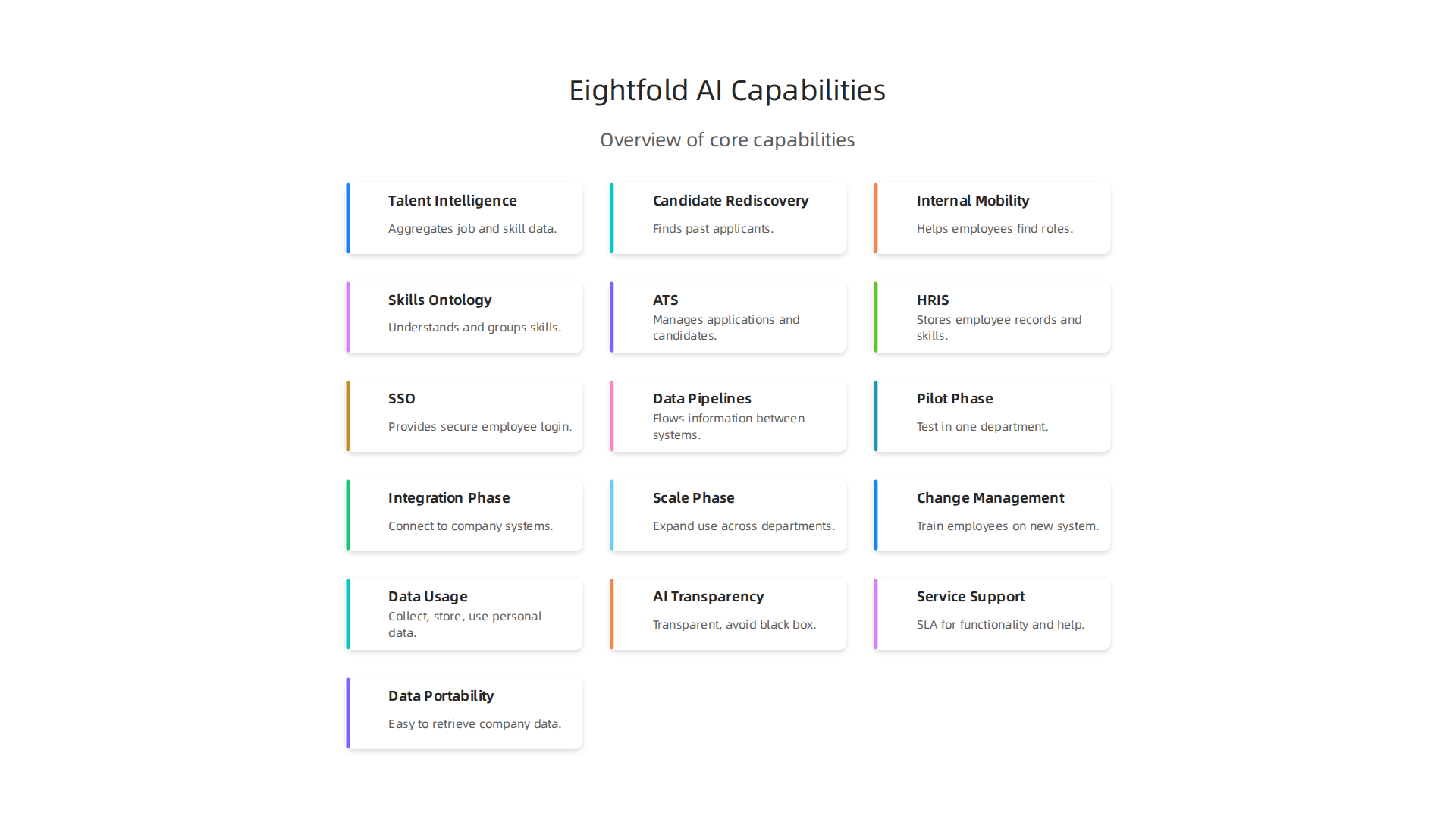
- Talent Intelligence: This means it gathers and understands a lot of information about jobs and people’s skills. It can look at data from many places, like resumes and job postings, to see what skills are needed for different roles and who has them. This helps companies know their workforce better.
- Candidate Rediscovery: Imagine you had great people apply for a job last year, but you didn’t hire them. Eightfold AI can "rediscover" those past applicants in your system. This helps companies find good people they already know, making hiring faster and easier. It’s like having a special memory for all your past talent.
- Internal Mobility: This part of the system helps current employees find new roles within the same company. It can suggest training or new positions that fit an employee’s skills and career goals. This keeps good staff happy and helps them grow, which is great for the company too.
- Skills Ontology: This is a fancy way of saying eightfold ai understands and groups together all the different skills people have. It knows that "project management" and "leading a team" are related skills. This helps the system make smarter matches between people and jobs.
Eightfold AI also connects with many other business tools that companies already use, such as systems for managing job applications or human resources. For example, it can link up with SAP SuccessFactors or Greenhouse to make sure all data works together smoothly Integrating the Eightfold Talent Intelligence Platform with …. This helps businesses avoid manual data entry and makes their talent processes more efficient. You can learn more about how different AI models are changing industries in our article on how AI models in 2026 are transforming every major industry.
All these tools from eightfold ai help businesses in important ways:
- Hiring Faster: By quickly finding and matching the right candidates, companies can hire people much quicker.
- Diversity Hiring: It helps companies find diverse talent they might have missed, making their teams stronger and more varied.
- Workforce Planning: Businesses can use eightfold ai to see what skills they have now and what skills they will need in the future. This helps them train their current staff or plan for new hires. It’s a bit like how other data tools help with smart decisions. Companies like People Data Labs and Browse AI focus on getting data, while Turing AI helps connect talent with tech jobs. Eightfold AI brings a lot of these functions together for a full picture of a company’s talent.
Eightfold AI helps businesses get a full picture of their talent, and it does this by connecting smoothly with other important company systems. For large companies, understanding how these connections work is key.
Technical Architecture and Integrations: What Enterprises Need to Know
To truly use eightfold ai well, it needs to talk to the software a company already uses every day. Think of it like a central hub that gathers information from different places and shares its smart insights back.
Typical Integration Points and Data Flows
Eightfold AI often connects with several main types of business software:
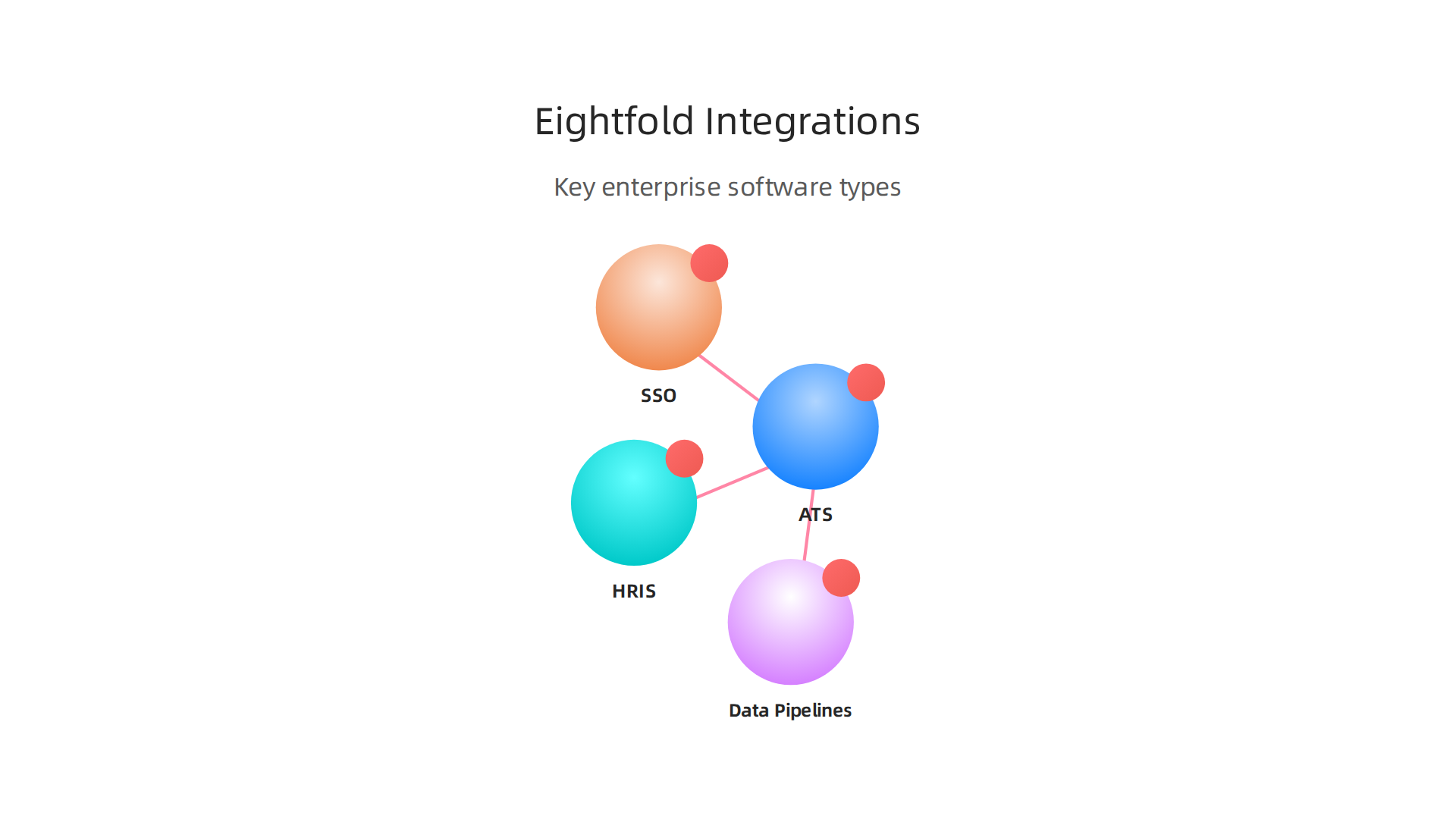
- ATS (Applicant Tracking Systems): These systems help companies manage job applications and candidates. Eightfold AI pulls in past applicant data from the ATS, helping companies "rediscover" talent they already know.
- HRIS (Human Resources Information Systems): These systems store all employee information, like their skills, work history, and roles. Eightfold AI takes this data to understand the current workforce and suggest new paths for employees.
- SSO (Single Sign-On): This makes it easy and secure for employees to log in to eightfold ai using their existing company login.
- Data Pipelines: This is like a highway for information. Data about jobs, applicants, and employees flows into eightfold ai. Then, eightfold ai sends back helpful information, like recommendations for new hires or internal moves.
APIs, Connectors, and Partner Ecosystem
Eightfold AI uses special tools called APIs (Application Programming Interfaces) to make these connections happen. An API is like a menu that tells different software programs how to talk to each other. Eightfold AI has its own APIs, like the Eightfold API v2 service, which lets other systems get and send core data API Documentation – Eightfold.
The company also offers "pre-built connectors" or adapters. These are like ready-made bridges that easily link eightfold ai to popular systems that many businesses use. This includes big names like Workday, Oracle HCM Cloud, iCIMS, Lever, ADP, SmartRecruiters, Taleo, and Greenhouse, along with others Eightfold AI Review 2026 : Pros, Cons, Features, and Pricing …. These pre-built connections make it much easier and faster for companies to set up eightfold ai.
Because eightfold ai is made for big businesses, its APIs are usually available to customers and trusted partners through special agreements, not just anyone Eightfold AI — API Provider, Schemas. This way, companies can be sure their data is handled safely and correctly during the setup process. Thinking about how these systems connect is an important step when you need to how to choose the best enterprise AI platform for your organization in 2026.
Staying updated on the latest AI advancements is crucial for making smart business decisions.
Get clear daily AI updates from The AI Newsletter Worth Reading.
Continuing from how Eightfold AI connects with other systems, let’s look at where it stands in the market. It’s helpful to understand how eightfold ai compares to other tools, what makes it special, and why big companies choose it.
Market Positioning: Competitors, Strengths, and Differentiators
Eightfold AI is a leader in using smart computer programs to help big companies find and manage their talent. But it’s not the only player in this field. Many other companies offer tools for hiring and human resources (HR), and they all have their own ways of doing things.
Some competitors might be other "talent intelligence platforms" that help companies understand skills and job markets. Others are the big Applicant Tracking Systems (ATS) or Human Resources Information Systems (HRIS) that have added some AI features to their existing tools. While companies like People Data Labs might focus on gathering data, and tools like Browse AI or Turing AI might help with specific tasks, eightfold ai tries to offer a complete solution for very large businesses.
What Makes Eightfold AI Stand Out
Companies often pick eightfold ai because of its special strengths:

- Big Scale for Big Companies: Eightfold AI is built to handle the huge amounts of data that come from very large businesses. It can manage many job openings and many employees at once, which is a big plus for global companies.
- Deep Skills Graph: One of its best features is its "skills graph." Imagine a giant map that understands all the different skills people have and how those skills relate to various jobs. This helps eightfold ai understand what skills a company already has and what it needs, even if those skills are not clearly written down. This deep understanding makes it easier to match people with the right roles inside and outside the company.
- Smart AI Matching: Eightfold AI uses its powerful AI to match job seekers to positions and employees to new career paths within the company. This isn’t just about keywords; it looks at a person’s whole work history and predicts what jobs they would be good at. This makes hiring faster and helps employees grow.
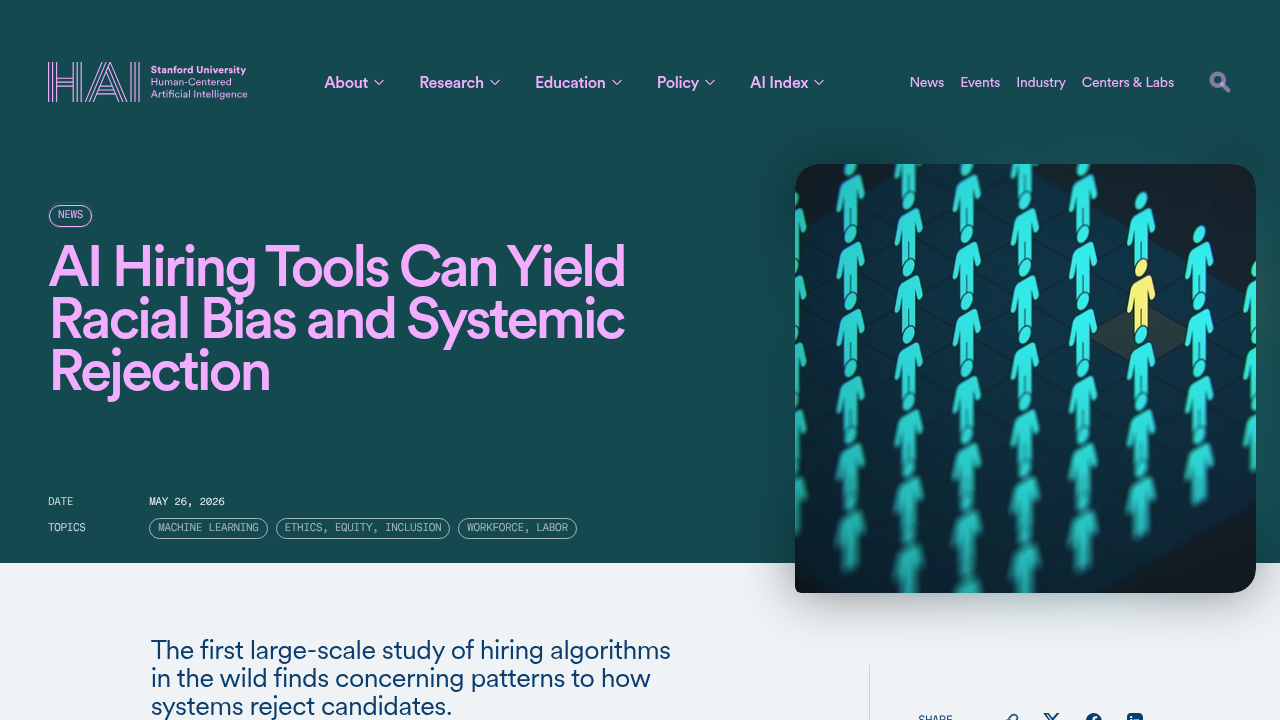
- Fairness and Less Bias: A big worry with AI tools in hiring is that they might accidentally show bias against certain groups of people. Studies in 2026 show that AI hiring tools can sometimes lead to unfair results, for example, showing racial bias or gender bias in who gets considered for jobs AI Hiring Tools Can Yield Racial Bias and Systemic Rejection.
Eightfold AI focuses on building fair AI models to help reduce these biases. This means it works to make sure everyone has an equal chance, which is very important for companies today. To learn more about this topic, you can read about the real dangers of AI in 2026 bias privacy job loss and existential risk.
- Easy Connections: As discussed before, eightfold ai can connect well with other systems a company already uses. This smooth connection means all important information can flow easily, making the whole HR process more efficient.
Understanding Pricing Models
When companies look at talent intelligence platforms, they also consider the cost. While many AI recruiting tools have different pricing plans based on things like how many users there are or how many jobs are posted, eightfold ai does not openly share its prices 8 best talent intelligence software for 2026. This means that pricing for eightfold ai is often set up specially for each big company, depending on their size and what features they need. This custom approach highlights that it is a solution built for large enterprises with unique needs, rather than a one-size-fits-all product.
Bringing a powerful tool like eightfold ai into a large company is a big project. It’s not just about buying software; it’s about changing how people work. This process usually follows a clear plan to make sure everything goes smoothly.
Implementation Playbook: Timeline, Team, and Costs to Expect
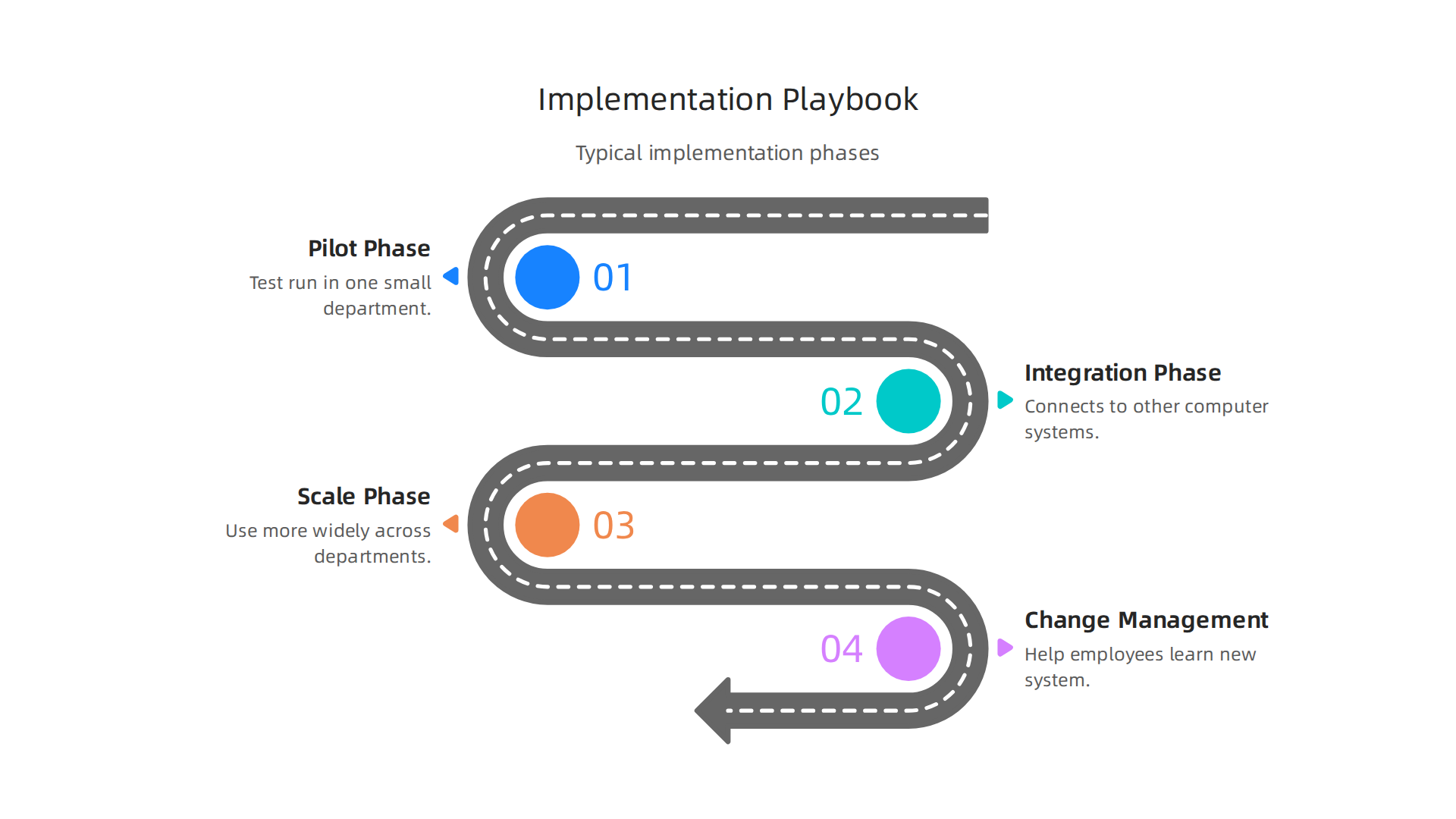
When a company decides to use eightfold ai, or any big AI system, they usually go through different steps.
Think of it like building a house: you don’t just start with the roof. You lay the foundation first, then build the walls, and finally add the finishing touches.
Typical Steps for Using Eightfold AI
- Pilot Phase: This is like a test run. A company might try eightfold ai in one small department or for a specific type of hiring first. This helps them see how it works, what needs to be changed, and how people react. Pilot programs for skills intelligence systems can start in 2 to 3 months for specific teams Business Case for an AI Skills Engine.
- Integration Phase: Here, eightfold ai is connected to other computer systems the company already uses. This includes tools for tracking job applicants or managing employee records. This step is super important so all the information can flow easily between systems. It’s like making sure all the rooms in the house are connected. Experts suggest mapping out existing data sources like ATS, HRIS, and performance management systems as a first step in data-driven HR Talent Intelligence Data: The Ultimate Guide to Data-Driven HR.
- Scale Phase: Once the pilot and integration are successful, the company starts using eightfold ai more widely. This means rolling it out to more departments, more job types, or even across different countries. For larger companies, fully deploying an HR system can take six to ten months 12 Best HRIS systems for enterprises [2026].
- Change Management: This is about helping employees learn how to use the new system and understand why it’s helpful. People don’t always like change, so good training and support are key to making sure everyone uses eightfold ai well. Companies should automate simple tasks first, then add more advanced AI features later AI-Driven Workflows for Enterprise Talent Management.
Who Helps Make It Happen?
Many people within a company get involved in bringing eightfold ai on board.
- HR Team: They are the main users and champions. They know what the company needs for hiring and managing talent.
- IT Team: These are the tech experts. They help connect eightfold ai with other systems and make sure everything runs smoothly.
- Company Leaders: Top managers need to support the project and make sure it has the money and resources to succeed. Their backing can either speed up or slow down how fast a new tool gets used.
- Legal and Privacy Teams: They ensure that using AI in hiring follows all the rules about fairness and data privacy.
What About the Costs?
As mentioned before, eightfold ai usually offers custom pricing for big businesses. This means the cost depends on the company’s size and what features they want. For enterprise talent intelligence platforms in 2026, the minimum cost is often around $150,000 per year, not including setup costs Best Talent Intelligence Platforms 2026.
Even though the upfront cost can be high, companies see many benefits over time. For example, some companies have seen a 30% cut in how long it takes to hire new people and an 18% drop in the cost for each hire How a Nordic HR & Recruitment firm accelerated hiring cycles with ….
Choosing the right AI tools for your business needs means looking closely at how they will fit into your company’s bigger picture. For more insights on this, read about how to choose the best enterprise AI platform for your organization.
Staying updated on the latest AI trends, tools, and developments is crucial for making informed decisions about such big investments.
Get clear daily AI updates from The AI Newsletter Worth Reading.
After making a big investment in a system like eightfold ai, companies naturally want to see real results. They want to know that the new system is making a positive difference. This is where looking at case studies and measurable outcomes becomes very important. It’s about seeing how the technology helps the business grow and work better.
Companies often look for several key improvements when they bring in an AI talent platform:
- Time-to-Fill Improvements: This means how quickly a job opening can be filled with a qualified person. A shorter time-to-fill saves money and keeps projects moving.
- Internal Hire Rates: This shows how often companies can find suitable candidates for new roles from their existing employees. Higher internal hire rates mean better career paths for staff and less need to look outside the company.
- Quality-of-Hire Indicators: This is about how good new hires are. Are they staying longer? Are they performing well? AI can help match people better to roles, leading to higher quality hires.
- Recruiter Productivity: AI tools can help recruiters do their jobs faster and better, such as sifting through many resumes quickly. For example, some businesses using AI for HR tasks have seen big jumps in speed. IBM, for instance, reported a 75% faster hiring process, and Dell saw an 85% boost in recruiter output AI HR & Recruitment Automation Case Study. These kinds of changes show how AI can make a real difference.
Evaluating What Vendors Report
When companies like eightfold ai or others share their success stories, it’s smart to look closely at their claims. You want to make sure the reported benefits are true and can be measured. Here are some things to think about:
- Ask for Details: Don’t just accept big numbers. Ask exactly how these results were measured. What was the company doing before the AI system, and what changed after?
- Look for Neutral Evidence: While a vendor’s own case studies are good, also ask for reports or studies from independent groups. This gives a more balanced view. When building a case for talent intelligence, understanding current costs is a key first step How to build a business case for talent intelligence.
- Compare with Your Needs: A good outcome for one company might not be exactly what your business needs. Make sure the reported benefits directly match the problems you are trying to solve.
- Consider the Whole Picture: Remember that AI tools are part of a larger system. How well eightfold ai works also depends on how well it connects with your other tools and how your employees use it. Digital HR transformation projects, for example, often lead to standardized processes and faster reporting HR digital transformation case study: Cases & ROI playbook.
Choosing the right AI tools for your business means looking at many factors beyond just the flashy promises. For more on this, it’s helpful to understand how to master how to choose AI tools for your business needs. When companies carefully check the claims and outcomes, they can make sure their investment in platforms like eightfold ai brings true value.
When companies look at all the good things AI tools can do, like what eightfold ai offers, it’s also important to think about the possible problems. Just like any powerful tool, AI comes with its own set of risks and things to consider carefully.

This means looking at fairness, keeping personal information safe, and understanding how the AI makes its choices.
Risks Around Bias in AI Hiring
One of the biggest worries with AI in hiring is bias. AI systems learn from data they are given, often from past hiring decisions. If that past data had old biases, the AI might accidentally learn them too. This means the AI could unfairly treat certain groups of people, like women or different racial groups, even without meaning to.
For example, studies in 2026 have shown that AI hiring tools can lead to unfair results. One large study from Stanford found that these tools can increase racial bias, causing certain applicants to be passed over more often AI Hiring Tools Can Yield Racial Bias and Systemic Rejection. Another point is that new rules in 2026 are making companies really look at how their AI hiring tools might be unfair Algorithmic Hiring Bias: What New Research and 2026 Regulations Mean for Employers. This is why companies need to check their AI systems very closely to make sure they are fair to everyone.
Data Privacy Concerns
AI tools like eightfold ai handle a lot of personal information about job applicants. This includes resumes, test scores, and sometimes even video interviews. Keeping all this data safe and private is a big deal. Companies must make sure they protect this information from hackers and use it only in ways that are fair and legal. They need to follow strict rules about how they collect, store, and use people’s data.
Algorithmic Transparency
When an AI system makes a decision, like deciding who gets an interview, it’s important to understand how it made that choice. This is called algorithmic transparency. If the AI is like a "black box" where no one can see inside, it’s hard to trust its decisions or fix problems if bias occurs. Companies should aim for AI systems that can explain their reasoning clearly, especially in important areas like hiring.
Regulatory Compliance
Because of these risks, governments are putting new rules in place for AI, especially in hiring. In 2026, many companies need to be careful about these new regulations to avoid legal trouble. This means making sure their AI hiring systems, whether from eightfold ai or other providers, follow all the latest laws. It is a big job to keep up with all the changes.
Steps to Audit, Monitor, and Govern AI Hiring
To deal with these risks, businesses must take clear steps:
- Audit Regularly: Companies should check their AI systems often. This is like giving the system a health check-up to see if it’s working fairly and correctly. They need to look for any signs of bias or unfairness.
- Monitor Decisions: After the AI makes a choice, people should review those choices. This helps catch any strange or biased decisions the AI might make. It’s about having humans work with the AI to ensure good outcomes.
- Set Clear Rules: Companies need clear rules for how their AI tools are used. This includes who can use the AI, what data it can see, and what kinds of decisions it can make. It also involves training staff to use AI tools responsibly.
By taking these steps, companies can use powerful AI tools safely and ethically. Understanding and managing the risks is just as important as enjoying the benefits. To learn more about the broader challenges and dangers AI can bring, it’s helpful to explore The Real Dangers of AI in 2026: Bias, Privacy, Job Loss, and Existential Risk.
Staying informed about the fast-changing world of AI is vital for every business leader and professional. Get clear daily AI updates from The AI Newsletter Worth Reading.
After understanding the risks of AI, especially in hiring, the next big step is choosing the right AI tools. This means asking smart questions to potential vendors, like eightfold ai, to make sure their system fits your company’s needs and values. A good way to do this is by having a clear checklist.
Vendor Selection Checklist: Questions to Ask Eightfold AI (and Any Vendor)
When you are looking for AI hiring tools, it is important to know what to ask. This helps you pick a system that is strong, fair, and safe. Here are key questions to ask any AI vendor, including ones like eightfold ai or others such as people data labs, browse ai, and turing ai:
- How will my data be used?
You need to know exactly how the AI vendor will collect, store, and use the personal data of job applicants. Ask about their security measures to keep this information safe. Make sure they follow all privacy laws in 2026. - Can you explain how your AI makes decisions?
It is important for the AI to be clear, not a "black box." Ask how the AI comes up with its suggestions or choices. Can they show you examples of how it works without bias? This is called model transparency. - What kind of support will I get (Service Level Agreement)?
An SLA is like a promise for how well the service will work. You should know what happens if the system goes down or if you need help. What are their response times for problems? - What if I want to stop using your service? (Exit & Data Portability)
Find out how easy it is to get your company’s data back if you decide to switch to another vendor. You should own your data and be able to move it without big problems.
Building a Smart Scorecard
To pick the best AI partner, it helps to create a scorecard. This means you list all the important things you care about and give them a score for each vendor. You can weigh different parts more heavily. For example:
- Technical things: How well does the AI work? Is it fair? Does it really help you find good people?
- Legal things: Does it follow all the new laws about AI? Is your data safe?
- Business things: How much does it cost? Is it easy for your team to use?
Speaking of costs, AI recruiting software pricing can vary a lot in 2026. Some companies charge per user, others per job, or even based on how many candidates you process AI recruiting software pricing 2026: costs, models compared. Some vendors, like Eightfold AI, don’t share their pricing easily and prefer a direct conversation to figure out costs based on your company’s size and what features you need 8 best talent intelligence software for 2026. It’s crucial to understand these models fully.
By asking these questions and using a scorecard, you can make a clear choice that supports your business goals while using AI responsibly. For a deeper dive into selecting the right tools, learn how to choose the best enterprise AI platform for your organization.
Summary
This article explains how talent intelligence platforms like Eightfold AI help large companies hire faster, redeploy existing staff, and plan future skills needs using AI-driven skills graphs and candidate matching. It walks through core features—talent intelligence, candidate rediscovery, internal mobility and skills ontology—plus how the platform integrates with ATS/HRIS systems via APIs and pre-built connectors. The piece covers market context and vendor strengths, typical implementation stages (pilot, integration, scale), expected timelines and cost signals for enterprise deals, and measurable outcomes such as time-to-fill and recruiter productivity. It also examines risks around bias, data privacy, transparency, and regulation, and gives a practical vendor checklist (data use, explainability, SLAs, exit rights) to evaluate providers. After reading, leaders will understand what Eightfold offers, how to plan deployment, what questions to ask vendors, and how to govern AI hiring responsibly.