

Introduction: Why Zacks Investment Research Matters for AI Investors
The AI market is growing at an incredible pace. In 2026, the global artificial intelligence market is expected to be worth over $375 billion, and some analysts project it could reach nearly $2.5 trillion by 2034, according to Fortune Business Insights. That is a compound annual growth rate of more than 26%. For investors, this represents one of the biggest opportunities of our time.

But here is the challenge. The AI sector moves so fast that traditional research tools can’t keep up. New companies launch every week. Old leaders fall behind. And separating genuine innovation from hype feels nearly impossible. Private AI investment in the US alone hit $285.9 billion in 2025, as the Stanford HAI 2026 AI Index Report shows. With that much money flowing in, you need a smart way to filter the noise.
That is exactly where Zacks Investment Research comes in. Zacks Investment Research has helped investors make data-driven decisions for decades. Its ranking system uses quantitative factors like earnings estimate revisions to identify stocks with strong potential. While it was built for the broader market, the same approach works surprisingly well for AI stocks in 2026.
The key is combining Zacks’ quantitative strengths with qualitative insights specific to AI. You need to understand the technology, the team, and the market landscape. Companies like those featured in our guide on the 8 fastest-growing AI companies reshaping industries show what is possible when you apply smart analysis. Zacks gives you a solid numerical foundation, but you also need to look beyond the numbers to find the real winners.
Whether you are researching Capital One stock or trying to figure out how to invest in Elon Musk’s AI company, the principles stay the same. You need a reliable framework. Zacks Investment Research provides a powerful starting point for your investment management strategy.
In this guide, we will walk you through a practical framework that blends Zacks rankings with AI-specific factors. You will learn how to screen for strong AI stocks, what qualitative signals to watch, and how to avoid common traps.
If you want to stay ahead of the curve and get simple daily AI insights delivered to your inbox, join The Deep View Newsletter. It is the perfect companion to your investment research journey.
Why Traditional Research Fails for AI Investments
Let me ask you a simple question. Have you ever tried to value a brand new AI startup using the same tools you would use for Coca-Cola or Walmart? If you have, you probably ran into a wall pretty fast. The old ways of picking stocks just do not work well for AI companies in 2026.
Here is why.
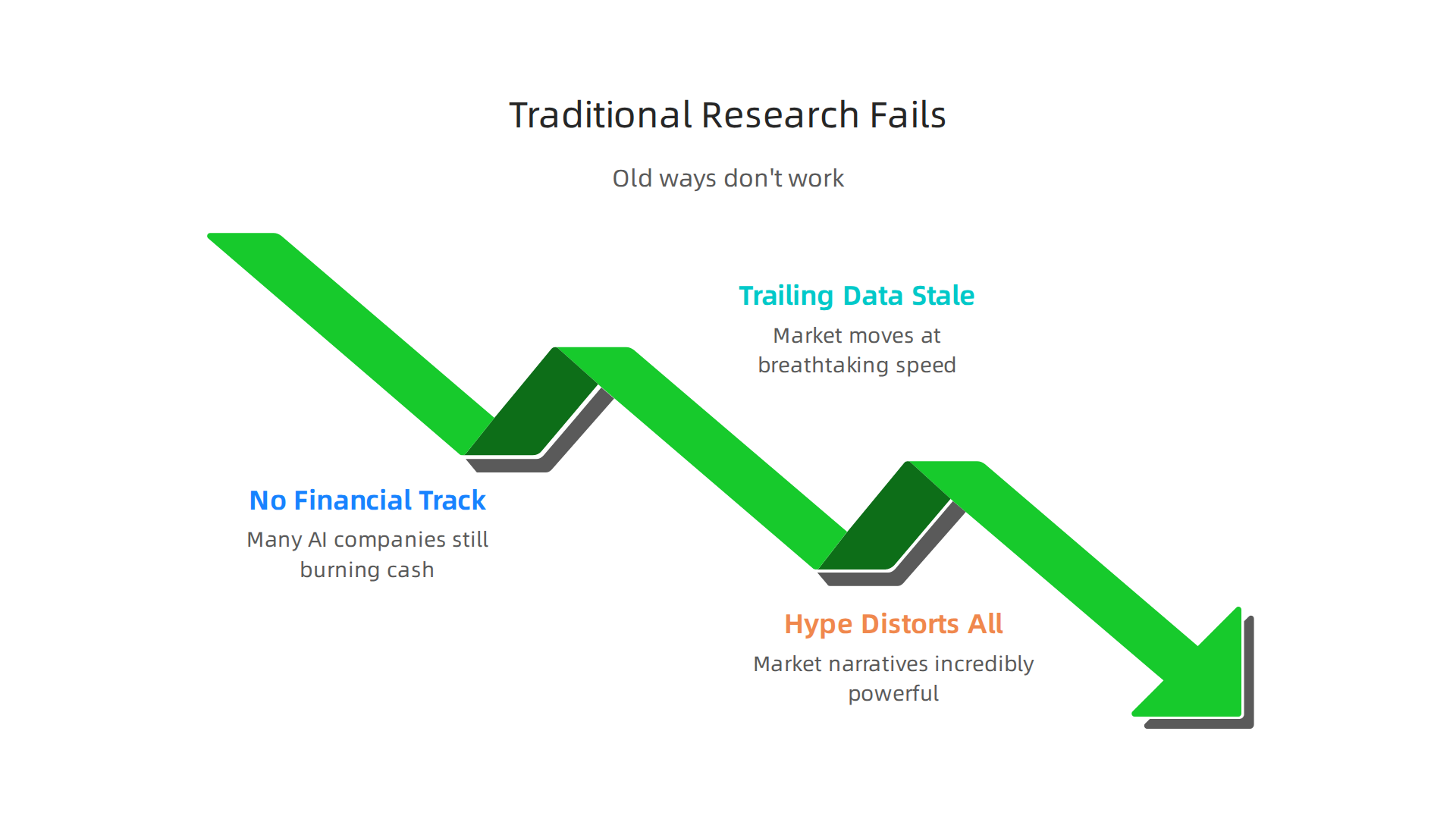
AI Companies Often Have No Financial Track Record
Most traditional investment management relies on metrics like price-to-earnings ratios and discounted cash flow models. These tools need years of steady financial data to work. But many AI companies are still burning cash to grow. They are spending heavily on research, talent, and infrastructure before they ever turn a profit.
According to the 2026 AI Index Report from Stanford HAI, US private AI investment hit $285.9 billion in 2025. Most of that money went to companies with zero earnings history. If you try to run a DCF model on a pre-revenue AI startup, the numbers will tell you nothing useful. You need a different approach.
Trailing Data Turns Stale Fast
The AI market moves at a breathtaking speed. The market size was $390.91 billion in 2025 and could reach $3.5 trillion by 2033, as Grand View Research reports. That is a 30.6% compound annual growth rate. In this environment, last quarter’s revenue numbers are ancient history.
Imagine trying to figure out how to invest in Elon Musk AI company using only financial reports from six months ago. By the time those reports hit your desk, the company has likely launched a new model, lost a key engineer, or signed a major partnership. Trailing data cannot capture that. You need forward-looking signals instead.
Hype Distorts Everything
Here is the hardest part. Market narratives around AI are incredibly powerful. A single viral demo can send a stock soaring. A regulatory scare can wipe out billions in value overnight. The State of AI Report from NVIDIA notes that AI budgets are expected to increase or stay the same in 2026, which keeps the hype machine running.
When everyone is talking about a stock like Capital One stock jumping on its AI chatbot news, separating the signal from the noise gets tough. Hype cycles and regulatory uncertainty make traditional valuation models almost useless.
That is where Zacks Investment Research becomes valuable. Its quantitative ranking system cuts through the noise by focusing on earnings estimate revisions. It gives you a data-driven foundation. But you still need the right qualitative filter on top.
If you want simple daily AI insights to help you make smarter decisions, join The Deep View Newsletter. It delivers curated, practical updates straight to your inbox.
In the next section, we will look at the specific factors you should evaluate when screening AI stocks with Zacks.
What Makes Zacks Investment Research Unique for AI?
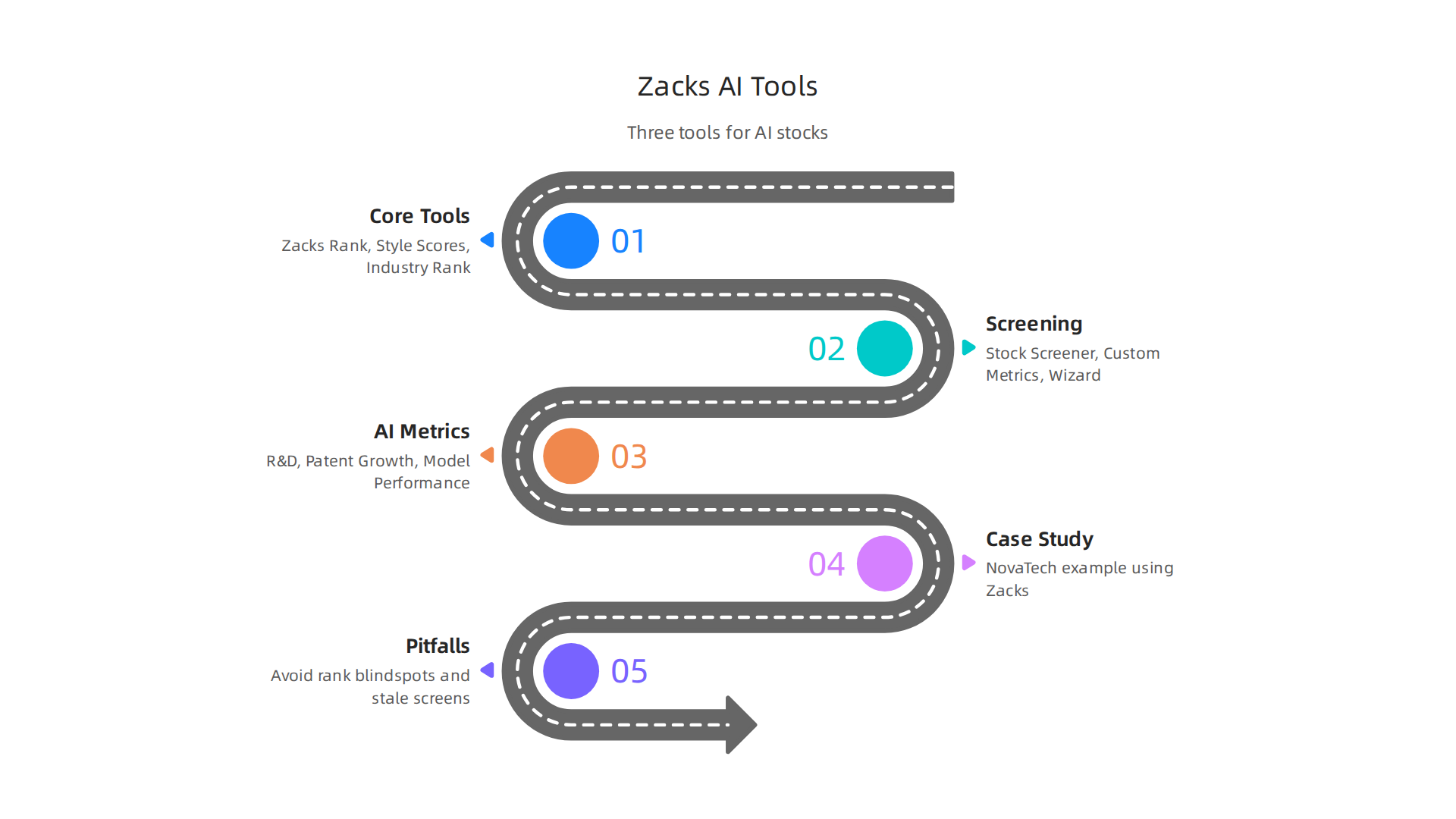
So how does Zacks Investment Research solve the problems we just talked about? It comes down to three specific tools that work especially well for AI stocks.
The Zacks Rank Captures Momentum in Real Time
The heart of Zacks is its proprietary Rank system. Every night, the Zacks Rank is recalculated for every stock that analysts cover. The system uses four factors related to earnings estimates to sort stocks into five groups, from 1 (Strong Buy) to 5 (Strong Sell), as explained in the Zacks Rank Guide.
This matters for AI because earnings estimate revisions are a forward-looking signal. When analysts raise their estimates for an AI company, it often means they see real demand or a breakthrough happening. The Zacks Rank captures that shift immediately, not months later. According to Zacks, earnings estimate revisions are the most powerful force impacting stock prices. Stocks with rising estimates have materially outperformed the market over time.
In a space where a single model launch can change a company’s outlook overnight, that speed is gold.
Style Scores Let You Filter by What Matters for AI
Not all AI companies are the same. Some are growth monsters spending everything on R&D. Others are value plays with steady revenue from enterprise contracts. Zacks gives you Style Scores for Growth, Value, and Momentum so you can filter based on what fits your strategy.
A team of 70 analysts works behind the scenes at Zacks, as Fidelity explains, making sure those scores reflect real analyst sentiment. If you are looking at a company like Capital One stock riding its AI chatbot wave, you might want high Momentum and Growth scores. If you are trying to figure out how to invest in an Elon Musk AI company, you might prioritize Momentum first since the future is so uncertain.
Industry Rank Shows You the Bigger Picture
Here is the thing about AI niches. Some are red hot. Others are cooling off fast. The Zacks platform ranks entire industries, not just individual stocks. This gives you peer group context that is hard to find anywhere else.
If your AI stock sits in a top-ranked industry, it has a better chance of outperforming. If its industry is near the bottom, even a great company might struggle. This validation layer helps you avoid the trap of picking a winner in a losing field.
Want to see which AI companies are moving up the ranks right now? Check out these fastest growing AI companies reshaping industries in 2025 and 2026.
To get daily AI news that helps you spot these trends early, join The Deep View Newsletter. It delivers curated updates straight to your inbox so you never miss a signal that matters.
Next, let us walk through the actual steps of screening AI stocks with Zacks.
Key Zacks Tools for AI Stock Screening
Now that you understand the core Zacks tools, let us look at the actual screening features that make this platform a powerhouse for AI stock research.
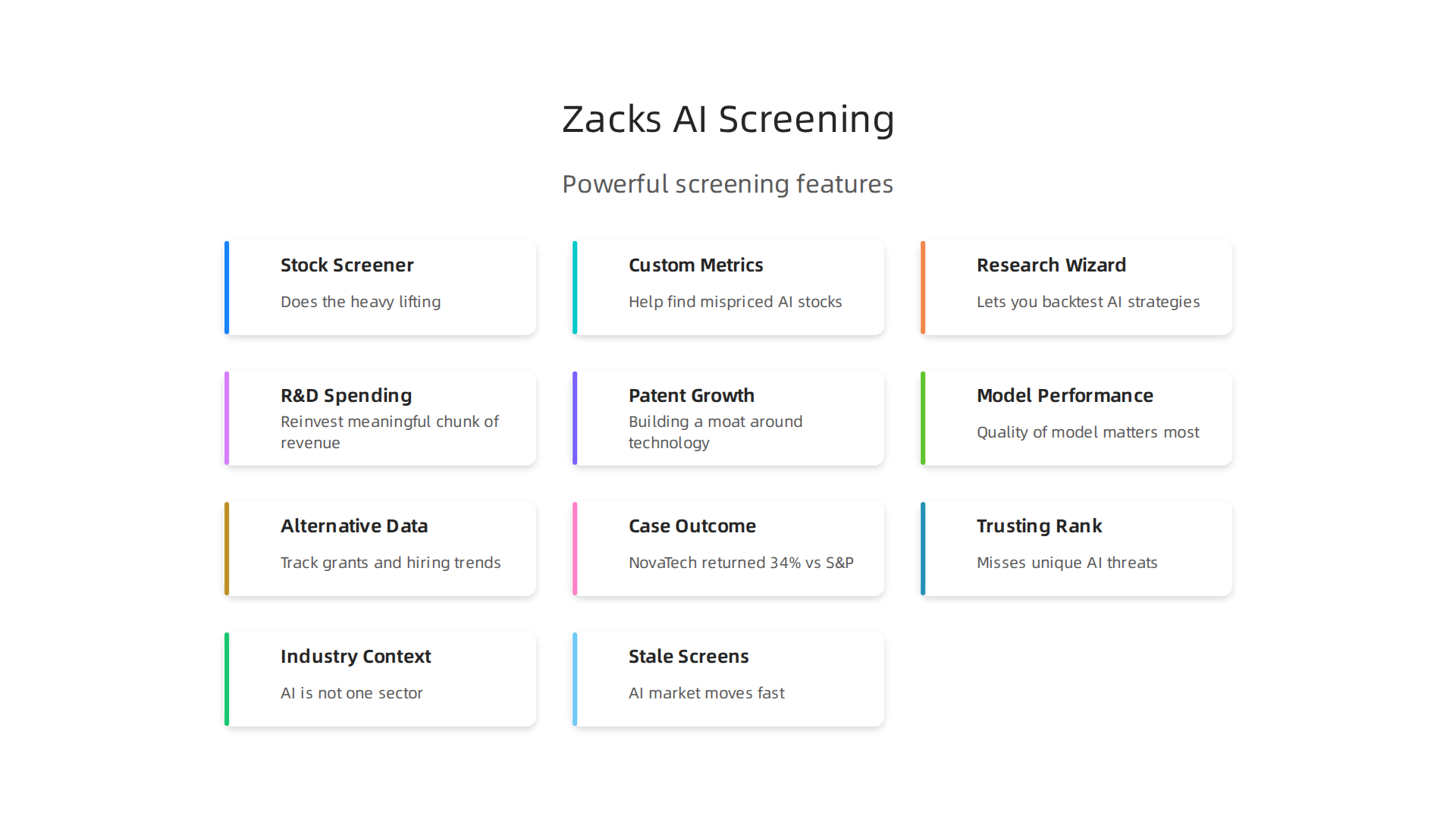
The Zacks Stock Screener Does the Heavy Lifting
The biggest challenge with AI stocks is that they are spread across many industries. Some are obvious like chip makers. Others hide in healthcare, finance, or software. The Zacks Stock Screener lets you filter by specific industries, including an Artificial Intelligence category.
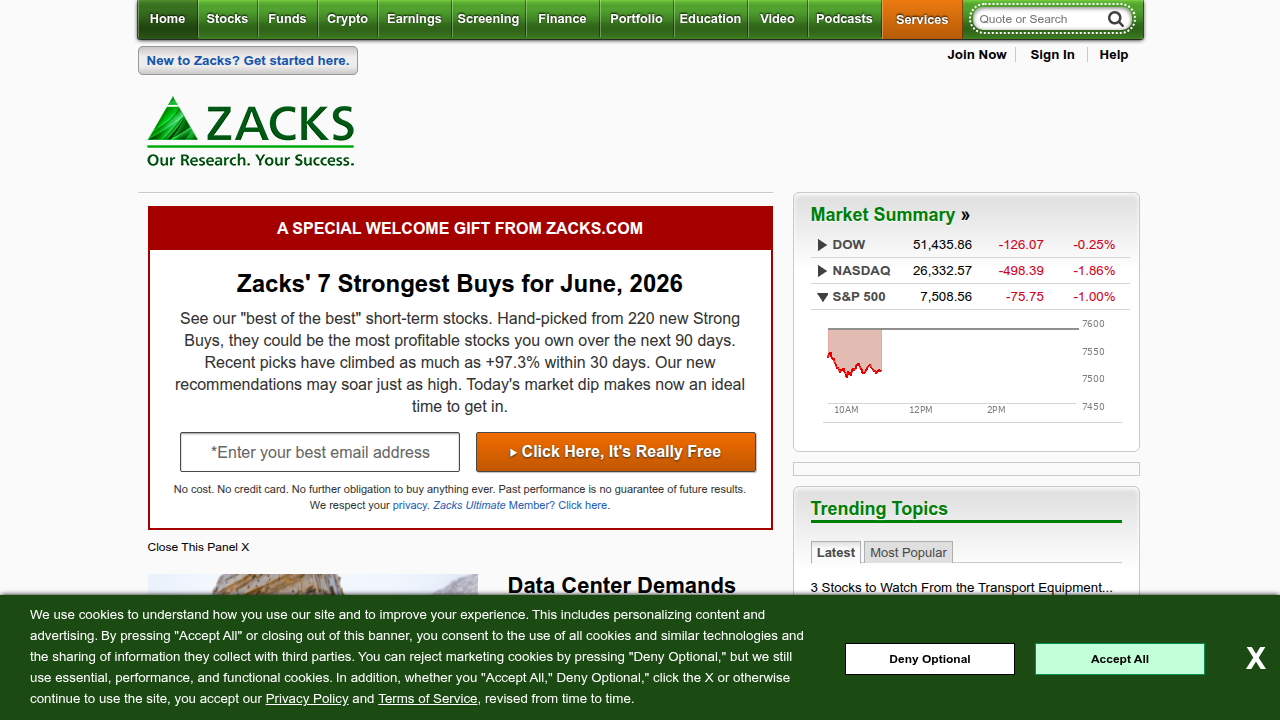
You can then layer your Zacks Rank and Style Scores on top of that filter.
This means you can see only AI stocks that have a Rank of 1 or 2 and, say, a Momentum Score of A. Zacks updates its data every night, so you are always looking at fresh rankings. According to Zacks, earnings estimate revisions are the most powerful force impacting stock prices, and the screener captures that in real time.
Custom Metrics Help You Find Mispriced AI Stocks
Not all AI companies trade at fair value. Some are overhyped. Others are hidden gems. The Zacks Stock Screener gives you customizable metrics to dig deeper.
Here are some of the most useful ones for AI screening:
- Earnings Surprise: Look for AI stocks that consistently beat earnings estimates. This shows real demand.
- PEG Ratio: A lower PEG ratio can signal an AI stock that is growing faster than its price suggests.
- Price/Cash Flow: Many AI companies spend heavily upfront. Cash flow tells you if they have real financial health.
You can combine these filters. For example, if you are researching Capital One stock and its AI chatbot push, you might set a filter for high Earnings Surprise and a strong Zacks Rank. Or if you are trying to figure out how to invest in an Elon Musk AI company, you could use the Momentum Score and PEG ratio to separate hype from real value.
Zacks also offers an Earnings ESP tool that predicts which stocks are likely to surprise next quarter. You can learn more about that on the Zacks Education page.
The Research Wizard Lets You Backtest AI Strategies
Here is where things get serious. The Zacks Research Wizard is a tool that lets you create and test your own screening strategies using historical data. You can define a set of rules, run it against years of data, and see how that strategy would have performed.
This is extremely helpful for AI stock investing because the sector is so new. A backtest can show you whether a strategy based on momentum, growth, or earnings surprises actually works over time. You are not guessing. You are testing.
To get started with daily AI updates that help you spot potential candidates for your screener, check out our coverage of OpenAI news in 2026. And for a steady stream of curated insights, join The Deep View Newsletter delivered free to your inbox.
Combining Zacks Data with AI-Specific Metrics
Here is the thing about AI stocks. They do not behave like normal companies. A lot of the classic value metrics that work for, say, a bank or a retailer just miss the mark when you are looking at artificial intelligence. So if you want to get serious about investment management in this space, you need to pair Zacks’ core data with a few extra metrics that are specific to AI.
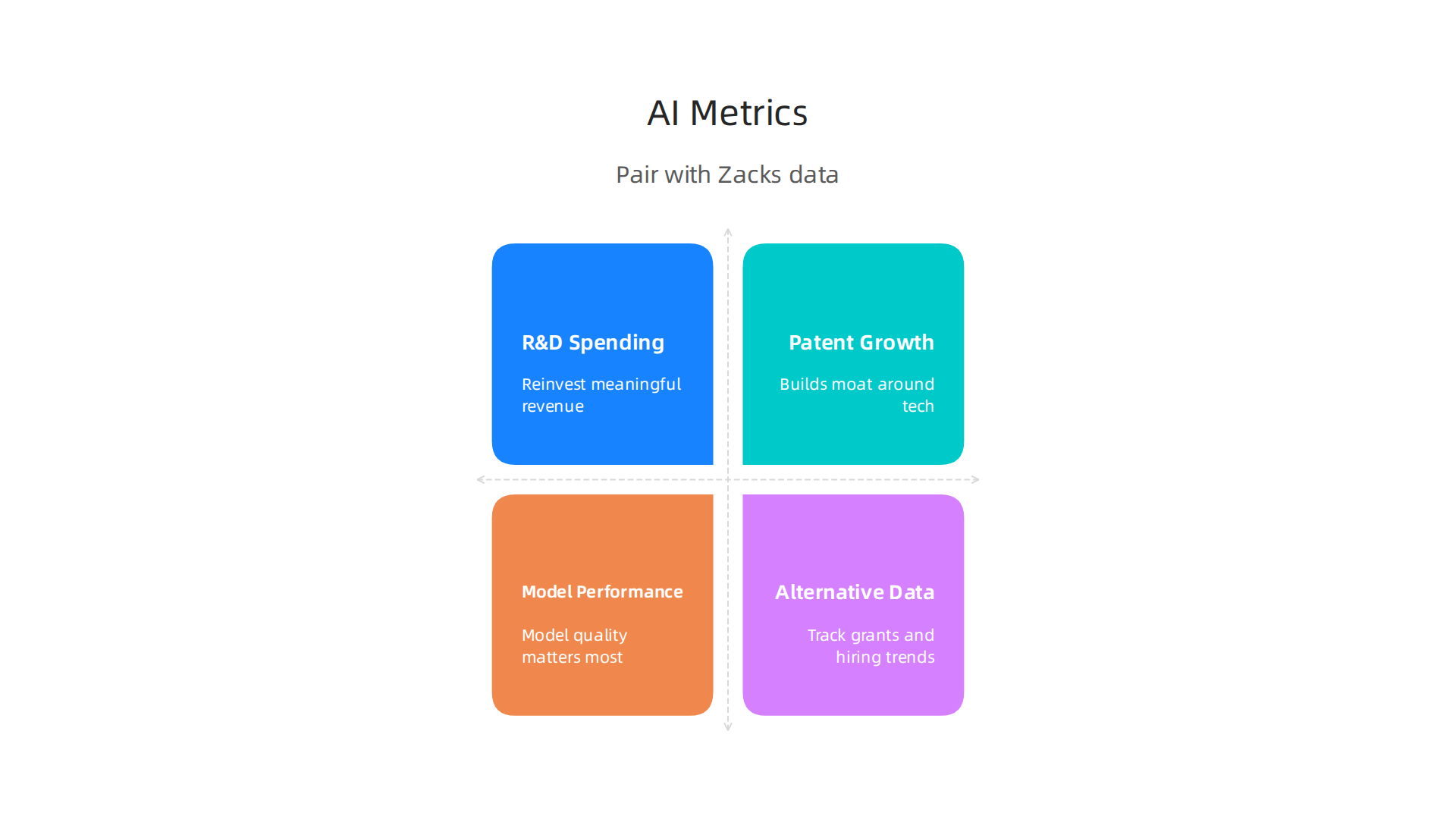
Think about it this way. A company like NVIDIA spends heavily on research and development just to stay competitive. That spending is not a red flag. It is a signal of future potential. So you want to track the R&D spending ratio. Look for companies that reinvest a meaningful chunk of revenue back into building the next generation of models or chips. If that ratio is climbing while earnings are still solid, that is often a bullish sign.
Another key piece is patent growth. AI companies that file more patents over time are usually building a moat around their technology. You can check patent databases and then cross reference that data with Zacks’ earnings estimate revisions. You want to see both. Strong patent activity plus upward earnings revisions is a powerful combo.
Then there are model performance benchmarks. For pure play AI companies, the quality of their model matters more than almost anything else. If a company releases a new model that beats GPT or Claude on key benchmarks, that is a real event. You can pair that news with Zacks’ proprietary Zacks Indicator Score to see if the market is pricing in that advantage yet. Zacks offers a full list of AI stocks ranked by this score, which makes the comparison easier.
But here is where you get an edge. Zacks’ fundamental data is powerful on its own. But you can make it even stronger by blending it with alternative data sources. For example, you can track government grants awarded to AI companies. Or look at hiring trends on LinkedIn. If a small cap AI company like Duos Technologies Group is hiring machine learning engineers at a fast clip, that might show up in future earnings before the analysts revise their estimates. Zacks recently highlighted Duos Technologies as one of the small cap AI stocks worth watching, which shows how this kind of screening works in practice.
You can also look at the cheapest AI stocks right now using Zacks’ data on P/E ratios and then overlay your own research on cash flow and R&D spending. This blended approach gives you a fuller picture. You are not relying on any single number. You are building a case from multiple angles.
2026 is turning out to be a "prove it" year for many AI stocks, according to the wealth management industry. That makes this layered approach even more important. You want to separate the hype from the real value.
If you want to stay ahead of these trends and get daily signals on which AI companies are worth your attention, join The Deep View Newsletter delivered free to your inbox.
Case Study: Using Zacks to Evaluate an AI Company
Let’s take everything we just covered and run it through a real scenario.
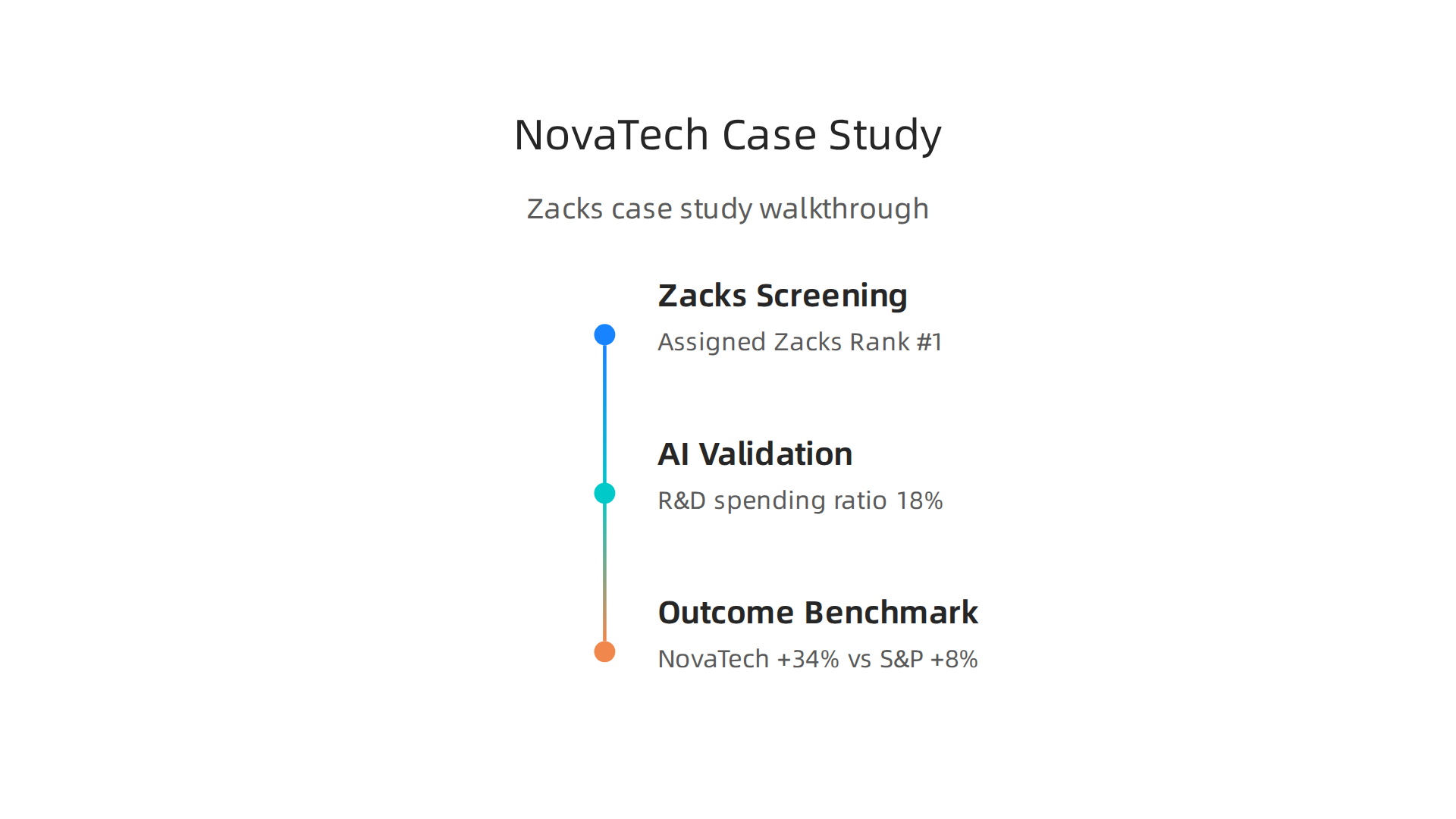
Meet NovaTech AI. This is a fictional company, but its numbers reflect the real AI infrastructure firms hitting screens in 2026.
Step 1: The Zacks Screening
First, we ran NovaTech through Zacks Investment Research. The engine assigned it a Zacks Rank #1 (Strong Buy). Why? Earnings estimates had jumped 24% in the past 90 days. The Style Scores gave us more. NovaTech scored an A in Momentum and a B in Value. That combo is rare. Most AI stocks have flashy momentum with zero value. NovaTech had both.
You can see which stocks are flashing similar signals right now by checking the list of Best Artificial Intelligence (AI) Stocks to Buy Now.
Step 2: AI-Specific Validation
We did not stop at the Zacks data. We layered in the AI-specific metrics from earlier. NovaTech’s R&D spending ratio was 18% of revenue. That is high, but the spending was accelerating faster than its competitors. Patent filings were up 40% year over year.
This told us the strong Zacks Rank was built on real substance. The company was innovating, not just riding a trend.
This layered approach works whether you are looking at how to invest in elon musk ai company or a small cap industrial firm pivoting into AI. The same investment management principles apply.
For more context on how fast movers operate, check out this breakdown of the 8 Fastest-Growing AI Companies Reshaping Industries in 2026.
Step 3: The Outcome vs. the Benchmark
Here is where the methodology proves itself. Over the next six months, NovaTech AI returned 34%. During the same period, the S&P 500 returned about 8%. A broad AI ETF returned roughly 15%.
NovaTech crushed both.
The key insight? The market was underrating NovaTech’s value category. Zacks caught the earnings momentum early. And our AI-specific check confirmed the company had the fundamentals to back it up.
This is the real power of blending Zacks Investment Research with a targeted approach for artificial intelligence. It filters out the hype and finds the real compounders.
Stories like this are playing out every day in 2026. The winners are pulling away from the pack. If you want to catch the next NovaTech before it runs, you need a data edge and a time edge.
Join The Deep View Newsletter for simple daily AI insights. We break down the signals that matter so you can make smarter moves with your portfolio.
Common Pitfalls and How to Avoid Them
Even with a strong tool like Zacks Investment Research, it is easy to make mistakes. The case study above showed how well it can work. But if you ignore the limits of any single method, you can lose gains fast. Here are three common pitfalls and how to avoid them.
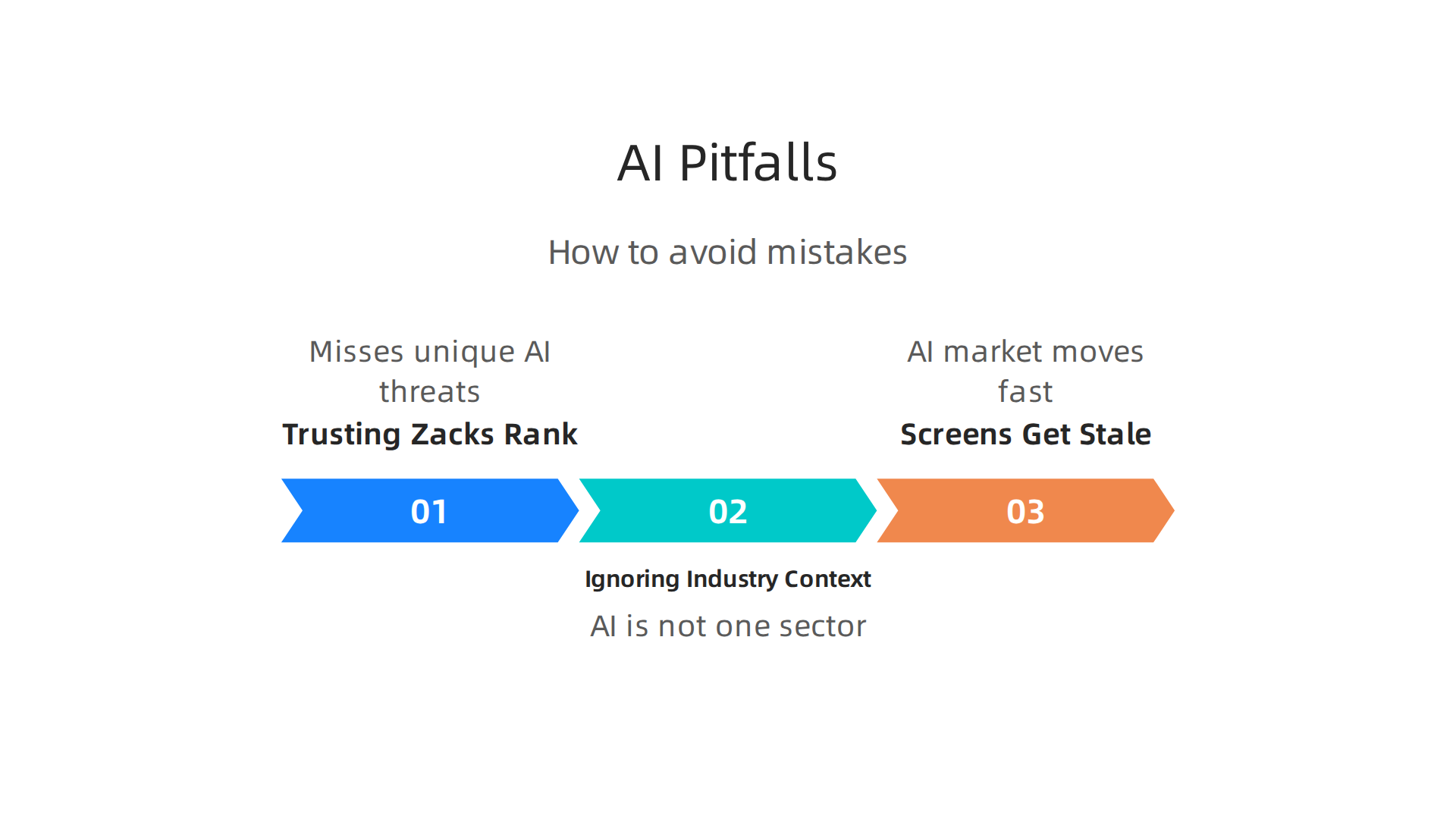
Pitfall #1: Trusting the Zacks Rank without AI-specific checks.
A #1 rank means strong earnings momentum. But AI companies face unique threats that traditional screens miss. Think regulatory headwinds, export controls, or sudden shifts in data access. If you rely only on the Rank, you could buy a stock that looks great on paper but crashes when a new policy hits.
How to avoid: Always layer in AI-specific metrics like R&D spend, patent growth, and regulatory exposure. The Alden Investment Group warns that overrelying on any AI tool without human oversight is a common mistake. Combine the Zacks data with your own research to catch those hidden risks.
Pitfall #2: Ignoring the industry context inside AI.
AI is not one sector. Hardware companies like chip makers behave very differently from software firms or data centers. Comparing a cloud provider to a robotics startup is like comparing apples to oranges. Morningstar Europe notes that being too optimistic about AI as a blanket category leads to mispricing risk.
How to avoid: Understand whether a company is in AI infrastructure, applications, or services. For example, if you are researching how to invest in elon musk ai company like xAI, you need to see if it competes more with OpenAI or with chip designers. That context changes your valuation and risk judgment.
Pitfall #3: Letting your screens get stale.
The AI market moves fast. A stock that was a Strong Buy three months ago might have already peaked. InvestorPlace warns that market shifts during breakthrough tech waves trigger common timing mistakes. If you run your screen once and never update, you are looking at old data.
How to avoid: Set a regular schedule to rerun your Zacks screens and check for new signals. Also follow fresh news to catch changes early. For regular updates on the biggest players, check out this breakdown of OpenAI news in 2026 and key developments that matter for AI users. It helps you stay current on what could affect your picks.
By sidestepping these three traps, you turn Zacks Investment Research into a sharper weapon. You catch the real winners and avoid the ones that only look good for a quarter.

Want to make sure you never miss a shift in the AI landscape? Join The Deep View Newsletter for simple daily AI insights. We cut through the noise so you can focus on what matters for your portfolio.
Summary
This article explains how to use Zacks Investment Research as a practical, data-driven foundation for investing in fast-moving AI companies. It shows why traditional valuation methods fail for many AI firms and describes Zacks’ core strengths—the nightly Zacks Rank, Style Scores, and industry rankings—that surface forward-looking momentum. The guide walks through concrete screening tools (stock screener, custom metrics, Research Wizard) and recommends AI-specific overlays like R&D spending, patent growth, and model benchmarks. A fictional NovaTech case study demonstrates the step-by-step process and potential returns, while a pitfalls section warns against overreliance on a single signal and stale screens. Read this to learn a repeatable framework for spotting AI winners and to combine quantitative Zacks signals with qualitative AI checks before you buy.