

Artificial intelligence (AI) is changing the world very fast in 2026. It’s not just for computer experts anymore. Big schools like Harvard Business School (HBS) are looking closely at how AI affects leaders and businesses. This focus on hbs artificial intelligence shows just how important it is for everyone to understand AI today.
What top schools teach about AI really helps shape how companies use it and how leaders make smart choices.
The speed of new AI discoveries means that advanced learning programs must keep up. Schools are creating new ways for people to study AI and understand its power. For example, HBS offers programs like "AI for Leaders" to help business people learn about AI’s uses in their jobs, from machine learning to generative AI applications across different business tasks. They also have courses on AI Essentials for Business that teach about digital strategies and ethical issues. These programs show how deeply computers and education artificial intelligence are linked for future success.
This article will help you understand all these important changes.

We will look at what new things are being taught in AI classes, how schools work with companies, and the best ways teachers are helping people learn about AI. We will also cover how schools measure what students learn. All this information is put together clearly for you, especially if you are a decision-maker who needs to stay ahead in the world of AI.
To keep up with the latest in this fast-moving field, you can also explore a great resource. You’ll get daily AI updates from The AI Newsletter Worth Reading.
What ‘HBS Artificial Intelligence’ Indicates About Program Design and Leadership Education
Harvard Business School (HBS) thinks about artificial intelligence (AI) in a special way, especially for people who lead companies. Their programs show how business leaders need to understand AI to make good choices, not just how to build AI tools. This focus on hbs artificial intelligence is key to their teaching style.
HBS programs are set up with different parts to help leaders learn. There are core courses that everyone takes, like the ones that teach about using data science and AI for making big decisions. For example, the Data Science and AI for Decision Making program helps leaders learn hands-on skills in AI. Then, students can pick from many other classes that focus on specific AI topics. The Harvard Business Analytics Program curriculum also shows how these courses are structured with core learning, online classes, and even in-person sessions.
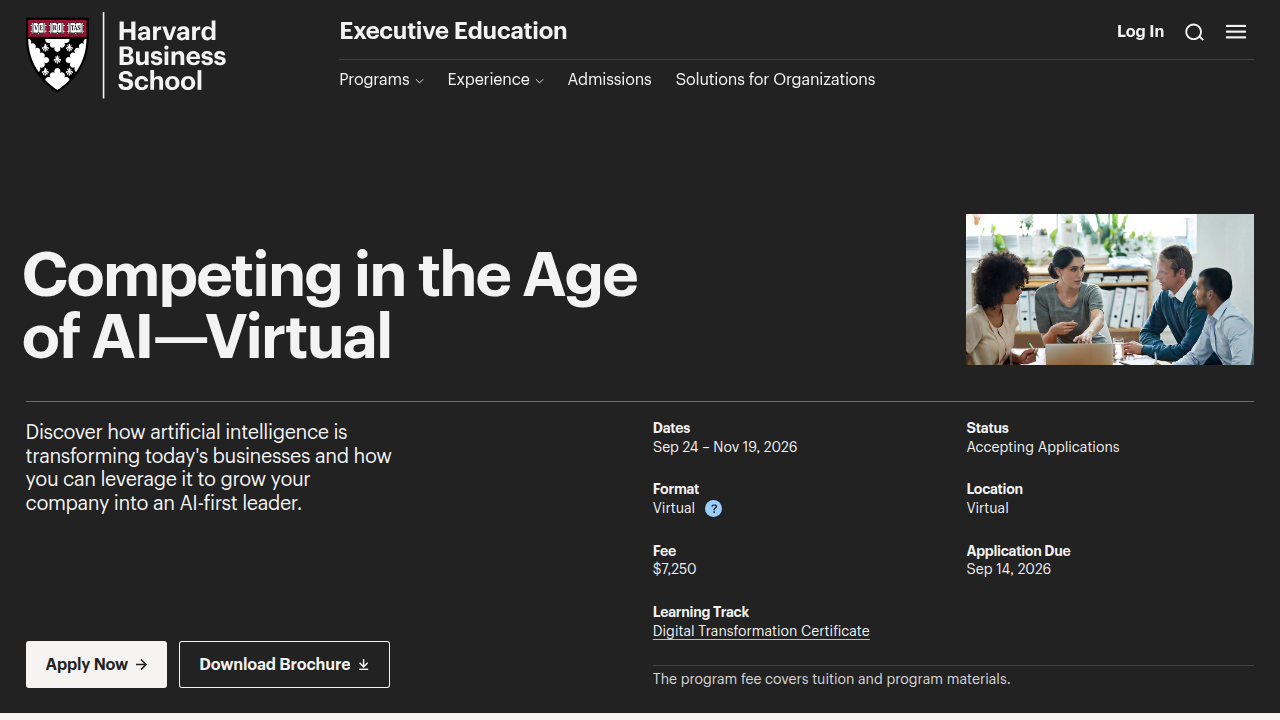
Beyond the regular courses, HBS also has shorter programs for leaders who are already working. These are often called executive education. They help busy people learn about AI quickly. For instance, the "Competing in the Age of AI" program is a good example of how they help leaders learn to build strategies in today’s AI world Competing in the Age of AI—Virtual | Executive Education.
These programs are designed to fit into a busy work schedule.
The way HBS teaches about AI is different from a regular computer science degree, like an online phd data science program or general data science uci studies. HBS doesn’t aim to make everyone an AI coder. Instead, it teaches leaders how to use AI to improve their businesses. They learn about:
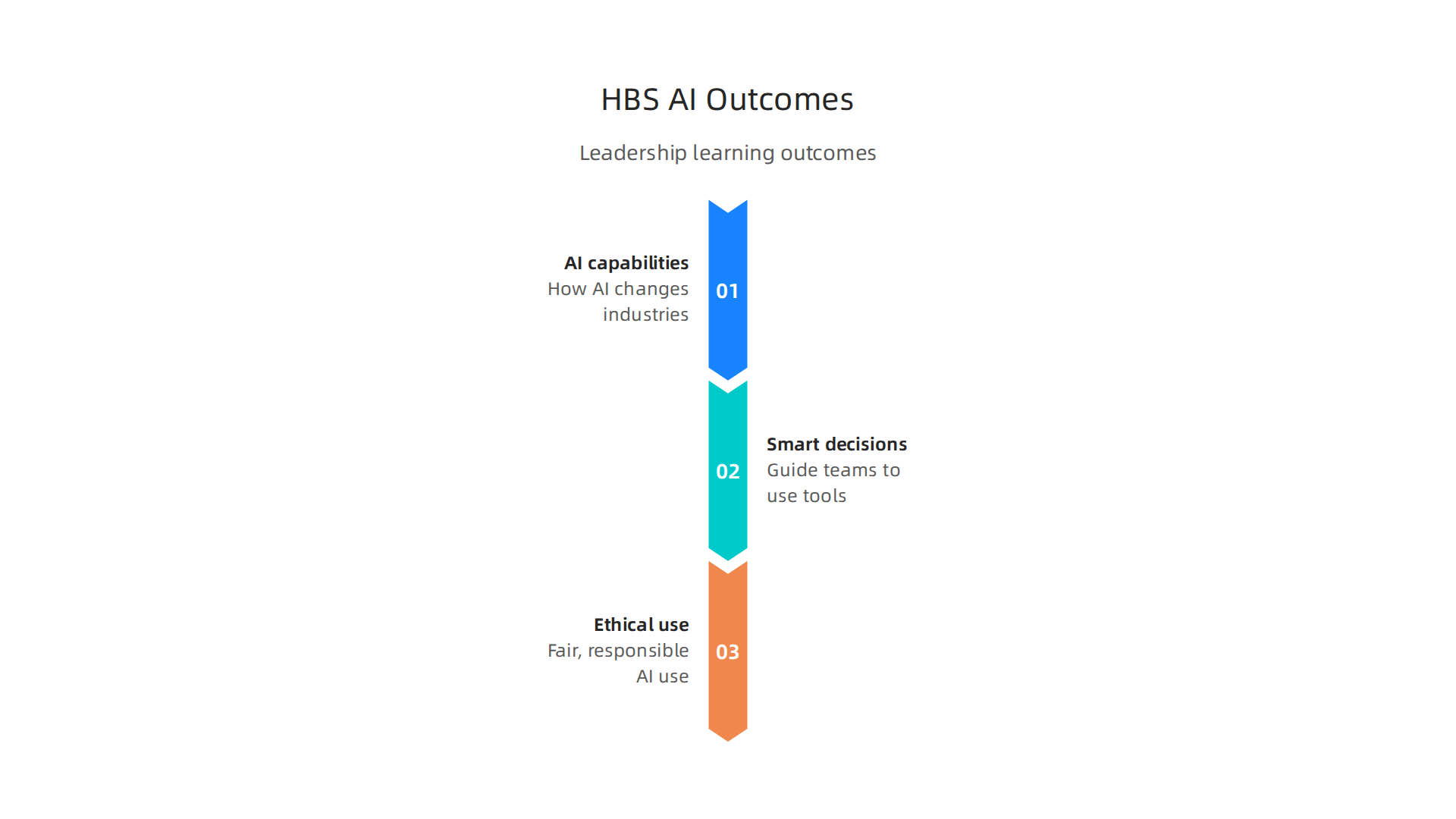
- Understanding what AI can do: How AI changes industries and how to use it in their own companies.
- Making smart choices: How to guide their teams to use AI tools well.
- Thinking about ethics: How to use AI in a fair and responsible way.
It’s all about helping leaders use AI to grow their companies and stay ahead. This approach connects computers and education artificial intelligence directly to real-world business problems. To learn more about how leaders can use AI for growth, you might want to read about Augment AI Smart Strategies for Leaders. This shows how understanding AI from a leadership view helps drive success.
How AI is reshaping advanced-learning pedagogy and assessment
The way we learn and are graded in schools is also changing a lot because of artificial intelligence. While HBS focuses on teaching leaders how to use AI in business, AI is also changing how students in all kinds of programs, even those who study ai or pursue an online phd data science, learn every day. This shift impacts teaching methods and how schools check what students have learned.
Many schools are now using new ways to teach that are helped by AI. For example, active learning lets students get involved in tasks instead of just listening to a teacher.

Project-based assessments ask students to complete big projects that show their skills, much like real-world problems. AI tools help with these new ways of learning by giving quick feedback or helping to organize group work. Experts agree that putting AI into teaching, learning, and checking student progress is a big trend in higher education Artificial Intelligence in higher education: Impact depends on support, pedagogy, human agency, and purpose.
AI-powered tools are also changing how teachers grade papers and give feedback. These tools can help teachers save time by grading some tasks automatically. For example, AI can check simple answers or help give basic feedback on writing. Studies show that AI systems can make grading faster and reduce the time students wait for results Utilizing artificial intelligence for assessment in higher education. This means students can learn what they did right or wrong much quicker. This helps students improve faster and is a great example of computers and education artificial intelligence working together.
However, there are also things to think about when using AI for grading. One big concern is academic honesty. Students might use AI to do their work for them, which makes it hard to know if they truly learned the material. Schools are trying to find ways to make sure students use AI fairly and still learn on their own. For example, some approaches suggest that instead of just grading the final product, teachers should look at how students use AI throughout their learning process Generative AI in education: Process-aware pedagogy, assessment …. This way, AI becomes a helpful tool, not a shortcut. Also, there are questions about how fair AI grading really is and if it always gives good feedback, and more research is needed to fully understand these impacts A Systematic Review of AI-Powered Assessment and ….
To stay on top of all the exciting changes and challenges that AI brings to learning and beyond, it helps to have clear, daily updates.
Get clear daily AI updates from The AI Newsletter Worth Reading.
Comparing AI course formats: executive education, MBAs, and specialized masters
Beyond staying updated with daily news about AI, many people look for deeper learning through special courses. When you want to really study ai and understand hbs artificial intelligence, you have many choices. These can range from quick courses for leaders to full degrees for those who want to build new AI tools. Let’s look at how these different paths help people and businesses.
Executive Education Courses for Leaders
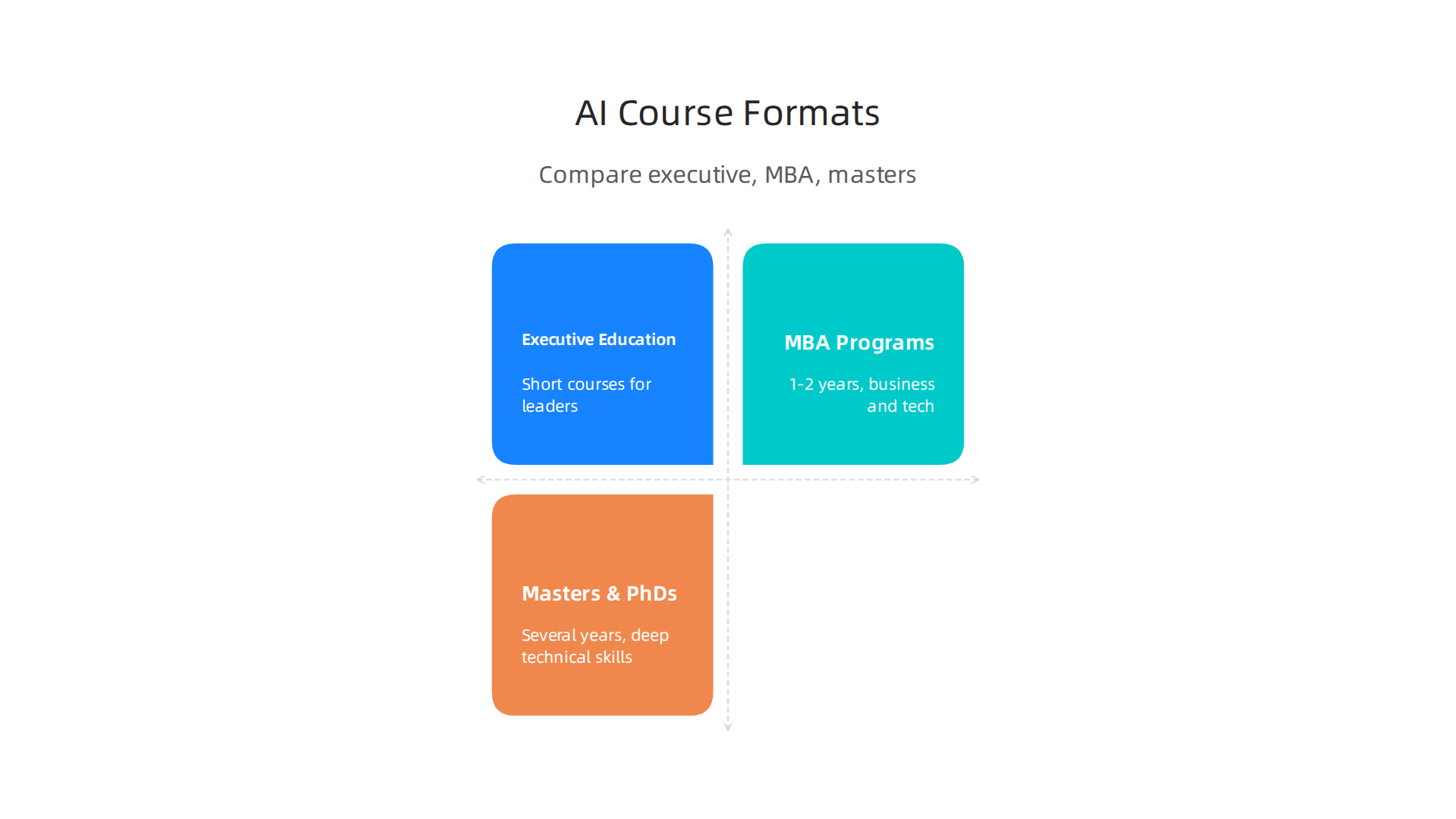
First, there are executive education programs, like those offered by Harvard Business School Online. These are usually short courses made for business leaders and people who work in management. The main goal is to give them a good idea of how AI changes business. For example, courses like AI for Leaders and AI Essentials for Business help you learn how to use AI in different parts of a company, like sales or marketing.
These courses often take just a few weeks and teach practical ways to use AI, rather than focusing on the deep technical details. You learn about things like machine learning and new generative AI tools. Another good example is the Data Science and AI for Decision Making program, which can be completed in about four weeks. These courses are great for companies that want to quickly teach their current leaders how to think about AI and use it to make better plans.
MBA Programs with AI Focus
Next, many MBA programs, which are master’s degrees in business, are now adding a lot about AI. The goal here is to train future business leaders who can understand both business and technology. For instance, the HBS MBA program has required courses like "Data Science and AI for Leaders" and offers many other AI-related classes. These programs take much longer, usually one to two years. They combine business lessons with how AI can change a company’s goals and how it works. Students learn through real-world examples and case studies. This type of program is good for growing new leaders within a company who have a strong mix of business sense and AI knowledge.
Specialized Masters and PhDs for Deep Technical Skills
Then, there are specialized master’s degrees and PhDs. These are for people who want to become experts in building and researching AI. Programs like a Harvard Business Analytics Program or an online phd data science focus much more on the technical side. They teach you how to create AI algorithms, manage data, and work with complex AI systems. These degrees usually take several years to complete and require a strong background in subjects like math or computer science. They are perfect for companies that need to hire people with very deep technical skills to create new AI products or run large data science teams. These programs are important for building up a pipeline of highly skilled technical talent.
Choosing the right course depends on what you want to achieve. Do you need to help your current team understand AI better, or do you need to hire new people to build complex AI systems? Each type of program serves a different purpose, whether it’s quickly boosting a team’s AI capacity or preparing experts for the future. Learning more about how to make smart choices for your organization can help you master how to choose AI tools for your business needs.
Beyond taking courses, schools and businesses also work together very closely to move AI forward. These special ties between universities and companies are known as the university-industry nexus.

They are key to developing new hbs artificial intelligence ideas and bringing them to the world.
Different Ways Schools and Companies Work Together
There are several common ways that universities and companies partner up:
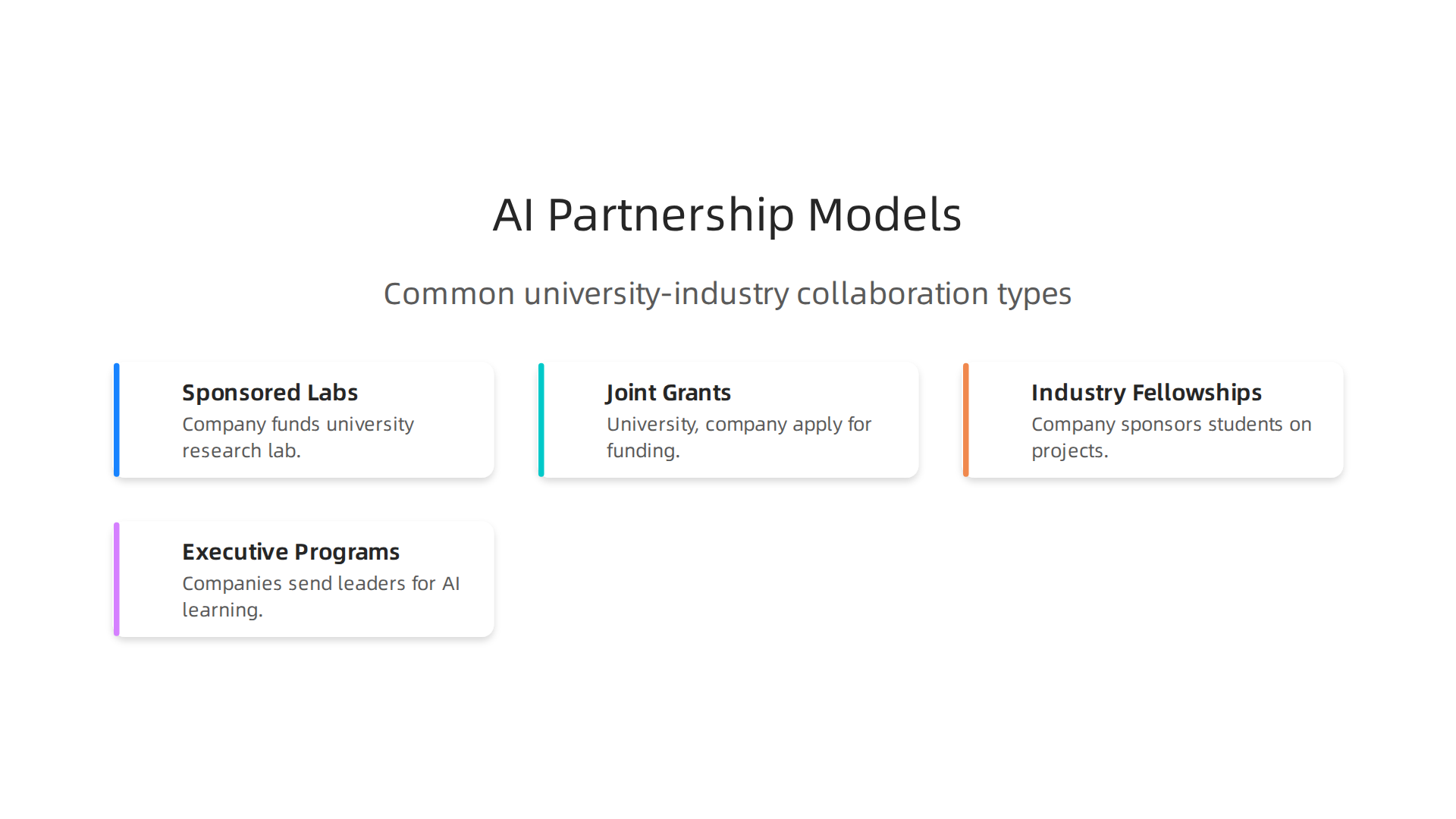
- Sponsored Labs: A company might give money to a university to set up a special lab. This lab then does research on AI topics that are important to the company. These labs help both sides. The company gets new research, and the university gets funding and real-world projects. Such partnerships are vital for driving advancements in AI, much like public and private groups work together to create new initiatives and funding mechanisms 2023 National Artificial Intelligence Research and Development ….
- Joint Grants: Sometimes, a university and a company will team up to apply for big grants. These grants often come from the government to
study aiprojects. By working together, they can get more funding and achieve bigger goals than they could alone. This type of broad teamwork can create entire ecosystems for many different fields to work on AI together, for example, through AI University Teams CoverSheet. - Industry Fellowships: Companies also offer special programs called industry fellowships. In these programs, companies pay for students or researchers to work on specific AI projects. These people might be studying for an
online phd data scienceor another advanced degree. It’s a win-win: students get valuable experience and funding, and companies get smart help on their projects. - Corporate Executive Programs: While discussed earlier as education, these can also be a form of partnership. Companies send their top leaders to university programs to learn about AI. This helps ensure that the company’s future plans are guided by the latest AI thinking, often shaped by
computers and education artificial intelligence.
Making Sure Partnerships Work Well
When universities and companies join forces, they need clear rules to make sure everything runs smoothly. This is called governance. It covers important things like:
- Who Owns the Ideas: One big part is called Intellectual Property (IP). This means figuring out who owns the new inventions or discoveries that come from the joint research. It’s important to have clear agreements on this. For example, some partnerships use open-source methods so that new ideas can be shared more easily, which can help avoid conflicts over IP Genesis-University-Summit-Breakout-Summaries-Report. ….
- Being Open (Disclosure): Both sides need to be open about their work. This means telling everyone how the research is funded and what the goals are. Being transparent helps build trust and makes sure that the research is fair and helps the public. This is a key part of good AI governance Guidance for the New Global Dialogue on AI Governance.
- Managing Conflicts: Sometimes, there can be disagreements or tricky situations. Good governance helps manage these problems. It puts plans in place to handle conflicts of interest and ensures that no one gets an unfair advantage from the partnership.
- Turning Ideas into Products: These rules also help guide how new discoveries are turned into real products or services that people can use. This process is called commercialization. It ensures that the benefits of university-industry AI research can reach the wider world.
Knowing about these partnerships and how they are managed helps us understand the bigger picture of AI development. It shows how learning and business work hand-in-hand to build our future. To keep informed on all these important developments in AI, make sure to get clear daily AI updates from The AI Newsletter Worth Reading. Staying updated is crucial, just like understanding how AI models in 2026 are transforming every major industry.
After learning about how schools and companies work together to build our AI future, it’s clear that knowing about AI is key. But how do we truly show that someone has the right AI skills? In 2026, we’re seeing new and better ways to test and give credit for AI knowledge, moving past old-fashioned exams. This is very important for anyone looking to study ai and for schools that offer programs like an online phd data science.
Designing Assessments and Credentials for AI Skills
Today, schools and workplaces are finding smart ways to check if people really understand and can use AI. They want to make sure the skills learned are useful in the real world. This is where new types of assessments come in.
New Ways to Show Your AI Skills
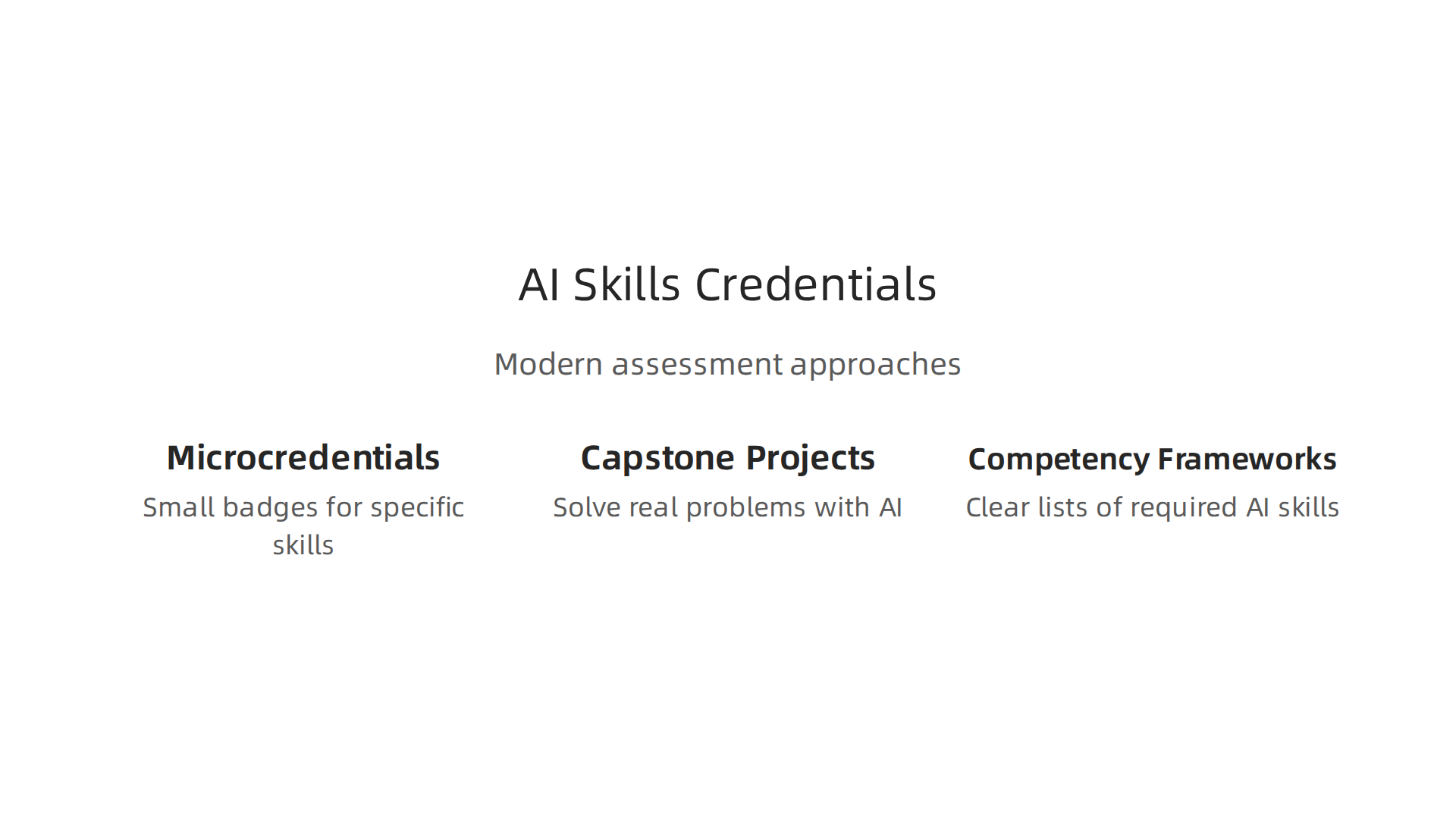
- Microcredentials: Think of these as small, special badges or certificates that show you’ve learned a very specific AI skill. For example, you might get a microcredential for knowing how to train a certain type of AI model. These are great because they focus on practical, hands-on abilities. They are different from a full degree, but they prove you have a valuable skill. Many jobs now look for these direct proofs of skill.
- Capstone Projects: These are like big final projects where students get to use all their AI knowledge to solve a real problem. For someone studying
hbs artificial intelligence, a capstone project might involve building an AI system to help a business make better choices. It shows you can apply what you learned, not just repeat facts. This kind of project helps people learn by doing, which is very important in the world ofcomputers and education artificial intelligence. Research shows that AI-supported assessments, especially those based on portfolios, can help with complex thinking and feedback for students in higher education today GenAI-supported portfolio assessment for complex thinking – Frontiers. - Competency Frameworks: These are clear lists that describe all the different skills someone needs to be good at AI. It’s like a roadmap of what you should be able to do. These frameworks help schools teach the right things and help companies know what skills to look for when hiring. They make sure everyone is on the same page about what "AI skilled" truly means. The goal is to make sure assessments are strong and reliable, even as AI changes quickly A Systematic Review of AI-Powered Assessment and ….
How Employers and Schools See These Skills
For many years, a college degree was the main way to show you had skills. But now, employers are also very interested in these newer forms of proof. They often prefer to see what you can actually do with AI, rather than just what classes you took. Microcredentials and capstone projects provide strong signals to employers that you have practical capabilities.
Schools also play a big role in making sure these new ways of assessing skills are fair and trustworthy. They work to validate that students truly master the skills these credentials claim. This means constantly updating how they teach and test, especially with how fast AI is changing. For more on building your AI skills, check out Mastering AI in 2026: Key Skills Learning Paths and Career Strategies. Learning how to use AI tools, for example, can even transform your study habits, as outlined in Transform Your Learning with AI Study Tools in 2026.
These changes in how we measure AI skills are a big part of making sure people are ready for the jobs of today and tomorrow.
New ways of testing AI skills make it easier to show what you know. But once you have those skills, what kind of jobs can you get? In 2026, many exciting jobs need people with AI knowledge. Schools and companies work together to make sure that what you learn in class helps you in these jobs.
Career Pathways and Skills Mapping from Academic AI Programs to Industry Roles
When you study ai, especially through a program like an online phd data science, you learn many skills. These skills can lead to different jobs in the world of artificial intelligence.

Let’s look at some common job paths and the special skills each one needs.
Popular AI Job Roles
- AI Product Manager: These people act like a bridge between the technical team that builds AI and the customers who use it. They figure out what problems customers have and how AI products can solve them. For example, someone from an
hbs artificial intelligenceprogram might become an AI Product Manager, guiding the creation of new smart tools for businesses. They need to understand AI basics, talk well with others, and think about business goals. - Applied Machine Learning Engineer: This role is all about building and making AI models work in real life. If you enjoy coding and working with data, this might be for you. They take the ideas from AI research and turn them into actual programs that can do things like recognize pictures or understand speech. Skills in programming,
data science uci, and understanding different AI models are key here. Many companies in 2026 are looking for these specific technical skills, including expertise in generative AI and machine learning operations (MLOps) Top In-Demand Tech Skills Employers Want in 2026. - AI Strategy Lead: This job focuses on the big picture. An AI Strategy Lead helps a company decide how to use AI to grow and solve major challenges. They need to know about the newest AI trends, understand business deeply, and think about the ethical side of using AI. This often involves looking at how AI can transform whole industries. If you’re interested in roles like these, learning about What is a data analyst: your 2026 career guide can provide a solid foundation.
Making School Learning Fit Industry Needs
Schools want to make sure their AI programs prepare students for these important jobs. This means they look closely at what skills companies need and then build their courses around them. For instance, programs that focus on computers and education artificial intelligence try to teach both the deep science behind AI and the practical ways to use it.
One big way schools do this is by making ethics a core part of learning. It’s not just about building AI, but building AI responsibly. Integrating clear rules about AI into school lessons helps students understand how to make fair and safe AI systems. This is an important step in aligning academic programs with what companies need and expect today Embedding Ethical Oversight into Academic Curricula Development.
This ensures that whether you’re aiming for a specialized technical role or a leadership position, your education gives you a strong start.
Staying informed about these fast-changing career paths and the latest AI breakthroughs is crucial.
The world of AI moves very fast. To keep up with all the new AI model launches, company news, and important trends, you need a reliable source. The AI Newsletter Worth Reading delivers clear daily AI updates to your inbox, helping you stay ahead.
The fast pace of AI means that schools and universities must also move quickly to update what they teach. This is especially true for making sure that AI programs are not just about technology, but also about doing things the right way. This means teaching students about ethics, having clear rules, and making smart choices about how AI is used in learning and in the world.
Building Ethics into AI Learning
For schools offering programs like an online phd data science or even specialized courses in hbs artificial intelligence, thinking about ethics isn’t an add-on. It’s a key part of how new AI programs are designed. Many experts agree that ethical principles should be woven into every part of the curriculum, not just taught as a separate class. For example, guidelines from the European Commission in 2026 offer a clear way to add ethics and data rules into teaching and learning for educators Artificial Intelligence in Classrooms: Ethical Dimensions.
This means that when students learn to study ai, they also learn about:
- Privacy and data protection: How to keep people’s information safe.
- Fairness and avoiding bias: Making sure AI doesn’t treat groups of people unfairly.
- Being clear and understandable: Knowing how AI makes decisions.
- Looking out for student well-being: How AI tools might affect students.
Leading organizations like UNESCO are also working on frameworks for AI ethics in education, building on earlier guidance for generative AI. This helps schools create rules and policies to manage AI safely AI in Higher Education Ethics and Policy: 2026 Developments. It’s about ensuring that as computers and education artificial intelligence grow together, they do so in a way that benefits everyone.
How Institutions Adopt New AI Programs
When a school wants to start a new AI course or program, like a data science uci program, they need a plan. This plan should not only cover what to teach but also how to teach it fairly and responsibly. This means:
- Setting up strong rules: Universities need their own clear rules for using AI, making sure they match bigger guidelines from places like OECD and UNESCO. These rules help make sure AI-driven learning is fair, clear, and accountable Ellethea Pryce’s Post.
- Looking at the whole picture: Leaders in schools need to think about how AI will change everything from privacy to fairness. They should set up strong systems to manage data and protect students. In 2026, it’s about making sure that the benefits of AI are shared widely and that no one is left behind.
- Thinking about fairness for everyone: Schools need to make sure that new AI programs are available and helpful for all students, no matter their background. This often means carefully reviewing how AI tools are chosen and used, and making sure they don’t create new gaps.
Putting these ideas into action helps schools offer new AI learning paths that are not just cutting-edge but also thoughtful and fair. It’s about creating a future where AI helps everyone grow and learn in a responsible way.
Summary
This article explains how top schools—exemplified by Harvard Business School—are redesigning AI education for leaders and organizations in 2026. It compares formats from short executive courses to MBAs and deep technical degrees, and shows how curricula emphasize practical use, decision‑making, and ethics rather than just coding. The piece reviews new pedagogy and AI‑enabled assessment methods, including microcredentials and capstone projects, and explains how those credentials map to real industry roles. It also outlines how universities and companies partner—through sponsored labs, fellowships, and joint grants—and why clear governance, IP rules, and transparency matter. Finally, the article connects program design to career pathways and offers guidance on choosing programs that align with business goals, workforce needs, and responsible AI practice.