

Why AI adoption is now mission-critical for B2B marketing agencies
Being a leader at a B2B marketing agency in 2026 means keeping up with a lot of changes. New AI tools and models are popping up almost every day. It’s like trying to drink from a firehose! This rapid change and huge amount of information can feel overwhelming. Agency leaders often struggle to know which AI tools are truly helpful and which are just noise.

Actually, using AI in marketing is not just a nice-to-have anymore. It’s becoming a must. Reports from this year show that a very large number of marketers are using AI tools. For example, 91% of marketers are now actively using AI in their daily work, which is a big jump from last year, according to one major study Report: The State of AI in Marketing 2026. Other research points out that over 80% of marketers now use AI in some way The State of AI Adoption in Marketing Teams: Year 2. This means if a B2B marketing agency isn’t adopting AI, it might fall behind.
Many B2B marketing leaders already know this. About 63% believe AI has changed marketing a lot, and 71% plan to spend more on AI for marketing this coming year 2026 State of AI and B2B Marketing report. AI can help with many parts of a marketing portfolio, from creating content to setting up a new marketing strategy template or improving direct marketing and digital marketing tools. But knowing that AI is important and actually putting it to good use are two different things.
This guide is here to help you cut through the confusion. We want to give you a clear, trust-first roadmap. You’ll learn how to choose the right AI tools, how to make sure they’re worth the money (ROI), and how to use them smartly and safely for your B2B marketing agency. If you’re tired of information overload, you can Get clear daily AI updates from The Deep View Newsletter. We’ll also help you understand how to pick the best AI tools to get the most impact for your business. It’s all about making AI work for you, not the other way around.
Key AI capabilities reshaping B2B marketing in 2026
To truly make AI work for your B2B marketing agency, it helps to understand the main kinds of AI tools and what they can do.

In 2026, some key AI powers are changing how agencies get things done. Let’s look at these important capabilities and how they fit into the services your agency offers.
Core AI Powers to Know
Here are the main types of AI that are making big waves:
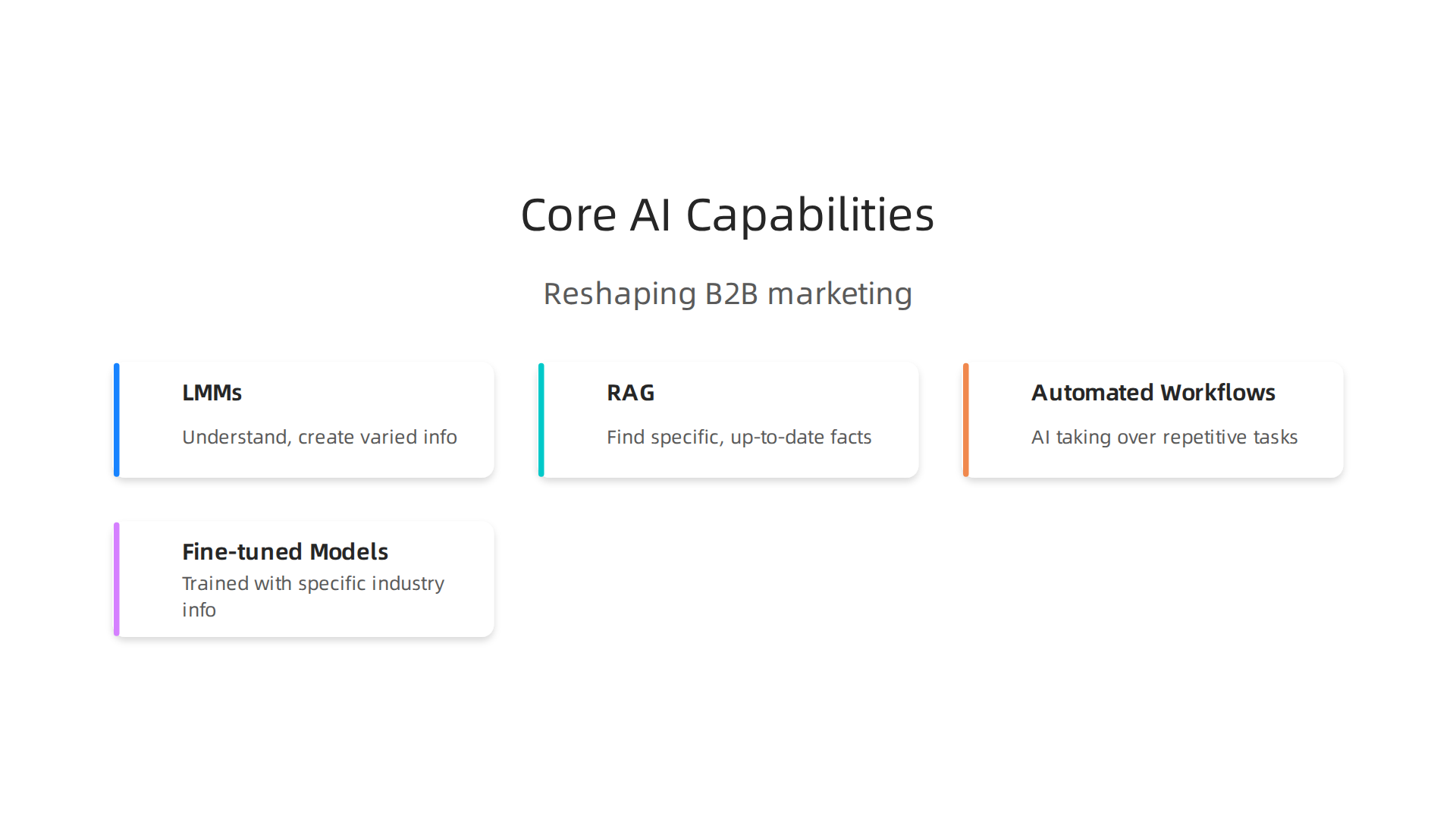
- Large Multimodal Models (LMMs): Think of these as super-smart AI tools that can understand and create many different kinds of information. They don’t just work with words. They can also work with pictures, videos, and even sounds. This means they can help a lot with creative tasks for your marketing portfolio. For example, an LMM could create an image for an ad and also write the text for it. The idea of multimodal AI that combines different types of data is becoming very important for new AI models LUMIRAG: A UNIFIED MULTIMODAL RAG LARGE MODEL.
- Retrieval-Augmented Generation (RAG): This fancy name means that AI can find specific, up-to-date facts from a large library of information. Then, it uses those facts to give you a smart answer. Instead of just guessing or using old data, RAG helps the AI be very accurate and relevant. This is a big deal for B2B marketing agencies because it means the AI can pull fresh industry data to make your marketing strategy template stronger.
- Automated Workflows: This is about AI taking over tasks that are done over and over again. Imagine AI sending out many emails, sorting data, or even setting up ad campaigns without a person having to click every button. This saves a lot of time and makes work faster.
- Fine-tuned Domain Models: These are AI tools that have been trained with a lot of very specific information about one industry or topic. So, instead of a general AI, you might have one that’s an expert in, say, healthcare technology marketing. This makes the AI much better at understanding and helping with niche B2B tasks.
Knowing about these core capabilities can help your team understand how to choose AI tools for maximum business impact.
How AI Capabilities Map to Agency Services
These powerful AI tools aren’t just for show. They directly help with the kinds of services a B2B marketing agency offers:
- Demand Generation: This is all about getting more people interested in a product or service.
- Automated workflows can send out many personalized emails or social media messages to potential customers.
- RAG can help create highly targeted content by finding the most recent data about what different buyers care about. This makes your direct marketing much more effective.
- Fine-tuned models can help identify which companies are most likely to buy, making sure your agency focuses its efforts in the right places.
- Account-Based Marketing (ABM): This is when an agency treats each important client account like its own small market.
- RAG is super helpful here. It can dig up deep insights about specific companies or people, like what technologies they use or what their goals are.
- LMMs can then use these insights to create highly personalized content, like unique messages or ad visuals, for each key account.
- Creative Production: This involves making all the visual and written content for campaigns. Many reports show that creating content is the top way marketing teams use AI State of AI Marketing 2026 | Enterprise AI Adoption Report.
- LMMs are perfect for this. They can quickly make different versions of ad copy, write social media posts, or even generate images and video scripts.
- This can also include tools that help unlock digital content creation with face swap AI tools for engaging visuals.
- Sales Enablement: This means giving sales teams the tools and information they need to sell better.
- RAG can give sales reps quick answers to customer questions by pulling information from product manuals or case studies.
- Automated workflows can help create reports on customer interactions or summarize long sales calls.
- Fine-tuned models can even help train new sales staff by creating realistic practice scenarios.
By using these AI capabilities, a B2B marketing agency can not only work faster but also make its digital marketing tools and strategies much smarter. Studies show that AI’s share in marketing activities has nearly doubled in just two years, meaning it’s quickly becoming central to all marketing efforts The_CMO_Survey-Highlights_and_Insights_Report-2026.
It is clear that AI has many powers that can help a B2B marketing agency. But how do you decide where to start? It’s like having a toolbox full of amazing tools. You need to know which tool to use for each job to get the best results. For your agency, choosing the right AI tasks means looking at two main things: how much good it will do (impact) and how hard it will be to set up (complexity).
Think of it like a simple map for your marketing strategy template. This map helps you see where the "quick wins" are and where the "bigger projects" might be.
Finding Your Agency’s AI Sweet Spots
Here’s how to look at common tasks for a B2B marketing agency:
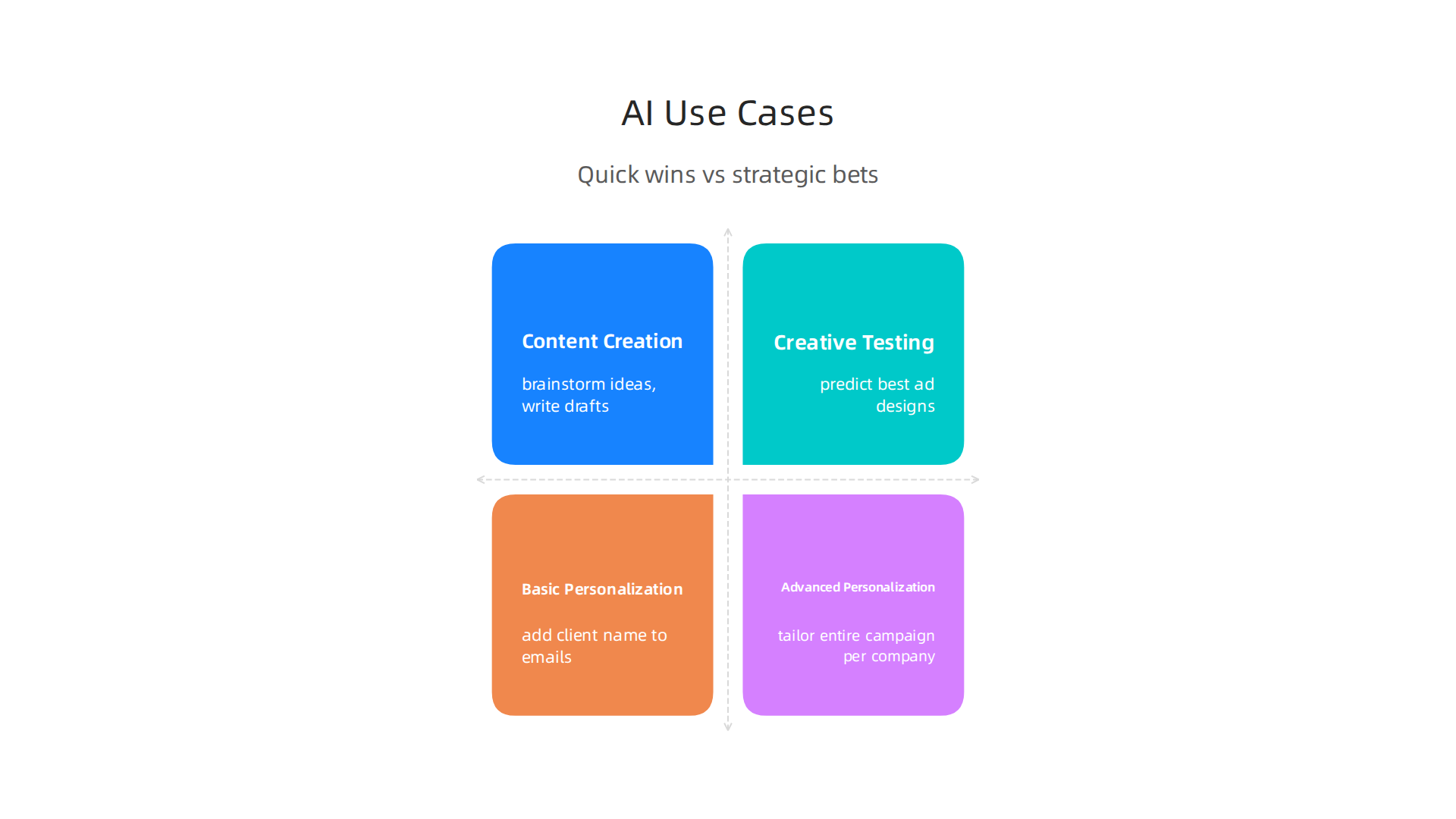
Quick Wins: High Impact, Low Complexity
These are tasks where AI can help a lot without needing a huge effort to start. They often give good results fast.
- Content Creation (Simple Forms): AI is great at helping you brainstorm ideas for blog posts, write first drafts of emails, or create social media updates. This makes your content faster and easier to add to your marketing portfolio. In fact, creating content is still the top way marketing teams use AI in 2026, with 87% of enterprise marketing teams using AI tools today for tasks like this.
- Creative Testing: AI can quickly tell you which headlines, images, or ad designs will work best. It learns from past data to guess what people will like. This saves time and makes your direct marketing much more effective. Companies like Currys use AI models to figure out which creatives connect most with people to drive clicks and sales.
- Basic Personalization: You can use AI to add a client’s name or company to emails. This is a simple step to make your messages feel more personal without being too hard to set up.
Many agencies are already seeing success here. Reports show that the share of marketers using generative AI in at least one regular task has grown a lot, reaching 87% in 2026 The 2026 State of AI Adoption in B2B Marketing.
Strategic Bets: High Impact, High Complexity
These are tasks that can bring huge benefits to your B2B marketing agency, but they need more time, special data, and maybe even a few new tools to get going.
- Advanced Personalization: Imagine AI tailoring an entire marketing campaign for one specific company. This means everything from the content they see to the specific problems it tries to solve. It needs a lot of customer data and smart AI models, making it complex but super impactful.
- Predictive Lead Scoring: This is when AI looks at all your potential customers and predicts who is most likely to buy. It uses deep learning from lots of past sales data to find the best leads. This is a game-changer for digital marketing tools, as it can greatly increase qualified leads. Some agencies have seen a 60% increase in qualified leads by using AI for marketing automation and lead scoring Marketing Automation Case Study: 60% More Qualified Leads, 2 …. This takes good data setup and careful planning.
- Automated Campaign Optimization: AI can constantly watch your ad campaigns and make tiny changes to improve them, like changing who sees the ad or how much you spend. This can lead to much better results over time, but it needs a system that can connect many different tools and understand lots of data. You can learn more about how to set up AI for campaigns effectively in a guide on how to optimize your AI marketing funnel in 2026.
It’s important to remember that while the more complex AI uses might take more effort upfront, they often lead to bigger payoffs for your agency in the long run. Many companies are seeing great returns, with 74% of executives reporting they achieve a return on investment from AI within the first year The ROI of AI: Agents are delivering for business now – Google Cloud.
By starting with quick wins and then slowly moving to more complex, strategic bets, your B2B marketing agency can grow smarter and stronger with AI.
Want to keep up with the latest in AI and how it can help your business? Get clear daily updates.
The AI Newsletter Worth Reading
Once you know which AI tasks make sense for your agency, the next big step is to pick the right tools and companies that offer them. This is like choosing the right ingredients for a special recipe. You need to look closely at what each vendor offers to make sure it truly helps your B2B marketing agency achieve its goals. Making a smart choice here is key to getting good results from your new digital marketing tools.
Evaluating AI Tools and Vendors: Practical Due Diligence Checklist
Choosing AI tools is not just about cool features. It’s about how well a tool fits your needs, how safe it is, and if it will actually bring value to your business.
What to Ask About Vendor Claims
When a company tries to sell you an AI tool, they will make many promises. Here’s how to look deeper:
- Data Sources: Where does the AI get its information? Is it from reliable places? For example, if an AI helps with lead scoring, you want to know it’s learning from good, clean sales data, not just random internet info. Bad data can lead to bad results for your direct marketing efforts.
- How the AI was Built: Ask about the "model provenance." This means understanding how the AI was made and trained. Is it a general tool, or was it built specifically for B2B marketing agencies? Knowing this helps you trust its outputs.
- Customization: Can you change the tool to fit your agency’s unique way of working or your client’s special needs? A tool that can adapt is often more useful in the long run than a "one-size-fits-all" solution.
- Speed (Latency) and Cost: How fast does the AI work? Does it take minutes or hours to do a task? Also, how much does it truly cost? Look for hidden fees. Some AI tools might seem cheap at first but have high costs for extra features or data use.
- Security: How will the tool protect your clients’ sensitive data? This is very important for a B2B marketing agency. You need strong security to keep information safe and follow all privacy rules. Many marketing agencies are looking at the costs of AI, with some noting an average initial investment between $47,000 to $112,000 for mid-sized agencies in 2026, often taking 11-16 months to break even AI Adoption in Marketing Agencies: Key Statistics and Trends for 2025. Actually, for many, AI is still seen as a cost center, not yet a revenue driver, especially in 2025 The State of Generative AI Inside US Marketing Agencies, 2025 – 4As. This makes careful cost evaluation even more important.
Checklist for Getting Started
Before you decide to buy or implement an AI tool, use this checklist to make sure you’re ready:
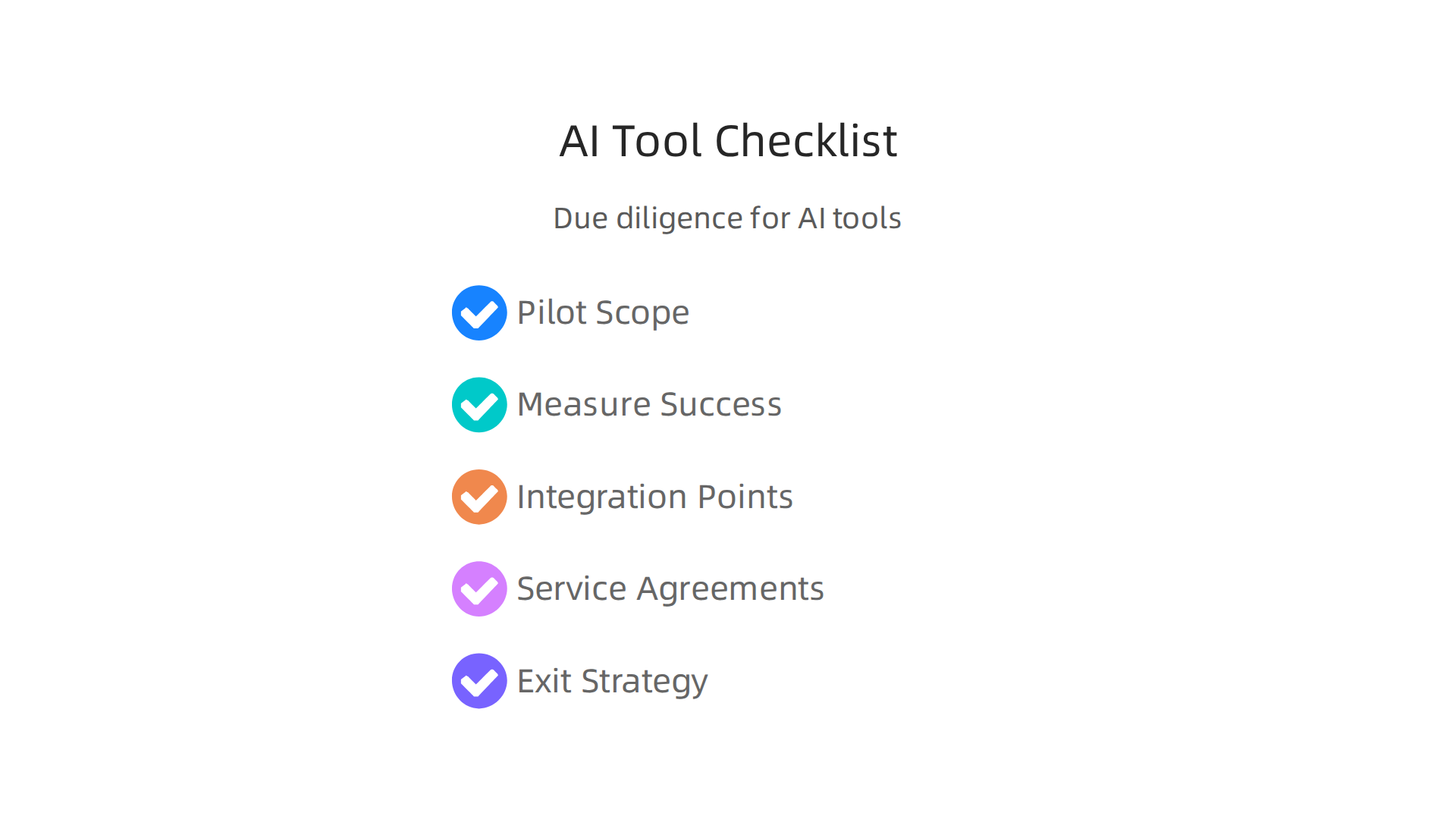
- Pilot Scope: Don’t go all in at once. Start small. What specific project or part of your marketing strategy template will you test the AI on first? What is the goal of this small test?
- How to Measure Success (KPIs): Decide exactly how you will know if the AI tool is working well. Will you track how many leads it finds, how much time it saves, or how much more money a campaign brings in? Having clear numbers to watch is very important. You can find out more on how to choose AI tools 2026 for maximum business impact.
- Integration Points: Think about how the new AI tool will connect with your existing systems. Will it talk to your customer relationship management (CRM) software, your email platform, or other tools in your marketing portfolio? Seamless connection is key to smooth operations.
- Service Level Agreements (SLAs): These are promises from the vendor about how well the tool will work and what kind of support you will get. What happens if the tool breaks down? How quickly will they fix it? This helps protect your agency.
- Exit Strategy: What if the AI tool doesn’t work out as planned? How easy is it to stop using it and get your data back? Having a plan for this means you won’t be stuck with a bad investment. Learning to master how to choose AI tools for your business needs can save you a lot of trouble.
By carefully checking these points, your B2B marketing agency can make smart choices about AI tools and make sure they truly help your business grow.
Measuring Impact: KPIs, Experiments, and Attribution for AI-Driven Campaigns
After picking the right AI tools for your B2B marketing agency, the next big step is to make sure they are actually working.

This means carefully watching how your AI-driven campaigns perform. It’s like planting seeds and then checking to see which ones grow best and give you the most fruit. You need to know what to measure and how to measure it correctly.
Designing Tests for AI Tools
To truly understand if an AI tool is helping, your B2B marketing agency needs to set up smart tests. We often use two main types of tests: A/B tests and holdout experiments.
- A/B Testing: This is like trying two different versions of something to see which one works better. For example, you might have the AI create two different ad headlines, and then you show half your audience one headline and the other half the second headline. By checking which ad gets more clicks or sales, you can see which AI-generated headline is stronger. You need enough data for the results to be meaningful, sometimes needing hundreds of conversions per option to see clear differences, especially if the impact is small The Complete Guide to Meta Ads A/B Testing in 2026.
- Holdout Experiments: This is a bit different. Imagine you want to see if your new AI tool for finding leads actually brings in more business. You would keep a small group of your target audience separate and not use the AI tool on them. This is your "control group." The rest of your audience would be your "test group," and you would use the AI tool as planned. A holdout test helps measure the real impact of a marketing effort by comparing outcomes between the groups What Is a Holdout Test in Marketing? A 2026 Guide – Measured. This control group might be 1% to 10% of your total audience, sometimes even more if you are testing for brand changes Hold-Out Groups: Gold Standard for Testing—or False Idol? – CXL.
These tests help you know if the changes made by AI are really causing better results, not just happening by chance. For bigger tests, you might even use "geo-holdout tests" where you test AI in certain areas and compare them to others where AI isn’t used Validate 2026 Credits: Geo-Holdout & Synthetic Control. This helps isolate the AI’s impact on your overall marketing strategy template.
Keys to Successful Experiments
For these tests to work, you need to:
- Define your goal clearly: What exactly do you want to learn? For instance, do you want to know if AI can boost website visits by 10%?
- Run tests long enough: Don’t stop too soon. Many tests need at least 4 weeks to give clear answers, and sometimes 6 to 8 weeks for things related to your brand Holdout Test in 2026: Incrementality Measurement That Actually Works.
- Replicate winners: If a test shows a clear winner, try running it again to make sure it wasn’t just luck An AI Ad Creative Testing Framework That Works. This makes your digital marketing tools even stronger.
You can often set up these experiments right within platforms like Google Ads Prove AI Marketing ROI: Incrementality Tactics for 2026. To learn more about getting the most out of your data, consider how to augment AI smart strategies for leaders to drive growth in 2026.
Giving Credit Where It’s Due: Attribution
Attribution is about understanding which parts of your marketing efforts truly led to a sale or a customer action. When you use AI for things like creating content or personalizing messages, it can get tricky to know exactly how much credit the AI should get. This is because AI often works behind the scenes, touching many parts of your marketing portfolio.
A good way to handle this is by focusing on incrementality. This means proving that your AI efforts actually added to your results, rather than just doing what would have happened anyway. Tools and strategies for AI attribution fixes and incrementality strategies for 2026 can help. This is where those holdout tests become super important. They help you see the "extra" lift that AI provides for your direct marketing campaigns.
By being smart about how you test and how you give credit, your b2b marketing agency can truly understand the value AI brings.
Staying up-to-date with the latest advancements and measurement techniques in AI can feel like a full-time job. For clear, daily insights into the rapidly changing world of artificial intelligence, there’s a helpful resource. Get clear daily AI updates from The AI Newsletter Worth Reading.
After making sure your AI tools are truly boosting your B2B marketing agency efforts, there’s another very important step: keeping all data safe and following the rules. Think of it like a new car. It’s great if it runs fast, but you also need to make sure it’s safe to drive and follows all traffic laws. When you use AI for marketing, especially with client information, data governance, privacy, and compliance become super important.

Keeping Client Data Safe with AI
When an AI system collects, processes, or uses information about people, it has special rules to follow. This is called AI data privacy obligations. It’s not just about keeping data secret; it’s also about making sure the AI acts fairly and you know how it makes decisions.
Here are some practical things your B2B marketing agency needs to do:
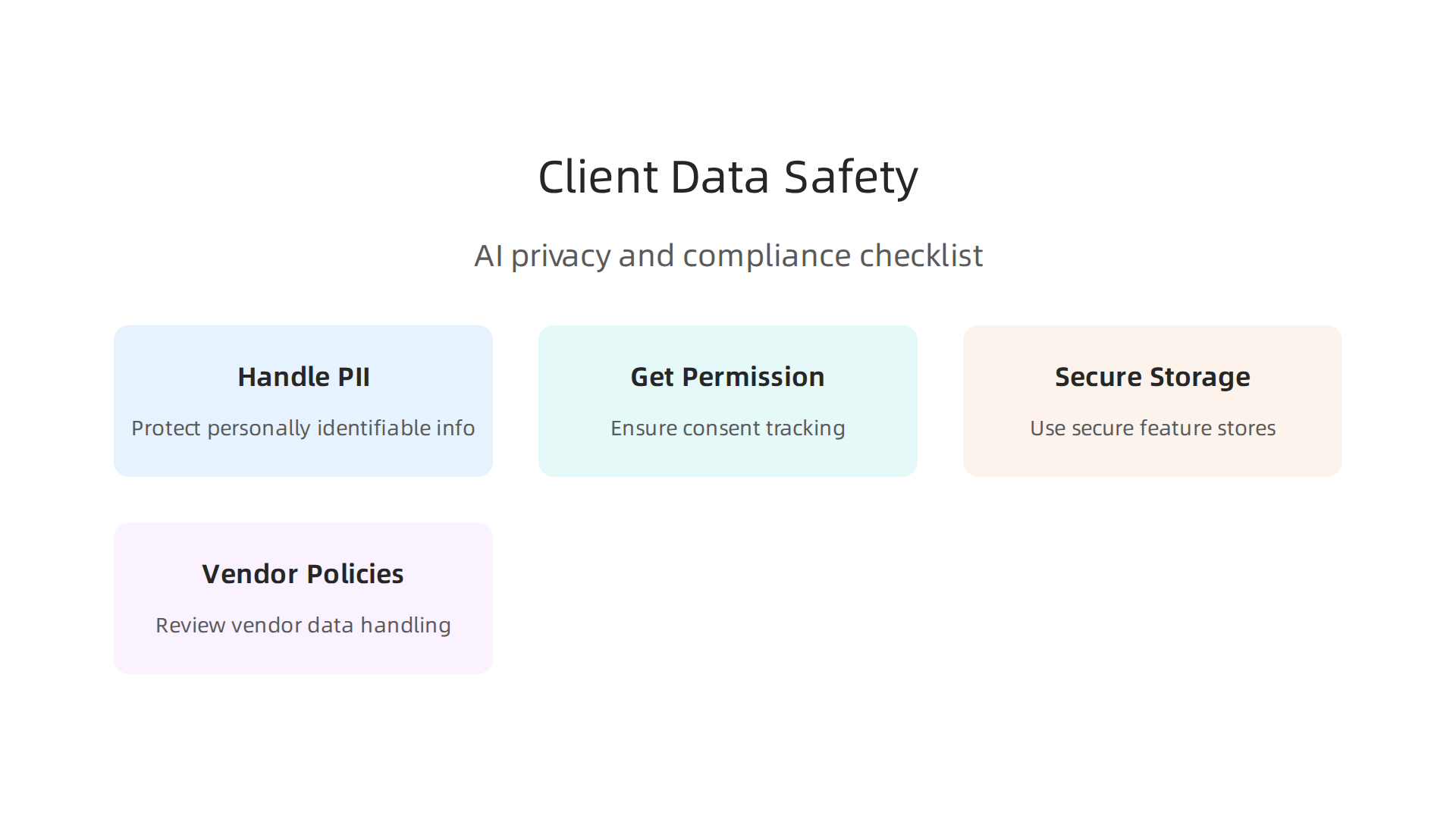
- Handle Personal Information Carefully: Personal Identifiable Information (PII) is any data that can directly or indirectly point to a specific person. This includes names, emails, and even IP addresses. Your agency must have clear rules for how AI tools use this data. You need to protect it from being seen by the wrong people or used in ways it shouldn’t.
- Get Permission to Use Data: Always make sure you have permission to use someone’s data. This is called consent tracking. If your AI tool uses customer data for a direct marketing campaign, you need to be sure that customer said "yes" to having their data used that way.
- Use Secure Data Storage: Imagine a special, locked room for all the data your AI uses. These are called "secure feature stores" in the tech world. They are safe places where data is kept ready for AI without letting just anyone see it. This helps keep your marketing portfolio information private.
- Check AI Vendor Data Policies: When you choose new digital marketing tools that use AI, you must check their rules for data. How do they handle data? Do they share it? It’s like checking the safety record of a car brand before you buy. Having written data management policies is key to making sure that outside companies handle your client’s data properly. Good practice involves checking vendors for data privacy compliance with a clear questionnaire 8 Steps to Manage Vendor Data Privacy Compliance.
Understanding the Rules for AI
The rules about data privacy and AI are changing very fast in 2026. Many new laws are coming out around the world. For example, in the U.S., states like Indiana, Kentucky, and Rhode Island have new privacy laws in effect this year. Even more, the European Union has its own AI Act with rules that started this past August 2, 2026 Data Privacy, AI Regulatory, and Compliance Update: July 2026. States like California and Colorado also have new AI rules. This means businesses need clear plans for privacy instead of just hoping for the best Privacy as the Foundation of Responsible AI Governance.
For a B2B marketing agency, it’s important to:
- Stay Updated: Keep an eye on new laws in all the places you do business.
- Build Rules into Your Work: Don’t just read the laws; build them into your daily marketing strategy template and how your team uses AI. This means training your staff and making sure every step of your AI-driven marketing campaigns follows the rules.
- Know the Risks: It’s also smart to understand the real dangers of AI in 2026, including privacy issues and biases that can creep into AI if not managed properly.
By actively managing data privacy and compliance, your B2B marketing agency can use AI confidently and responsibly, building trust with clients and avoiding problems. You can also explore how a data annotation specialist is critical for AI accuracy and data quality to ensure the information used by your AI is always up to par.
By actively managing data privacy and following the rules, your B2B marketing agency can use AI confidently and build trust with clients. But to truly make AI a strong part of your business, you also need the right people and a clear plan. It’s like having a great car that’s safe to drive; you still need a good driver and a map to get where you want to go.
Organizational Change: Staffing, Skills, and Implementation Roadmap
Bringing AI into your B2B marketing agency means thinking about your team and how they work. You might need new kinds of skills or new roles.
Getting the Right People and Skills
As AI grows more important in 2026, agencies need people who understand it. You have three main choices:
- Hire New Talent: You could look for people already skilled in AI. These might be "prompt engineers" who are good at writing instructions for AI, or "ML product managers" who help guide AI projects, or "MLOps" experts who manage how AI tools run every day. People who are great at looking at data (analytics) are also key. Many AI jobs are in demand for 2026, showing how important these roles are becoming.
- Teach Your Current Team: You can also help your current staff learn new AI skills. This is called upskilling. Training your team to use new digital marketing tools and understand AI can make them more effective and excited about new ways of working.
- Work with Experts: Sometimes, it’s best to partner with outside companies or consultants who specialize in AI. They can help your B2B marketing agency set up complex AI systems or offer expert advice. This can be a smart way to get high-level knowledge without hiring a whole new department.
Remember, the goal is to make sure your team feels comfortable and capable using AI, whether they are working on a marketing strategy template or handling a direct marketing campaign.
Your Step-by-Step AI Roadmap
Bringing AI into your B2B marketing agency should happen in clear steps. A good plan helps you succeed and avoid big problems. Many experts suggest a 30-60-90 day plan to implement AI effectively, often starting with a smaller test project before expanding across the whole company.
Here’s a simple way to think about it:
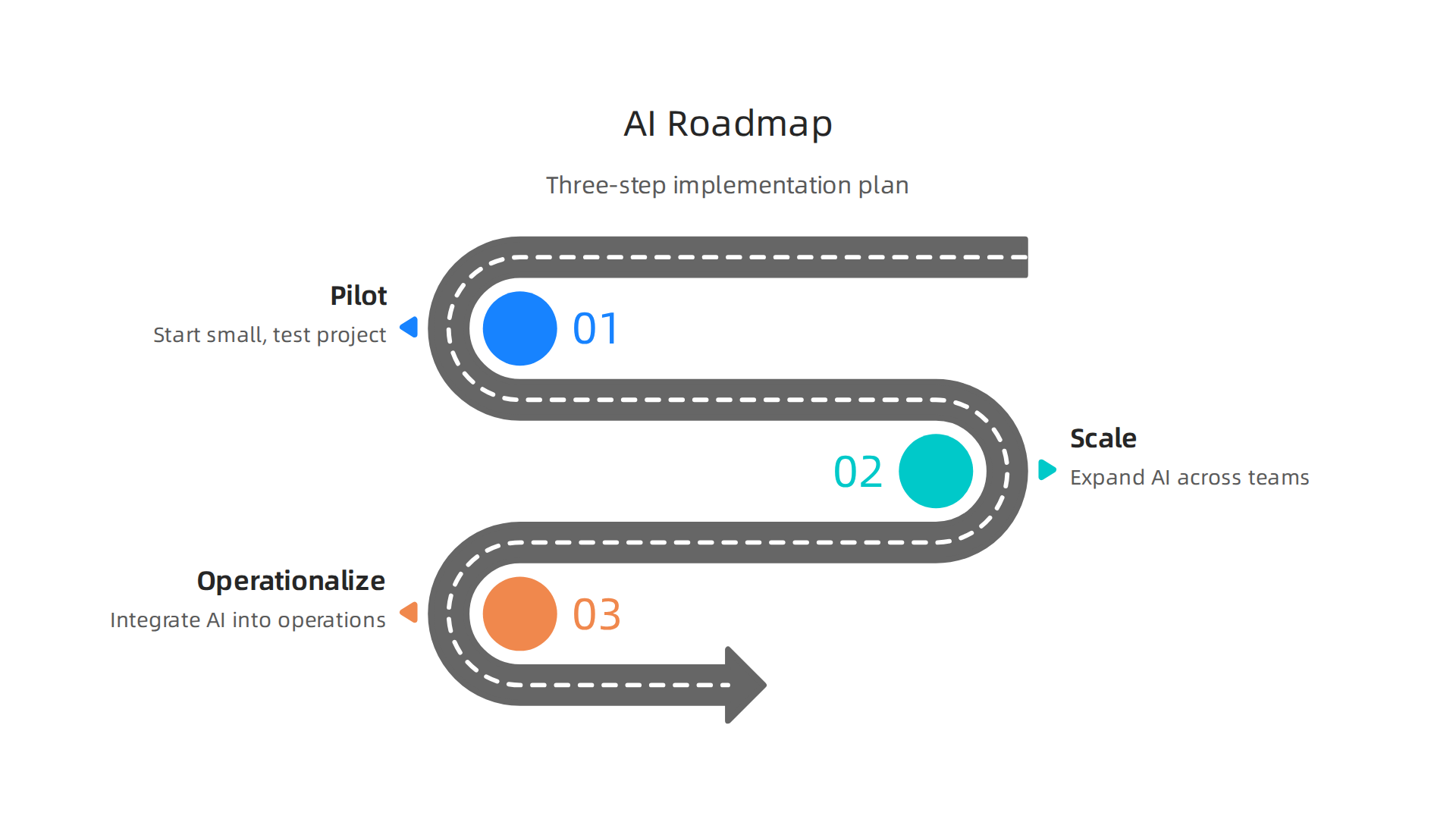
- Pilot: Start small. Pick one project or one team to try out an AI tool. For example, use AI to help write social media posts for one client’s marketing portfolio. This helps you learn how AI works for your agency without a lot of risk. This first step is crucial for auditing your current AI usage and assessing your data readiness, as outlined in The AI Playbook. This phase might last for the first 30 days, focusing on building a foundation and achieving quick wins, as many roadmaps suggest Implementing AI in Your Marketing Department: A 90-Day Playbook.
- Scale: If your pilot project goes well, you can start using AI for more tasks or with more teams. This means taking what you learned and applying it more widely across your agency. You might expand to more clients or add AI to different parts of your marketing work. This typically happens in days 31-60, integrating AI into more workflows and measuring performance.
- Operationalize: This is when AI becomes a normal part of how your B2B marketing agency does business. It means having clear rules (governance) for how AI is used, and always checking to see if it’s working well (continuous measurement). This stage involves ongoing improvement and making sure AI tools keep helping your agency grow. Building a clear AI marketing plan template can help guide these efforts.
Staying informed about the fast-changing world of AI is also part of this process.
Get clear daily AI updates from The AI Newsletter Worth Reading.
Summary
This article explains why adopting AI is now essential for B2B marketing agencies and lays out a practical, trust-first roadmap for doing it well. It defines the core AI capabilities—LMMs, RAG, automated workflows, and fine-tuned domain models—and shows how they map to services like demand generation, ABM, creative production, and sales enablement. The guide helps leaders spot quick wins (content, testing, basic personalization) and plan strategic bets (advanced personalization, predictive lead scoring, campaign optimization). It also gives a due-diligence checklist for vendors, a framework for measuring impact with A/B and holdout tests, and clear steps for data governance, compliance, and staffing. After reading, agency leaders will know where to start, how to evaluate tools, how to measure ROI, and how to build the people and processes needed to scale AI responsibly.