

Why this moment matters: AI’s accelerating impact on work
In 2026, we are seeing a huge change in how people work all around the world, all thanks to artificial intelligence (AI). This isn’t just about computers doing more; it’s about a complete shift in jobs and how businesses run. AI is no longer a faraway idea. It’s here now, and it’s making a real difference in workplaces everywhere.
Many experts agree that AI is quickly changing our work lives. For example, a report from PwC about the global job market in 2026 shows how AI is reshaping jobs, skills, and even pay across many countries 2026 AI Jobs Barometer Global report findings. This means that whether you are in manufacturing, healthcare, or creative fields, your work is likely touched by new AI tools.
This quick change means leaders need to act fast.

Think about global work AI not just as a technology, but as a new way of doing business. It’s affecting everything from simple tasks to complex decisions. This is why jobs like data jobs are becoming more important. People who understand how to work with data and AI are in high demand. If you’re wondering what it takes to get into this field, understanding concepts like what is data engineering is a great first step. Countries like South Korea artificial intelligence are also investing a lot in AI, showing how important it is on a global scale.
In this article, we want to give you clear ideas that you can use right away. We’ll help leaders like you figure out what steps to take this quarter. Our goal is to make sure you know how to use AI wisely, whether it’s understanding new tools or making sure AI systems are fair and easy to understand, which is often called explainable AI. This way, you can lead your teams well into the future.
Staying on top of these fast changes can be tough. There’s so much happening with new AI models, company news, and changing rules every day. That’s why having a reliable source for updates is key. For clear daily AI updates, consider subscribing to The AI Newsletter Worth Reading. You can also learn more about specific roles like a data analyst career guide to understand the new opportunities AI brings.
How AI is Reshaping Job Categories and Demand
As AI keeps growing, it’s changing what jobs look like and what skills are needed. We are seeing two main things happen: some jobs are getting augmented, meaning AI helps people do them better, and some tasks are getting automated, meaning AI does them instead of people. But it’s not all about replacement. New types of jobs are popping up too, often called hybrid roles, where people work closely with AI tools.
For example, a report on the state of AI in businesses for 2026 shows that many companies are already using AI to boost their workers, not just replace them The State of AI in the Enterprise. This means people in creative fields might use AI to quickly make first drafts, while customer service agents might use AI tools to find answers faster. These tools make work easier and let people focus on more complex or human tasks.
New Kinds of Jobs Are Emerging
The rise of global work AI means there’s a big need for people who can understand both human needs and how AI works. You’ll see more data jobs coming up, like data scientists, AI trainers, and AI ethicists. These roles help build, manage, and make sure AI systems are fair and understood. Understanding concepts like what is data engineering is becoming very important because it’s all about designing and building systems that collect and process data for AI to use. For those looking to grow in these fields, learning new skills is key to mastering AI jobs in 2026 and finding top roles.
Many businesses are also creating hybrid roles. Imagine a marketing specialist who uses AI to analyze customer trends and then uses their human creativity to design campaigns.

Or a healthcare worker who uses AI to review patient data, then provides the personal care only a human can. These roles blend human smarts with AI power. This shift is happening all over, even in countries like South Korea artificial intelligence is a big focus for job creation and skill development.
What This Means for Your Company
In the next three to five years, how companies hire, move people to new roles inside, and plan for future talent will change a lot.
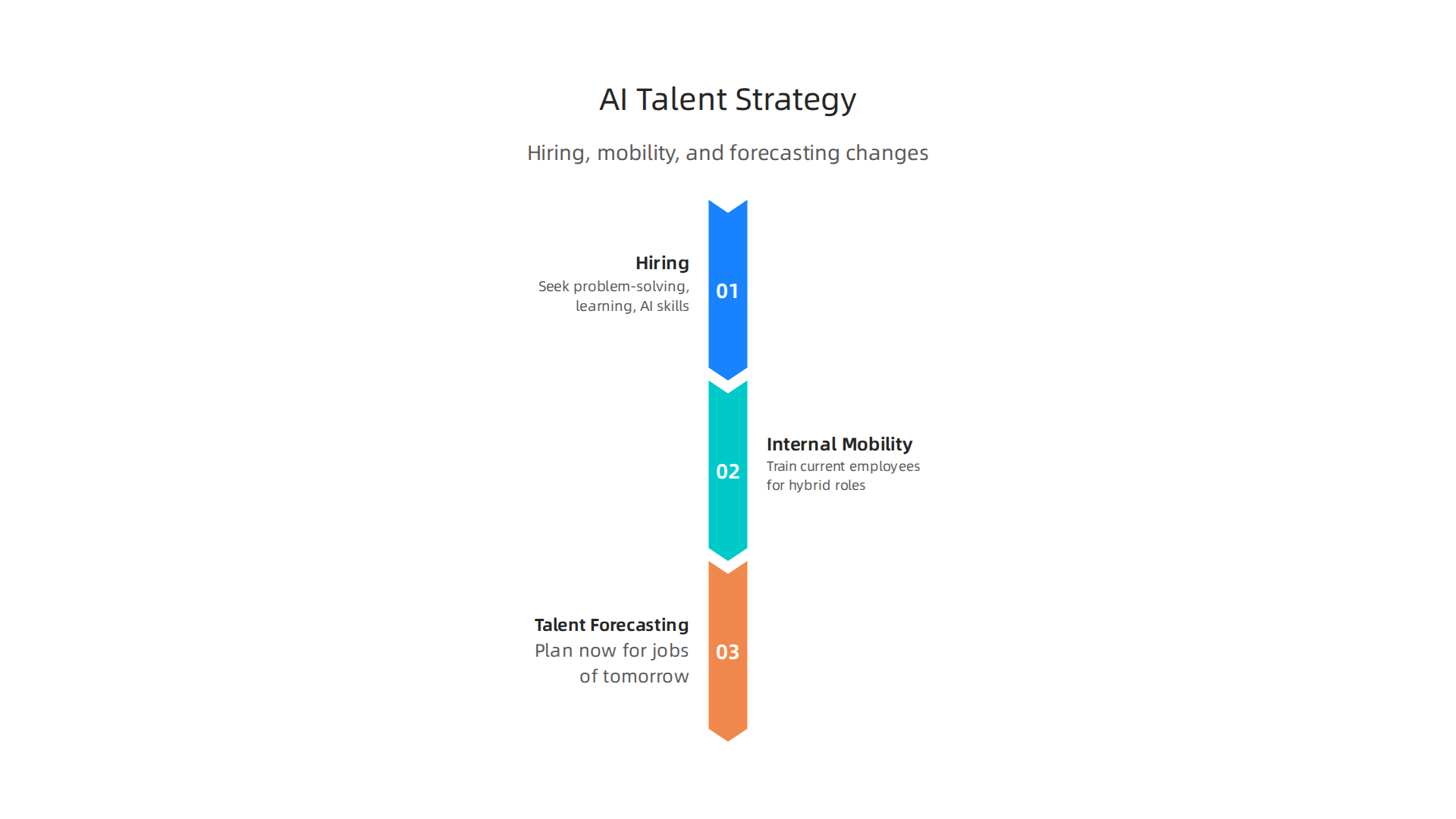
Leaders need to think about:
- Hiring: Instead of just looking for traditional skills, businesses should seek out people who are good at problem-solving, learning new things, and working with AI tools. The 2026 AI Impact Survey shows that skills in AI are becoming highly valued 2026 AI Impact Survey Report | Grant Thornton.
- Internal Mobility: Can your current employees learn new skills to take on these hybrid roles? Giving training and chances to grow within the company can save time and money. For example, helping employees understand how to choose AI tools for their business can make a big impact.
- Talent Forecasting: Looking ahead, what kinds of skills will your company need? It’s about planning now for the jobs of tomorrow. This includes roles focused on making sure AI systems are fair and transparent, often called
explainable AI, to build trust and avoid problems. Tools that help with enterprise talent management are becoming more important to manage this complex landscape.
By focusing on these areas, leaders can make sure their teams are ready for the future of work with AI.
Regional and Sectoral Impacts: Who Gains and Who Loses?
As we’ve seen, AI is changing jobs, but this change doesn’t happen the same way everywhere. The speed and type of AI’s impact can be very different depending on the country, the type of industry, and even how big a company is.

Think of it like a ripple effect: some places feel the wave strongly, while others just get a gentle splash.
A global look at how AI affects jobs in 2026 shows that the changes are not even. For example, some countries have strong rules about new technology, while others have fewer. These rules can speed up or slow down how quickly AI is used. The labor market structure, meaning how jobs are set up and how many people work in certain areas, also plays a big part. If a country has many manufacturing jobs, it might see more automation than a country focused on services. The digital tools and internet setup that a country already has (its digital infrastructure) also makes a big difference in how easily companies can bring in AI. Experts looking at firm data on AI adoption and its effects on jobs and money have found that these impacts vary widely across places like the US, UK, Germany, and Australia Firm Data on AI.
Different Industries Feel AI Differently
Some industries will see bigger changes than others. For example, a recent review of studies about AI and automation suggests that manufacturing and transportation might see a lot of automation. On the other hand, healthcare and education could see more help from AI, making workers more productive A systematic review of Artificial Intelligence and Automation …. This means new kinds of data jobs are popping up, especially in fields where lots of information needs to be understood. Knowing what is data engineering is becoming very important for building the systems that handle all this data.
The finance world is also changing fast, with AI helping to make better decisions. The PwC 2026 AI Jobs Barometer shows how AI is changing jobs, skills, and even wages across many different countries 2026 AI Jobs Barometer Global report findings. This is part of the global work AI trend, where AI affects how we work around the world.
To get a better idea of how AI is shaking things up, you can learn more about how AI models in 2026 are transforming every major industry.
Small vs. Big Companies
The size of a company also matters. Big companies often have more money to invest in new AI tools and training for their staff. This can help them grow faster and handle changes more easily. Smaller businesses might find it harder to get started with AI, especially if they don’t have the right digital tools or skilled workers.
Countries like South Korea artificial intelligence are investing a lot in AI, aiming to be leaders in this new age. Their policies and focus on tech education help them adapt quickly. Understanding ideas like explainable AI, which makes AI’s decisions clear and understandable, is important everywhere to build trust and make sure AI is used fairly.
AI is changing how we work, and it’s helpful to see these changes in two main ways: automation and augmentation. Automation means AI takes over tasks or even whole jobs that people used to do. Augmentation means AI helps people do their jobs better and faster. It’s like comparing a robot building a car all by itself (automation) to a smart tool that helps a doctor find health problems more quickly (augmentation).
When we look at real information, like from businesses and workers, it’s important to tell the difference. Are companies letting people go because AI can do their work, or are they seeing their workers become super-efficient with AI’s help? Many studies in 2026 show that a lot of AI use leads to workers being more productive. For example, in Europe, using AI has made workers about 4% more productive, and this did not mean losing jobs at the company level AI adoption, productivity and employment: evidence from European …. This is good news for global work AI.
How to See What’s Really Happening
It’s tricky to sort out if AI is leading to fewer jobs or just boosting how much work people can get done. We need to look closely at numbers. Early studies from 2026 don’t show that AI is causing a lot of job loss across the entire economy Canaries in the Coal Mine? Six Facts about the Recent Employment Effects of Artificial Intelligence. Instead, businesses often get better at what they do. New kinds of data jobs are also popping up, as companies need people to manage and understand all the information that AI uses. Learning what is data engineering is becoming very useful for those who want to help build these smart systems.
Leaders should watch certain things to know if AI is truly helping their business or just a lot of talk.
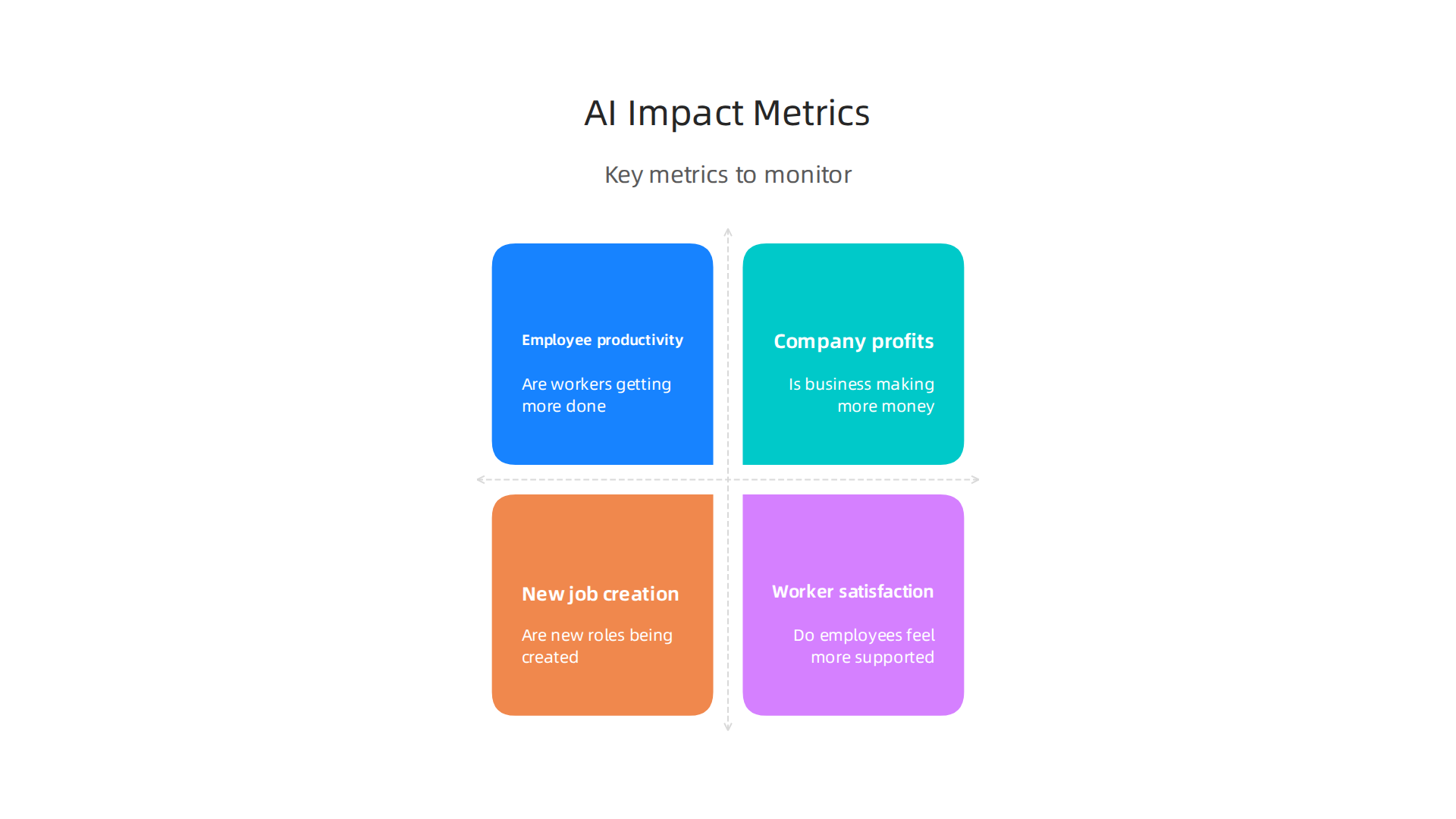
Here are some key things to track:
- Employee productivity: Are workers getting more done in the same amount of time? For instance, one study found that giving workers AI tools saved them an average of 3 hours per week Driving practical, measurable AI adoption at scale.
- Company profits and growth: Is the business making more money or growing faster after using AI?
- New job creation: Are new roles, especially those requiring skills like understanding
explainable AI, being created to work with the new tools? - Worker satisfaction: Do employees feel more supported and less stressed because AI is taking over boring tasks?
Looking at these things helps leaders understand the real impact of AI, moving past simple ideas of "jobs lost" or "jobs saved." It’s more about "jobs changed" and "jobs made better." If you’re a leader thinking about bringing AI into your company, it’s wise to learn about how to choose AI tools 2026 for maximum business impact. You can also look into augment AI smart strategies for leaders to drive growth in 2026 to see how AI can help your team succeed.
Companies don’t just need to track how AI changes work; they also need to understand the rules around it. As AI becomes a bigger part of how businesses run, governments are starting to make laws about its use. These rules aim to protect people, their jobs, and their private information. For any business that uses AI, knowing about these laws and getting ready for them is super important for smooth global work AI.
What Companies Must Prepare For
Thinking about AI, legal and HR teams should look closely at a few key areas:
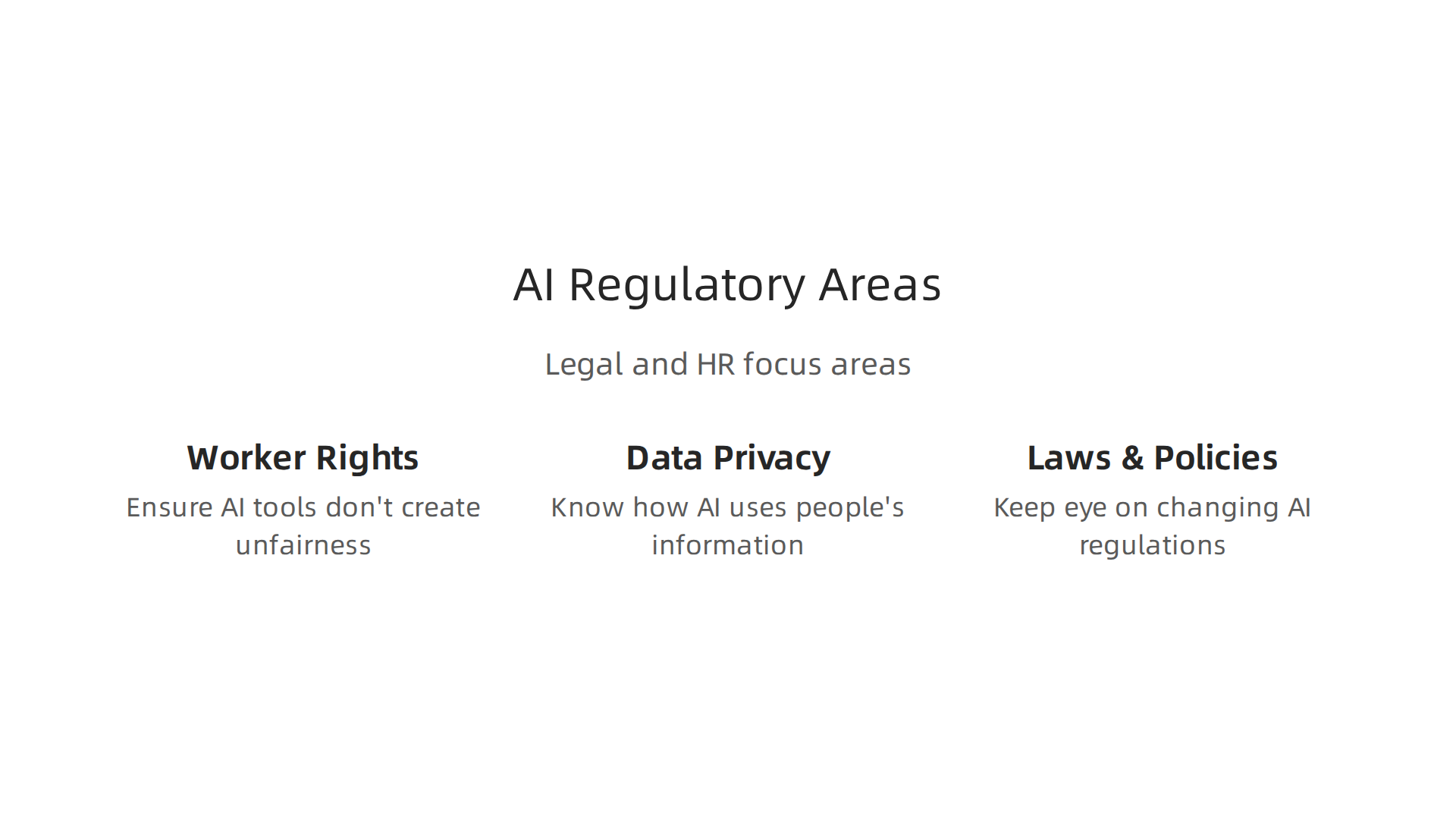
- Worker Rights and Fairness: When AI tools help decide who gets hired, promoted, or even let go, there’s a risk of unfairness. New rules are coming out to make sure AI doesn’t pick favorites or leave people out unfairly. Companies need to make sure their AI tools are fair and that they can explain why AI made certain decisions. This is where understanding
explainable AIbecomes very important. Studies show that a lot of companies are using AI tools, but not many have strong rules in place to manage them properly AI & Compliance Survey 2026: Adoption is high. Governance and …. - Data Use and Privacy: AI needs lots of data to learn. But using people’s information comes with strict rules about privacy. Companies must know how they collect, store, and use data with AI. This is a big area where new
data jobsare growing, such as roles focused on making sure data is handled correctly and safely. Learningwhat is data engineeringcan help manage this complex flow of information ethically. Keeping up with these changes helps avoid problems and builds trust. - New Laws and Policies: Different countries and even different states are creating their own AI laws. These laws might cover everything from how AI affects workers to how it handles personal data. For example, a survey found that local AI laws are a top concern for many employers in 2026 The Littler Annual Employer Survey Report. This means businesses need to keep an eye on laws in all the places they operate. Staying informed about these regulations helps prevent legal trouble and makes sure the company is doing things the right way.
Steps for HR and Legal Teams Right Now
To get ready, HR and legal teams should:
- Review all AI tools: Make a list of every AI tool your company uses. For each tool, understand what it does, what kind of data it uses, and how it affects workers. It’s surprising how many companies don’t even have a full list of their AI systems, which makes it hard to manage risks State of Enterprise AI 2026 Report.
- Create clear rules: Develop clear company rules for using AI. These rules should cover how to use AI fairly, protect privacy, and deal with any unexpected problems. About a quarter of companies are working on their AI policies right now 2024 AI C-Suite Survey Report.
- Train employees: Teach everyone how to use AI tools responsibly and what the company’s AI rules are. This helps prevent mistakes and makes sure everyone is on the same page.
- Stay updated: Laws about AI are changing all the time. Your teams should keep learning about new rules and make sure the company’s practices change with them. Understanding the real dangers of AI in 2026 can help you prepare for these policy shifts.
By taking these steps, companies can use AI to grow and be more productive, while also making sure they are fair, legal, and protect their workers.
Want to stay on top of all the latest AI changes and policy updates? Get clear daily AI updates from The Deep View Newsletter to make sure you never miss important news.
Dealing with new AI laws is just one part of the puzzle. Businesses also need to get their teams ready for these big changes. This means teaching workers new skills and finding new roles for them inside the company. It’s all about making sure people can work well with AI, not against it,

as global work AI becomes more common.
Upskilling and Organizational Design: Evidence-Based Approaches
As companies bring more AI tools into their daily work, many jobs will change. Experts believe that over half of all jobs in the US will be reshaped by AI in the next couple of years AI Will Reshape More Jobs Than It Replaces. This isn’t just about training people to use new software. It’s about helping them gain completely new skills or adjust to different tasks. Companies that get this right will stay ahead.
Models for Reskilling and Redeployment
Many organizations are starting to teach their employees how AI works and how to use it in their current jobs. However, fewer companies are truly preparing workers for bigger changes like needing entirely new skills because of AI Report: Most Organizations Are Preparing Workers for …. This is a big difference. While 73% of companies are using or testing AI tools, only 18% have had most of their workers go through special reskilling programs Aon research: Human Capital Trends Study 2026 – REBA Global.
Some businesses are already showing how to do this well. For example, a global marketing company was able to make its teams much more efficient by using AI to redesign work. This helped them gain a lot more capacity without needing more people How WPP Reimagined Work for the AI Era. Another good example comes from Airbus, which trained about 2,000 employees. They found that each worker saved up to four hours a week thanks to AI upskilling What Works for AI Upskilling in the UK: Supporting Case …. These results show that when done right, AI training can really help people become more productive.
For companies looking to handle talent shifts, tools that help with enterprise talent management can make a big difference. For example, a company like Lennox International enabled over 4,800 internal job moves, helping retain skilled workers and their knowledge 55 Upskilling And Reskilling Statistics for 2026. This kind of approach keeps valuable employees engaged and productive within the company. If you’re wondering how to guide your team’s growth, you can learn more about Mastering AI in 2026: Key Skills, Learning Paths, and Career Strategies.
Designing Learning Pathways Tied to Business Outcomes
Training shouldn’t just be about checking a box. It needs to lead to real, measurable improvements for the business. This means making learning pathways that are clear and focused on specific goals. For instance, instead of just a general AI course, companies might offer training on explainable AI for legal teams, or advanced courses for those moving into data jobs like what is data engineering.
When training is focused, it shows real results. One company saw that by training over 300 employees across different departments, they saved an average of three hours per worker each week Driving practical, measurable AI adoption at scale. Another study showed that workers using AI tools needed 34% less time to finish their routine tasks and could resolve 13.8% more customer issues per hour How AI is Transforming the Workplace: Real Results from …. These are strong examples of how targeted training boosts productivity.
Many companies are still in the early stages of using AI, with only about a quarter of them moving their AI test projects into full use Deloitte report: AI is shifting from pilots and experimentation to scaling. This means there’s a huge chance to make sure that as AI grows in a company, the workforce grows with it. Businesses should think about using AI-Powered Learning Platforms Are the Future of Corporate Training in 2026 to make training more personal and effective. These platforms can help employees gain the right skills for future roles, even for complex fields like Master Data Careers: Advanced Data Engineering and Science Programs in 2026.
Moving from preparing your team with new skills, it’s clear that leaders also need a step-by-step plan to bring AI into their companies. Thinking about the big picture for global work AI is important, but what can you actually do right now? The next 90 days are key for executives to act on AI plans. This quarter, focus on a clear roadmap to handle risks, start small projects, and make sure important jobs are ready for change.
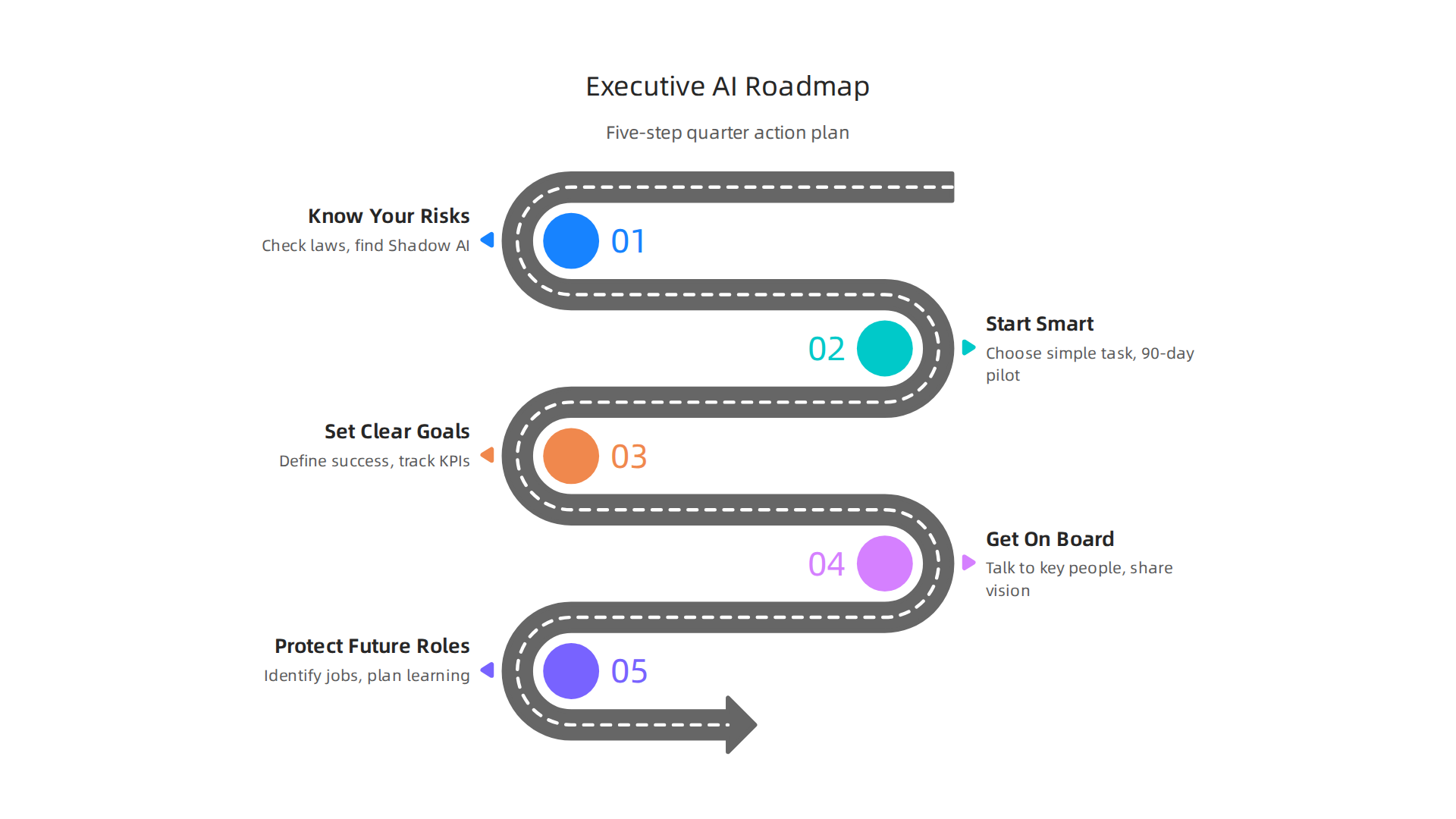
Practical Roadmap: What Leaders Should Do This Quarter
For leaders, the next three months are a chance to make real progress with AI. This isn’t just about buzzwords. It’s about taking solid steps that protect your company and help it grow. Here’s a simple checklist to guide your actions.
1. Know Your Risks and Rules
Before diving deep into AI, you need to understand the playing field.
- Check AI Laws: New laws about AI are a big worry for many businesses, with 43% of companies concerned about local AI rules in 2026 The Littler Annual Employer Survey Report. Make sure your company knows what rules it needs to follow.
- Find "Shadow AI": Many employees use AI tools without telling their company. In 2024, about 55% of employees used unapproved AI tools [Shadow AI Statistics 2026: 25+ Cited Data Points | Aona AI]. This can create big risks. Find out what tools your teams are already using to avoid problems.
- Set Up Rules: While over 83% of companies use AI, only about 25% have strong rules for how to use it safely [AI & Compliance Survey 2026: Adoption is high. Governance and …]. This quarter, start creating clear guidelines. Also, make sure you know all the AI systems used in your company. More than half of companies still don’t have a full list of their AI tools, which is a basic step for checking risks [State of Enterprise AI 2026 Report].
2. Start Smart with Small AI Projects
After you understand the risks, it’s time to test AI in real work. Don’t try to change everything at once. Pick small, easy projects first.
- Choose a Simple Task: For your first pilot, pick a small, repeating task. It could be something like processing invoices or handling a specific part of customer support [ROI Playbook — How to Measure Time Saved and …].
- Plan Your 90-Day Pilot: A good plan for a pilot project includes picking one or two tasks, getting all the step-by-step instructions, collecting sample data, and setting clear goals [AI Workforce Playbook: Build, Measure, Scale – Nodewave].
- Pick the Right Tools: Think about how to choose AI tools for maximum business impact, ensuring they fit your specific pilot needs. This helps you learn what works best without a huge investment.
3. Set Clear Goals and Measure Success
For your pilot projects to truly help, you need to know if they are working. This means setting up clear ways to measure success.
- Define What Success Looks Like: Before you start, decide on your business goals and what numbers will show you’re meeting them [Checklist For Ai Employee…]. For example, if you use AI to help with writing, you might measure how much faster documents are created.
- Track Key Numbers: Use specific measures called Key Performance Indicators (KPIs). These can include how long a task takes, how much it costs, how many mistakes are made, and how many people are actually using the AI tool [AI Agent KPIs: How to Measure Performance and ROI – AI Workforce]. Make sure you have a starting point (a baseline) for these numbers before the AI project begins [Pilot KPI Framework — DC CAP Enterprise AI]. You can track things like baseline volume, hours saved, and how quickly tasks are completed [AI Automation Pilot Success Metrics | KPI Scorecard]. Having a scorecard with metrics like task cost can also be helpful [AI Pilot Success Criteria: 12-Metric Scorecard | Wavect]. You can use a simple setup to track 6 to 8 KPIs that show if the project is making money or helping the team [KPI Table – AI Coding Agent ROI Toolkit – devexpgbb.github.io].
4. Get Everyone on Board
To make sure your AI plans work well, everyone in the company needs to understand and support them.
- Talk to Key People: Identify all the main people who will be affected by or involved in the AI changes. This includes leaders, team managers, and the employees themselves [Checklist For Ai Employee…].
- Share Your Vision: Explain clearly why the company is using AI and how it will help everyone. This helps reduce any fears and builds excitement for new tools. When you choose the best enterprise AI platform for your organization, make sure to get input from the different teams that will use it.
5. Protect Your Team’s Future Roles
As you bring in AI, think about how it will change jobs.
- Identify Important Jobs: Look at which roles might change a lot because of AI. This helps you plan for new training or new tasks. For example, some roles might shift to focus more on managing AI systems or analyzing the data they produce, like new
data jobsor understandingwhat is data engineering. - Plan for Learning: Start thinking about how you can help employees gain new skills for these changing roles. This could involve teaching them about specific AI tools or even deeper topics like
explainable AI, which helps people understand how AI makes decisions. Exploring Mastering AI Jobs 2026: Discover Top Roles in Demand Skills and High Salaries can give you ideas for future-proofing your workforce.
To keep up with all these changes and ensure your roadmap stays on track, continuous learning is essential. For clear daily AI updates and more in-depth insights, consider subscribing to The AI Newsletter Worth Reading.
Summary
AI is accelerating a fundamental shift in work in 2026, changing which tasks people do, how companies hire, and what skills matter most. This article explains how AI both augments and automates tasks, why new hybrid and data-focused roles are rising, and how impacts differ by industry, firm size, and country. It outlines the legal and privacy risks companies must manage, why explainable AI and governance matter, and what HR should do to protect worker rights. You’ll find evidence-based upskilling models, examples of successful reskilling, and practical steps for designing learning pathways tied to business outcomes. For leaders, the piece offers a clear 90-day roadmap: audit AI use, run small pilots, set KPIs, and prepare internal mobility and training. The article also shows how to measure real impact—productivity gains, new job creation, and worker satisfaction—so you can move beyond hype to measurable results. After reading, you’ll know immediate actions to manage AI risks, begin pilots, and build the talent and governance needed for sustainable adoption.