
Why AI now matters for social media marketing services
It’s 2026, and things are changing fast in social media. If you manage social media marketing services for a business, you’ve probably noticed that Artificial Intelligence (AI) is everywhere. AI tools are not just fancy new gadgets; they are truly shifting how teams create content, find the right people to talk to, and measure how well their efforts work. In fact, by the end of 2026, nearly half of all social media content made by businesses will be created using AI. This is a big jump from just a couple of years ago, showing how quickly things are moving GenAI To Produce Half of Branded Social Content by 2026.
AI helps digital marketing specialist professionals in many ways. It can give you new ideas for posts, write captions quickly, and even help make videos and pictures. AI also makes it easier to figure out what your audience likes and when they are most likely to see your content. For a successful content marketing strategy, knowing these things is key.
But here’s the thing: with so many new AI tools and ideas popping up every day, it’s easy to feel lost.

Leaders and business owners are dealing with a huge amount of information, and it can be hard to know which tools are truly helpful and which are just noise. You need practical advice that helps you act, not just more things to read.
This article is here to help. We will explain what leaders need to know about AI for social media marketing services right now in 2026. You’ll learn how to look at different AI options and decide what’s best for your business without feeling overwhelmed. If you are a marketing consultant looking to stay ahead, you might find our guide on AI for marketing consultants very useful.
Do you want to keep up with the latest AI trends without the information overload?
Get the edge with daily AI updates
Stay informed on all major AI advancements, model launches, and market shifts with easy-to-understand daily insights delivered straight to your inbox.
The AI Newsletter Worth Reading
AI-driven audience targeting and ad performance
Moving beyond just creating content, AI is changing how we find the right people for our messages and how well our ads work. For social media marketing services, this means smarter ways to reach customers, which can greatly boost your content marketing strategy.
How AI helps find the right people
Before AI, marketing teams used to guess a lot about who would like their products. They would pick groups of people based on simple ideas. Now, AI uses lots of data to understand audiences much better. It can look at past actions, interests, and even how people talk online to find very specific groups. This is called audience segmentation.
AI can also create "lookalike audiences." This means it finds new people who are very similar to your best customers. It does this by spotting hidden patterns that a human might miss. Think of it like a super-smart detective for your social media marketing services. With AI, adopting ad targeting and optimization tools has grown a lot, and campaigns using AI often get much better results, sometimes improving performance by over 50% TOP 20 AI-DRIVEN AD TARGETING STATISTICS 2026.
Smarter bidding and ad spending
AI also changes how we spend money on ads. Instead of manually setting how much to pay for each ad, AI uses "smart bidding" strategies. These strategies learn what works best over time. For example, AI can automatically bid more when it sees a person who is very likely to buy something, and less for someone who is not. This helps you get more value for your money.
Studies in 2026 show that using AI for bidding, like Target Return On Ad Spend (tROAS), can lead to much higher returns compared to older, manual ways AI Google Ads Bidding: PMax Automation Strategy 2026.
Also, AI models that focus on maximizing conversion value can bring in over six times the return on ad spend compared to just maximizing conversions State of Google Ads Optimization 2026 – Lyra. This shows that AI helps your ads reach the right people at the right time with the best possible price. If you want to dive deeper into how AI is making ads smarter, you might find our guide on how to optimize your AI marketing funnel in 2026 helpful.
What signals AI uses and where it truly helps
A digital marketing specialist can use AI to understand many practical signals. AI can track how people click on ads, what they search for, and even how long they spend on a website. It then uses this information to predict what they might do next. This helps campaigns become much more accurate. AI in advertising makes targeting, bidding, and delivering ads more precise, but it needs good data and clear goals to work its magic AI in Programmatic Advertising: Smarter Targeting & Bidding.
AI also helps with making ads themselves. Actually, ads made with AI often get more clicks than ads made by humans. For example, some data shows AI-made ads can have a 12% higher click-through rate on platforms like Meta AI Ad Creative Benchmarks 2026: CTR and ROAS Data.
Things to watch out for when using AI tools
While AI is very powerful, it’s important to be careful. Not all AI tools are equal, and some claims might be too good to be true. When looking for AI tools for your social media marketing services, you need to ask smart questions.
Here are a few things to consider:
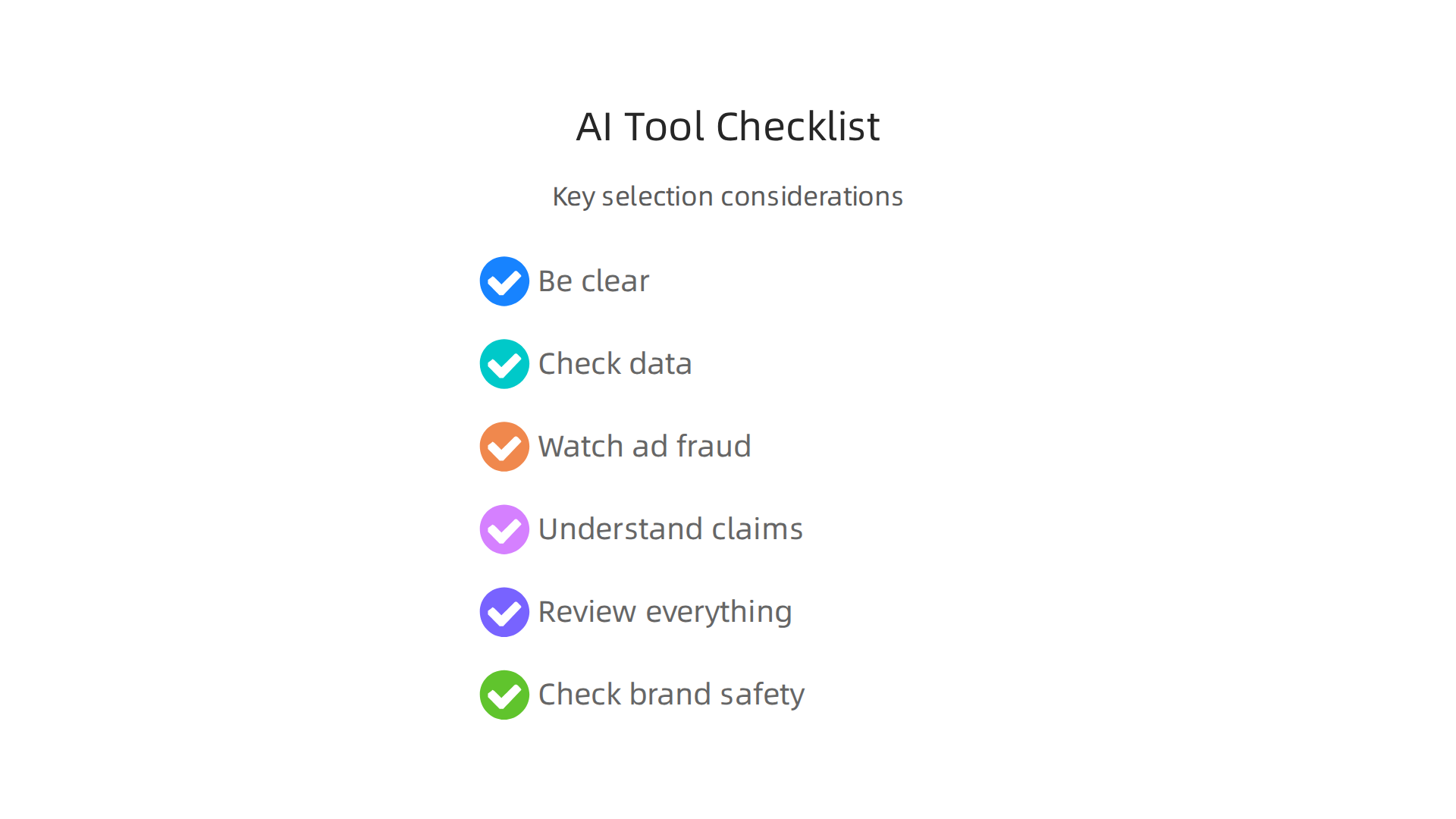
- Be clear about your goals. What exactly do you want the AI to do for you? Do you want more sales, more website visits, or something else?
- Check the data. Does the AI tool use your data safely and privately? Is your data used to train models for other companies?
- Watch out for ad fraud. Sadly, some bad actors use AI to create fake clicks or views, which wastes your money. Experts predict global ad fraud losses will reach over $100 billion in 2026 Ad Fraud Statistics 2026. So, choose tools that help prevent this.
- Understand vendor claims. When a company tells you their AI tool is the best, ask for proof. Look for case studies, client reviews, and clear explanations of how their AI works.
Choosing the right AI vendor is a big decision for any digital marketing specialist. It’s wise to use a checklist to make sure you pick a tool that truly fits your business and helps you succeed without hidden problems AI Vendor Selection Criteria Checklist. Having a solid way to evaluate new AI tools will save you time and money.
Content creation at scale: generative models for posts, captions, and creatives
Beyond helping social media marketing services find the right people and spend ad money smarter, AI is now a big helper in making the actual content. This means AI tools can create the words, pictures, and even videos for your social media posts and ads. It’s a huge shift in how teams handle their content marketing strategy.
AI makes content faster and easier
Generative AI uses smart computer programs to create new things. For social media, this often means making text for captions, headlines, or longer posts. It also creates images and videos. In 2026, many businesses plan to use AI for a lot of their social media content. Experts say that by this year, companies will use generative AI to make almost half of all their social media content, a big jump from before Nearly Half of All Social Media Content Created by …. This shows how important these tools have become for keeping up with social media demands.
For example, a digital marketing specialist can tell an AI tool to write five different captions for a new product, or ask it to come up with ideas for trending topics. AI is also very good at creating visuals. This includes new images that fit your brand or even short videos for platforms like TikTok and Instagram Reels. If you are looking to improve your visual content, you might want to explore some of the best AI image generators 2026 available.
People and AI working together
Even with AI doing so much, people are still very important. The best way to use these tools is to have humans and AI work together. A person can give the AI clear instructions or "prompts" to get the right kind of content. Then, the human reviews what the AI made. This helps to make sure the content sounds like your brand and shares the right message. This team effort helps create a lot more content without losing your unique brand voice. In fact, many marketers use AI for content ideas and writing captions AI in Social Media Statistics 2026 (Adoption, ROI & Trust).
Keeping quality high and staying safe
When using AI for content, you still need to check everything carefully. This is called quality control. It’s important to:
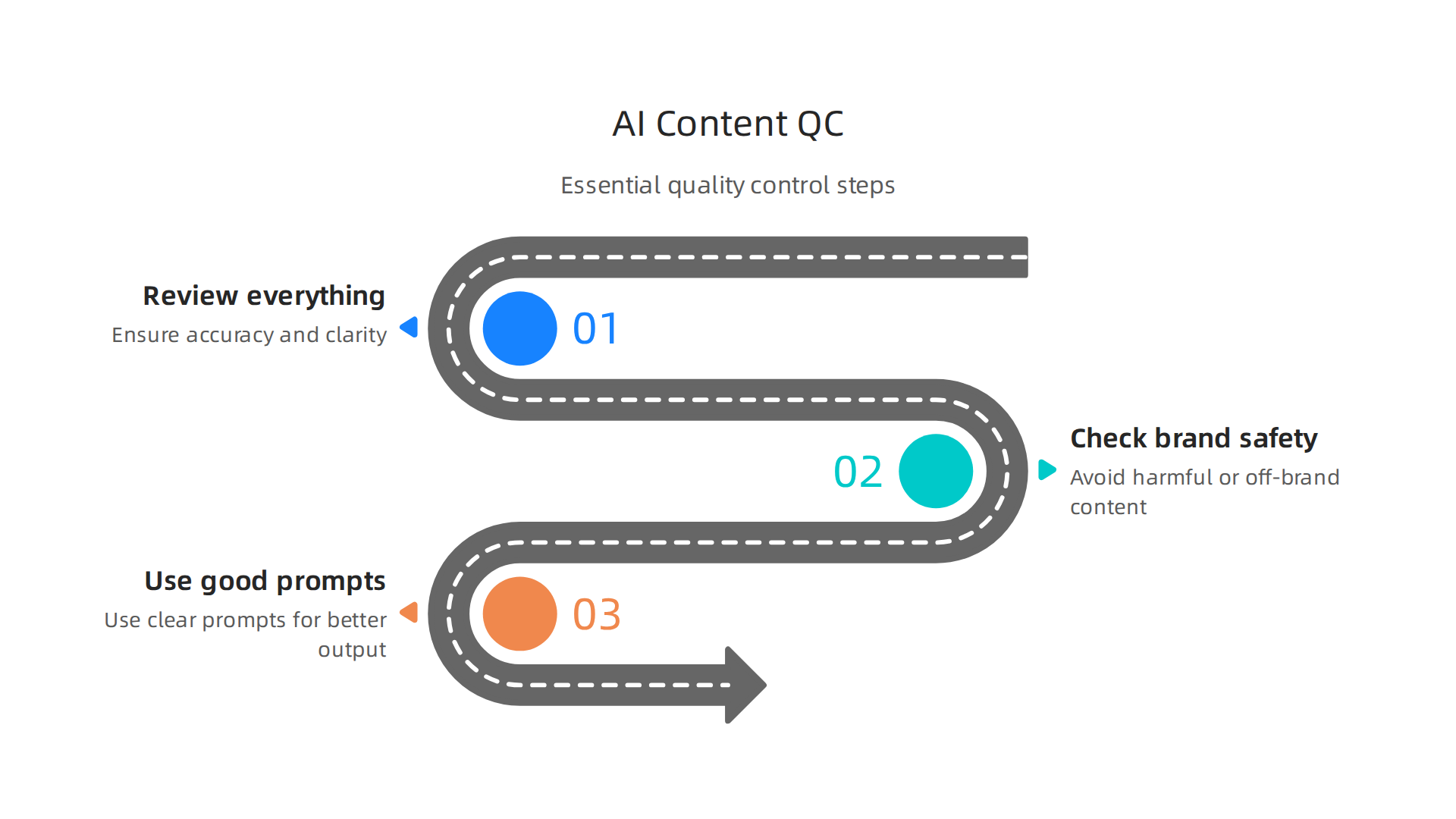
- Review everything: Always read and look at what the AI creates. Does it make sense? Is it accurate? Does it match your brand’s style?
- Check for brand safety: Make sure the AI content does not say anything harmful, rude, or off-brand. AI can sometimes make mistakes or create unexpected things.
- Use good prompts: The better your instructions to the AI, the better the content it will make. Learning to "talk" to AI effectively is a skill called prompt engineering. It helps guide the AI to give you exactly what you need.
Working with AI for content creation means you can publish more often and keep your audience engaged. But remember, the human touch of a digital marketing specialist is key for guiding the AI and making sure the final content is top-notch.
To stay on top of all the latest AI news and trends that impact your marketing efforts, you’ll find great value in our daily updates.
Get clear daily AI updates from The AI Newsletter Worth Reading.
After using AI to create better content, the next big step is figuring out if that content actually works.
This is where AI-driven analytics comes in. It helps social media marketing services understand how their ads and posts lead to real results, like sales or new customers.
How AI helps measure what works
Before AI, it was tough to know exactly which part of your marketing efforts caused a customer to buy something. People might see an ad on Instagram, then a post on Facebook, and later click a Google ad before buying. This journey is called the customer path.
AI has changed this greatly with something called "multi-touch attribution." This means AI looks at all the different ads and posts a person saw or clicked along their path to buying. It helps give credit to each step, not just the last one. In 2026, AI-powered models are much more exact than older ways, especially since web tracking has changed with fewer third-party cookies 2026 Marketing Playbook: Proven AI & Attribution Strategies. These smart systems also help with tracking across different platforms using tools like Conversions API to get better data for AI to learn from Meta Ads Machine Learning Optimization: Advanced Bidding …. This makes it easier for a digital marketing specialist to see the full picture.
Testing ads with AI
Sometimes, the numbers you see from social media platforms don’t tell the whole story. You might see a lot of clicks, but did those clicks really bring in new sales, or would those people have bought anyway? This is where "lift tests" come in. These tests help you know if your advertising actually "lifts" your sales higher than they would have been without the ad.
AI makes these tests much better. It can help set up the tests and then understand the results more clearly. This lets social media marketing services know which ads truly work and which don’t. Experts say that by 2026, many companies are using AI more and more for ad targeting and other smart ways to reach customers. Actually, a recent report showed a big increase in using AI for ad targeting, leading to much better results TOP 20 AI-DRIVEN AD TARGETING STATISTICS 2026 ….
Making smarter budget choices with ROAS
One of the most important things for any content marketing strategy is to get a good "Return on Ad Spend" or ROAS. This simply means how much money you get back for every dollar you spend on ads. AI helps by looking at all the data and figuring out which ad campaigns give you the best ROAS.
For example, AI can suggest how much to bid for an ad space to get the most sales. In 2026, using AI for bidding strategies like Target ROAS has been shown to give a much higher return on ad spend compared to manual bidding AI Google Ads Bidding: PMax Automation Strategy 2026. This helps businesses spend their advertising money wisely. It means less guessing and more smart choices based on what the AI has learned.
Even with all this AI help, people are still key. A digital marketing specialist needs to look at the insights from the AI and decide how to use them to make good business decisions. Learning how to use these AI tools can help leaders really drive growth for their companies. If you’re looking to understand how to apply these insights, consider strategies to augment AI smart strategies.
Using AI to understand what works is one thing. But what about using AI to make every customer’s journey feel special and easy? That’s what automation and personalization do. They help businesses, including social media marketing services, talk to each person in a way that feels just right, all the time.
Talking to Customers One-on-One, but Big
Imagine a store that knows exactly what you like, even before you do. That’s what hyper-personalized messaging at scale is trying to achieve. It means sending messages that are perfect for each customer, but doing it for many people at once.
Here’s how AI helps:
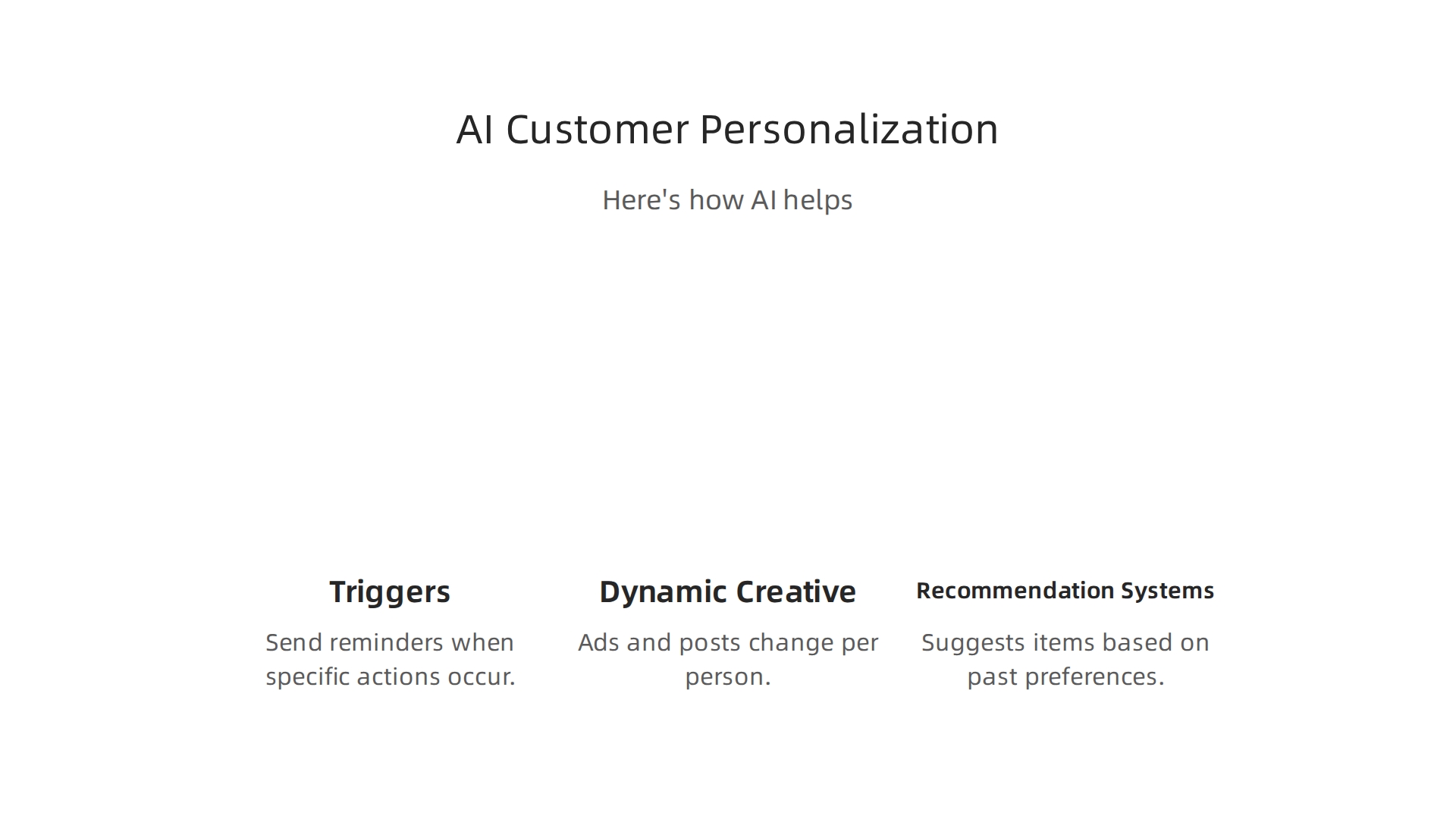
- Triggers: AI watches what customers do. If someone puts an item in their online cart but doesn’t buy it, AI can send a friendly reminder. These are like automatic "triggers" that start a message when something specific happens.
- Dynamic Creative: This means ads and posts can change for each person. For example, if you like sports, an ad might show sports gear. If your friend likes cooking, the same ad might show kitchen tools. AI helps create these changing messages.
- Recommendation Systems: Think of online shops that say, "Customers who bought this also liked that." AI makes these suggestions. In 2026, many companies are using AI to give customers better recommendations, which helps them find what they want faster and can improve a
content marketing strategyPersonalization Market Report 2026. Experts note that these smart systems are moving beyond simple campaigns to always create a great experience for customers Personalization Software Market Size & Share 2026-2032.
This kind of smart marketing helps a digital marketing specialist make sure customers see relevant things. It makes the customer journey smoother and more personal.
Big Brain or Local Smarts?
When we talk about personalization, there are two main ways AI can work:
- Centralized Models: This is like having one big brain that collects all the information about all customers in one place. It makes all the decisions about what messages to send. This can be powerful because it sees the whole picture.
- Edge Personalization: This is when the personalization happens right where the customer is, like on their phone or on a specific website. It uses less personal data and often gives quicker, real-time results. For example, AI on your phone might suggest apps based on what you do, without sending all your data back to a big central brain.
Choosing between these has trade-offs. A central system offers more control over the whole content marketing strategy, but edge personalization can be faster and better for privacy. Many businesses are building their systems around consented, first-party data that works across different places, while keeping AI smart and safe with stricter privacy rules Personalization Market Report 2026.
Making It All Work Smoothly
To use AI for automation and personalization, businesses need to think about a few important things:
- Data Pipelines: This is how customer information moves from one place to another. AI needs good, clean data to learn from, so making sure data flows smoothly is key.
- Consent: People care about their privacy. Businesses must make sure they have permission to use customer data and follow all the rules. The personalization software market in 2026 is driven by the need for platforms that handle both creativity and accountability for data Generative AI In Personalized Marketing Content and ….
- Integration with CRM and Ad Platforms: AI tools need to connect with other systems a business uses. This includes Customer Relationship Management (CRM) tools, which keep track of customer details, and ad platforms like social media sites. This helps everything work together to create a smooth customer experience. Many companies are combining their customer data tools, recommendation engines, and analytics to get better results Personalization Software Market Size & Share 2026-2032.
Handling these steps well helps social media marketing services deliver truly personalized experiences that feel helpful and not intrusive. Learning about how to use these tools can help you build smart AI solutions. For deeper technical insights, you might want to learn how developers build advanced AI solutions.
AI offers many cool ways to talk to customers. But, like any powerful tool, it also comes with important risks we need to understand and manage.

When using AI for social media marketing services, especially for creating content or personalizing messages, we must think about safety, fairness, and following the rules.
New Rules for AI Content and What It Means
In 2026, governments and social media companies are paying close attention to AI-generated content. Why? Because AI can create things that look very real but are actually fake, like "deepfakes." These can spread wrong information or harm people.
Because of this, many places are making new rules. For example, some new IT rules say that social media sites must take down harmful AI-generated content, like deepfakes, very quickly. In India, for instance, there’s a requirement to remove objectionable AI content within three hours once reported and to clearly label any AI-created content India tightens AI rules. Other rules also state that AI content that looks real must be labeled clearly IT Rules 2026: Deepfake 3-Hour Takedown & AI Labelling. This means that if you’re a digital marketing specialist using AI to make ads or posts, you’ll need to know these rules. It’s not just about what you can create, but also about how you must tell people it was made by AI. The European Union also has similar rules coming in August 2026, requiring AI-generated images, videos, audio, and text to be marked as artificial Do You Have to Label AI-Generated Content? 2026.
These changes mean that businesses need to be careful. They need to ensure their AI tools follow these rules and that they don’t accidentally share harmful or misleading content.
The Problem of Bias in AI
Another big risk is bias. AI learns from the data it’s given. If that data has unfair ideas or is missing certain groups of people, the AI can learn these biases. This means the AI might:
- Show different ads to different groups: If the AI has learned that only certain people like certain products, it might not show those products to everyone fairly.
- Create unfair images or messages: The AI might generate pictures that only show one type of person, leaving others out. This can cause "representational harm," making people feel unseen or misunderstood.
For a content marketing strategy, this can be a serious issue. If your AI shows biased content, it can upset customers and harm your brand’s image. To fix this, businesses need to:
- Use diverse data: Train AI with information that includes many different kinds of people and experiences.
- Check AI results carefully: Always look at what the AI creates or recommends to make sure it’s fair and not biased. You can learn more about these issues, including privacy risks, by exploring The real dangers of AI in 2026.
Keeping AI Safe: How Businesses Manage Risks
To deal with these risks, businesses use special methods called "operational guardrails." These are like safety checks for AI.
- Moderation: This is about having systems to review AI-generated content. Sometimes, AI can flag content that might be bad, and then a human looks at it to make the final decision. This is especially important for
social media marketing serviceswhere content goes out to many people. - Provenance: This means knowing where AI content came from. Was it made by a human? Was it made by AI? Keeping track of this helps to meet labeling rules and ensures you know the source of your content. Tools like AI content detectors can help confirm whether content is human or AI-generated, which is crucial for transparency.
- Human Review: Even with smart AI, people still need to be involved. Setting clear "thresholds" means deciding when a human must check AI work. For example, if an AI is creating an important ad campaign, a human
digital marketing specialistshould always review it before it goes live. This ensures quality and safety.
By setting up these guardrails, companies can use AI’s power while being responsible. It’s about finding the right balance between automation and human oversight to ensure trust and safety in the digital world.
After putting safety checks in place, the next step for businesses is figuring out how to actually use AI in their work. This means choosing the right tools, setting up clear steps for how things get done, and making sure the team has the right skills. It’s all about bringing AI into your everyday social media marketing services in a smart way.
Implementing AI in social media marketing services: tools, workflows, and team skills
When you want to use AI for your marketing, you face a big choice: should you buy a ready-made AI tool from another company (a vendor), or should you build your own AI systems from scratch?
Buying an AI Tool vs. Building Your Own
- Buying (Vendor): This is often faster and easier. You get a tool that’s already built to do a certain job, like writing social media posts or making personalized ads. It’s like buying a car that’s ready to drive. But you need to make sure the tool fits your needs and follows all the rules.
- Building (In-house): This means your team creates the AI tool specifically for your business. It can be a perfect fit, but it takes more time, money, and skilled people. This is like designing and building your own custom car. Most businesses, especially for
social media marketing services, start by buying tools.
When looking for an AI tool, it’s smart to use a checklist. This helps you ask the right questions and avoid problems. You should check things like:
- Does the tool really solve the problem you have?
- How does it keep your data safe and private?
- Can it work with other tools you already use?
- What kind of help or support does the company offer?
Experts suggest looking into how vendors handle data and if their AI models can be properly checked AI Vendor Evaluation Checklist for Non-Technical Marketers.

Also, be careful of "red flags" like unclear plans or vague promises about what the AI can do Free AI Vendor Evaluation Checklist PDF & Guide (2026). Make sure the vendor’s vision for AI matches your goals. If you need more help picking a tool, you can learn more about how to choose the best enterprise AI platform for your organization.
Practical Workflow Templates for AI Marketing
To use AI well in your content marketing strategy, it helps to have a clear set of steps. Think of it like a recipe for getting things done. Here’s a simple workflow:
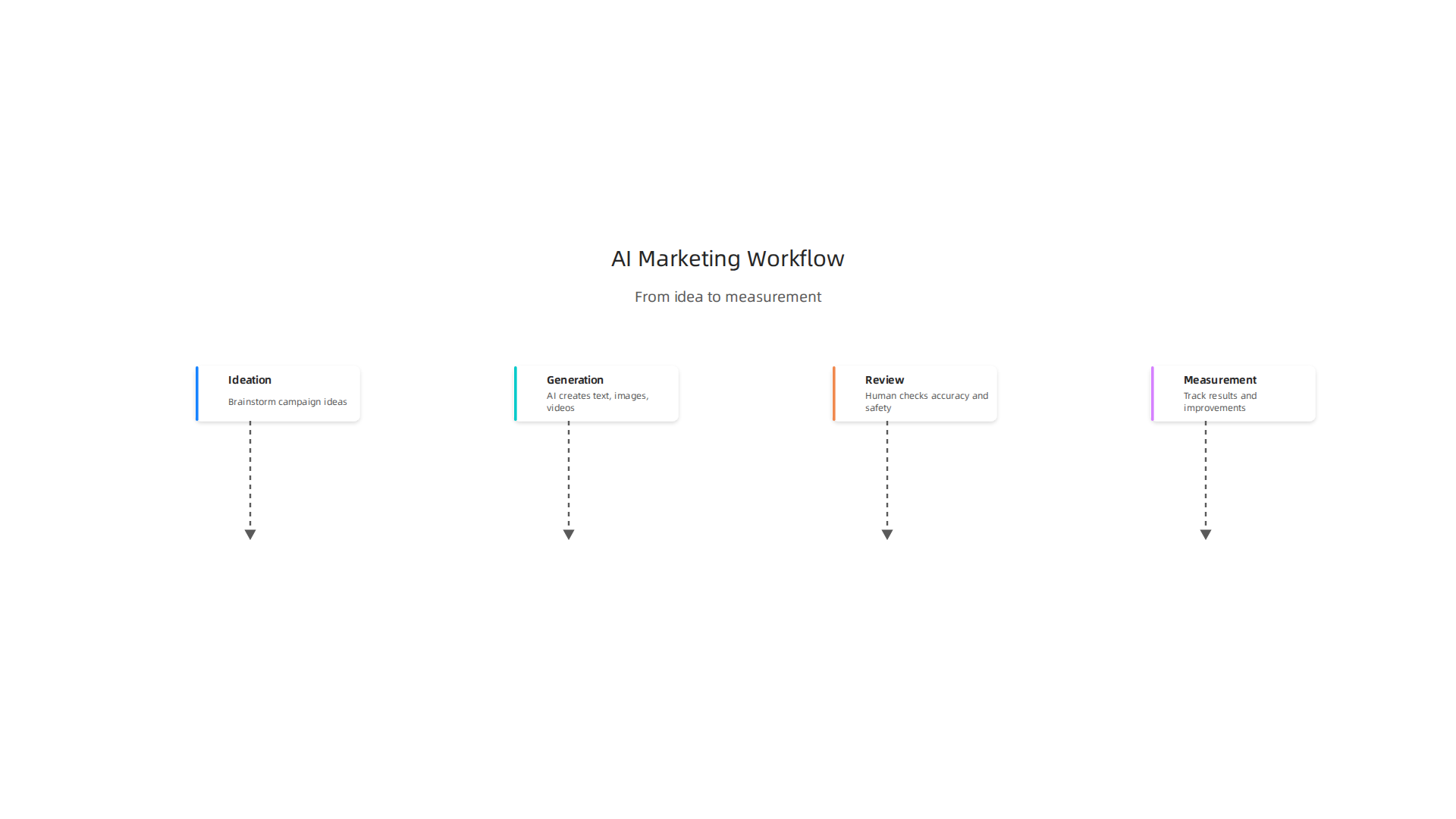
- Ideation (Coming up with ideas): AI can help you brainstorm new ideas for social media posts, ad campaigns, or even product names. You can tell it what you’re trying to achieve, and it will give you many ideas to start from.
- Generation (Creating content): Once you have an idea, AI can help create the actual content. This could be writing text for posts, making images, or even short videos.
- Review (Checking the work): This is a very important step. A
digital marketing specialistmust always check what the AI has made. Is it accurate? Is it fair? Does it follow all the rules for AI labeling? This is where human judgment makes sure the AI content is top-notch and safe. - Measurement (Seeing how it did): After your AI-powered content goes out, you need to see how well it performed. Did people like it? Did it bring in new customers? AI can also help you track these results and suggest ways to do even better next time.
Skills and Roles for Your AI Marketing Team
As AI becomes a bigger part of social media marketing services, teams need new skills. Some common roles and skills include:
- Prompt Engineering: This is the skill of talking to AI models in a way that gets the best results. It’s about knowing what words to use and how to ask questions so the AI understands exactly what you want it to do.
- ML Ops (Machine Learning Operations): These are the people who make sure AI tools run smoothly, stay updated, and work reliably. They handle the technical side of keeping the AI systems healthy.
- Analytics: This skill helps you understand the data and results from your AI efforts. An analytics expert can tell you what’s working and what’s not, guiding your future
content marketing strategy. - Creative Strategy: Even with AI doing a lot of the work, you still need people with strong creative ideas. These experts guide the AI, making sure the content it creates fits your brand’s voice and goals. They ensure the AI is creating content that truly connects with people.
For teams looking to grow in this new landscape, focusing on these areas can open up new social media marketing jobs and help you stay ahead. To learn more about the important skills for working with AI, check out how to master AI in 2026.
Staying informed about the latest AI trends and tools is key for any marketing professional.
Get clear daily AI updates from The AI Newsletter Worth Reading.
After making sure AI tools are safe and that teams know how to use them, the next big step is for leaders to think about the money side of things.

This means setting budgets, checking if the tools are actually helping the business, and planning for what’s coming next. It’s about making smart choices for your social media marketing services that help the company grow.
Executive view: budgeting, vendor ROI, and planning for the near future
When you’re bringing AI into your marketing, it’s really important to know how you’ll measure if it’s working. You need to set clear goals, also called Key Performance Indicators (KPIs), for your AI projects. For example, if you use AI to write social media posts, you might want to see if those posts get more likes or shares, or if they bring more people to your website.
Think about starting small with a test budget. This lets you try out AI tools without spending too much money at once. You can see how a new AI tool performs for a specific part of your content marketing strategy, like making ads or creating quick videos. By 2026, many companies are already using AI for a good portion of their social media content. In fact, experts say that by 2026, nearly half of all social media content made by businesses will be created with AI help, rising from earlier years GenAI To Produce Half of Branded Social Content by 2026. This shows how important it is to plan ahead.
Checking if AI tools are worth the money
It’s not enough to just buy an AI tool. You also need to check if it’s giving you a good "Return on Investment" (ROI). This means seeing if the benefits you get from the tool are bigger than its cost. For businesses using AI in social media marketing services, this could mean:
- Saving time: Does the AI tool help your team do tasks much faster?
- Saving money: Does it reduce the need for other services or tools?
- Better results: Does it help you reach more customers or make more sales?
When you work with an AI company, or "vendor," it’s good to have checkpoints. These are specific times when you look at how well the tool is doing. If you’re doing a small test run, make sure it meets your goals before you decide to use it for everything. Many marketers are already seeing big benefits from AI, with 87% using generative AI in their daily work by 2026 87% of Marketers Use AI for Social Media (2026 Study). This means they are finding ways to make AI work for them. To make smart choices and help your business grow, leaders should learn about augment AI smart strategies for leaders to drive growth in 2026.
What to watch for in 2026
Leaders also need to keep an eye on what’s new and changing in the world of AI and social media. This helps avoid surprises and lets them grab new chances. Here are a few things to watch out for in 2026:
- More AI automation: AI won’t just make content. It will start to handle whole campaigns, schedule posts, and even write reports on its own 25+ AI Marketing Statistics You Need to Know in 2026. This means
digital marketing specialistroles might change. - Voice is becoming key: People will talk to computers more to get things done. This will change how customers interact with businesses and get help.
- Community over virality: While AI can make content go viral, social media platforms in 2026 are focusing more on real connections and meaningful talks within groups, rather than just getting many quick views Social Media Trends in 2026: What’s Next – National University.
Understanding these changes helps executives make better plans for their social media marketing services and make sure their teams are ready for the future of social media marketing jobs.
Summary
This article explains why AI is now central to social media marketing services in 2026 and shows how leaders and teams can use it without getting overwhelmed. It covers AI-driven audience targeting, smarter bidding, and automated ad optimization that can boost performance and ROAS, plus generative models that accelerate content creation for posts, captions, images and short video. The piece also explains measurement advances like multi-touch attribution and lift tests, and how AI supports hyper-personalization at scale while highlighting trade-offs between centralized and edge approaches. It warns about real risks—bias, deepfakes, privacy and emerging labeling rules—and recommends operational guardrails such as moderation, provenance, and human review. Finally, it offers practical guidance for implementing AI: choosing vendors versus building in-house, defining workflows, hiring or training for prompt engineering and MLOps, and running small budget tests to measure ROI. After reading, marketers will know what to evaluate in tools, how to integrate AI into workflows, and which controls to put in place for safe, measurable results.